Top Podcasts
VR And The Future Of Gaming With Boss Fighters CEO Vadim Shevchuk, Plus: Omar Eibo Of 0ffsimpson
There is plenty of opportunity for development in the NFT gaming arena. Today’s guest is making the most of that with prime innovations and novel ideas to attract and retain players entering the space. Vadim Shevchuk is the CEO of Boss Fighters, a unique multiplayer action game using a unique combo of VR and PC-based competition to inspire all sorts of blockchain antics. He joins hosts Jeff Kelley, Eathan Janney, and Josh Kriger to discuss the possible key to the mainstream adoption of NFT-based gaming, the gamification of blockchain, and the community aspect that binds it all together. Stay tuned for a Hot Topic session with 13-year-old Founder of Offsimpson, Eibo, and watch out for a special giveaway with Boss Fighters Rowdy NFTs.
—
Listen to the podcast here
VR And The Future Of Gaming With Boss Fighters CEO Vadim Shevchuk, Plus: Omar Eibo Of 0ffsimpson
NFT curious readers, stay tuned for this episode and find out how Boss Fighters is using a unique combo of VR and PC-based competition to inspire all sorts of blockchain antics
**Also, what might be the key to the mainstream adoption of NFT-based gaming. **
Learn how this guest’s prized possession involves a very special sense of community. All this and more on this episode. Enjoy.
Don’t forget that we put a little soiree that brought out thousands of the world’s most innovative doers in the NFT space. Head to 2023.NFTLA.live to get on the whitelist for tickets to our bigger, bolder, and better but also just as an intimate and impactful event happening in Los Angeles from March 20th to 23rd, 2023. See you there.
—
This sponsored spotlight episode features Vadim Shevchuk, the CEO of Boss Fighters, the world’s first VR versus PC competitive action game with digital NFT assets. He is an experienced studio head, entrepreneur, and software and game producer, besides his duties as CEO. He is the Creative Director of Boss Fighters and has been working in CG and game development for years. He began his career as a 3D artist, including experience as a VFX artist, 3D animator, 3D generalist, and product director.
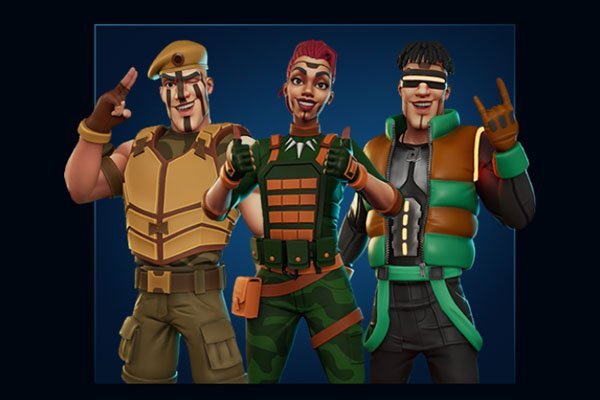
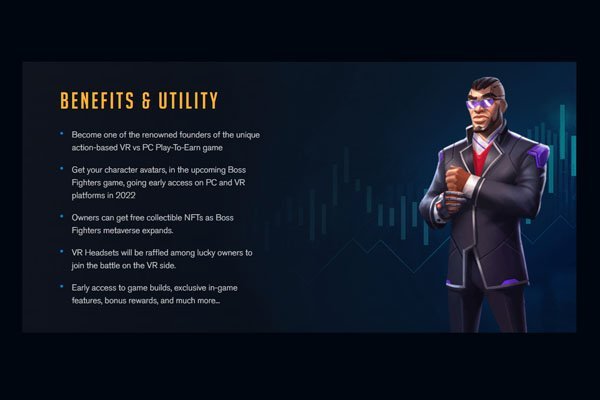
**Boss Fighters is a unique multiplayer action game where VR players embody a powerful boss monster fighting a team of PC players in intense, fast-paced battles. Players enter the arena to become futuristic superstar gladiators that battle as Boss or Fighter and win valuable items, skins, and other rewards stored on the blockchain and tradable on the marketplace. **
—
Vadim, welcome to the show. It’s great to have you here.
Thank you. I’m glad to be here. Thanks for having me.
It’s an honor, especially in these times when people want to focus on the markets and everything. We prefer to focus on real innovation, which is what you’re doing with Boss Fighters. It sounds like a ton of fun. We will dive in deeper, but first, where did this idea come from, and how did you decide to bring it to life?
The idea originates from our experience as developers. I run a company that develops VR applications and professional business applications like simulations. That’s where my obsession with VR started years ago when I got my first VR headset. The instant I was on my VR headset, I said, “I have to make the game in VR. It has to be something special because it opens up so many creative opportunities for game developers.” There’s so much uncharted territory in the game design space.
It has been a long way. We’re here making Boss Fighters because we decided to bring the innovation to Web3. The idea comes from multiple experiences that we had as a team of game and VR developers. I have an experience as a producer on a blockchain project, so we put everything together. It’s our dream project. We’re a team of fanatics that are trying to build this unique stuff.
Vadim, I appreciate how powerful the use of AR can be if applied in a creative way that’s engaging. A lot of people have tried to do things with AR for a long time. Some of it catches on and some of it doesn’t. The key is nuance in the execution and being so thoughtful. It sounds like you’ve put a lot of thought into what you’ve created here that we’ll talk about.
We studied the data and the way for VR users. We learned that the major roadblock is the lack of engaging experience. That’s what’s stopping the platform from developing the way it deserves. Developing for VR is way harder but more fun because you’re interacting with your whole body. It’s not interacting with a controller, a keyboard, a mouse, and stuff like that. You need to keep this in mind. This is where our experience with professional simulations helped us because you’re dealing with total newbies. You need to develop this experience in a flawless manner. Anyone can use the simulation program.
I was looking into the game through the site and stuff. It looks unique. Some people are on PC and some people are playing through VR. Talk to us about the overall features and utility of the project. The community is doing some cool stuff as well.
We have this game mode, which is a face-off with a VR boss. It’s a new type of boss fight. We are familiar with boss fights. The bosses are controlled by AI. When you pour down DPS to the bosses, they all repeat the same patterns. We want to break this, and because it is a competitive multiplayer game, the VR player embodies this boss. This creates a lot of replayability. Replayability is one of the main features of the long-lasting life of the project.
Overall, we have a set of features that we believe will make this project stand out. There’s this gladiator-style arena. We want to push heavily on the side of the gaming show. We have the special feature we call Watch-To-Earn. It is a cooperation between spectators and players. We will talk about this later if you wish. We have the asymmetric aspect where we can match VR players with screen players in different proportions. We can have exclusive flatscreen player modes to expand our player base.
We can have exclusive VR player modes like fitness VR stuff. We can even integrate the popular Move-To-Earn in a smart way without any Ponzinomics scheme. People are already doing fitness in VR. The whole market emerged when Oculus was released. All the fitness apps said, “Why don’t you play this active game? It is an active game where you crush and throw stuff with your figure in a physical environment. Why don’t you integrate a small reward for these VR players?”
Another big feature that’s also in development is user-generated content, which is important for the community. We use the tools to create the game, like a map editor and special tools for creating in-game assets. Once we publish them, we can release the tools to the community. The community can start building up and monetizing their creations. There are a plethora of options that are on the table for Boss Fighters. The fractured feature is the cool combination of the cross-reality battles between VR and flatscreens.
Let’s dig in on that piece a little bit more. That’s where the crux is. That’s the distinctive thing we’re talking about here. Tell us a little bit more about that. How does this work? Why is this so important to you as the Founder of Boss Fighters?
It’s important for several reasons. There are game design reasons why we want to do this. There are pure business reasons why it’s important to do an asymmetric style and mix these communities together. Let’s start from a business standpoint. Why is it important to create the asymmetric VR game? Why do we believe it’s the way to go? We know the VR market, although the community of VR is engaged. They play games constantly but it’s tiny in comparison to mobile phones.
Replayability is one of the main features of the long-lasting life of the project. Click To Tweet
We have a bit more than 20 to 25 million VR devices out there. Eighty percent of the market is controlled by Meta. In comparison to the mobile market, it’s small, even for PC and consoles. On the other hand, these VR players like the games they play because there are not a lot of VR games out there. Quality games are constantly bringing attention.
You need to make a game design solution to bring new members to this game. Why don’t we create this asymmetric multiplayer competition? There are a whole lot of unexplored features in this asymmetric genre. We know cool examples of games that explore these features, like Dead by Daylight and other titles that are popular. Why don’t we do this in VR?
It’s such an interesting feature to explore if done properly. What I mean by that is done in the form of an action game. Action games are the most popular titles in VR. That’s why I’m a bit skeptical about the whole stuff in VR, like metaverse. You just walk there and observe something passively. It’s not how VR uses their VR headsets. They play action games. From a business standpoint, it’s an important feature.
From the gameplay perspective, it’s interesting to explore what we can do. We’re excited to release our alpha and get feedback from the community. We’re not trying to replicate somebody. We’re trying to pave our way in this uncharted territory. As a creative director and game designer, it’s so exciting to do stuff, try to put it in front of the public, and see what they will say about the project.
Let me clarify. If I’m on the PC side or the VR side, can players be on the same team if they’re working off one platform versus another? Can VR plus PC players be operating as bosses in the game? How does that interplay work there?
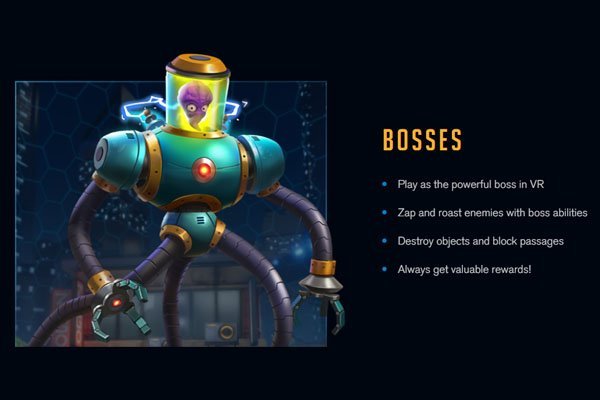
The main game mode is the VR player embodies the boss. That’s the whole point. We don’t want to move away from this and allow PC players to control the boss because the whole gameplay of the boss is centered around physical interactions. That’s how VR works. You grab stuff, pull yourself toward environments, use weapons, and tear down buildings. It’s mayhem. On the other hand, fighters, which are flatscreen players, have to cooperate and play as a team to take down this boss because it’s dangerous. It’s a big monster. There are weapons and it can throw you through the building.
There’s a big forcing function based on the structure of the game as far as how people team up or not and what their roles are. That’s very cool.
It’s a big thing in the US. I can think of how all the CrossFitters could get into this game. They’re starting to look like boulders while they’re playing the game. There could be some viral meme videos going on there for sure. Hopefully, people choose things to hold that are not too dangerous as they’re playing this game if they want to simulate that part of it.
We started talking about the Watch-To-Earn mechanic. I want to go into more detail there because, like Splinterlands and Axie Infinity, each of these projects has pioneered a new type of tokenomics and mechanism for doing that. You mentioned this is new and unprecedented. What are the details there? How did you come up with the approach that you’re taking?
There was a long brainstorming process in trying to answer the question, “How do we bring more players and users to our ecosystem? We have limited VR players and a bigger portion of those flatscreen players.” We need to make something up with the streaming. Usually, it is a futuristic gladiator show. Coliseum 2.0 is the future. Why don’t we create a building game feature where spectators who are watching it on Twitch or other streaming services can directly participate in the battles in some way?
The declaration of the system that we’re developing works like this. It is a cooperation between players who can’t be streamers and spectators. A player can use our back-end platform. We’re not building Twitch or anything, but we use the credentials, so we can link your account. If you’re logged out of our system and you started streaming a battle, we can track how spectators you get on your stream. Depending on those metrics, we can increase rewards for VR players or just players.
You get the rewards after the battle, like some weapons or cosmetic items. We can give you better rewards if you get more spectators. On the other hand, this is more Web3-focused stuff. This is aimed at users who cannot play the game for some reason or don’t want to play the game but still want to participate. They get special on-chain assets or what we call tickets for watching these streams. The more streams you watch, the more tickets you get.
You can spend these tickets in multiple ways. You can spend them on the marketplace and get discounts on the in-game marketplace. You can get special assets that are only available for spectators. That’s creating this cooperation between players and spectators. If you’re a spectator, you get a special reward for participating as a spectator. You can list them on a marketplace. That’s the only to obtain this reward.
The core stuff in this Twitch API and all the streaming APIs is we can create an interactive game mode. We call them mini-bets, mini-challenges, and intervention game modes. Intervention is like Hunger Games. You type in the spectator’s chat commands and create weapon drops in the arena with some rewards. Mini-challenges are more fun. A challenge randomly appears during the battle. Nobody knows what the challenge will be. It’s a randomly-generated system. The challenges might be like that.
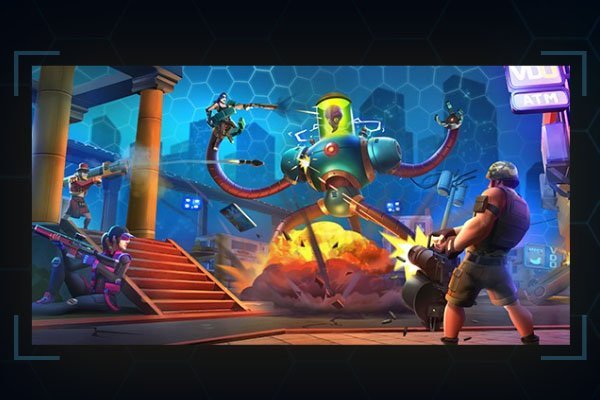
Boss Fighters: Developing for VR is way harder but more fun because you’re interacting with your whole body.
You use your tickets as a spectator to bet or something like that, “Can the boss destroy 3 buildings in the next 60 seconds? Can the boss toss 50 players through the window during this battle?” Nobody knows what the challenge will be. If you’re a spectator, you could participate. If you win, you win some valuable rewards. The system is aimed at bringing in more users. We want to build up advertising and product placement because we have big screens in the arena. The opportunities are endless here.
My favorite thing that you mentioned was the ability of the spectators to make things drop into the scene. You’re almost like the gods in Greek mythology playing around with the mortals. I’ve mentioned this a couple of times in the show before. It was an NHL thing where they let the fans vote on the All-Star team. The fans played around with it and voted this underdog guy who was clunky and not the best player, but they wanted to see him on the All-Star squad, so they put him there. I love that. I hope you get to do more of that.
There’s something special about the engagement that you get out of people putting something on the line, either earning based on a bet they make or putting tokens, money, and their reputation on the line for an outcome. There’s something in there around gamification, fantasy sports, betting, and even the idea of having control of the outcome like Fan Controlled Football, which is a close group of colleagues of ours. We’re barely scratching the surface on that level of engagement. I’m excited to hear more about how that goes.
We need to get our butts at FCF to help us make a fan-controlled show.
That’s what we’re working on.
Let’s hit this preview. We looked at the gladiator arena-type thing. That’s what it looks like. It’s an in-the-ground battle, and there’s the main boss.
That’s the generic boss avatar. We have different boss avatars and a boss-customization system.
It’s wreaking havoc.
It’s whipping the other players around. That looks fun.
The fighters have a lot of maneuverability with the angles and directions of their limbs, what they’re doing, and how they’re moving. It’s a very experiential thing that’s going on there.
It’s especially fun for the VR players to have that feeling of being this all-powerful being and know that they’re real players that are having fun with that whole dynamic. I love it.
There’s always someone that comes to mind that you want to toss around if you’re having a bad day.
Josh, you played a lot of games. I do remember back in the day. We don’t talk even talk about you as a gamer in any context. What did you use to play? What was your go-to back in the day?
I had a convo with someone about this. We bonded over the fact that our favorite game growing up was Mortal Kombat. I was the Mortal Kombat champion at my local arcade. They used to hook me up with $10.25 every so often because I was on top of the big board. There were constraints in terms of gameplay back then that don’t exist now.
You need to make a game design solution to bring new members to this game. Click To Tweet
There’s this delicate balance between making it fun and innovative for each character, making the characters not be too strong against each other overall, and also giving characters some unique moves that make it fun. The competition and innovation in the industry have come such a long way. I can imagine the twelve-year-old version of myself loving this game.
We would have you probably on the show, Josh, if you were still twelve. Maybe you would show up for Hot Topics. There’s a great movie called The King of Kong: A Fistful of Quarters that you remind me of. It goes back. That’s the beginning of video game competitions and the genesis of a lot of what we’re talking about here. Something we hear about often is the divide between traditional and blockchain gaming. We’re curious about your thoughts on how Web3 gaming and blockchain play a role in the overall gaming architecture of the world. What’s your view on that?
To be honest, it’s a bit of an unfortunate time for blockchain games. It’s a bit early because of what titles emerge in 2021 and 2022. They mostly focus on the earn side. These play-to-earn games are the dominant thing in space. That’s what pushed most of the gamers away from this whole narrative because there’s not a lot of gameplay depth in these games.
What do gamers want to do? They want to play quality games. They’re not concerned a lot about the earning aspects or something like that. They want quality games that are fun to play, and that’s the next step in blockchain gaming. Blockchain is a tool to bring ownership of these digital assets. Players all over the world are spending millions of dollars every day.
I read that Diablo Immortal, with their monetization practice, is doing $10 million a day or something like that. People are spending money like crazy on games but they don’t get anything in return. They get fun but they can’t do anything with this asset. They’re all relying on the platform. There is no interoperability. That’s a problem that also blockchain can solve.
Blockchain gaming is the natural state of development of the gaming industry. We already see this. A lot of big names are coming into the industry. Making games is hard. It takes time. You need time to make quality games. Once quality games start to emerge, we will see a surge of lots of new quality games. Players or normal Web2 games will start to gravitate to blockchain gaming because it’s a tool to give ownership of the assets.
It has to be done properly and in ways where it makes sense. It doesn’t make sense to try to create another Axie Infinity because it’s not sustainable. You don’t need to invent the wheel again. You just need to do normal stuff like what the normal gaming industry does but give more tools to the community and the players and be more community-centered. That’s what the community wants.
Once people see that there are interesting and fun games to play, on top of that, you get something in return. You’re not only pouring money into the game but you have at least an option to list this asset on a marketplace. Somebody else can be interested in that. That’s when we see the shift. We’re still a few years from the moment of this big shift but in a few years, the industry will switch gears toward blockchain gaming.
It’s a good grippy yoga mat.
I sold my PS4 because I bought PS5.
I’m calling in from Egypt.
I was wondering what kind of video game it was.
Blockchain gaming is the natural state of development of the gaming industry. Click To Tweet
It’s a big part of what we talk about here.
What’s your handle on social?
It’s @0ffsimpson.
You’re welcome. I appreciate you.
Thank you for having me.
Important Links
-
Twitter – Offsimpson
-
@0ffsimpson – Instagram
-
@BossFightersVR – Twitter
-
Spotify – Edge of NFT Podcast
-
iTunes – Edge of NFT Podcast