Top Podcasts
Tyler Durden Of Mocaverse — The Platform That Derives Value From Its Network, Plus: OpenSea Pro Overtakes Blur
Innovative technologies can only be adopted in the smoothest and most rewarding manner if people work together. Tyler Durden of Mocaverse leads the charge in ushering new levels of collaboration and community in the Web3 space. He shares with Eathan Janney and Josh Kriger how they are building an ecosystem NFT with more than 8,000 distinct Mocas, curating an amazing user experience for all through collective knowledge and partnerships. He breaks down three main themes of their strategy, the threefold identity of the Japanese market, and the impact of AI technology on Mocaverse as it intersects with Web3. For this episode’s hot topic, they discuss how the NFT Aggregator market heats up as OpenSea Pro overtakes Blur.
Listen to the podcast here
Tyler Durden Of Mocaverse — The Platform That Derives Value From Its Network, Plus: OpenSea Pro Overtakes Blur
This is Tyler Durden of Mocaverse, the one-of-a-kind ecosystem for Animoca members here at the Edge of NFT, the one-of-a-kind show that brings the most exciting evolutions at the Outer Edge. Keep reading.
---
NFT-curious readers, stay tuned for this episode to learn how Mocaverse is breaking ground for new levels of collaboration and community in Web3, why spaghetti is the new lemonade for kids to start their entrepreneurial journey, and what OpenSea’s new product means to the NFT marketplace landscape. All this and more on this episode. Enjoy.
Finally, Outer Edge LA, our awesome community-centric gathering returned to Los Angeles. If you think you missed out, here’s a way to catch up on all the interactive experiences, discussions, presentations, and more. Simply go to Watch.OuterEdge.live and register with your email address to get a full recap of over 60 captivating conversations and performances. Game on.
This episode features Tyler Durden of Mocaverse. With a history in the tech startup sphere, Tyler has cofounded and managed a variety of ventures, including those in renewable energy, cross-border eCommerce, and AI. His fervent dedication to fostering the widespread adoption of innovative technologies has elevated him to a pivotal role in championing AI and Web3 integration for Fortune 500 companies.
Tyler’s deep exploration of NFTs, DeFi, and ReFi has led him to his role as Head of Projects at Animoca Brands, a prominent name in the blockchain gaming industry. His visionary leadership is set to propel Animoca brands into new territories within the rapidly evolving Web3 domain. Mocaverse serves as the membership NFT collection for Animoca Brands’ exceptional network of companies, projects, investments, shareholders, and partners. This unique collection embodies our values surrounding Web3 and digital property rights, as well as our unparalleled ecosystem. Tyler, we’ll welcome you to the show.
Thanks for having me. It’s a pleasure to be here.
We’re so glad to have you on the show. It was great to meet you at Outer Edge LA. Thanks for making us your first stop on what seems like a Mocaverse world tour.
It’s Lyft and traveling around. We were in LA and then Singapore. We also were in Tokyo, which was very exciting. It’s great to be on this show as well. The Edge of NFT conference was amazing. I was on a good panel with Yuga Labs. Thanks for pulling that, Josh. It’s been amazing.
It’s our pleasure. For full disclosure, Eathan and I should share that we are members of Mocaverse as part of the Animoca portfolio. We have our Mocas and we’re holding. This is a pretty revolutionary project that we’re going to get into. It features 8,888 distinct Mocas. Why don’t you start by telling us about the origin story and explain how you got involved in all this?
Initially, it was Yat Siu, the Chairman of the company and the Cofounder of Animoca Brands, who was like, “We should do a PFP collection.” Basically, a team is picking that and then being like, “What does that mean? What do we want to achieve? What utilities are we trying to provide?” The team took it from there, one statement, “We need a PFP collection,” and then keep expanding the potential of Mocaverse. We call that ecosystem NFT. That’s probably something that no one has called it before, but we believe in the space. There are not a lot of companies that can build an ecosystem. NFT. Meaning, for example, Animoca Brands has invested in 400 portfolio companies and has a very wide reach and network.
Our role here is to bring that network effect of the portfolio companies and partners to be accrued to the NFT itself as a collection. There’s a lot to do. Since we announced that we’re launching Mocaverse, we got 100-plus different portfolio companies reaching out to us and different partners to work together. We have launched something called the XP system, which we think would be instrumental in the Web3 space because it’s going to bring a lot of motivation for people to participate in the ecosystem. It’s not just the holders but also as well as the Web3 projects that would be participating in the ecosystem.
I feel, Eathan, these guys have an unfair advantage and that Animoca Brands has this vast portfolio of Web3 projects and partners already. You guys have seen what works and what doesn’t work, and you’re in it in terms of having a feel for what’s happening on the ground. I’m excited about all that. I know we’re looking forward to diving into this conversation.
At Animoca Brands, we have been talking about synergy collaboration and all that, but I don’t think anyone has cracked it in terms of what’s a real collaboration and partnership in this space. You see a lot of the whitelist and all that, probably shilling or doing AMA and all that. There’s a lot of potential in terms of a deeper level of collaboration and partnership.
What we mean by that is we think there is a scrappy way to achieve interoperability across different projects. It doesn’t have to be coming up with a new standard and everyone needs to follow that standard. We believe that in the partner ecosystem, there is a good way for an asset to be cross-chain, cross-ecosystem, cross-platform and the user engaging with different platforms. In the end, the value is being accrued to the same centralized but decentralized ecosystem. The Moca experience is very interesting. It’s being accrued to the token ID and the NFT itself. We’ll love to talk more about it probably later in the session as well.
You’ve mentioned into a good degree so far the collaboration opportunities here. We’re a member of the Animoca ecosystem and we have our own things that we can offer to the rest of the ecosystem. How else do you foresee the collaborations playing out here? What’s the way that you imagine this stuff moving forward?
We basically have an official partnership with Amazon, mainly on the Amazon web services side. We announced a partnership with Sky Mavis, formerly Axie Infinity, and with GMEE Arc8, which is a hypercasual game. The collaboration and partnership are going to bring a vast diversity of experiences to the holders. We are not concerned about the volume of the partnerships and collaborations, but then we’re very cautious about how we curate that experience along the user journey.
The partnership and collaboration are not limited to games. For example, Azure NFT can probably make a proposal to the Moca DAO, which we will be launching soon, to be the advocate of the Mocaverse and have podcasts creating content either in text or video format and all that to basically share about Mocaverse or even having a dedicated section or channel podcast for Mocaverse.
The beauty of this is that the Moca DAO and the community can propose anything around a few key themes. I’m going to publish a light paper very soon, but the DAO has three main themes. One is governance. The second is about building the culture and influence in the market, building the Moca IP. The third is about building. How do you build a new product? How can you make the onboarding experience amazing?
There are tons of things like making a proposal on building experience on Sandbox. Sebastian and the team have been having great conversations. Sebastian himself, the Cofounder of Sandbox, is very bullish about Mocaverse, and he loves Mocaverse, and we have been working very closely together. I would say the potential is endless and the sky is the limit.
You mentioned Moca XP a little bit earlier. I’ve gone on and I’ve checked, and I’m excited to see that we are at the top of the leaderboard. I should say there are quite a lot of folks at the top of the leaderboard right now. I’m personally very curious about how that system is going to work and the significance of it and how we’re going to be able to stay at the top of the leaderboard while everyone else slowly goes down the leaderboard. That’s what I want to know.
The XP is coming from four different dimensions. One is more on sticking. Basically, you don’t list, you don’t transfer, and you don’t sell. It’s more passive in terms of earning the XP. The second category of it is also activation. If you’re active in participating in games, for example, we are going to launch a hypercasual game for the Mocaverse holders. It’s going to be pretty amazing when people participate in those activations. We even have a tribe versus tribe leaderboard as well. There’s a social element in it and also a competitive element in it. If you’re active in activation, then you would definitely be ahead of the leaderboard.
Third is community engagement. The more you share, the more you tweet, the more you participate on Discord, and then the more you earn as well in the future. The fourth category would be contribution. This is something that we value a lot. For example, are you active in making a proposal? Are you active in bouncing ideas about a proposal in the DAO? Are you active in voting? XP would be a way to incentivize and drive that robust and thoughtful conversation about the longevity of the project as well. It’s not pump and dump or talking about prize action.
Sounds like there are quite a few mechanisms there. That’s exciting to get to work on. You also dropped some alpha that Mocaverse is one of the largest ApeCoin DAO governance delegates, and you’ve acquired 1.5 million ApeCoins. Can you tell us a little bit more about the decision to be that deeply engaged with ApeCoin and the implications there?
We are probably the first project ever to delegate a huge amount of ApeCoin or any kind of tokens to a more decentralized community. Our whole vision about that is how we can play a role in the decentralized economy and the voting process in the DAO by delegating the voting rights to the Mocaverse holders to thousands of people and thousands of wallets. That is the first intention.
The second intention is that Animoca Brands could have delegated more to the Mocaverse holders, but the reason why we are so specific about 1.5 million is because we don’t want to completely swing the vote. We don’t want it to be deterministic. If you look at the ApeCoin DAO proposal, some of the controversial proposals and voting is about 1.5 million difference, and Mocaverse holders are going to have a lot of influence in the ApeCoin DAO proposals.
A lot of people probably don’t completely understand the influence and the power of it and potentially what tangible value would bring. It’s very funny. There are some community members that are like, “Why don’t you evenly distribute 1.5 million ApeCoins to all the holders and get all the financial rewards and all that?” First, it doesn’t work that way. Second, it’s going to be a zero-sum game if we do that.
The thing that I’m personally very against and also the rest of the company as well is to have a zero-sum game. We make less than 10 million, we are going to distribute 5 million, we keep 5 million, and then keep the operation. We don’t believe in that way. What we believe in is that, for example, it starts off with 10 million.
We believe this can be 100 million or 1 billion, and then the holders are going to benefit from it. Basically, ApeCoin allocation and then the delegation, we are the second largest in the ApeCoin DAO holding. What it means in terms of implications is that we have already seen a lot of Ape holders coming into the Mocaverse community first to lobby and second is to educate.
The ApeCoin holders want to make sure the Mocaverse holders are educated enough along the DAO process to make the right decision. Also at the same time, they want to use Mocaverse as a platform and probably to make a proposal and get the proposal approved. First, if everyone is familiar with politics, especially in the US, there’s a lot of lobbying happening when you have something.
This is something that would foster the collaboration between the largest DAO in the open metaverse space and drive collaboration between Mocaverse and ApeCoin. We don’t know what that would be right now. We don’t have a very vivid what the first proposal would be, but I think that’s the exciting part of it. The Mocaverse community can submit their proposals and fold on it. That’s exciting. I’m looking forward to the community making great proposals on that.
If you have something good, expect a lot of lobbying in US politics. Click To Tweet
It’s a novel way of bringing more value to the project. I appreciate how thoughtful you all are being about this process and trying to lead the charge here. One particularly interesting component is you’re doing these travels, and you have a global community. From our travels as well, we are seeing the nuances and distinctions between different parts of the Web3 community in terms of Singapore and Korea as well as Hong Kong and Japan. Japan is particularly interesting in the metaverse market because of how passionate they are about that element of Web3. I’m curious about what Mocaverse’s strategy is for engaging with a Japanese audience and how you intend to navigate this unique market and cultural landscape.
I came back from Tokyo. I met a lot of local communities. I met a lot of IPs and IP commercialization partners. The beauty of the Japanese market is threefold. First, it’s the anime IP and Japanese native IPs in the country. There’s a huge fan base in terms of Japanese IPs. Part of the Mocaverse division is to onboard a lot of users and bring interest to cultivate that interest in Web3 through a Web2 IP and the fan base.
The Web2 IP is amazing. That’s the first point. The second point is that in Japan, there are a lot of great commercialization opportunities in terms of leveraging IP. What Mocaverse aims to be as well is we want Mocas to be everywhere in the world and starting from Japan. How can we do that? In this space, there’s no silver bullet and there’s no best formula in terms of how you can commercialize NFT IP. What we want to do is we want to bring in the best brain in the world to show and give an example of how those artists and how those fashion brands can commercialize IP. Not just commercializing but also spreading the influence of it.
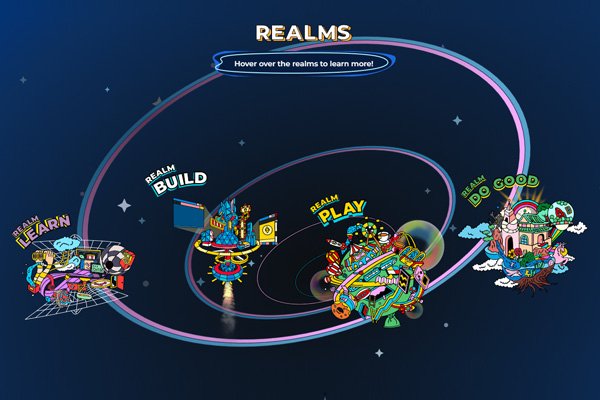
Mocaverse: There is no silver bullet in commercializing NFT IP. Mocaverse wants to set an example of how artists commercialize their work and spread their influence.
Third, I would say the Japanese community is amazing. They huddle all the way, very united and forgiving at the same time. They’re here for the long-term. Those are the three points why we’re so excited. Fresh off the news as well, we have appointed a new CEO for Animoca Japan as well. Definitely, we’re super excited about working with them and working very closely together, especially on the Japanese IP side of things.
I’ve never been to Japan. I’ve been to Hong Kong. Josh has gotten to do some of these more global travels than I have as of late. I’m fascinated with the cultural diversity in the space and all the different ways that these different places are bringing their own culture to Web3. We’re going to cut out here in a couple more questions and get on to Quick Hitters, which should be fun to hear about your personal history and personally connect with you. Before that, what does your roadmap look like going forward with Mocaverse? There are partnerships and artist collabs. I know you mentioned a couple of things, but anything else we could look up in the future?
The Realm Tickets are going to play a key role. Realm Tickets in the future are going to be a consumable asset. The Realm Ticket is that you need to consume in order to participate in an activation. We’re not monetizing those Realm Tickets because we’re going to redistribute 100% of the Realm Tickets back to the community to incentivize and motivate active participation. That’s the roadmap for Realm Tickets.
The PS Realm Tickets is 1155, so the reputation is not going to be accrued to the token ID, but then the reputation is going to be accrued to the wallet. Potentially, the roadmap of Mocaverse is your Moca is your identity, and then you build up the reputation around it, and that becomes your identity in the ecosystem.
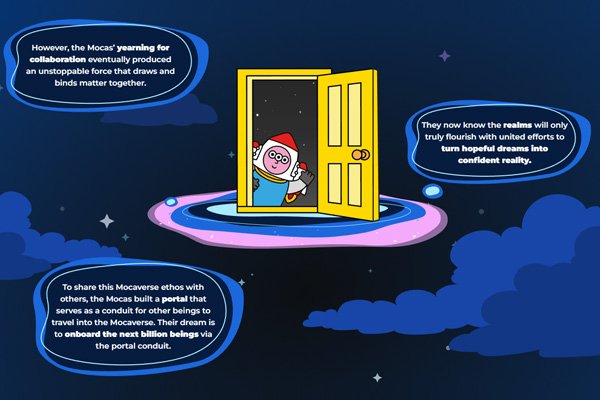
Mocaverse: In Mocaverse, your wallet is your identity. You build your reputation around it, and it becomes your identity in the Web3 ecosystem.
We talk about the XP system as well. You can see the wallet or the Moca as your identity. The XP is basically your on-chain proof of your achievements and how much you contribute and all that. At the end of the day, it’s going to be related to something tangible and something exclusive that might be intangible. Along the process, everyone would be guarding a lot along the process but also at the same time getting a lot of value.
The IPs would play a huge role as well. I see Mocaverse as a growth platform. What I mean by growth platform is coming from user acquisition, user engagement, user retention, advocating, and along the whole user funnel and the conversion funnel. The Web2 IPs would be very significant and instrumental in user onboarding. I still haven’t seen an amazing onboarding experience. I’m staying in the Hacker House of the wallet solution. They’re trying to push the boundaries in terms of how to onboard the next billion users with social lock-in, no safe phrase management, and all that. Mocaverse is definitely aiming for that in terms of the onboarding experience.
Where’s this Hacker House?
It’s in Singapore right now. It’s a four-story house. There are a lot of remote teams in Vietnam, the Philippines, and all that. They probably come regularly, staying in the same house, sometimes maybe sharing a bed. I don’t know. There’s an elevator. The house is pretty cool with an amazing rooftop. I want to do probably a shout-out to the founder of the company Web3Auth. They’re amazing. They’re one of the hottest startups right now in terms of wallet solutions. The COO is here. Basically, we are chilling and talking about the space. Usually, the space is used for engineers to come and code and for remote records with colleagues. I love the idea. I want to do one in Hong Kong. It’s just the property price in Hong Kong doesn’t make sense.
We’re going to be doing some more hackathons, so that’s something fun for us to talk about. At our hackathon at Outer Edge, we had 21 teams compete. That was on the Saturday and Sunday before the event. It was incredible what people came up with. Shout out to Playtags for winning the $10,000 grand prize. It was a cool concept there. I love what hackathons can do in this type of builder climate. Out of curiosity, what is the staple cuisine of choice at the Hacker House? What are the drinks? What’s the food that you’re seeing in the greatest abundance over there?
I looked at the fridge. It’s all stocked up with beer and soju if you want a shot of soju in your beer. Apparently, I reject it. I stick with my beer. I have a beer right here right now. The team is so well prepared in terms of hosting guests and stocked up with all the alcohol.
Let’s go.
Not Web3 or NFT?
What’s the most recent purchase?
As in the biggest gain?
I think we have time for 1 or 2. Let’s do it.
No problem. My pleasure.
Important Links
-
Spotify – Edge of NFT
-
iTunes – Edge of NFT
-
@EdgeOfNFT – Twitter