Top Podcasts
TOONSTAR With John Attanasio
Thanks to technology, we are seeing industries become more open to people. Take the animation ecosystem for example. What once was very much like a private club now has the potential to be more accessible to both creators and their communities. This episode’s guest is making this possible, and he takes us deep into the captivating world of AI, Web3, and entertainment. John Attanasio is the Co-founder and CEO of Toonstar, a next-generation animation network at the forefront of revolutionizing storytelling and community experiences. Drawing from his extensive background in the studio world, John shares the genesis of Toonstar and its groundbreaking approach. He talks about AI’s role in animation production, where Toonstar’s innovative animation tech stack automates labor-intensive processes and facilitates the creation of high-quality animation at a faster pace. John then shares his thoughts on AI-powered social interactions, especially on empowering creators and fans and pushing for community-driven storytelling. For more great insights on the transformative power of AI and Web3 and their pivotal roles in shaping the future of entertainment and animation, tune in to this conversation!
---
Listen to the podcast here
TOONSTAR With John Attanasio
Join us as we delve into the fascinating world of AI, Web3, and entertainment with our guest John Attanasio from Toonstar. This is a special episode. Let’s meet John, the Cofounder and CEO of Toonstar, a next-generation animation network designed for the Mobile H. John is an alumnus of the University of Southern California, Marshall School of Business. Toonstar is a Web3 animation studio at the forefront of interactive storytelling and community experiences.
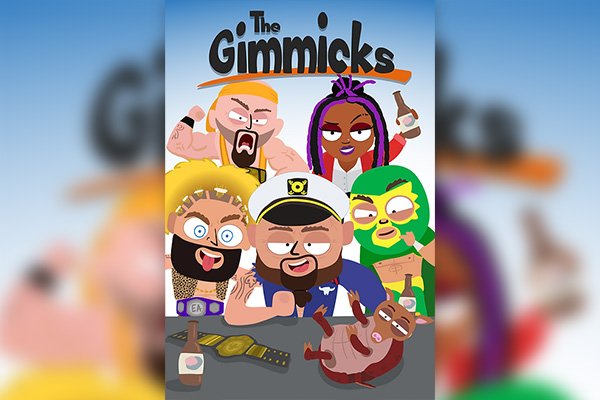
They are the creative minds behind The Gimmicks, an amazing project, innovative community-driven animation NFT project that empowers creators and fans with creative control and commercial benefits. Let’s give it up for John. Toonstar is pretty amazing. It’s creating a new world of possibility for creators. I love to kick it off and engage folks with the genesis of it all.
The best way to describe Toonstar is we call ourselves a Web3 story studio. I’m one of the founders. The other Founder is Luisa Huang, and we both come from the studio world. We met at Warner Bros. Before that, I was a Dreamworks and she was at Disney. We spent a long time in the studio, where we would say better or worse, and there are some good parts. There are some things that we think need some challenges. We basically came up with the idea for Toonstar. There were a couple of things, like we were in the digital media group was our last role and we were doing a lot of experimentation at the intersection of technology and storytelling. We were involved with the group.
I don’t know how many people remember Maker Studios. It was one of the original or OG MCNs. We were on the team that was trying to figure out how to take the relationship with Maker Studios and integrate that into the broader studio. That was a great experience and a lot of learning. What it did is it opened our eyes to this idea of the creator economy and the notion that creators can connect with fans directly.
There was this interesting type of storytelling that was taking place. The first a-ha moment for us was like, “This whole idea of direct-to-community or direct-to-consumer is fundamentally changing in a lot of ways. Thanks to technology.” The other part of it is, being in the studio system, we had a chance to work on a lot of animated properties.
Fortunately and spoiler alert, I’m Gen X. I’m a child of Saturday morning cartoons. My brother’s a comic book artist. I grew up going to Comic-Con before it became what it is now. Animation has always been an amazing storytelling medium to myself and my Cofounder. It’s such a great way to build characters and character worlds. It’s also a great commercial medium. When you look at some of the most successful IP properties, they are animated properties.
It was always odd to us that when you looked at the animation ecosystem, it was very much like a private club and it was the same people on rinse and repeat, whether it was writers, showrunners, or voice talent. That was always a headscratcher because, to us, it’s like, “This is such a great storytelling medium. Why don’t more people have access to it?”
Do they all live in the valley too?
Maybe. I don’t know. They are from everywhere. That was the moment when there were many creative voices and diverse voices out there that weren’t getting a chance to tell their stories in animation. You put those two things together, and that was the inspiration for launching Toonstar. The idea at the beginning was, “What would Disney or Dreamworks look like nowadays given the tools, technologies, and what’s happening with creators and communities?” That’s enter of Toonstar.
Because you’re smaller, it comes with some nimbleness and agility to try some new things. Along those lines, you guys have been pioneers on the AI front. We came talking about AI and I understand you’ve been doing a lot of speaking on the topic given how newsworthy it is and how important it’s in terms of where things are going.
I’d like to dive into how you’re using AI specifically because these broader conversations are exciting, but let’s get specific and understand the use cases of this and how it applies to the entertainment industry, which we’re all part of in some shape or form if we live in LA or we turn on the TV or our phones. Let’s start with the production side of the house and in AI. What have you done with ai? What’s been your AI journey with production?
On the production side and our company, we’ve been around for a couple of years. When we launched the company, the idea was that we were focused on the notion of if you are going to build characters and tell stories direct to communities, and when we started, our focus was on social media. If you’re going to do it on those platforms, you’re going to need to come up with a completely different production process and also build a new animation technology. That’s exactly what we did.
We built an animation tech stack that allows us to do high-quality animation very quickly. It’s analogous to a gaming engine. There are other types of technologies out there that do a similar type of thing, but what it’s doing is it’s automating a lot of labor-intensive processes of animation, whether that’s lip-syncing, facial expressions, or certain movements. In this case, we’re using machine learning, which is a type of AI. That’s what it’s doing and it’s very effective.
We’ve had a lot of success with that primarily because 1) We’re able to produce, first and foremost, a quality product, but 2) It gives us this speed. This is one of our thesis. To go direct-to-community and direct-to-consumer, you need to be able to produce at a speed that they’re accustomed to. If you think about social media, I see people with phones. You’re on it every five minutes sometimes. Certainly, every hour. You’re on there and there’s a cadence that you expect. That’s what you’re looking for in terms of content and conversations.
Our belief is that you need to be able to produce somewhere in that area if you want to have success on social media. The tech stack is machine learning that’s helping us do this production. The real benefit is the quality and the speed. What that does is it allows you to have these unique interactions with the audience because, all of a sudden, now you’re creating characters that live in social media and you can have these conversations almost real-time, but there’s a heavy cadence to it. Now all of a sudden, you have a deeper connection to the characters and the content.
Also, the content becomes more relatable because what you can do is drop in timely topical things. We do a lot of pop culture-type of narratives. We can take something that’s trending and, all of a sudden, drop that into the storyline. Now it feels more relevant and relatable. In all those things, the goal is to deepen the connection with the audience and that character. That’s an interesting use on the production side.
It seems like a critical part of the puzzle that was missing otherwise to create a type of animated content that is very relatable to the attention span of the consumer. What’s the time savings there if you could quantify it? You’re an OG in the world of animation relative to where we were before.
There’s a spectrum of how long it can take to do animated content. Traditionally, animated content, if you look at a series that was on the network, can take up to 18 months or sometimes up to 2 years to produce. There’s a variation on that, but that’s what you’re looking at in terms of something you might see on network TV.
We’re doing episodes in a week. This is a fun fact, and this is some of the stuff we were doing prior to Web3. We’ve got the largest animated channel on Snap Discover. The thing that is underappreciated about Snap is that the audience we get is bigger than what you would see on a network TV. A lot of people don’t either know that or don’t give it the credit that it probably should get. That’s a key way to leverage it.
TOONSTAR: The thing that is underappreciated about Snap is that the audience we get is bigger than what you would see on a network TV.
It’s at least 60 to 80 times faster. That’s pretty incredible.
To break it down, we can do a 5 to 8-minute episode in a few days. That gives you a sense of how quickly you can do it. Bump that up against a network episode. Generally, those run about 22 minutes, but that’s about the speed that we can do. Interestingly, the thing that slows it down a bit is less on the production side. It’s more on the creative development side, which is the story writing and storytelling part of it.
This crazy flashback came to my mind that I probably am not supposed to share out loud, but with the old election with Obama there in the Gangnam Style trend, I had this idea to make a Gangnam Style Obama video go viral. I ran out of time, and someone else did it because it took too long for my animator to do his magic, but if I had the technology he had, I would’ve beat CollegeHumor to the punch. You’re also messing around on other sides with the characters.
That’s one use case. On the production side, we’ve been using that for years. Our first project in Web3 was a project called The Gimmicks. We co-produced it with Mila Kunis. It was the first weekly community-driven animated series in Web3. We had a lot of success with that. The community has been great. We launched our third Web3 in a year called Space Junk, which stars John Heater and Tony Cavalero from Righteous Gemstones. It was created by Dominic Russo, the creator of Workaholics. You’ve got this crazy talented team behind Space Junk. The concept is awesome. It’s about the unsung heroes that are garbage men and women in lower Earth orbit.
It could be all of us after AI.
That could be where we’re heading, but we call it a workspace comedy. It’s creatively biased but we think it’s very funny. The AI part of it is we have the first AI voice character in an animated series that’s in Space Junk, which certainly got a lot of attention. For us, we thought it was appropriate because it’s AI voicing a robot. It’s a robot voicing a robot. We thought there was something inherently funny about that.
The cool part is when you hear the voice, and this is part of the creative process, as we were doing the voice, it sounded too human for us at the beginning. We’re like, “We need to make this sound more like a robot.” We made it sound more like a robot because part of the idea and the character arc of Wellbecca is that she’s a robot, but as she hangs out with this crew, she starts to sound and act more human over time. It’s by design. We had to back it up and say, “Let’s go more robotic, then over time she’s going to start to sound more human.” All that’s done through AI.
You didn’t stop there in terms of your use of AI because you’ve also applied it to social, which is one of the more interesting use cases. I was talking to someone before I was going to interview you, and they’re like, “I haven’t heard about that.” It seems relevant in terms of how AI is going to integrate into the social experience of learning about content and being engaged and part of a community. I’d love to hear about those use cases.
That’s another use case we got into with Space Junk. The idea was first like, “How can we use AI in new different ways beyond the production side?” We’re like, “This is cool. We have a character named Wellbecca, who’s voiced by AI. What if we take her and make her the creative co-pilot for the community?” We’re like, “This could be a great use case for character and story generation,” because the core theme to our projects is they’re community-driven.
Storytelling is the community-driven on-chain experience, but it’s all about the community and the community drives it for us. It’s like, “Why can’t we take AI, put the AI in the hands of the community, and let them use it like ChatGPT or DALL-E and Midjourney and help them create their own characters and backstories but all within the Space Junk canon?”
What we did is we have a character, Wellbecca, who is just that. If you are a token holder in Space Junk, you get to go to her and she’s going to help you write your backstory for your character. She’ll also then help you take your backstory and then turn that into a visual representation of your character, and then she’ll help you turn that into a comic panel and turn it into an animated short. That all is being powered by AI in cooperation with the user, the community member. They’re working together to create this cool thing within Space Junk canon.
I would wager that the opportunity to co-create that experience is as valuable to the community as the output that they create.
That’s what we’ve noticed. We have an AB test. The AB test is we used AI on the production side for The Gimmicks, but we didn’t use AI on the community-facing side. What we did for The Gimmicks is we allowed the community to do the same thing. I can’t make this up, but we created a social layer. We were told it was the first social layer in Web3. It’s called the DIC Punch.
It stands for Decentralized Inclusive Community. It’s very thematic to the ethos of Web3. The cool part about it is it was a social layer. It was our version of the Facebook Poke. What it allowed the community to do is like if someone goes in there and you write your backstory, in this case, you weren’t being helped by AI, you’d just go write your backstory.
If the community thought your backstory was the coolest, they’d give you the most DIC punches. You’d get to voice your character as a cameo in an episode, which now all of a sudden becomes cool because you get IMDb credit in a Mila Kunis-produced animated series. The community loved it. All of a sudden, now your character comes to life, you get to voice it, and you show up in this series.
The first version of that was we didn’t use AI. It was a very manual process. You did it yourself. For Space Junk, we’re using AI as a creative co-pilot. The stuff, amount of output, and conversion have gone 10X. What that told us is it helps. There are some creatives that don’t want help, don’t need it and they’re great with a blank sheet of paper. There are a lot of aspiring creatives and people that want to tell stories that could use some help.
Maybe you want some structure or some ideas to riff off. When you are some of the greatest storytellers of all time, they’ll tell you some of their work is derivative. Tarantino worked in Blockbuster. It was a movie rental. He notoriously is someone that has watched many movies and they clearly have influenced his storytelling. There are a lot of people that can use help in certain ways to still have the essence that they want to be part of the output but a little bit of help along the way.
It’s interesting from the perspective of how people think about disabilities or impairments now versus several years ago. I feel like we all have blockers in our lives where we’re better at some things than others, yet if we didn’t have those blockers, why not create a story? Why not do something outside your comfort zone and, essentially, you’re enabling the community to accelerate getting uncomfortable?
The other thing we found is prompts are very helpful because we’ve done a lot of AB testing. We’re always trying to figure out ways to have our community participate in the narrative, whether they’re creating characters or helping drive where the narrative is going to go and story arcs go. Prompts are always more effective because it’s a starting point and something you can riff off. It’s something that you know and you can move from there. That’s it. It’s the aid of that prompt versus a complete blank.
You built up your own stack, but are there tools and technologies that you recommend to folks that they can use that you’ve messed around with and that the audience can take with them and mess around with at home?
To your point, we built our own tech stack. If you want to experiment with AI, go play with ChatGPT. There’s a lot you can do with it. Play with Midjourney, DALL-E, or ChatGPT. If you want to produce text or images, Dolly and Midjourney are great. Experiment with it because what happens, and co-pilot is a good way to see this, is it’s like an assistant. It’s a co-pilot, but essentially you’re in the director’s chair.
The more you play with it and the more you give it commands and a certain prompt and see how it reacts, the more you get comfortable with it. You’re going to learn and it’s going to learn you because it will start to figure the way you think and it’s going to start to give you things where you’re like, “This is better.” It’s getting better because it’s figuring out what you’re trying to ask it. Get in and play with those tools. Once you’re in there, they’re powerful.
We at least have to go down the Web3 rabbit hole a little bit because blockchain has not exactly been fully embraced by the entertainment industry yet. We’ve had Fox on the show. Fox has done some blockchain work with Studio BCL and Warner Bro has dabbled in it. You’ve embraced blockchain for Toonstar based on what you learned from Sonar Casts and whatnot. I’d love to understand what you see as the strongest utility for animation and blockchain and the type of community that you’re building.
The biggest positive use case is that it’s about ownership. It is this idea of you come in and you have ownership in what we’re all building together and you have a stake in it. If you come in and the project becomes the next South Park or the next Simpsons and you play a role in that happening, you have some skin in that upside. That is one of the big promises of it.
The other promise is the nature of being decentralized and this idea like we’ve done work in Web2 prior to Web3 and now we’re deep in Web3. One of the challenges of Web2 has been that because it’s centralized this idea of, “I build up a community. I build up fans. The algorithm can change overnight and, all of a sudden, now my fans go away, or I reach 5% of my community because the algorithm changed.”
That lack of control is an issue in Web2. Web3 and the blockchain can help solve that. These benefits depend on whether you’re a creator storyteller or whether you’re fan. The other benefit from the creator standpoint and this is what we’re hoping we’re trying to build, is that when you look at the traditional studio system, that’s a gatekeeper economy.
Does anyone in the audience have a question?
Important Links
-
Spotify – Edge of NFT
-
iTunes – Edge of NFT
-
@EdgeOfNft – Twitter