Top Podcasts
Tom Ara And Michael Fluhr Of DLA Piper — The Platform Where Success Is Solved
When one of the most trailblazing industries meets one of the most conservative, you get a pretty interesting dynamic. That’s what you get with the legal side of Web3, the blockchain, and NFTs. How do lawyers working around the edges of the law deal with the new legal conundrums posed by all these emerging technologies and their attendant issues on things like ownership, governance, and intellectual property? Among other firms in the world DLA Piper is on the cutting-edge when it comes to this. Joining this discussion are two of its lawyers that are most involved in the emerging practice area of blockchain law – Tom Ara and Michael Fluhr. Tune in and learn what it’s like for them in the practice, what big issues they’re facing right now, and how they navigate the conservative legal landscape to find a place for this new, rapidly growing industry.
Listen to the podcast here
Tom Ara And Michael Fluhr Of DLA Piper — The Platform Where Success Is Solved
This is Tom Ara and Michael Fluhr of DLA Piper, the global law firm that makes Web3 business better.
We are here on The Edge of NFT. Legally speaking, that is the best show on earth. This is not a legal advice. Keep tuning in.
Stay tuned for this episode and learn how DLA Piper is contributing significantly to the growth and refinement of Web3 from a legal perspective.
You will learn about some interesting vocab terms like licorice pizza and disintermediation.
You will also finally catch up about Entertainment Studio Toonstar’s new NFT-backed TV series called Space Junk. Stay tuned.
Outer Edge LA, our awesome community-centric gathering, returned to Los Angeles in March 2023. If you think you missed out, you can catch up on all of the interactive experiences, discussions, presentations, and more by having over to Watch.OuterEdge.live. Sign up with your email address to get the full recap of over 60 captivating conversations and performances. Watch out, Netflix, because I’m going to Outer Edge and chill.
This episode features Tom Ara and Michael Fluhr of DLA Piper, a global law firm with legal professionals in over 40 countries ready to help clients with their needs around the world. First up, let’s get a little background on Tom. He’s a Partner at DLA Piper’s Century City office. He’s a global and US co-chair of the firm’s media, sports, and entertainment practice. Tom is all about making deals and solving problems within the entertainment and media industry and Web3.
Variety Magazine recognized him as a top business leader shaping the global media industry. He has led a multitude of cutting-edge transactions in media and entertainment globally. He has appeared and contributed opinions in media across TV, podcasts, and text publications. Check the Wall Street Journal, Bloomberg, and Financial Times, to name a few, for his name.
Within Web3, he has closed investment deals involving VR and Bitcoin and played a role in the first TikTok NFT and OpenSea record-breaking drops involving the likes of Anthony Hopkins and Scotty Pippen. He’s a board member of The Blackhouse Foundation, a trustee of the US Asia Institute, and an advisor or board member of various other entertainment industry organizations.
Let’s get some background on Michael Fluhr. He counsels and defends companies in a wide variety of complex commercial disputes. Michael focuses his practice on the financial sector, including the blockchain and digital asset space where he advises and defends exchanges issuers, NFT platforms and creators, and other related companies.
Michael is an author and editor of the book Cryptocurrency and Digital Asset Regulation: A Practical Guide for Multinational Council and Transactional Lawyers. It is a coffee table book for many, I’m sure. It was published in 2022 by the American Bar Association. Sought-after for his deep understanding of this space and technology, Michael has been quoted in media and regularly publishes and speaks about issues germane to blockchain and digital assets. This includes securities analysis, intellectual property rights, and regulation of the NFT space.
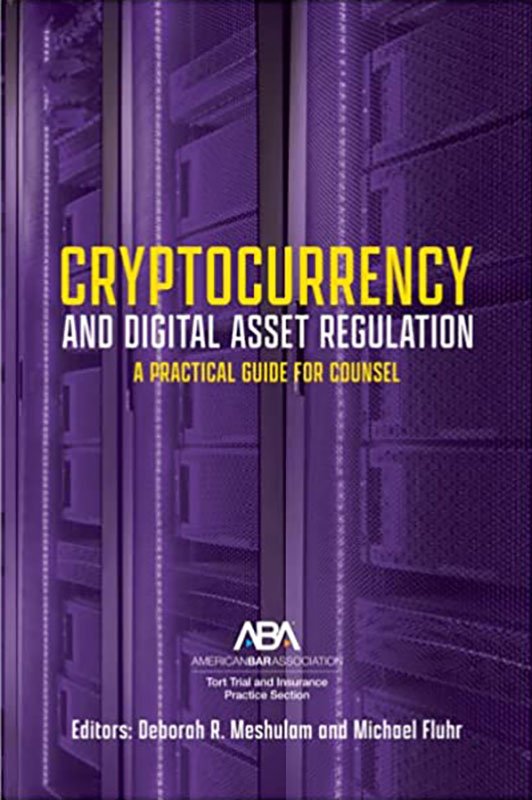
Cryptocurrency and Digital Asset Regulation: A Practical Guide for Multinational Counsel and Transactional Lawyers
Finally, a little bit more about DLA Piper. It just about handles any legal needs for clients wherever they do business on Earth. Global offices sit in the Americas, Europe, the Middle East, Africa, Asia Pacific, and more as well. Example areas of mastery include arbitration, banking, competition and trade, corporate crime, and corporate finance. Additionally, they are strong in legal matters pertaining to employment, energy, hospitality, insurance, intellectual property, litigation, and M&A. The list goes on. Welcome to the show. Michael and Tom, it is great to have you here.
Thanks for having us.
The legal system is well beyond me. I’ve studied a lot of complex things. I admire anybody who goes deep into law. It is great knowledge to have. You are direly needed in this particular industry with so many changes and things going on. DLA Piper is very impressive. You’re all about helping businesses grow and doing it well by applying late-breaking insights in legal and commercial practices. Can either of you guys give me any background on DLA Piper, in general, and how the organization came to be? A good way to approach this question is a little bit of background that you know and also how you got there, maybe from each of you.
The firm was here long before I got here. Thank you for the wonderful introductions, including the overview of the firm’s breadth and expertise. In general, what we have been able to accomplish here and during the time we’ve been here is to place the firm on the map when it comes to Web3. It has been an incredibly important practice area for our firm and a growth area for our firm. Lawyers like Mike and others who we’ll talk about or others that we have come across have played an incredible role in placing the firm firmly at the top of the list of Web3 firms.
The firm has tremendous roots in Silicon Valley and technology both in the Bay Area and in the tech corridor down in Southern California. It’s an international firm that’s created as a result of a number of combinations over the years that resulted in what is one of the top 2 or 3 firms in the world in terms of size. I will also add that what I love about what we’ve built here is it’s a collection of lawyers and professionals who have tremendous connectivity and overlap in ways that make working together synergistic. Ultimately, we’re a service business delivering top-quality service comprehensively to our clients.
Michael, do you have anything to add about your experience or how you got to DLA?
I’ll give you a little background on myself and then how that dovetails into DLA’s blockchain practice. I came to DLA a few years ago. Before that, I was helping to build the blockchain practice at a different firm. We were doing a lot of work for a very large cryptocurrency exchange that centered around litigation. I was also starting to build a larger practice that included regulatory counseling, commercial counseling, and IP licensing with a variety of clients in the blockchain space.
There weren’t a ton of attorneys who had a deep understanding of the industry, the space, and the technology, which in this particular industry is very important for a lawyer to have. We were seeing increasing demand. At the time, I was looking for a place that had a growing blockchain practice and a large platform, particularly in the tech industry in the Bay Area and California where we continued to build that practice, so I came to DLA a few years ago.
At the time, like a lot of firms or at least a lot of good firms in the blockchain space, there was a rapidly growing blockchain practice with attorneys from a variety of different areas. You had corporate attorneys who are helping early-stage blockchain companies figure out how to raise capital with maybe both equity and tokens. You had some of the media attorneys, including Tom and his group, that were starting to do projects in the NFT space with their media clients. You had regulatory attorneys and litigators who are starting to counsel companies on how to comply with all sorts of various regulations and participate in litigation.
Over the past few years, with the help of some amazing colleagues at DLA who I’ll name in a second, we’ve built a core team of blockchain practitioners who are handling all sorts of matters from tax advice to DeFi protocols to capital raising for early stage companies to NFT licensing and advice to DAO work. I do want to give a special shout-out to some of the leaders and pioneers in that group including Margo Tank, Deborah Meshulam, the venerable Mark Radcliffe, James Williams, and Tom.
It’s a fascinating space to be in and to grow. This isn’t your basic real estate transactional law or something. It’s not like John and Jane buying a house. This is cutting-edge stuff where you have to be at the forefront and you have to be willing to almost be co-creating an industry as it builds. It’s very exciting for you guys to be in there.
In all of the things you listed, there are a couple of areas that have the most excitement and creativity around but also a lot of messiness that probably creates a lot of interesting strategies and conversations from the legal side. Those being NFTs and DAOs.
The messier it is, the more they get paid, so I don’t think they’re worried about that.
I’d love to hear about how you guys help people think strategically around NFTs and DAOs, in particular, where you see a lot of creativity and people experimenting all the time. In DAOs, it’s exceptionally messy and still nascent. There are still questions around, “Will this ever be anything other than illegal?”
To prelude to that, Web3, NFTs, and blockchain, it is the intersection of some very important legal areas. That is where some of our colleagues and the team here are critical to it. It’s regulatory in many ways as you guys are probably very well aware of as well as your audience. It is unsettled law, but prosecution around a lot of what’s happening in Web3 and blockchain by various regulatory authorities. Intellectual property is incredibly important to most of what this space involves like venture and venture capital. That’s the funding source for a lot of what happens here in pure technology. It’s this culmination of expertise in so many different areas that come together to be able to provide this package of services to clients.
DLA Piper: Web3, NFTs, blockchain – it really is the intersection of some very important legal areas.
Some of the areas you mentioned, Zach, DAO is a very rapidly developing area as we speak. Laws are being introduced. Bills are being introduced in states including California where Mike and I try to bring some certainty to the DAO world which has a lot of uncertainty from both the legal perspective and also regulatory and other aspects.
For us, one of the things we try and do is share knowledge. We have an internal email group where we are constantly not only saying, “I saw this article,” but then, I’ll see something and I’ll post it. The next thing I know, Mike has dissected it with incredible detail of what it means and the implications, and then someone else will chime in. We’ll do that every day. It’s a lot of fun to see that because we know we’re on the bleeding edge. We’re doing work in an area that 10, 20, or 30 years from now we’re building the foundation for with our clients as legal advisors.
Do you have anything else to say on that topic about the challenges and issues you guys are hashing out, Michael?
To go back to the question in terms of dealing with what you call messiness, I’d probably pick a friendlier word. It is interesting because as is true for a lot of technologies, you have technological entrepreneurs who are pioneering and leading the way. Lawyers then have to figure out what they are doing and how are existing laws going to apply to that.
NFTs and DAOs both present a good example. For NFTs, what you saw in the early days of NFTs is creators saying, “I’m going to sell an NFT,” which is just a digital certificate in a lot of ways. I am going to associate it with this piece of media that’s going to maybe live off-chain somewhere. I’m going to sell it to you as a package and say, “You’re going to have an NFT of this piece of artwork.” People said, “That’s cool. I’ve got an NFT of this picture. I’ve got an NF T of this sound recording.”
From a legal perspective, the question becomes, what does that mean? What does it mean to have an NFT of a picture? Lawyers get involved. We say, “The thing to own when it comes to a picture is intellectual property. Maybe there’s an intellectual property right here that the creator can own and then either transfer or license to the holder.” You saw the emergence of these assignment and licensing regimes of intellectual property.
The DAOs presented another example where you had people say, “We’re going to farm a DAO. We’re going to create a smart contract and distribute a governance token which is going to have some governance rights maybe over this underlying DeFi protocol,” to use an example. The question then arises, what kind of organization has been formed, if any?
Lawyers have to come in and start trying to figure out what that means for a group of people to get together and say, “We’re each going to exercise some limited governance right over this DeFi protocol. Does that mean that we can incorporate it? Does that mean we can call ourselves an unincorporated association, like a partnership or even a nonprofit association? Can we say we’re not any organization at all and we’re just independently out doing our thing?” These are the things that lawyers then come in once the entrepreneurs have built products. They’ll say, “How do we fit these products in and work with existing laws to secure favorable and workable legal treatment so that these entrepreneurs can go out and do their thing and make the next products for tomorrow?”
I can’t help but be reminded of the story which you guys may or may not be familiar with. It may be too pop culture-y for you. I don’t know. There’s the monkey selfie where the monkey got the copyright because he’s the one that pressed the button. He had somebody’s camera. It’s funny that we’re doing monkey pictures now with NFTs. It’s a similar dance around, “Who owns this monkey picture?” What does that mean?
I would like to point out these are not monkeys. They’re apes.
People like to say that. I appreciate the second description of all that from you. Let’s jump over to the metaverse here. That has its own set of legal complications. I wonder if one or both of you could break down some of the things that you deal with in the metaverse and how DLA might be getting their hands dirty helping out with that.
The first thing I’d begin by saying to dispel notions that folks may have about the laws that apply when you’re foraying into the metaverse is there are laws. Those laws are the same ones that we live with every day in the real world. It’s not a different planet. It’s not a different universe. It is a virtual world that exists on this planet. Depending on the jurisdiction you live in, those are the laws that are going to likely apply to you for whatever conduct or actions that you take there.
One of the most important things that I deal with because my background is media and intellectual property are intellectual property rights in the metaverse, which start to get interesting and at times, murky. What happens in the metaverse often, which is a great thing about the metaverse, is a piece of intellectual property gets introduced and then people build on it. It develops into something that we call a derivative. There are questions about who owns that derivative work or that new creation. Is it whoever created it in that space? Is it the platform that runs that metaverse or is it the original creator?
There are a lot of things, depending on the terms of use for that platform when you enter and use it. It may depend on copyright laws in a particular jurisdiction. There is a lot at issue there. For the average person who maybe comes in and introduces a piece of intellectual property in the metaverse, they may not care that much about aspects around ownership or copyright. Let’s say you’re a major brand, a major Hollywood studio, or a creator. You want to be very careful when you’re going into that world about what can be done with your intellectual property and who can gain any part of the ownership of it.
These are the types of things we’re talking to clients about quite regularly, and how to manage those risks. Some are more risk-averse than others. The important thing for us in our role is to help them navigate the risks there and mitigation options. Ultimately, clients have to make their own decisions about what to do there.
At the risk of diving ahead first down in one of the deepest rabbit holes, I can’t resist asking you guys for some perspective on one of my favorite topics in the world of Web3 and crypto. That is the concept of ownership. We use that word a lot. It has a more understood and established meaning in everyday outside of the metaverse and outside of the Web3 world. In certain jurisdictions, it also has a very specific definition.
Previously, it has required identity, whether it’s a natural person or a business entity owning something. In Web3, it might be more accurate to say, “I’ll admit that I happen to control the keys to a wallet.” At what point does that cross over into maybe more established versions of ownership? It seems to me like branching from that comes a lot of interesting conversations around intellectual property in particular.
If you were to ask even the average attorney, “What does it mean to own something?” I have this phone that I got. This is going to be one of the questions later, but what does it mean for me to own this phone? At the end of the day, what it means is the law is going to recognize my right to do certain things with it. It feels a bit circular, but is that what ownership means? It’s that the law is going to allow me to control it and not let anyone else control it. I have certain rights to do what I want with it. We end up asking ourselves these same questions when it comes to digital assets like cryptocurrency.
You’re exactly right. If I control the keys and that is the way to think about it to let’s say a given address on Ethereum and metaphorically stored in that address are certain tokens, do I own those tokens? I would argue the answer is an unquestionable yes. We have a lot of court cases that talk about certain rights to cryptocurrency. They’ve been treated as property under tax laws and under laws of civil liability for purposes of theft. It seems clear to me that you can certainly own these digital assets on a blockchain as much as you can own other types of assets.
Around the boundaries, there are all sorts of unanswered questions including maybe the one you were asking before. Who can own these sorts of things? Can a protocol own tokens? There are no clear answers but you might ask, “How different is that from saying a vending machine owns the snacks inside?” Normally somebody controls the vending machine.
What if I share the key with a spouse, a friend, or accidentally with a hacker? It’s almost like by copying a key at Home Depot for $0.29, I give 50% equity in my contents or my safe.
I don’t think we do.
I feel like that’s so appropriate.
We indeed did.
There’s also the metaverse, right?
Yeah. It’s fascinating.
Mike, collabs, what do you have?
No comment.
Sure. Let’s go.
Michael, do I have your consent?
It was very expensive.
You got to drop your name now, Mike.
I’m going to say an acoustic piano.
Fair enough.
Tom?
That’s nice. What about you, Michael?
Michael, do you have any comments on that?
We’ve had them on. That’s great.
That’s what we talked about.
Who did you have?
It’s eight minutes for me.
That’s perfect. Does that cover everything?
I think so.
Important Links
-
Facebook - SnakDaddy
-
SoundCloud - SnakDaddy
-
Instagram - SnakDaddy
-
Tom Ara – LinkedIn
-
Michael Fluhr – LinkedIn
-
Spotify – Edge of NFT Podcast
-
iTunes – Edge of NFT Podcast