Top Podcasts
The Gameplay Experience With Dreamer From DeFi Kingdoms
For games to succeed in the Web3 space, they must go beyond just asset ownership. They should also make the gameplay experience highly engaging to keep players looking forward to more updates. In this episode, Dreamer talks about how he focuses on navigating the Web3 gaming industry through DeFi Kingdoms, an immersive fantasy RPG game with beautiful pixel art, tokenized resources, and Hero NFTs integrated with DeFi protocols. He talks about the inspiration and collective effort behind the game, as well as its in-game economy, hero creation system, and upcoming combat system. Dreamer also shares his insights and takeaways as one of the finalists of the reality show The Next Crypto Gem. For this episode’s Hot Topics, they discuss how Stoner Cats NFT drew a $1 million penalty from the SEC and the most immersive blockchain summit to be held in the MENA region this October.
Listen to the podcast here
The Gameplay Experience With Dreamer From DeFi Kingdoms
This is Dreamer with DeFi Kingdoms, a cross-chain fantasy RPG game with beautiful pixel art, tokenized resources, and Hero NFTs where strategy trumps luck. I’m on the Edge of NFT, the most fun strategy for keeping the tabs on all things Web3.
NFT-curious audiences, stay tuned for this episode to learn more about how to go from being a VP at Goldman Sachs to being a president of a gaming company, how to thrive and learn from being on a reality TV competition, and finally, what led to Stoner Cats’ company, including founders Mila Kunis and Ashton Kutcher, settling for $1 million with the SEC.
It’s official. You can dive into the captivating world of artificial intelligence with the Edge of AI Podcast. Join us as we explore the frontiers of AI and its impact on our lives. Subscribe on your favorite podcast platform and follow us on Twitter @Edgeof_AI and LinkedIn for exciting updates and insights. You can also visit our new website, EdgeOfAI.xyz.
This episode features Dreamer, the President of Kingdom Studios, which is the development team that brought you DeFi Kingdoms, the tokenized RPG game that came in on the top four of the hit reality show, The Next Crypto Gem. Prior to Web3, Dreamer was a Vice President at Goldman Sachs where he specialized in hedge funds and alternative investments in the Risk Division. Dreamer’s background is not only in banking but also brings financial acumen and the unique strategic perspective that uniquely positions him as a leader in DeFi Kingdoms where precision and visionary thinking are paramount.
DeFi Kingdoms is an immersive fantasy RPG where you step into the role of a Commander. Players can build their legion of unique Heroes, engage in epic PVP duels to rise as a legendary champion, test their combat skills against mythical creatures in the Combat Testing Grounds, and explore two distinct realms and more to come, each with its resources and objectives. Dreamer, it’s great to have you. How are you doing?
I’m happy to be here. I’m doing pretty well. I finished up TOKEN2049 in Singapore. It was a very good trip but a long flight home.
We got back as well a little earlier than you. Did you catch the F1?
It was getting started. 2022 was the same. I show up. It was a long week. I’m like, “I’m so excited to get home.” You’re bummed you’re leaving right when all the fun is getting started. I didn’t catch much of it. A lot of Singapore shuts down. You start hearing the Time Trials on Friday night, which is pretty cool but I did not get to go to the actual event. I used to live in Singapore. When I did, there was at least one of the years when I was able to attend. It’s pretty fun.
It’s a good time. It was great to run into you in Singapore. I’ve been seeing you a lot lately. You have been building quite a lot over the last few years. It’s an honor to have you on the show in this official capacity doing a full show together as opposed to a short clip. I’ve been a fan of the game and a player of the game since the early days. I own my suite of Heroes and have watched as you created this engaging world that took Web3 by storm. A lot of the games before you weren’t nearly as sophisticated. The bars have been elevated since then but thank you for pioneering in this area. I would love to start the interview by asking you this. What inspired you to create DeFi Kingdoms? How is it different than other fantasy RPG games both in Web2 and Web3?
The initial inspiration came from two people. One is Frisky Fox and one is Pie Face. They were old coworkers. We were talking about gaming and blockchain. We thought, “How cool would it be if there was a Final Fantasy-like game where everything in the game used blockchain technology? How could we get started there? Maybe we take a DEX and make it game-like so that people can understand crypto better and start from there?” From there, people were drawn to the idea, including myself.
A lot of people on the team came in at various times and a lot of people that were there at the beginning have since moved on. It has been a combined effort from community development, art, music, business development, and so on. Over 100 people have contributed to DeFi Kingdoms. Although I’m the president of the development company, through the ups and downs, I have been working with many others to make decisions as a group. The game that you see, the success, and the troubles that we have worked through are a result of a large number of people, which extends to the broad community.
That vision came to life when we started to see an immediate response on a chain that nobody knew of back then. People were figuring out how to bridge a chain that they never thought they would use to get access to this new idea of gamification of DeFi, not stopping there, and starting to tokenize an RPG game. If you’ve ever played an MMORPG, you know that they’re not simple. It’s not like you’re going to take a Maze Runner or another simple game and convert it to Web3. You have to build it from the ground up. One of the main characteristics of these types of games is the in-game economy.
You’re farming for different items. You’re using those items to craft weapons and potions. Your actual characters are getting stronger. All of this transfers so well with Web3 technology because they all hint at ownership and exchange of ownership in one way. That’s where the DeFi part came in. Making your DEX, NFT marketplaces, and even a DEX that’s more of an order book-style to cover all the low liquidity items was imperative to create a foundation where the real game could be built.
You unpacked a lot and something that stuck out for me is the complexity of setting something like this up. To be able to set up the DeFi elements of an MMO is a tall task but there’s something else that I want to go back to for a second that was a tall task. It’s the transition that you made from Wall Street over into gaming. Those are two very distinct types of career paths. What have been some of the surprising synergies between these seemingly disparate fields? How has it helped drive innovation at Kingdom Studios?
It’s a different lifestyle and work environment. However, there’s one thing that was pretty similar for me. I didn’t come from a long line of people in banking. I grew up in Maui. I had a pretty simple education at public schools. I paid for my education at a school that isn’t great on paper but I worked hard to learn, started trading while I was in school, and did some side education like CAIA. I don’t know if you’ve heard of CFA and CAIA. They’re self-taken exams to progress your knowledge.
Every step of the way, I was a self-starter. I didn’t have somebody holding my hand, somebody who has done it for generations before, or a network that gives you an easy in. It was the opposite. I decided early on that I wanted to work at Goldman Sachs because they came to my school at one time and I was like, “It’s the best investment bank in the world. Sign me up.” When I showed up, they were like, “You don’t fit the bill. You’re not the guy that we usually hire.”
Although I came from a diverse environment, I didn’t appear diverse. I worked hard at my education but on paper, it wasn’t very impressive. I didn’t know anybody there. I didn’t come from money. I started as a temp. I was like, “Give me a data entry role.” They gave me a contract for a year. Within two months, I had automated my position and the guy next to me, and they hired me on as an analyst.
At that point, I went on to be the earliest associate in the Risk Division in terms of how young or how long I was there. I was asked to go to Singapore to lead a group out there where I made Vice President early on as well and then sent back to Salt Lake City to cover additional prime services, futures clearing, and other products that started to expose me to crypto.
This was around when Grayscale Bitcoin Trust and CME futures were coming out. We needed that risk to be understood. I started to get excited about the technology and reporting on it with my team. The feedback I got wasn’t as positive. There wasn’t a lot of appetite for risk-taking. It was more about staying relevant while being cautious, which makes sense in a new industry, especially from a large bank like that but I felt a little stifled. I felt like this was a space that had a lot of opportunities. In my position, I wasn’t going to be able to explore it.
When you look at the transfer to Web3, there are a lot of the characteristics I was saying. There is no path in this space. There are no generations of people that are going to tell you exactly how to do everything. You have to figure it out on your own. You don’t have the expertise so you go out and learn it from others who have it and then add on top of it.
You have to continue to push because, in bull markets, people are pretty excited. They’re encouraging. In bear markets, people flee, blame, flood, and get scared. If you don’t have that tough skin or you haven’t learned how to fight for what you want and make the dream that you have come true, a lot of people don’t make it, as we have been seeing in this extended bear market.
I didn’t know your whole story. Thanks for sharing all that with us. There’s one word that comes to mind that sums it all up, which is grit. Grit is essential to any emerging market like Web3 and leading the team that you lead over at DeFi Kingdoms. It’s all clicking for me. I appreciate that context. Let’s talk a little bit about the gameplay and explain it to folks who haven’t checked out DeFi Kingdoms yet but might after this and get hooked. How do the game mechanisms work? What goes into building this legion of Heroes?
To build Heroes, you’re going to have to first learn where they come from. Differing from many other Web3 games or crypto projects, we don’t go and sell anything. We don’t make items, put a fixed price, and then sell it. The gamers or players have control over all of this. If you have two Heroes that have the ability to summon a new Hero, not all do, you can put them together.
Gameplay Experience: DeFi Kingdoms doesn’t sell items with fixed prices. Players have full control of creating and summoning their own heroes.
Some of the earlier projects called this breeding. When we were developing DeFi Kingdoms, the thought was more around, “These are people. It’s weird to call it breeding.” When you’re talking about cats or something, CryptoKitties make sense but we use the word summoning. You are summoning a new Hero into the realm to fight, adventure, and so on.
The cool thing is it pulls genes from both of the Heroes that you’re using. You have two existing Heroes. They come together. The visual genes, the stats underneath it, and the classes that make up these Heroes come together. You have a random chance to mint or summon a new Hero that could be mythic and has high growth rates. It could be a rare class. It could be visually appealing in different ways or have unique abilities for combat that would be rarer.
This main feature has been the driving force for a lot of people in the game because the Heroes are constantly getting new utilities and features. The game even after 2 years is only 15% done. We have a long roadmap and a lot of features to add. It’s the excitement of understanding how they’re used and then, for example, having two classes that when put together mint a more advanced class.
When I first got my first Ninja, I was like, “Dang it.” You go and tweet it, “I mutated my first Ninja.” People get excited. That’s the core of the early stage of gamers. They could potentially get a rare Hero or a strong Hero. You have to start leveling them up. You go questing, phishing, foraging, mining, and gardening. You play the mini-games, which is like a card game that you play war. You turn over your cards and it randomly selects a stat.
It’s quite simple but the strategy there is we’re building the game. We have seasons where rewards are unlocked in real-time during the season, which is a unique innovation that other games haven’t put in yet where the rewards are sitting on the blockchain. As you climb the rank, you automatically are given real items that carry a real value and are tradable, or you can use them to continue to level up your Hero.
As a Commander of your Heroes, your goal is to collect and level up your Heroes and then make choices on how to use them because you can’t use them all at once. We have a cool feature coming out. It’s the first PVE feature. We have been developing a combat system. Everything I said up to is more gamified, finance DeFi, or the early stages, establishing your Heroes prior to gameplay but from here on out, we’re very focused on gameplay.
We have been developing a combat system where your Heroes come to life. All of their abilities in the NFT metadata get live and you start making decisions to fight things. We have been practicing this in the testing grounds but soon enough, we will have our first player-versus-environment or PVE hunt where you will go out and be hunting monsters within the realms. It’s exciting.
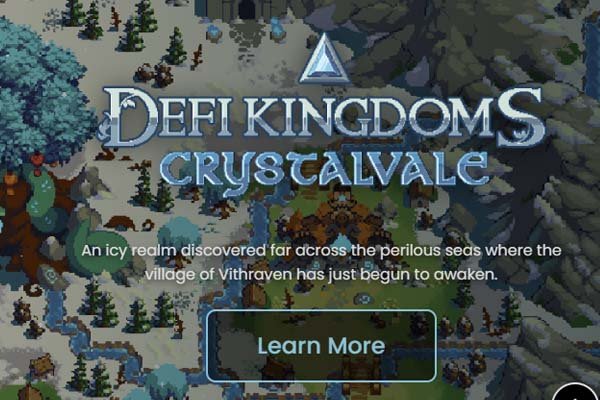
Gameplay Experience: DeFi Kingdom has been developing a combat system where players’ heroes will come to life along with their abilities in the NFT metadata.
There are a couple of pieces that I won’t share yet but it’s related to the type of rewards that you will get from it that’s very consistent with the gameplay you get from traditional MMORPGs. If you think of combat turn-based role-playing, managing resources, leveling up your Heroes, and having the excitement of growing your legion with hopefully more legendary, mythic, and rare Heroes, that is where we are at.
You spoke to the excitement around this. You keep adding more different gaming elements and content pieces that have thus garnered a very passionate player community. You keep getting feedback from them to create more of these cool things that they can do in the game to keep coming back for more so much so that you had a pretty significant impact on The Next Crypto Gem show. Can you give us some of the key strategies and insights that set your product apart from other competition that was on The Next Crypto Gem?
The Next Crypto Gem is a show that’s being pre-screened but it will have hit the Insight TV distribution, which I believe has over 300 million homes worldwide and a number of streaming services. People should check that out. It has judges that many might know like Brian Evans who’s a major investor in the space with an extra focus on Web3 gaming and Layah Heilpern who is a public figure with a number of views, many of which are related to crypto and bitcoin, a very interesting person, and a smart woman, and then George of CryptosRUs. Many people in crypto are there because of his videos.
There were three awesome judges who looked at a number of submissions. There were sixteen that made the semi-finalists, and then DeFi Kingdoms was one of the final four. The show has about seven episodes. It’s the first foray into educating the broad public in a way where you see people in the space get humanized. We’re competing and doing challenges. It’s meant to be entertaining but the primary goal is awareness, trying to tap into the traditional non-Web3 market that might only see headlines or only think that crypto is about currency, gambling, or something else or see all the bad stuff that comes out and think that everybody in crypto is bad.
The primary goal is to break those barriers down to hopefully teach a little bit about the space and then show real people who have committed their lives and dedicated themselves to building the technology. You could think about it as The Apprentice meets The Voice meets Shark Tank or so where there are challenges. There is a reward. There is some pretty grueling judging. Hopefully, it’s a little bit of fun.
George is one of the guys that I followed early on back in 2017 or 2018. He has been a grinder continuing to create content. I have a lot of respect for George. He’s one of the many inspirations for us in terms of doing our show and a lot of content as well. We’re past episode 300. He’s very passionate about educating the masses and creating snackable content that resonates with the broader market. I love what this show is all about. What do you think it was about DeFi Kingdoms that stood out to the judges and the viewers?
On the show, of the 4 finalists, 3 of them are games, and 1 of them is more of a memecoin but there’s an interesting story as it launched in the bear market and was around a community. Even though there are three games, they’re all quite different, one of which is very much focused on maximizing the game portion and integrating blockchain technology without it being forefront in your face. It’s a strategy to promote mass adoption in this space.
They brought some interesting things to the show that I learned. For me, it was a great learning experience because it was like free consulting. We had all these incredible people judging us. I had competition in this space where I was looking at what they might be doing differently. That was one focus and I realized, “We haven’t been as focused on breaking down those barriers to entry. We’re DeFi Kingdoms. We’re in-your-face Web3 gaming.” That was an interesting polarized approach.
Another one is doing a lot of everything. DeFi Kingdoms has the DFK Chain. It’s powered by Avalanche Subnet. We were their first subnet. We have done over 500 million transactions on that subnet, which is its own blockchain. One of the other games has its chain as well but they have a lot of simpler games. They’re trying to create a franchise of games in the space following trends that have been popular before. For DeFi Kingdoms, it’s not the simplified blockchain technology in the background or an easy-to-get-in-and-play-right-away game. It takes a lot to onboard. It’s not a do-a-little-bit-of-everything type of game. We have a very specific brand and a long roadmap to build this detailed game.
The judges liked that it was more complicated and multifaceted. We have been around for two years. It’s a little controversial launching in the bull market, having everything crash in the world, figuring out a way to survive at the Harmony Bridge hack, and so on. That also adds an interesting narrative. Our team’s ability to deliver a product that’s powered by hundreds of smart contracts on two different chains over two years was one of the reasons that they felt confident that we should be in the top four.
It’s something cool to see that 3 out of the 4 finalists were in gaming. It speaks to why people like the story that a game can bring. It can bring out so much creativeness out of so many different facets. What you described and what’s setting apart DeFi Kingdoms holds true and is another reason why people are as passionate as they are about DeFi Kingdoms. Going through that journey, competition was very fierce and I’m sure you had to go through a lot. What do you think were some of those key lessons that you had to discover about DeFi Kingdoms that you were able to take and keep growing?
What was the most recent thing you purchased?
You are a board hoarder, noted.
We have a bonus question, Richard.
Either.
Important Links
-
@Edgeof_AI - Twitter
-
LinkedIn - Edge of AI
-
@DeFiKingdoms - Twitter
-
@DreamerDFK - Twitter
-
@Dreamer.DFK - Instagram
-
Discord - DeFi Kingdoms
-
iTunes - Edge of NFT
-
Spotify - Edge of NFT