Top Podcasts

The Edge Of Gala: Diving Into The State Of Web3 Gaming With Michael McCarthy From Gala Games
How cool would it be if you could take ownership of your own content as you’re playing a game? We’re afraid it’s already happening and Gala Games is once again at the leading edge with their latest contribution to the rapid development of Web3 gaming. In this episode, Michael McCarthy hops in on the Edge of NFT to talk about Mirandus, a fantasy MMORPG that allows players to truly own their content. This game us unlike any other you’ve seen in the world of epic fantasy RPGs, and its unique take on the play-to-earn system is something both blockchain enthusiasts and avid gamers will want to learn about. If you’re either of those people or both, tune in!
Listen to the podcast here
The Edge Of Gala: Diving Into The State Of Web3 Gaming With Michael McCarthy From Gala Games
I’m Michael McCarthy from Mirandus, the fantasy MMO Powered by Gala and blockchain technology, allowing players to truly own their own content. I’m here on the Edge of NFT, the show that allows its audience to own the alpha content of blockchain gaming. Keep tuning in.
Stay tuned to this episode to learn what inspired our guest with 30 years of gaming experience under his belt to go all in on Web3 gaming, and why owning your own virtual cemetery Mirandus may be the opportunity of a lifetime you don’t want to pass up, and what were some of the surprising and enlightening insights from a highly comprehensive and data-driven report on the state of Web3 gaming.
It’s official. You can now dive into the captivating world of artificial intelligence with the Edge of AI podcast. Join us as we explore the frontiers of AI and its impact on our lives. Subscribe now to your favorite podcast platform and follow us on Twitter at @EdgeOf_AI and LinkedIn for exciting updates and insights. You can visit our website, EdgeOfAI.xyz.
Welcome back to our special new recurring segment Edge Of Gala. We’re catching up with the team at Gala, given the breadth and depth of this special growing ecosystem. For those that don’t already know, Gala Games is where blockchain meets gaming in a revolutionary play-to-earn platform. Imagine playing your favorite games and being rewarded with cryptocurrencies and rare NFTs. Gala games offer a diverse range of gaming experiences all fueled by their native token Gala. This regular segment is sponsored by our friends at Gala, the world-leading Web3 entertainment company that’s reshaping the future of entertainment with blockchain technology
Gala’s journey began in 2019 when they launched Gala games. Since then, they’ve expanded their horizons to include music and film. They empower content creators in emerging talent by returning creative licenses and providing a direct connection to their audience, offering genuine involvement in innovation projects.
In this episode, we’ll focus on some exciting updates around one of Gala’s newest games, Mirandus, with our guest, Michael McCarthy. Michael is an experienced director working in the game industry for 20 years now. He has contributed to many titles in an art design and/or production capacity. He is an execution focus leader with X-Men power of new IP development. He works to understand what the business needs, establish and evangelize the vision, and build great teams to execute against the vision.
He’s worked on the social and free-to-play space. He understands the power of objective game development using data to inform vision, features, and roadmap. We have a lot to cover about Mirandus, the fantasy MMO Powered by gala and blockchain technology, allowing players to truly own their content. Mirandus is a game unlike any other epic fantasy RPG set in a massive world ruled by five-player monarchs. Let’s get started.
I think you got that comment from LinkedIn about me. I have been making games for almost 30 years. I’m almost 50.
Either we have to get a better fact checker or you have to update your LinkedIn profile a little more often.
I hate going to LinkedIn. It’s the worst. Updating my profile is the extra worst, but I will do that. I’ll update it.
You’ve been too busy building games to worry about your LinkedIn profile. We’ve heard so much about Mirandus and what’s going on there. We would love to let our audience know what the world needs to know about this incredible game that you’ve been building.
If you’re new to Mirandus, we’re a 3D MMO. It’s set in an open world. There are no maps so there are no quest givers. Players all begin at the same place and it’s up to them to explore and survive. We’re a single shard, so all players from all over the world will be there together in one place. Players control the economy. They place deeds and buildings and they craft goods necessary to survive and push deeper into the world.
We are a simulation. The world itself is a simulation. This is a big part of keeping the game feeling like an adventure, but our creatures are alive. They eat and sleep. You can’t camp at a response point. You never know exactly where things will be. A lot of cool emergent gameplay happens when you build systems like this. There’s one thing that happened, which was cool. We were playing and there was a buck that the herd followed of deer. The buck was thirsty and started to make its way over to a stream. There was this herd of deer coming through a field. It was beautiful. That was cool.
The graphics look incredible. How big is your graphics team?
It’s not massive. One of the lessons that I learned early on in my career, and I think everyone in game development, who’s had this experience can echo it. If you have the right people, you develop good tools, and you target the right aesthetic, you can move mountains with a very small team. If you start going down the route of a lot of normal maps and specular maps, your team gets massive because you’re creating something very complex. Everything has to be very complex.
We’re more passionate about a reductive style and trying to distill nature into its simplest and most beautiful forms, colors, and shapes. We’re trying to bring that into the world of Mirandus. We like it. It serves some interesting purposes too from a gameplay standpoint. We’ll get to how dangerous the world is of Mirandus. When we’re talking about Mirandus, it is dangerous. If I were to drill one point home to the community or to people who are new to Mirandus, it would be dangerous. The goal of the game is to truly bring adventure back.
When you die, there’s pushback in the system. You can lose XP. Having that world creates a different environment. You walk around afraid. You listen for a snap of a twig in the forest. You don’t just run in, die, and respond. You think about how you want to approach enemies. Our community wants that. They’ve spoken to us about it. They even have a saying called #MakeMirandusHard. They want that experience. What’s fun about it is when you’re playing a game where you invest time to become more powerful, it’s less meaningful. In this game, one of our sayings is and we’re hoping it’s true, but when a high-level player walks into a tavern, you already know their name. We’re endeavoring to make players true heroes and famous.
You’re speaking my language. Those are the types of games I like. A big challenge, but there are consequences to dying. Anybody can respond one million times, do some over and over again, and eventually get it right. When there are true consequences, you have to put in a true strategy. I think that pushes your end player to have to be creative, put in strategies, and want to evaluate a lot of different paths in order to progress and move forward through the game. With that, you said you heard back from the community. What is the story behind Mirandus? What inspired your team to pursue this initiative and to listen to the feedback that you’re getting to make it hard?
We started in early 2021 trying to envision what the game would be. Usually, it’s born of something you are missing. You want to play a game like this. Wouldn’t it be cool if we started with that idea and concept and then reached out to our Gala community on Discord? They’re awesome, and to see if there’s any interest. They absolutely loved the concept. It’s the community and their love for Mirandus that fuels us. We’ve brought them along on the development of the game at every step. That’s been awesome. It’s not just our game as the developers, but it’s a game that we’re creating with the community themselves. They get to see everything. We have design ideas and things that we think are good ideas, but we run them by them to see what they think and get their feedback.
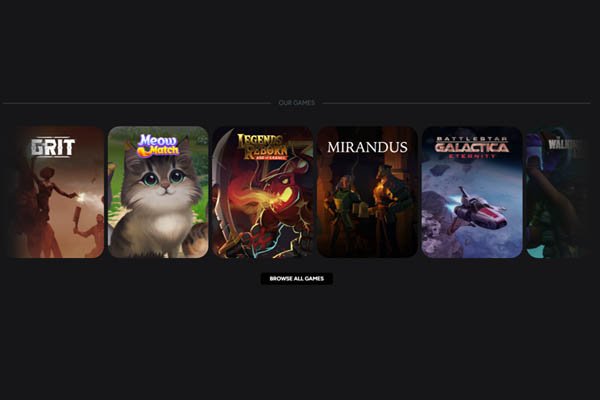
Web3 Gaming: It’s really a game that we’re creating with the community themselves. They get to see everything and we have design ideas and things that we think are a good idea but we run up by them to see what they think and get their feedback.
It’s been a different way to develop it and I love it. Normally, you can’t show anyone anything and then you get to the end, and some big $20 million marketing budget tries to put lipstick all over your game and it sucks. One of the things that always happens to us as game developers is when you tell someone you make games, they’re like, “What’s that like?” We realized, “Maybe the community would love to know.”
We show them everything, little prototypes and process of making the art and the challenges with engineering, not just the bright side of development but also what if you’re pursuing something and it ends up stinking, how do you trash it and go back, and the twists and turns of development as well. We love our community. They’ve been awesome. We try to include them in everything we do. They’re the passion behind Mirandus. Without them, it wouldn’t be made at all.
There’s something apropos about what you’re sharing. Mirandus is about facing fear and treading lightly in a lot of ways. Your approach to game development is facing the fear of making mistakes and picking the pieces back up again. That’s cool. This is a game that is being developed by Gala. From having Jason on, you guys work with outside studios as well, but this is something that you guys are building in-house. How did you stumble upon Gala games and decide to get in the mix personally?
I was listed probably as a co-founder of the company. I was there in 2019. We were working to try to envision what this network could be and what blockchain was. I was completely new to blockchain. I was being brought into meetings and they were sitting me down and like, “Mike, why don’t you watch this video on how Bitcoin works?” I was completely new to it. A lot of people are going through that. They’re new to it and trying to figure it out. It’s an okay place to be in the dark about it and learn how cool it is and how neat it is. I’ve been there pretty close to the beginning and worked hard to try to make Gala as cool as it possibly could be.
Townstar was where I started. That was a game that was in development. That was the first game on the platform. That’s how you have to make a platform. If you’re making a platform, we call it eating your own dog food. You have to make the platform. The platform is a lot of work. It’s the front-facing thing users see and the eCommerce site behind it. There’s the Gala chain itself, which has been years in development and is now live, amazing, and critical to the games that we build because a lot of chains can’t support the numbers of transactions that we need to perform inside the game. There’s a lot there. There’s a lot we’ve had to build. I’m proud of it. I think we built something cool.
It shows. When you think about building a bridge, a skyscraper, or something, it’s not just the raw materials or the engineers. It’s all the communication that goes on with all the different stakeholders to get that thing stood up. That becomes part of the DNA of the end product.
There are many hands all sculpting clay at the same time. We made some mistakes. I’d certainly made some mistakes. We over-leverage the Ethereum network early on and didn’t understand what transaction volume might look like and what those gas fees would look like for our players. It’s also new. Everyone who’s in this space is taking shots on goal and trying to figure out how best to utilize this technology to empower players. That’s the mission.
That’s true consistently in other areas. Eric, one of the founders of Art Blocks, acknowledged that everything he did in the very beginning was a pure experiment. Don’t try this at home kids. That makes sense. Let’s dive into the game a little bit. Part of the uniqueness here with decentralization blockchain is the concept of ownership shifts. In your case, this is very much a player-owned economy. What are some of the rewards of playing the game and how does that economy work?
There’s a fiction and a narrative to the world that lends itself to a player-owned economy. This is an unexplored land. Our players are the first to land in this world and try to establish towns, build buildings, and craft the things they need to survive, weapons, armor, food, clothing, and sails for their ships. Players all have to build and create this to survive in the land. Player-owned economy in a world and a setting like this makes a lot of sense. We’re trying to simulate a fantasy world. Part of that is that players have to make it here, and then survive and support each other to push deeper. From a reward standpoint, I don’t know if I even think about the word rewards as much.
It’s like, “If you play this, you get a reward.” We’re just trying to keep everything on the chain. It’s what our players want. When you loot a creature, gather resources, and craft stuff that’s valuable to other players in the game, it can make you powerful. Game items that we have have value inside the game and everything you craft is what our target is. It has value inside the game then it can be bridged out to Ethereum as an 11.55. You can take it out of the Gala chain network and over to Ethereum if you want.
Having that player economy piece is something that a lot of people from Web2 coming over to Web3 are interested in but don’t necessarily know how to tie the two yet. Things like Mirandus and how you’re going about this is making that invitation more welcoming and having a community that’s helping to teach some of these people how to do some of those first steps helps with understanding how they can be empowered with that type of player economy. You were getting to the core of what makes a lot of that ecosystem thrive and what people need to prosper in the game. It’s around Materiom. Can you explain what that is and why that play is a big part of the game?
Materiom is magic. Beyond all the things that you have to craft and build, Materiom is manna or magic in the world. It can be found through Mirandus. You can kill a creature and find it on the creature. You can find it in secret locations. Every single magical act you perform in the game requires Materiom. If you cast a spell, that’s magic and it uses Materiom. You can resurrect without penalty. You can come back magically fresh and new, but that’s magic and requires Materiom. You can complete a craft. If you don’t have all the resources, you can magically will it into existence. It’s a magical act. Anything that is using magic is using Materiom. Materiom is the items that are powerful in the game, but you can also be bridged out of the Gala chain as an ERC-20.
You also have these exemplars that folks can purchase. What are those all about?
Exemplars are cool. They are avatars. Players think of them as elite avatars. Each one has a special ability. You can be all the classic fantasy stuff. You can be an Alpha halfling, an ork, a dwarf, or a human, but each one of these has powers. You could get an ever-flow elf and they cast spells more proficiently. You can get a clear-blood ork and they’re immune to poison and toxins. What’s cool about them is that there are 50,000 of them. This is one of the Web3 things that you can guarantee players that you can’t necessarily in the Web2. There are 50,000 exemplars. There will never be more than 50,000 exemplars. It’s on chain. You can see it.
As we’re talking, I see that elves are sold out, halflings are sold out, humans are almost sold out, and the orks are coming up at the end of the pack. Do you have any sense of why the elves and halflings were more popular?
They’re scarce. They’re rare. One of the things that I love about Lord Of The Rings is there’s this moment where they’re in the forest and a group of elves walk by and it’s like, “Holy crap, there are some elves in the forest.” They’re rare and elusive. We wanted to create that here. While there are 50,000 exemplars, there are only 1,000 elves that will ever be in the game. You will never see the elf unless it’s 1 of these 1,0000. Seeing a group of them is cool and is a big deal. It’s true that about 90% of them have sold out if that’s about right or maybe a little bit more. To play Mirandus, you must own or rent one from another player.
You can buy one on the secondary market, like on OpenSea. There are some on OpenSea. The coolest way probably to get one is we’re about to launch what is called shipwreck crates. They’re a bit of a mystery box. They’re fun, but to come to the land of Mirandus, there’s only one clear route and you come on the King’s Galleon. That’s how the game begins, but there are other people who went for it and didn’t make it. Their ships have been destroyed and their stuff is washing up on the shores.
This is the players’ chance to get it. There’s a cool sale coming. We have loaded up with most of the remainder of our exemplars, which is there are about 6,000 or 6,500 exemplars on there. That’s a cool way to get it. Along with other prizes, there are deeds and buildings and all sorts of stuff in it. The part of making a game and decentralizing is getting everything in the player’s hands. I don’t want stuff like this in the store. I want it in their hands. I want them to be able to place these cities and build these buildings and play. It’s going to be a pretty low-cost way, we’re hoping, to get stuff in people’s hands so that when the game comes out, they can go for it.
These crates are like a 0.15 Eth. It’s pretty reasonable for all sorts of exciting possibilities. You can get in them relative to the cost. We’ll share some of the visuals with our YouTube audience. I encourage you guys to check the show out on YouTube or go to Mirandus.game and see for yourself some of this stuff.
We touched on a couple of them, but I always like to learn about some of the endgame assets that people or players can play with. You mentioned deeds and buildings, but I was curious about what are some of the other types of endgame assets that people can get excited about.
Deeds are where a lot of it begins. Deeds are like a blueprint. There are places in every zone where you can stamp down the skeleton or a blueprint of a town, and other players can come to that town with the buildings that they own. They can place forges, tanneries, and tavern stables. You stamp down your deed players own the buildings and they own and run their own commerce there. You can buy the exemplars. You can own those. You can own mounts. I think those are gone.
Firebrand Steeds, they’re called. They’re pretty cool. The items you craft you can own. Obviously, the Materiom you collect, you own. We’re trying to do everything. We include our community in this. When we ask them, “What do you want on chain?” The answer is everything. As much as possible, there are things that we know and have planned for and have announced. We’re trying to think through additional ownership. classes even, and spells. Anything we can put on the chain, we try to.
I peeked at it quickly. I skimmed over it.
I’m busy.
Significantly less. It didn’t exist.
You can go to Mirandus.game to learn more about Mirandus. There’s some information there. Search Mirandus on YouTube. There are lots of videos. Go to Gala.games. That’s our central hub for a lot of stuff that we’re building and things in production. Search for Gala Games and on Discord. That’s where our community meets. I don’t even know how many people we have there now. It could be 100,000. Every game that’s in production, we’re there. We’re on Discord. We engage heavily with the community. We show them, “Here’s what we’re doing. Here’s what we’re building.” Discord is a wonderful central hub for us.
Important Links
-
Michael McCarthy – LinkedIn
-
@EdgeOf_AI – Twitter
-
LinkedIn – Edge Of AI
-
Jason Brink – Past Episode
-
Spotify – Edge Of NFT Podcast
-
iTunes – Edge Of NFT Podcast
-
@EdgeOfNft – Twitter