Top Podcasts
Shaping The Future Of Commerce With Lola Oyelayo-Pearson From Mysten Labs
The highest evolution Blockchain can achieve is becoming a part of the internet and ceasing to be the place where you go to trade. Lola Oyelayo-Pearson of Mysten Labs is actively shaping the future of commerce online by reimagining her path in the most significant way. She shares their unique model called kiosk and how it aims to change data and content ownership, making NFTs more accessible and seamless between Web 2.0 and Web 3.0 platforms. Lola also shares the genesis of Mysten Labs and how she utilized her vast experiences at Shopify in bringing e-commerce to the next level.
Listen to the podcast here
Shaping The Future Of Commerce With Lola Oyelayo-Pearson From Mysten Labs
I’m Lola Oyelayo-Pearson from Mysten Labs, where we’re redefining the playbook for the future of commerce on blockchain. I’m here on the Edge of NFT, the show that’s redefining the playbook for the best Web3 content.
Stay tuned for this episode to learn what compelled our guest to reimagine her path for shaping the future of eCommerce and depart a great role at Shopify, why everything on Sui is an NFT, and how this changes the equation for what’s possible. Finally, how loyalty and reward programs are being flipped on its head. It’s official. You can now dive into the captivating world of artificial intelligence with the Edge of AI Podcast. Join us as we explore the frontiers of AI and its impact on our lives. Subscribe now on your favorite podcast platform and follow us on Twitter, @EdgeOf_AI, and LinkedIn for exciting updates and insights. You can also visit our new website at EdgeOfAI.xyz.
This episode features Lola Oyelayo-Pearson, who serves as the Director of Commerce Products at Mysten Labs. She’s at the helm of shaping a commerce roadmap for the suite blockchain, guiding Mysten Labs, tech innovations for commerce, and collaborating with Sui ecosystem partners to fulfill their commerce goals.
Lola** spearheads a dedicated team of product managers overseeing all Mysten Labs Sui apps, which include Sui Name Service, Sui Wallet, Sui Explorer, and captivating Sui Friends collectible initiatives. Mysten stands as a beacon where brilliant minds tackle foundational challenges to forge the tools for tomorrow. Their mission is to make Web3 secure, dependable, and primed for widespread use. Lola, thanks for joining us. Where are you calling us from?**
I am in Toronto. A lot of people will notice my accent is British. I am another Britt in Canada, which is a welcoming place for us.
My experience with Toronto is you all have a great food scene, but I was surprised by how many good vegan options are there. I’m not a vegan, but you guys have tons of great vegan food.
Canada, and I’ll speak to Toronto, have got tons of options for everyone. It has been my experience. There are lots of vegan options. In the food scene, there are many different nationalities of food represented. You always have options. I have a kid. Unlike London, where sometimes they look at you like, “You have kids.” Here in Canada, any restaurant you go to will have a kid’s menu or option. It’s an easy place to hang out. Canadians are quite chill. I’m having a good time here.
I got back from Dubai. I was blown away by the flexibility and diversity of the food scene there too. They had keto options. They had something for everyone as well. It’s great to see that I can leave LA and get all sorts of cool food. It reminds me that I have to get back to Toronto. We can talk about food for a while. I’d like to start by jumping into your background and what got you pumped about joining Mysten Labs and on that journey. We’ve gotten to know each other a little bit. Your background and philosophy on the future of eCommerce is fascinating. Let’s start there.
I’m under a year into heading up Mysten Labs as a commerce proposition. Prior to this, I was director of UX at Shopify. For a large part of that period, I was leading Shopify’s endeavors to build financial solutions for small businesses. If you’re not familiar with Shopify, they are all about commerce. Their mission is to make commerce better for everyone.
When you lean into that problem for even a short period of time, you get pinched by the narrative and the reality of what it means to solve everyday problems of small businesses, the cornerstone around the corner from you, the brand that you love so much, or the side hustle that you are even picking up yourself.
You get into all of the different challenges that a typical business has to face just to break even. I’ve had previous experience working in retail before Shopify. I was working in finance with Capital One. A long time ago, I was in investment banking. I used to be part of an agency working with all types of customers. You get to see a lot of different lenses. My time at Shopify put me in the seat a little bit.
We’re all entrepreneurs. I had my own store. My sister has a store. You live the problem a little bit differently. What I did at Shopify and how that combined a lot of my previous experience with what I think blockchain can do, you understand a little bit about why my job is this incredibly broad and non-specific director of commerce title.
The way I like to think about what my job is I’m a big believer maybe not so much in decentralization in a pure sense, but much more about the equitable distribution of income and opportunity on the internet. Blockchain technologies do distribute a little bit better than what we have with nonblockchain tech online.
When you combine that with opportunities to address some of the challenges that are forever sticky, forever expensive, and forever challenging for small businesses and big businesses alike, you end up with what I’m trying to do, which is to create solutions for the internet that make it easier to do business and simple commerce business. That’s everything from the apps that we build ourselves at Mysten Labs, our wallet is trying to make it easy to access the ecosystem, or our collectibles project which is trying to reframe what NFT ownership is.
It’s not about I own 1 of 20, but we’ve got 400,000 holders of the Sui Friends collectible because it does something, not because you own it but because owning it gives you access to more stuff and to also spend a lot of time with our partners on the ecosystem. Builders have incredible tech teams and ambition. They want to do cool stuff. They help me solve commerce problems.
If I need an ads product, marketplace, payment solution, delivery, customizations, and collectibles, I can work with our ecosystem to make it possible to do things on Sui, package those two things together, bring non-Web3 people to the table and say, “This issue you have with top of the funnel, acquisition, retention, loyalty, and engagement. Here’s a bag of tools that happen to be built on blockchain. They solve those fundamental problems that you have in your business, full stop.”
They’re not about you being on blockchain. They’re about solving those commerce challenges. They happen to be better because they’re on the blockchain. They’re cheaper, more accessible, and more interesting, but it’s not just pure blockchain play. Most of my time is occupied trying to make a tiny dent. I’m only one person.
That’s a lot. Your background is awesome. You’re able to take all the real-life cases of owning your own business, knowing what it means to have to work in the eCommerce side, work with a company like Shopify, take all of that and bring it and see what some of those deficiencies were from Web2 and how blockchain can help solve a lot of those challenges.
There are a lot of reasons why you probably got excited about Mysten. You were starting to name a few of the different things you’re working on. I want to go back to the origin because the goal of Mysten is to centralize the future with all the tools you named and more that are coming. What’s the genesis of Mysten Labs? What’s the true mission?
I’ll take you back a little bit further in my background. I fell in love with blockchain in the year 2017. After my daughter was born, I exited the agency that I’d been working with. It was an amazing experience. I had the fortune to be on maternity leave and be like, “What do I want to do with my life? I want to solve hard problems.”
A bunch of friends of mine were building a blockchain. I got into that blockchain with them. One of them was a cofounder at Mysten. For anyone who was in crypto back in 2017 and 2018, you know that the winter was cold and hard. It hit very quickly towards the end of 2018. They were acquired by Meta. They went on to build Libra or Diem, as some people might know it.
The thing that I always loved about that time in blockchain then and what grew me now is we were talking about making blockchain internet scale. I could have bought more bitcoin in 2017. I wish I had, but I didn’t because I wasn’t attracted by the financialization of crypto. I wasn’t into all of these meme coins and things that people were getting excited about. I didn’t even buy enough NFTs. I had a Crypto Kitty. Let me not hype up.
For me, it was much more about the equity side and the redistribution of participation. In order for that to be true on the internet, you needed a blockchain that ran at an internet scale fast enough, scalable enough, and cheap enough. The tech we were building then with George, one of the cofounders of Mysten, I believed in. He and his team went and proved that tech at Libra. They didn’t launch it, but as we now know, there are a bunch of well-funded blockchain propositions that came out of Libra that are built on that same tech.
Future of Commerce: It was much more about the equity side the redistribution of participation. For that to be true online, you needed a blockchain that ran an internet-scale fast enough scalable and cheap enough.
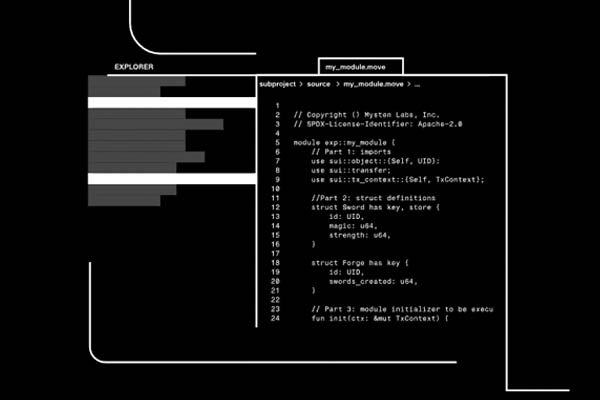
George combined with Sam, who cofounded Move, which is this blockchain smart contract language that seeks to specifically address the problems that you get with Ethereum and EVM-based smart contracts. If you are not very knowledgeable, you can write a rubbish and insecure smart contract. Suddenly, there are funds moving through that smart contract that is unsafe, and people get compromised.
Move was written in such a way that you would almost be trying to write something insecurely. It comes with this higher trust guarantee as a coding language. It’s object-centric. It’s developer-friendly. They get it. All of these things made me believe that the tech was internet-ready. I was looking at a cycle at Shopify. I’d been there for nearly three years. If anyone has been in a company for three years, you go through these cycles and you have to recommit.
Part of my recommit process is to make sure that I wouldn’t be better off outside than inside. I was in the middle of that cycle. Mysten raised a ton of money. I pinged George and I was like, “What are you doing? Do you want me to come and join you? Is it interesting? Should I move now?” I started a series of conversations that brought me here.
I’m not an engineer. I’ve always been an engineering-adjacent, but I care about the possibilities that exist in technology. I’m at Mysten and because of the tech, I can then execute my personal vision for what blockchains can offer in the commerce space. It’s been an incredible ride and the amount of things that we’ve already done towards that end.
I’ve been so impressed. I wasn’t following along before 2023, but it’s hard to miss you all at this point with the rate of development and the breadth of projects you’re working on. Part of that fundamentally is crafting tools that empower individuals and creators, and championing data and content ownership but also helping to define what that means. I’d love it if you could tackle some of these tools that are being created and how they redefine data and content ownership.
Let me give you a real example because I feel like I’ve observed this example from when I first joined Mysten. One of the early conversations that most people will have is, “You’re a new chain. Let’s talk about NFTs.” Initially, we had a lot of attention from our developer community about standards for NFTs and a lot of noise about creators and creator’s rights, and how to make sure you control royalties.
Transparently, Mysten was late to the conversation. We had developers in our ecosystem who were trying to advance that much faster because they had painful experiences at other ecosystems and other chains that I won’t necessarily name. When we started working on this, and credit where credit is due to our developers who are incredible, the approach we took was slightly different. It wasn’t just about let’s lock in royalties.
On Sui, everything is effectively an NFT. When you have an inherently programmable asset space full-stop, the idea of creating a standard to limit it is difficult. I don’t want to lock it down. I want to keep its ability to do many different things. Instead of a pure standard for an NFT, we came up with this model or this primitive that we describe this way called a kiosk. If you imagine, it’s a container. When you have a web account and you own an asset, it’s 100% yours. That also means that it’s quite expensive for somebody to ping and ask you what the state of that object is. Is it for sale? How much is it for? What does it mean? This is where typically a marketplace would go in.
With the kiosk, we were able to create a shared liquidity layer on chain. You put your own assets and NFTs inside a kiosk. That kiosk is controlled by you. That kiosk is a shared object. That means everyone can see the state of what’s inside the kiosk. Importantly, kiosks come with this concept of transfer policy. It’s conditions essentially.
As a creator, for example, our Sui Friends collectible project, our NFT, we have a condition that means all of our Sui Friends are sold within a kiosk. That means that every time we sell it or someone else sells it onward to secondary and tertiary sales, we get a percentage of a royalty fee back to Mysten. It’s not 1%. The reason we did that was we were like, “If you’re a creator here, you can see with Sui Friends how easy it is to create a transfer policy that serves your business model.
Royalties are only one type of business model. I’m trying to enable the full breadth. I want a royalty, but you might have a strong IP. You want to license it, which is how most of our favorite cartoon characters exist and how Disney makes this business. It licenses its IP. It doesn’t just do royalties. The other option might be you want to do rentals.
If you’re playing a game and you want to say, “I got to level ten. I got this asset that no one can get unless they get to level ten, but if you want to try playing level ten, I’ll rent it to you for the day.” Kiosk gives us this vehicle where as the originator or the creator, you can set whatever policies you like, but as an owner, I can decide if I want to add extra policies to that. It becomes much more than a standard. It becomes an integral part of saying, “If you want to do business on Sui, why wouldn’t you use a kiosk? Why wouldn’t you integrate your solutions with it?” It’s much more expressive than flat standard.
These optional terms of service that you can add, are these templated in a way that you can pick and choose them, or are they fully customized or both?
There’s a little bit of both. The basic kiosk standard is quite generalized. It would work for any domain, the type of business model, and the type of asset. We then have the concept of extensions that you can add or adapt. We have a marketplace adapter that allows anyone to spin up a marketplace where they can list all kiosk objects easily.
It’s designed to be extensible so that it can serve the niche and the full spectrum. The base standard is quite generalized. The idea there is we preserve interoperability across apps in the simplest possible way, but everybody can add their layer on top. We’re missing more tools. We’re missing maybe somebody to build a collections launchpad that integrates kiosks and makes it perfect for games, media, and publishing.

Future of Commerce: Kiosk is designed to be extensible so that it can serve the niche and a full spectrum. But the base standard is quite generalized. We preserve interoperability across apps in the simplest possible way.
Everybody wants their version of something. All of those would operate on the same kiosk foundation. That is a great example. The way Mysten looks at this is it’s a blockchain problem, but it’s about respecting the business models that exist off-chain and making sure they can be represented on-chain. Suddenly, the blockchain becomes part of the internet. It stops being this place to go to trade.
Richard and I talk about that a lot. Fundamentally, I was on a gaming panel and asked the question. An important question to these Web3 gaming leaders is, what’s the problem with gaming that they were trying to solve? We’re excited about the bells, whistles, and benefits of blockchain. How does it fit into the needs of an industry? These industries are not fundamentally broken.
We all shop online. We’re not afraid of shopping online. That was a problem five years ago. I can remember my first credit card purchase online. I was like, “Should I do this?” That’s not the problem. We don’t have that type of friction. What are the real problems? It’s one thing for coders and developers to look at those problems independently. It’s another for them to have someone like you who’s been both an avid shopper and an eCommerce vet who understands those problems. It seems like Mysten is taking stock of asking that fundamental question. What problem are we trying to solve here?
If we zoom out of blockchain and look at the arc of tech that sticks, unfortunately for all of us, it’s not always the best tech that sticks, hits, and creates that massive adoption swirl. It’s the tech that best explains its purpose and value to you. Sui turned up in 2023. We’ve already been through many bull and bear runs. Everyone is like, “Blockchain, whatever.”
I don’t want to sell you a blockchain. I want to sell you a value proposition. I want to give you a response to a problem that you already know you have. My job is ten times easier because I don’t have to explain why it’s important to you. I simply have to solve that problem. Fundamentally, a kiosk is a great example where creators struggle to make money. We’ve said, that it is a primitive on the chain. It is not something that people have to figure out how to use. It’s default and available to all builders. Pick it up and use it.
I’m a proud non-engineer, but I’ve spent almost the entire year working with our cryptography team, which makes my brain hurt. It challenges me. One of the things that emerged out of that is we launched this thing called ZK Login, which effectively accounts abstraction in a light touch way in that you use your standard OAuth login, like login with Google, Facebook, or Twitch. You can generate an on-chain address.
That is a big win because if you are going to talk about blockchain’s killer app and why we haven’t had one yet, we haven’t had one because it’s such a pain to participate. You’ve got to solve the access problem and say, “How do we take away this nightmare scenario whereby I have to get a mnemonic and a wallet, and I have to remember these things and on-ramp?” We have to start chipping away at that problem.
ZK Login for us was a big win because we wanted something that was still incredibly secure and usable. It uses zero-knowledge proofs to the limit of that technology right now. It gives us the ability to package blockchain further and say, “We’ll put it where it is and where it’s needed.” I can embed a wallet much more easily. It’s available as a premise on Sui. Our engineers and developers who want to use it get to use it by default on chain because they’re building on Sui. They don’t have to pay a third-party service to provide this level of solution.