Top Podcasts
Saro McKenna From Alien Worlds On The Journey From Oxford BA/MA To Interplanetary DAOs, Plus: Mekaverse's 60Mil NFT Sale, NFT Chess Trophy, And More...
Alien Worlds is the world’s largest NFT game to date, with roughly as many users engaged in this decentralized NFT metaverse as the country of Bhutan has people. Learn how this came to be as Jeff Kelly, Ethan Janney, and Josh Krieger speak with Sarojini McKenna, who is one of the founders of Alien Worlds and the CEO of Dacoco. Tune in as Saro takes us through her journey in cryptocurrency, her introduction to NFTs, and the exciting new directions that Alien Worlds is taking. Plus, on today’s hot topics: massive sales numbers in MekaVerse’s NFT launch, why FTX’s upcoming marketplace is avoiding NFTs that offer royalties, and a chess grandmaster that received first NFT trophy in the sport’s history.
—
Listen to the podcast here
Saro McKenna From Alien Worlds On The Journey From Oxford BA/MA To Interplanetary DAOs, Plus: Mekaverse’s 60Mil NFT Sale, NFT Chess Trophy, And More…
All you NFT curious readers launch into this episode to learn how our guests went from the banking world into crypto and took a deep dive.
How Alien Worlds helped to pioneer what DAOs are and can be.
Why NFT participation trophies may be the next big thing, all this and more on this episode, enjoy.
—
This episode features Saro McKenna, CEO of Dacoco and Cofounder of Alien Worlds, a social NFT Metaverse whereby NFTs are leveraged as game pieces with utility and functionality in the game. Alien World is the most popular blockchain game in history. Saro has bridged traditional business practices with decentralized communities and concepts since the early days of cryptocurrency. Prior to crypto, she spent more than four years in M&A at Rothchild in London and has represented equity on Boards of Directors. She holds an MA with honors from Oxford University, where she was a Mrs. JH McEwen scholar.
—
Saro, welcome.
It’s great to be here.
Thanks for joining us. You are in what part of the world now?
I’m based in Zug, Crypto Valley. A great part of the world to be in. It’s great to be with you guys over in various parts of the US.
The pros and cons of our industry are it’s a 24/7 business.
Getting up in the morning to talk to Asia, staying up late to talk to Americans but it’s good to be alive. It’s good to be able to collaborate with everybody.
Let’s go back in time a bit. You graduate from Oxford. You get into M&A. You are completely crushing it. How do crypto enter the picture for you, and when did NFTs make their appearance?
I started in M&A, learning about companies, buying and selling them, and valuing them. I joined as the beginning of the financial crisis was happening. I witnessed the unfolding of that banking crisis. Banks across Europe were failing day by day. In fact, we’ve got a daily memo in our inboxes of which national banks had major downgrades in their ratings or had failed in the preceding couple of days. I thought that I was going to see a major correction in how traditional finance functioned or even maybe some soul searching, or some actual changes in practices. I didn’t see much cultural change.
There was about a year-long period in which deals weren’t happening but I didn’t feel after that there was much change in the underlying approach to how corporate finance was being structured and done. I still stuck around in that world for a while. I was moving a little bit more towards strategy consulting and also working with private equity in terms of being representing them on Boards of Directors and doing post-acquisition, integration and consulting.
It wasn’t a master plan to get into crypto but it was gradual learning. I think about it. I was fortunate that I had a few friends who were already working on various projects. In fact, it’s an early stage in Ethereum and a couple of other things. That humanized it for me because otherwise, you hear about these projects and they sound impenetrable.
For Steven, understanding them and let alone. Whereas when you speak to people and they tell you the reality of what they are doing on a day-to-day basis. Even if you don’t understand fully what they are saying, at least you realize that it’s a human being that you might be friends with or might have in your social circle who’s doing that.
It was fortunate that I was hearing about it from other people rather than reading about it because that made it more real and accessible. I did have a friend who was working on a project called eosDAC, which was the precursor. The first project that I and my business partners worked on, which was a decentralized autonomous community. That was a block producer on a number of blockchains.
He began to introduce me to this project and I’ve got closer. There’s no formal way of being hired. You just start to circle around what’s going on and maybe comment add value, and then gradually, people might start approaching you. They asked me to look at their constitution, for example. They also had a lawyer who was drafting.
I was making some comments, and then I’ve gradually got closer to that project until eventually, my business partners and I decided to become a bit more formal and decide to start providing certain services into that DAC, and then we continued to do other things. That was how it got started. It being humanized through a couple of personal friendships where I realized that crypto wasn’t an abstract thing. Blockchain was something that people were working on then gradually starting to work on one particular project.
This constant theme, throughout the history of crypto, all goes back to the community and bringing people along in its own unique way. You talked about crypto. How did the NFT show up in your life?
All credit to that goes to my business partner, Rob Allen. We were working on eosDAC. This decentralized autonomous community. By the way, DACs are exactly the same thing as DAOs. It’s just different terminology, that was what we were calling them at that time but we now call them DAOs. One of the missions of that DAC was to help other DACs to form. It was to create so it was using a codebase to create a tokenized DAC that would have multi-sig permissions that would allow it to sign transactions and function as a DAC. It’s because we had that codebase, we thought it would be easy enough to provide that to other groups where they could spin up their own DAC and start operating the same way that we did.
We did that for a while and we were creating a product called the DAC Factory. We were also advising some other clients on how to set up DAOs or even to advise the preparatory committee to the government of LIBOR land, which is a micronation that was putting a lot of its operations on the chain. We were doing the thing of advising or trying to help DAOs become a reality in the world, whether from a more governmental level. We are also helping a foundation to do that. We were helping these other DACs through the DAC Factory. That was all chugging along but even the fact that we had to assist a government to conceptualize how to create legal structures that would allow DAO to function as an entity in the world.
Even the fact that we were having to get a fundamental as that. A precursor to even being a down world has evidenced the fact that it was maybe a little bit premature or at least quite early to be proposing this concept of DAOs to people as real business things that they might turn their company into a DAO. It was a little bit too soon for people to be able to see that, especially for non-crypto people.
We began to think, “What if we gamified this a little bit more?” That’s a realm in which people are more experimental. You also might attract a different type of person. It’s still fundamentally the same thing of bringing people together through tokens in a DAO but maybe we would reach a different audience and would be more accessible.
When you are starting to think about that, NFTs come around. At least for my prescient and visionary cofounder. This was before NFTs were on the radar for many people but he could see that the WAX blockchain was beginning to become more important and it was a chain that was designed to be NFT friendly, especially NFTs have utility.
We decided to combine this DAO thing that we had been working on for a while with NFTs, which are such a natural blockchain construct. You could put possessions or unique things on-chain rather than these measures of aggregate value, which is what a fungible token is. He could see that was a thing by fusing those together, these two big thematic pillars that were under the Alien Worlds. It ended up being a big success.
Two game-changing pieces of the crypto and blockchain universe in particular over the last several years are coming together in one amazing stuff. Thanks for sharing that.
As you started to talk to us about the history of your experience in crypto and NFTs, I thought we could probably spend a whole episode on the interesting journey that you have been through. There are a lot of twists and turns. It seems like you have come across a lot of intelligent, interesting folks and organizations as part of this but I’m glad we were able to get to mentioning Alien World.
Maybe Alien Worlds is a manifestation of Saro’s journey. That’s what’s going on.
A lot of people who have ended up going further with blockchain have been through similar things like how do you bring communities together? How do you track value? How do you incentivize the right behavior? These are some fundamental questions. We are all solving this but certain common themes arise and people discover how to solve those things. DAOs and NFTs are two of those solutions.
You told us how you brought existing ideas that you had put together and brought in the NFT, at least in its cohort form, into your project that led to Alien World. At the same time, Alien World, as we know is one of the top dapps now. It has been an ambitious project from the start. We hear about and see ambitious projects all the time, and then we stop hearing about them sometimes because they fall apart and nothing happens. You are a great person to ask, what’s the journey of executing on a vision when you have something granted big that you are ambitious about?
Some projects have come and gone. We have even seen that in the rankings like DappRadar, sewing the gaming and other activity in various steps. Some of them look like they are coming up and they are going to challenge us, and then several weeks later, they are nowhere. I wonder what was going on there? Some projects have been much more stable. What we have built with Alien Worlds is a platform.
We think of it as a Metaverse, a place in which people can use the fundamental architectural pieces that we have put in place to the NFTS and planetary structures. I can talk about the inflationary mechanism, which is how gaming rewards come into the system day-by-day and how those are competitively allocated between the planets that are in competition with each other.
That’s what we have constructed. Everything is on a chain, nobody has to come to us for permission to interact with the smart contracts to offer their own games using those architectural pieces, and that’s what’s happening. For example, communities began with Alien Worlds to drop their own NFTs onto certain collections of landowners. There’s a company that’s offering this as a commercial service with Alien Worlds.
It’s not our company. It’s totally a separate one. You can go to him and say, “I would like to have NFTs dropped onto certain collections of landowners.” He will execute that and you can do it with him and figure out, which NFTs and which groups of landowners and so on. The entire manifests on the chain, it’s accessible to anybody.
It had been a leave to have a bit of technical expertise but you don’t have to send me an email and it will come up with a contract with us like it’s completely open. That’s what the community is doing. The question is, “How do you execute?” You have to make it executable by a wider group of people and that’s what DAOs are designed to do. They are designed to bring in a group of people that can come and go. The group of people that are involved in a DAO will change over time because the token sits at the center of it by selling, buying or by working your way into ownership of that token. You can come and go out of the DAO.
These structures, if you can design them so that as many people as possible can contribute to them in an organized way that’s clear how that’s happening. That’s one of the key things about execution. That does require some design, some technical execution, and then teaching people how to engage with those things or attracting people who already would know like that company that I was mentioning. He already can read chain data and can execute something like that. That’s what a decentralized blockchain project is in contradistinction to any other game or company. What you are trying to build is something that other people can pick up the ball and run with it for years to come.
It feels like almost genetic algorithms or something. If you set up the correct initial conditions, then something can happen and if you don’t, then something won’t. We referenced this guy, Stephen Wolfram before as someone who’s involved with SuperWorld as one of the advisors. He’s this Mathematician who did a lot of stuff around what they call cellular automaton.
You create one cell, maybe it’s like a pixel on a screen but you define rules as to what its neighboring cells are. There’s a set of rules you can define and some of the rules makes a straight line. Some of the rules make this incredible infinite universe of pixels that go on and create all these interesting patterns and stuff like that. That has been a little bit of the secret sauce in setting this up for success is spending the time to find those right initial conditions that make something magical.
I’m looking at the data on DappRadar and I’m blown away. I wanted to put this in perspective for our readers. 673,000 users and $440 million transactions are probably ebbs and flows and it’s probably been bigger in some months but that’s the entire population of the country at Bhutan or the entire population of Fiji playing this game at the same time is the magnitude of this, which is incredible.
I wonder to what extent you feel how Alien Worlds is leveraging NFTs as part of the functionality, and utility is part of that, and how that is happening to create this stickiness. Jeff and I previous venture in the food-tech world prepared meals and the importance of retention. How hard it is to have that many users actively engaged at one time? I’m blown away.
NFTs are completely different from fungible tokens. There might sometimes be a series of them, all of which are the same but they are unique between the series. At least in our case, they have these attributes that are on-chain visible and are then read by the gaming smart contracts, not just our gaming smart contracts but anybody can write smart contracts that can understand these attributes, and then can ascribe different gameplay pathways, depending on what attributes the person is presenting in the NFT, that’s in their bag at that time. You couldn’t design a game around Bitcoin. All you can do with Bitcoin is transfer it. Maybe you could design a tennis-type game or something.
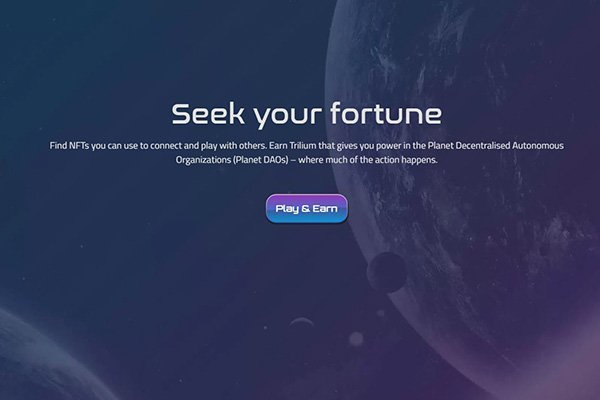
Alien Worlds: Fusing together these two big thematic pillars – DAO and NFT – was really what underpinned Alien Worlds.
By being able to put all of that richness in there, quite a deep strategy can emerge from that. In our case, when you mine on Alien Worlds, you have to select a land NFT and a tool NFT, and the land is located on a planet. The DAO dynamics at the planetary level impact the mining rewards that go down to all of the land NFTs that are located or associated with that planet DAO. You are selecting a combination of tools and land that also have relationships with the planet DAO that land is located on.
That’s a level of strategy that I don’t think you could replicate with another crypto game that didn’t use NFTs. You get much more uniqueness, variation, and strategy but also, one of the things that I find interesting. As the game Founders create NFTs that have these attributes, we can envisage ways that our gaming-smart contracts might understand those attributes.
You could create a game that receives Alien Worlds NFTs. In your world, an 8 could be lower than 1, whereas when we created it, it would be greater than it and you could have it where things are multiplayer. Whereas in ours, they might be summative or you could have a thing where one attribute cancels another, whereas we didn’t conceive of it that way.
When they are utility NFTs and they have these attributes, you are unleashing into reality unique on-chain and things that have attributes that anybody can then in the future come up with lots of different interpretations of that. You are almost creating the grammar to a language in a way or the characters to a story that can unfold. That’s completely different from how fungible tokens work. In our Metaverse, we have fungible tokens and NFTs. They do perform a different function but they are incredibly rich. I’m seeing the beginning also of how we will end up using them.
You are linking some DeFi elements into this too, is that correct?
It’s more user DeFi or socially constructed DeFi, in the sense that any DeFi mechanisms would go would have to be agreed by the DAO custodian. Once each of the DAO is open to concerning governance, they can choose to allocate resources in any way they want, so that opportunity is there. It’s not DeFi in the way that it’s not a stake to earn or those simpler mechanics but it contains the components for people. Certainly, people are earning through Alien Worlds, the mining game but that’s not a DeFi mechanism because you have to perform various actions, choose your strategy, and then go through mining. There are some possibilities for that to the DAOs, for sure.
It’s more play to earn than traditional DeFi.
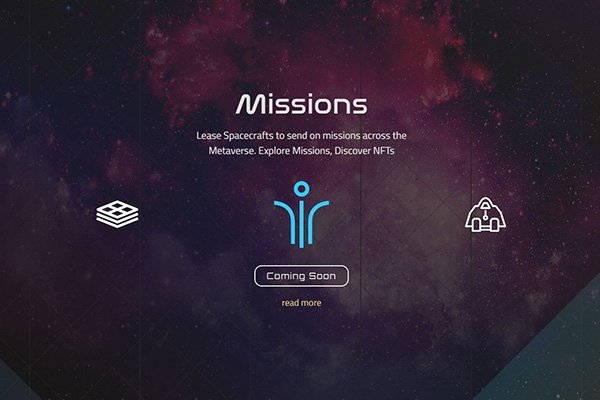
**The game will be launching missions on Binance Smart Chain. How are NFTs on BSC different or similar to the NFTs and the mining game on WAX? **
NFT is a little bit different for starters. The standard is different on WAX using atomic asset standard and on Ethereum, which different standards and in BSC as well. We have a fewer number of attributes and we envisage the bill get used in our missions’ game in a certain way. One of the reasons why I mentioned the possibility of anybody picking up the NFTs and running with them in different ways is that we are already beginning to see the community considering how those BSC NFTs could get used in other ways. The attributes on them could signify different things. For example, we have a crafting key attribute on the BSC NFTs, which we don’t have on the WAX NFTs.
Crafting key is a letter from A to G. If you had a B, you might gain access to certain events or you might need to craft an NFTs that had all of the letters. It allows a possibility for different game mechanics to emerge in the future. We don’t have that particular crafting key in our WAX NFTs. The community is looking at that and thinking about certain pockets of the community. Thinking how they can create little events and little mini-games. They have all these little quests, competitions, and different leaderboard competitions that they come up with themselves. Those contained some different attributes and are likely to end up getting used differently.
Was BSE Chain to clear the front runner of the new chain or did you guys look at Polygon, Avalanche, Solana, and some of the other possibilities?
Josh, we are heading over to Quick Hitters.
It would have to be a fuzzy peach sour candy.
Ii’s always going to be healthy first.
I’m glad to see this as a universal thing.
What breed is she?
It’s that the same as a Miniature Pincher?
They look almost identical.
That’s it. Do you like it? Have you seen it?
Can you have horrifying in a good way?
If it’s Halloween or it’s October.
You are more into the friendly aliens. I get it.
Congrats also on the huge success of your show.
We are in the Top 50 Tech Podcast.
You might do an event at some point as well.
—
Are those participation trophies?
We are talking full-scale pins.
Important links:
About Sarojini McKenna
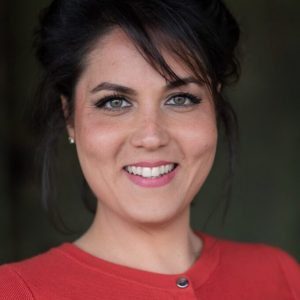
CEO of Dacoco and Cofounder of Alien Worlds, a social NFT Metaverse whereby NFTs are leveraged as game pieces with utility and functionality in the game. Alien World is the most popular blockchain game in history. Saro has bridged traditional business practices with decentralized communities and concepts since the early days of cryptocurrency. Prior to crypto, she spent more than four years in M&A at Rothchild in London and has represented equity on Boards of Directors. She holds an MA with honors from Oxford University, where she was a Mrs. JH McEwen scholar.