Top Podcasts
Robby Yung Of Animoca Brands On Its Multi-Billion Valuation, Gaming & MADworld, Plus: Coinbase NFT, McDonald's Big Mac Rubik's Cube' NFT, And More...
Blockchain games are just one of the many fascinating use cases for blockchain. In this episode, we take a look at the intersection of NFTs and blockchain gaming and see where they converge and complement each other. Hosts Jeff Kelley, Eathan Janney, Josh Kriger talk to the CEO of Animoca Brands, Robby Yung as they discuss blockchain games. Robby talks about the evolution of blockchain use cases and the rise of gamification of blockchain. We also hear about upcoming projects from Animoca that will surely excite gamers. Tune in for more NFT space news and information and learn more about the blockchain space.
—
Listen to the podcast here
Robby Yung Of Animoca Brands On Its Multi-Billion Valuation, Gaming & MADworld, Plus: Coinbase NFT, McDonald’s Big Mac Rubik’s Cube’ NFT, And More…
**Welcome to this episode. It’s a great one. Find out how Animoca Brands is supporting MADworld and defending artists in the metaverse. **
How the next billion users will find their way to blockchain
Get a crash course from our guest on the history of gaming and how it’s elevating NFTs. All this and more, just ahead on this episode.
—
This episode features Robby Yung, CEO of Animoca Brands North America, the literal game-changing leader in digital entertainment, blockchain, and gamification with a mind-blowing portfolio of products and games, including REVV and SAND tokens, as well as investment and partnerships with companies like Axie Infinity, OpenSea, Dapper Labs, and Alien Worlds and subsidiaries like The Sandbox, Quidd, and Lympo.
Robby has been in gaming since 2012 and blockchain gaming since 2018. He served as the first CEO of Animoca Brands after taking the group public in 2015. Prior to that, he cofounded magazine publisher, One Media Group, which he listed on the Hong Kong Stock Exchange. He also founded Chinese television and outdoor media concern, Redgate Media Group, which was acquired by Inno-Tech Holdings. He began his career in technology, building wireless telecom networks in China and Indonesia with Metromedia. He is now one of the visionary leaders, blazing new trails for blockchain, gaming, and NFTs.
—
Robby, it’s a real pleasure to have you here.
You’re making me blush.
I was looking up that Ready Player One came out in 2018, which was the same year you got into blockchain gaming. That was an interesting coincidence to me.
I have a bigger one for you if you want. Here’s a full-circle moment. The first company that I made an Angel investment into, which required begging my dad to lend me some money because I didn’t have any at that time, was in 1997. That was right after Snow Crash had come out. My friend gave me a copy of it to read and said, “This is what we’re doing.”
They had hacked together a demo using a level builder from Doom if you remember Doom and Quake. That was the best way to simply put together a 3D interactive, immersive environment, except that you weren’t shooting stuff. The funny part was that in order to make an eCommerce demo, you still have to use the shooting function to buy things because shooting is all you can do with the level builder in Doom, but the idea was to build a metaverse.
Needless to say, fast forward when the bubble burst in 2000 and 2001, the business tried to survive and didn’t, but funnily enough, now we have The Sandbox. Years later, not only is The Sandbox finally realizing that dream, but in a full-circle moment, the CEO of that startup that I invested in has now become an investor in The Sandbox.
Blockchain Gaming: In 2017, there was a big ICO boom. It started to get on the mainstream radar in the technology industry, at least.
The sad part is that your dad is now living on the street because you get all his money and spend it on bad investments.
The good thing is now I can pay him back. It just took a quarter-century.
Talk about predicting the future, like glimpses of the future.
It’s because we’ve always had these same dreams influenced by science fiction. We see so much of technology heading in that direction because sci-fi and things we saw in movies and read in books gave us these ideas. When it comes to figuring out how you want your product to look, people are like, “It needs a holodeck because those are the icons that we have from popular culture.”
Let’s go back to the beginning. We would love to learn how you connected with Animoca Brands. Also, what was your introduction to crypto and NFTs?
Animoca Brands was started by an old friend of mine, a guy named Yat Siu. Yat and I have known each other since the time of other anecdotes, so since ’97 because that was the dawn of the internet startup community in Hong Kong where I was living at that time. There was a handful of startups. In fact, we used to have weekly meetups. All the startups in Hong Kong in the internet business would meet up in somebody’s boardroom who still had a day job at a big corporate. That gives you an idea of how many startups work there because we all fit in a boardroom.
We would network, swap ideas, and try to figure out how to get venture funding. It was hard because we were not in Silicon Valley and the ’90s were very much about being in Silicon Valley and access to capital and networking. We did our best. One of those people I met at one of those events was Yat. We remained friends for years. He built a successful enterprise messaging business called Outblaze and survived the 2000 crash.
When he sold that business in ’09, he started Animoca Brands, repurposing the team to focus on games because they had done games as a side-pocket, doing some console and PC games, but then it was the dawn of mobile and so they wanted to go in the whole hog. A few years after that, I sold the last business that I was working on, which was a traditional media business. I was looking for something to do and I had heard tremendous things from a mutual friend and shareholder about what Yat was doing in mobile gaming.
When I discovered mobile, it was cool because it seemed almost like destiny because having been in TMT my whole career, it was everything wrapped into one. It combined wireless, mobile telecoms, internet, advertising, and media all in one platform. I’m like, “I was made to do this. It’s everything I’ve ever done all in one.” I haven’t looked back because I thought it was exciting. I joined when we moved to Android in 2012. In 2017, we started looking at crypto at that time because there was a big ICO boom. It started to get on the mainstream radar in the technology industry, at least.
We started to examine it and ended up making a partnership at the end of that year with a company in Vancouver that was working on making a game on the blockchain, which was a cool idea. The company was called Axiom Zen and the game was CryptoKitties. We agreed with them to be the publisher of CryptoKitties in Greater China. I was not an early Bitcoin miner or anything like that myself. That was my introduction to blockchain.
At that time, with CryptoKitties being such a groundbreaking NFT project, ERC-721, everything that happened there, was there a glimpse for you of the future of what NFTs could be or was it more of a slow progression?
We went into it with some fundamental ideas from the perspective of being game developers. For us, we only saw maybe 1/3 of the potential at that time, but that was enough to sell us on pivoting the whole ship and focusing on it. Later, we understood better what it could be, but we had a simple idea. We looked at the ICO boom and we thought, “All these people had bought tokens. They’ve spent billions of dollars over the course of 2017, buying tokens on all manner of blockchains.”
We looked at each other and we were like, “What are they going to do with all these tokens? There are so many projects out there that tried to be the next Bitcoin essentially, but they didn’t have any utility for their tokens.” We thought, “Here’s a simple idea. Why don’t we make games and maybe they’ll spend their tokens on our games?” That was the first idea.
We’re mobile game developers and mercenaries. If there’s a place where money can be made because users have eyeballs, we will go there. This, to us, was an interesting market opportunity because there was nobody else there. We were there at the beginning of mobile when the iOS App Store opened and there was nobody there. It was good for 5 or 6 years.
We heard about Apple giving you guys the boot, which is a crazy story Yat told us about. It’s amazing to recover from that and then to get a phone call from them.
There’s a big void because these guys are making the close games. They probably regretted that decision. There was this shift that occurred with NFTs where there’s more of a trading culture in proceed value that could allow gamers to make a living from the games that they play. When did that click for you? That’s a major milestone in the revolution of gaming that surely has had something to do with you all becoming a unicorn and raising $138 million. When was that shift?
The first stage of that was looking at a more simplistic proposition, which is to think about us as game developers and asking ourselves, “If we’re going to ask consumers to embrace this new technology, what does it mean for them?” One of the things about being in mobile for so long is we’ve gotten accustomed to an environment that has the most simple and straightforward user onboarding of any technology medium in history. With a well-made app on iOS, if you count the download app as one click, by click number three, you’ve bought something. There’s no other process in the world that’s that efficient because you already set up your wallet and everything like that, your Apple Pay, etc.
The way we thought about it was, if gamers have property rights and they own their digital content, two things will happen. One, they won’t have to do anything different than what they already do in free-to-play games. They already use virtual currency and buy virtual goods. They’ve been trained in this habit for more than a decade, so we don’t have to ask them to change their consumer behavior. That’s step one.
Blockchain Gaming: It’s interesting because it harks back to a traditional behavior in gaming where the idea is that you could at least repurpose your gaming investment. Even though it might diminish over time, you can repurpose some of it.
Step two, if we think about what it means to own your stuff, let’s pretend that the hype cycle of scarcity and things like that never happened. Let’s assume you own stuff and it’s digital stuff. Now, we can apply the analogy of traditional gaming. When I was growing up with a console at home, we had cartridges in the console and they were expensive. If you wanted a new game cartridge, typically, your parents made you get rid of the old one first because there was a secondhand market for the old cartridge. That’s how GameStop was born.
If you think about what NFTs are, NFTs enable that same recycling behavior. If you’re spending your money on a game and you get tired of this game and want to play game number two, you can sell your stuff from game number one. You may not make any money on it, but the nice thing is you won’t lose all your money because there’s going to be a secondhand market because new players will come into the game and say, “I’ll buy that car for half the price of the retail price. Why not? I don’t mind the secondhand car.”
It’s interesting because it harks back to a traditional behavior in gaming where the idea is that you could at least repurpose your gaming investment. Even though it might diminish over time, you can repurpose some of it. That, to me, as a traditional business guy, is a little bit hard-nosed. I thought that was compelling because of the idea that we could offer gamers, “Here’s an experience where you spend your money and you get zero and that’s guaranteed in return. Here’s an experience where you will get more than zero. We don’t know what it is. We don’t know if it will be bigger than your investment, but it’s more than zero.” We think everybody will pick the latter and it’s a no-brainer.
Fast-forward, we talked about the race. In part of the announcement that went out, you guys stated that the funds are going to be used to develop new products, make strategic investments, secure additional licenses, and further acquisitions. Can you tell us how that’s going so far and what we should get excited about?
So far, so good. What we’ve done is we’ve announced some exciting new products. We announced that we acquired a studio in Sydney called Blowfish, which is a AAA. It’s a space-themed adventure title with mechanical transformer-type robots. It’s cool and a great example of how we can build on top of great AAA content and introduce tokenization and NFTs into what would be a more traditional console game experience.
For our readers at home, AAA isn’t like Triple-A in baseball, where that’s the lower-level league. This is like the Major League. This is like the All-Star game is what we’re talking about when we’re talking about AAA gaming.
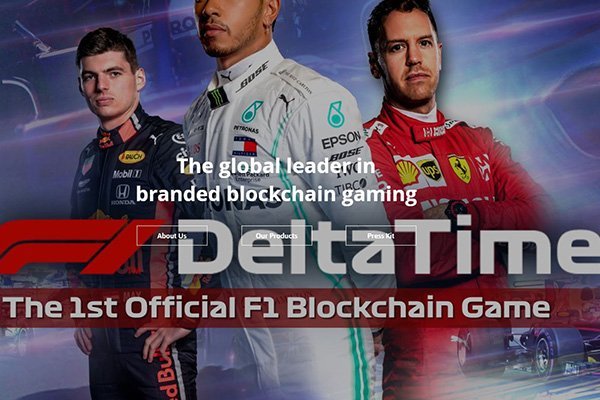
AAA gaming is the level of fidelity that you have to buy expensive TVs for. We’re excited about that. We’ve gone out and we’ve also grown our IP franchises. One of the things that we’ve done over the course of 2021 is expanded our motorsports franchise. We started with Formula 1 and then we moved to MotoGP and then Formula E. We also launched our own in-house title called REVV Racing, which is the most recent addition.
We’re familiar with that one. We all own Edge of NFT race cars. It can be used in your game. That was an awesome collaboration.
AAA gaming is the level of fidelity that you have to buy expensive TVs for. Click To Tweet
That game is legit too. It’s hard and good. There’s a real learning curve there.
There has to be because it’s called play-to-earn, not play-to-get stuff for free.
To your earlier point, do I get offers on my REVV Racing car? Once a week, people want that thing.
One of the things we did with REVV Racing was an airdrop of those NFTs as our distribution strategy. It’s great because one of the things that we identified was that about 80% of the initial launch of NFTs and it was about 16,000, went into the hands of people for whom it’s their first NFT. That’s important to us because one of the big themes is that we always talk about how gaming is the tip of the spear of entertainment and it’s bringing mass adoption to the blockchain. It’s nice because we can now start to see actual examples in the market, not just our portfolio, but as well as colleagues in the industry of success stories where we can see the results are being delivered and this is a legitimate industry and trend.
We had been talking about this theme overall about the meta-purpose of a lot of things that are happening right now in NFTs. It’s exactly what you said. For all the fun things that are happening, the meta-purpose is to bring people into the fold, introduce them to blockchain and NFTs, become part of the ecosystem, learn how to open a wallet and how to trade without being scared, and have confidence in what they do. It’s starting to grow exponentially. It’s just the beginning. That’s the amazing part.
We’ve seen tremendous success stories like Axie Infinity, which has been the good news story of the summer that keeps on giving. There are more people now in the Philippines with Axie Wallets than with credit cards. It’s amazing to think that you can essentially use a play-to-earn product like that to start to bank unbanked people.
I know Eathan has a question he wanted to ask you. I met NFT artists. They created a scholarship program for Axie Infinity and he has over 400 scholars. This was a long time ago. Probably, it’s double that now and 50,000 scholars on the waiting list where they have scholars. Some of the original scholars in his program have scholars into them. You guys are changing lives with this game.
As Josh alluded, I wanted to ask you a bit about MADworld. We got the news that Animoca Brands is backing MADworld. The idea is to help bring artists into the multiverse. Let’s mention MAD of MADworld stands for Multiverse Artist Defender. Can you tell us a little bit about MADworld and what this whole idea of defending artists is about?
It’s about providing a platform for artists that is enabling technology to allow them to be able to self-publish, to use an old-school phrase. They’re essentially minting their own NFTs, designating their own royalty schemes, and deciding how they want to distribute their artwork, including some interesting technology that uses NFT chips in order to be able to link physical goods with NFTs.
Blockchain Gaming: We’ve seen tremendous success stories like Axie Infinity, which has been the good news story of the summer that keeps on giving. There are more people now in the Philippines with Axie Wallets than with credit cards.
One of the things that at least I’ve noticed in the NFT art community is there are a lot of collectors out there who are happy. I always see these people posting on Twitter how they bought an NFT of a well-known artist. Six months later, they get the physical artwork in the mail that accompanies their NFT because they bought a digital twin product. As great as NFTs are, sometimes a physical piece of art to put on the wall is also nice. There is definitely a place in the market for purely digital products as well as digital twins. One of the things MADworld does well is to have a way to manage the digital twin process, which is interesting.
That’s interesting when we talk about the multiverse and integrating it in real life with NFTs and putting all that together. I’m curious about the general direction of MADworld. It’s integrating the real world and real-life art, but is there a bent towards gaming and virtual worlds as well? We’ve seen these different NFT platforms have different focuses. OpenSea has its focus. We talked to Impact Theory‘s founder about how he wants to have a comic-book-focused NFT platform. Is there a focus here on this gaming and multiverse with MADworld or is that not the case?
Gaming is part of their roadmap, but it’s a couple of years down the road. In short to medium term, it’s much more about focusing on being a platform that’s for artists, number one, that has a strong emphasis on security and management. One of the benefits of launching now in this market is that you have a couple of three years of solid technology development behind you. One of the things about our industry is it changes so fast. The incremental technological quality of products increases dramatically quarter-on-quarter because we’re all an open-source community. We all benefit from all the hard work everybody is doing because we can build on top of each other’s code.
In the medium term, it’s going to be about that platform for the artists and also then integrating that into metaverse spaces. To the extent that a metaverse is a game or a social experience, I’m sure we can argue what the definition is, but it’s all of the above. One of the things that’s making gaming such a compelling force for blockchain adoption is because gaming is not what we traditionally think of the term because gaming is a synonym for the largest movement in entertainment.
It’s interesting the way that opened up the definition of gaming. Even the PFP profile pic NFT there, some of them have at least an opening up, “Let’s put some traits on there as if it were some role-playing games. Let’s open up that trajectory to create a game out of things.” It reminds me of that go-to party trick, which is, “Let’s break out a game, everyone. Let’s play charades or UNO.” It starts to loosen people up and gets people having fun and socializing on a different level. That simple way in which you open up the definition helps me expand my perception of what’s going on here. We’re opening new avenues for socialization.
It was a gas-powered remote control car.
Gas-powered, that thing had to go fast.
Plants.
For around the house?
A bicycle.
Frugality.
My wife would say, “Your frugality.”
I know someone who works for that show.
Important Links:
-
Impact Theory – Previous episode
-
Mickey Maher – Previous episode
-
McDonald’s presents its own NFT collection called ‘Big Mac Rubik’s Cube’
-
@AnimocaBrands – Twitter
-
@ViewFromHK – Twitter
-
LinkedIn – Robby Yung
-
iTunes – Edge of NFT Podcast
-
@EdgeOfNFT – Twitter
About Robby Yung

Robby Yung started several businesses in China and Hong Kong, including those in mobile telecoms and software applications, cable television, internet services, outdoor advertising, and publishing. Robby has raised many rounds of private and institutional venture capital for these businesses as well as done four IPO’s, several trade sales, follow on financings, and lots of M&A.