Top Podcasts
Rob Richardson Of DisruptArt, The Global Marketplace Revolutionizing The Impact Of Art, Music, Fashion & Film, Plus: Rick Farman Of Superf3st, And More…
DisruptArt envisions a community where artists of all sorts intersect so they can create dialogue about social impact, contemporary art and the blockchain. CEO Rob Richardson is in the heart of this collaborative endeavor. He joins the show to share with us how his personal challenges helped lead to the inception of DisruptArt, how the platform changes the dynamic between artists and the community, and how Web 3 and NFT technology will impact the world moving forward. We’re also joined on this episode by Rick Farman, who talks about Superf3st, the platform that will finally enable his career-long dream of building a music and arts festival from the ground up. Join in and learn about two of today’s most innovative projects that straddle the intersection between the arts, community, social impact and the blockchain.
—
Listen to the podcast here
Rob Richardson Of DisruptArt, The Global Marketplace Revolutionizing The Impact Of Art, Music, Fashion & Film, Plus: Rick Farman Of Superf3st, And More…
I’m Rob Richardson, CEO of Disrupt Art, the Web3 platform, leading intersection impacting culture. Join me here on the show. We’re going to talk about the disruptors, the thinkers, and the builders of the future.
—
NFT curious readers, stay tuned for this episode and find out how selling Badazz Bears helps make the bear market more bearable.
Also, on where to go for sweet deals on private islands.
**Additionally, on how festivals co-created by fans and talent are already happening right under our noses, all this and more in this episode. **
**We put together a little gathering at NFT LA that brought out thousands of the world’s most innovative doers in the NFT space. Head to NFTLA.live to get tickets to our bigger, bolder, and better, but also as intimate and impactful event happening in Los Angeles, March 20th through the 23rd, 2023. See you there. **
—
**Now sponsored spotlight episode features Rob Richardson, the Cofounder and CEO of Disrupt Art, a global marketplace studio and technology company created to revolutionize the impact of art, music, fashion, and film. He is also the Founder of Disruption Now Media, a platform that connects entrepreneurs, artists, and leaders through interactive events, educational content, and podcasts. **
Disruption Now Podcast** hosts the conversational podcast with disruptors focused on impact. At the intersection of art and activism, Disrupt Art aims to curate an interactive space for artists, collectors, and activists to revolutionize the impact of art. Artists sell their pieces as NFTs receive a majority of the funds generated and always earn a royalty for their work. The Disrupt Art vision is to create a community where spoken word artists, musicians, entrepreneurs, photographers, and crypto artists intersect, creating dialogue about social impact, contemporary art, and the blockchain. Rob, welcome to the show. **
It’s great to be here. Thanks for having me.
**You’re getting ready to make some disruption now. **
Always.
**How are you holding up, Rob, after MidwestCon? We had to take a good month to recover from NFT LA. **
I’m still recovering too. It took me a week to try to get back some stable sense of myself and ourselves. It’s a lot to throw a conference, but it was worth it because that has led to many other opportunities. It’s not for the faint of heart. It is hard to do any type of large-scale event.
Similar to podcasting, it becomes an addiction. You get up and do it again. You forget all the pain that went into it.
We have some unique points, being in a bear market, but also the fact that we’re in Cincinnati. You’re in LA, the harder part is you have more competition, but you’re the center of entertainment in the world. When people think of Cincinnati, they don’t necessarily think of those things. The opportunity is that we surprise people with the level of culture and the art we had there.
The fact that we had our mayor come and talk about working with us. We had an event at an art school. That was a different vibe. It was more like a lounge club feel for our conference than it was a stiff conference. Our goal was to be intentional about curating a different experience that could be unique to our conference. I know we accomplished that.
**We’re not about stiff conferences, either. **
That wasn’t the NFT LA. You guys were stiff. That was to somebody else, another place that begins with NFT, and I won’t finish the sentence.
It’s all about a cultural experience. You got to have fun in life and work. If you’re not having fun, what’s the point? That’s cool. I heard great things about it.
We are having it there in 2023. It will be worth it. We had lots of people from LA. You got to come.
**Disrupt Art has taken on quite an important vision, where artists of all forms can intersect and make a big impact in the world. Where did all this come from? What was the culmination of this vision and concept for you? **
It comes from who I am and who I have been my entire life. The focus of my entire career, before I even knew what crypto, NFTs, or any of that, has been about how I can use my voice, help change other people’s lives, and have systemic change. Those things are important to me because of how I grew up. To make a long story bearable, I had an overall good childhood. It’s not a sob story, where I grew up poor or any of that. That’s not the story you’re about to read.
The story you will know is that I did have some challenges. I was diagnosed with ADHD, which is a learning difference, not a learning disability. Back then, they thought if you had any trouble at school, if you were hyper, you were a nobody. You were somebody that didn’t care about school. You were lazy. You combine that with my skin color. I grew up in a place that was more White than Black. I had teachers that might have been culturally insensitive.
Even though I sucked as a student until about the eighth grade, in the eighth grade, the light bulb went off, and I said, “I want to start applying myself.” I had a conversation with my teacher at the time, and I will never forget the conversation. I told her all of my dreams and aspirations to change the world and the light bulb I found. She tried to crush that dream. She was like, “Rob, you’re an awful student. College is not meant for everybody. I’m not trying to hurt your feelings, but you’re not going to be able to do that like that.”
Luckily, I had a much better conversation with my parents. My mother said these words that stick with me to this day. She said, “Rob, you never have to be defined by anyone’s low or narrow expectations of you. You define yourself or yourself by yourself.” Despite what this teacher said, my counselors and lots of people tried to give this whole long lecture about how I was going to fail and how this was a bad idea to put me in challenging classes. Seriously, it was a thing. I never let that define me because I had strong backing and lots of opportunities and success.
I know that story turns out differently for many others who are defined or confined by the narratives and the constructs, the things that are in place in front of them. They think that is the only place they can go because that is what the world tells them. My goal in life has always been to help empower people, be it through coming up with better systems for education and better ways to move technology.
Before I was involved in public politics, I ended up pivoting and getting into entrepreneurship. What I learned about Web3 through my entrepreneurship with Disruption Now and having these events with artists, creators, and entrepreneurs, I not only wanted to take a deep dive into the space, I realized it was important to own technology to help influence this space. Even though we’re in decentralized technology, platforms are still going to be the spaces that move opportunities for people. Platforms still matter, and it’s important to have that. That was the genesis and the reason. This is another application to my passion in life, which is about empowering people.
**Thank you for sharing that. There are many times that us crazy entrepreneurs have been told, “No.” It’s the fire that culminates from our bellies. I came from a fairly poor neighborhood and single mom. There are a lot of ways my life could have played out. A lot of it is choice and conviction, but it also comes from supporting each other’s dreams. I love what you said there. **
**That’s an inspiring stuff. I identify with that too. From a young age, my mother always talked about how she had dyslexia. That was the thing with her. Go way back to the ‘40s and ‘50s, when she grew up, she was left-handed in a Catholic school. I always had a strong sense of what you described. Even though I did relatively well in academia and school, that sense that there were all these other ways for all different minds has been a huge thing for me. It’s great to hear you call that out and be working diligently there. Let’s talk about an experience of an artist that works with Disrupt Art. What is the process like if they’re getting into the space? How do you guide and work with them? **
Our goal is to make this as easy as possible to onboard into this space, be it for the collector or creator. A lot of us in this space like to believe the process is easy. It’s doable but not easy, specifically for how people or minds are geared towards having a quick and easy experience. We have to know that, for us to get to mass adoption, it has to have the benefits of Web3, but it needs to have as close to the experience as Web2 because if you are asking people for more steps, they’re never going to get there. What we work to do is, first of all, make sure artists understand what this is, how this works, what NFTs are, and why and how it can be transformative.
I often figure out ways to explain it in a way that they can see it. Sometimes, different things make the light bulb go off. I make them understand that the same way people are talking about NFTs now, as if they are not safe and fraudulent, is the same way people talked about social media several years prior. It’s the same way they talked about the internet. I said, “My question for you is, do you want to be Blockbuster who said no one is going to download and watch movies, and they no longer exist? Do you want to be Netflix, where you can build off this work for the rest of your life and your kid’s life? There are no guarantees, but this is the future. Those who are building at the infrastructure level have the greatest opportunity.” That is usually my pitch somewhere or another.
We try to walk through a three-step process to side on a Disrupt Art. First, you create an account like you would in a social media account. You connect your wallet to your email, which gives you a quick code. Your wallet is connected. You can start minting and creating. If you’re a creator, we have to prove you for a creator because we are a curated site. Those are the steps, and it doesn’t require you to do all the other steps that are required for people to onboard. We make that process as easy as possible. We walk them through that. We usually answer personal emails to walk people through the process if they have any questions.
**You conveyed it as making Web3 on the level of Web2. It also is not that, but it’s those principles of human design. We saw all these things. You look at the genius of what Apple was able to achieve by saying, “Let’s make sure you can make little gestures with your hand, pinch, point, and whatever. Make things happen in a natural intuitive way.” It’s not just Web2. It’s the way to get human intuition integrated and involved. **
A lot of us, and I have been guilty in this space, too, say, “Everybody needs to do it this way because this is the best way it needs.” The best way is whatever way the consumer understands it to get them there. That is the best way. Not the way we think it is.
**We referenced this throughout the conversation so far but let’s dive a little deeper into social impact and your goals. How do you incorporate that into your ecosystem? **
It is important because all my career has been focused on that. How do we incorporate that? We tend to work with artists that resonate around that message. A lot of our artists tend to give parts to their proceeds, a social impact that we seek artists out like that. In the near future, we’re going to build it almost like a crowdfunding type of structure where you can opt-in to support a social impact. Some of your funds or additional funds will go towards supporting a social call that is tied to that artist or something that we, as a platform, support.
It will be some ways down the road but do a DAO that will have an infrastructure that will put things towards the social impact that the community will put up options for things that we want to support. Specifically, we have a few projects. We have one project, which is the Badazz Bears Project, which is a project that we’ve done with Jim Jones. There are a lot of cool features to the project. It’s a build-a-bear project. Everybody that gets one of these bears gets into all of our events, like MidwestCon. We have activations at Art Basel. We usually let them in VIP access.
Part of the future vision beyond building your own bear, having different custom bears, and things like that, which is like building your bears using NFTs, is the social impact tied to helping returning citizens. When I say returning citizens, I mean those who have been through our criminal justice system. Here’s a quick fact about this. The United States has more people in prison than any other nation in the world. More than Russia and China. Any other authoritarian nation that you think, we have more people within our system than them.
DisruptArt: It’s very important to actually own technology to help influence this space. Even though we’re in a decentralized space, technology platforms are still going to be the spaces that move opportunity for people. Platforms still matter.
We spend an extraordinary amount of money on locking people up, which drains money and resources. It ends up draining talent and opportunities for people. Even those who have served because they should serve because they have committed an act that they have to be responsible for, we as a society need to be able to integrate people back and not dehumanize them for the rest of their life.
This is important because it’s a project that is tied to the original artist of Badazz Bears, which is Jim Jones, the rapper. His uncle served a lot of time in prison but always would connect with these bears. He had the vision of creating these bears as a fashion line several years ago. We wanted to use this technology to help organize more people around understanding this concept. We work with the REFORM Alliance, the largest criminal justice reform organization in the United States. Jay-Z is part of that, Meek Mill, and others. The CEO works with us. We have awareness events for returning citizens, and we’re doing some other things.
I believe that the best use of technology is its ability to connect people. When you can connect with people, you can create change faster. That is the beauty of blockchain technology because it breaks down barriers, financial barriers, and global barriers, frankly. That is what we saw with Disrupt Art, being able to do that intentionally. One more example is that we have artists that are global. We have a couple of artists that are out in Nigeria. This artist sold some of his work for 100 FLOW, which is $200 roughly. Not a lot of money, relatively speaking, in the United States.
In Nigeria, $200 is equivalent to something like ₦60,000 or ₦70,000. He would have to work for 4 or 5 months to get that. The government probably wouldn’t have allowed him to do it, but we’re breaking down bears because we don’t have gas fees, and it’s easy for him to use it. That’s what gets me up and excited. Being able to think about things like Badazz Bears, we can build the community there and help global artists in a way where they wouldn’t have these opportunities. That is the power of blockchain to me.
Social impact is near and dear to our hearts. It’s something we incorporated into what we did at NFT LA 2022. It’s something we’re amplifying in 2023 with our social impact track. It’s set up by Arielle Caputo, our Head of Operations in Social Impact in our company. There are probably going to be some cool ways we can collaborate on that. There are amazing things happening there. It’s a great platform to raise awareness.
We would love to explore that. Let’s talk more about that.
Shout out to Jim Jones. We met Jim last 2021, and he allowed us to debut his crypto song on our show, which was super fun. He performed at NFT LA 2022. I was chuckling when you’re like, “We sometimes let those guys in.” I’m thinking, “If you got a bear that is cool, you get in. If you chose a bear with the wrong attributes, you might have to wait out outside a little bit longer.”
We always let our bears in. In a lot of NFT projects, what they do is they use the projects to be able to tell what they are going to do to build the technology that they hope to build. We did the opposite. We have a full-scale NFT marketplace with far advanced technology. We did a PFP project for a few reasons, but that is not where we live. That might be our only PFP project we ever do. Those folks will get special and exclusive benefits because I believe those with you from the beginning should get the greatest benefits. The bears that joined us in the bear market, we’re going to give them a lot of benefits.
**You touched on the importance of artists and community in some of the ways you’re building community. To go down that rabbit hole a little bit more, are there other specific techniques you’re using to nurture the Disrupt Art community now or in the future? **
We’re being intentional about immersive real-life experiences. I believe it’s important in this. When we initially got into the space of NFTs, everything was about being digital, your digital avatar, and so on and so forth. The real power was that it doesn’t replace us in person. I don’t believe that is the power like I don’t believe artificial intelligence power is replacing humans. I believe augmented intelligence, not artificial intelligence is the future. It’s an additional opportunity for us to expand our capabilities.
I look at NFTs as being another opportunity for us to expand connections. We can have it online. That’s part of it, but it doesn’t replace the in-person experience. You still need that. What we do and are very intentional about is doing events that usually teach or are immersive in some way where they get people to understand the concept of what NFTs are and what the possibilities are. I will give some specific examples.
We didn’t have activation in NFT LA 2022. Maybe we will in 2023. One of our first major activations is at South by Southwest. In there, we had David Bianchi. We had six major screens behind him. You got a chance to see as he did at NFT LA. He had his immersive spoken word. He makes people understand this is how it works. We had panels and NFT galleries. That was our first experience.
We also started doing regular and smaller events to make people understand the basics of NFTs. I have these in my city. All that culminated in what we did at MidwestCon, which we came good at this. We are intentional about creating these activations that make people have an emotional connection to what is happening. We had a fashion show that was both physical items, and you would see the digital avatar walking to that person on the screen at the same time. You would see the wearable digital asset that was being sold. It was all as part of the fashion show.
Augmented intelligence, not artificial intelligence, is the future. Click To Tweet
—
I’m ready. Let’s go.
No, I haven’t heard of this.
I’m going to cook. That’s what I’m going to do.
**Caribbean is on the menu tonight. **
Thanks for having me. I’m glad to be here.
**What do you get? **
It’s Harry’s Belafonte at Carnegie Hall.
It’s awesome, guys.
Important Links
-
Discord – SUPERF3ST
-
@SUPERF3ST – Twitter
-
Spotify – Edge of NFT
-
iTunes – Edge of NFT
-
@EdgeOfNFT – Twitter
About Rob Richardson
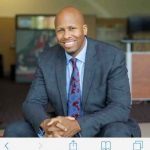
Richardson is the CEO and co-founder of Disrupt Art, a Global Market Place created to revolutionize the impact of Art, Music, Fashion, and Film.
Richardson is also the founder of Disruption Now Media, a platform that connects entrepreneurs, artists, and leaders through interactive events, educational content, podcasts, and virtual and in-person summits. Disruption Now Podcasts hosts conversational podcasts with disruptors focused on impact. Past guests have included: NY Times bestselling author Robert Greene, Monique Woodward, Jewel Burks Soloman of Google Startups and Collab Capital, Arlan Hamilton of Backstage Capital, and many others.
When Richardson was appointed chairman of the University of Cincinnati’s Board of Trustees, he became the youngest person to serve in this role in the University’s history. In his tenure, he established the 1819 Innovation Hub where industry and talent collaborate to spark groundbreaking ideas. He created a leadership development and academic preparedness program for high school students. He also championed reforms to the University’s police policies.
His education includes a Juris Doctor and Bachelor of Science in electrical engineering from the University of Cincinnati. He established the first student chapter of the NAACP at the University and was elected student body president. He received the University of Cincinnati Presidential Leadership Medal of Excellence, Jeffrey Hurwitz Young Alumni Outstanding Achievement Award, Nicholas Longworth Alumni Award from the College of Law and an honorary degree Doctor of Laws.
Richardson has appeared on MSNBC, America this Week, and is a weekly contributor to Roland Martin Unfiltered.
About Rick Farman
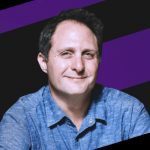
Rick Farman co-founded Superfly in 1996, becoming one of the creators behind iconic experimental properties like Bonnaroo, Outside Lands and The Friends Experience in addition to other various landmark experiences for clients including Intel, Citi, Bravo, Google, Nike, Apple and more. He plays a leading role in business development, identifying key opportunities to grow and expand Superfly’s capabilities through strategic partnerships and investments. Rick also invests opportunistically in businesses that are similarly evolving culture – many of which align with his personal interests towards wellness, technology and entertainment.