Top Podcasts
Outer Edge L.A. Twitter Space: AI Unplugged - The Basics And Beyond | By NFT LA Live & Howl Labs
It’s AI unplugged in this session of Twitter Spaces by NFT LA Live (now Outer Edge) and Howl Labs as leaders in the field introduce us to a couple of interesting use cases for AI. Rana Gujral from Behavioral Signals, NFT artist REO, and data scientist Science Stanley give us a peek at what’s going on in the intersection between Web3 and the metaverse and AI. Get ready to have your mind blown as they talk about the most interesting developments in human-to-machine interaction, generative AI, data science, and more. The future is now as AI starts to revolutionize all the subdisciplines in the NFT space and take NFT technologies to the next level. Tune in and see what’s right on the Outer Edge of NFTs!
Listen to the podcast here
Outer Edge L.A. Twitter Space: AI Unplugged - The Basics And Beyond | By NFT LA Live & Howl Labs
Welcome everyone to another session of Twitter Spaces by NFT LA, now Outer Edge, and Howl Labs. My name is Daniel F. Along with me, I have the pleasure of co-hosting with two new guys. We have Josh and Ivan. How are you guys doing?
What’s up? I am doing great. It is a nice warm day in Venice, California.
I can’t complain too much. I’ve been a little under the weather but I wasn’t going to miss this space for anything. It’s good to be here.
Ivan, we need to use some AI to fix the bug there that you got to improve your immunity over time. We will work on it.
That sounds good but there are pretty interesting use cases for AI, which we’re going to be discussing here. I’ll let Danny kick it off. I don’t have that many jokes under my sleeve but I’m powering through it. Thanks to everyone who’s jumping in here.
Let’s go. Without further ado, I’m going to introduce one of our guests. We have Rana Gujral from Behavioral Signals. How are you doing?
I’m doing well. I echo Ivan’s sentiment of feeling under the weather. I caught a bug after my long trip but I didn’t want to miss this fun conversation, so here I am. I’ll make the best of it. Thanks for inviting me. It’s a real pleasure to be here.
It’s a pleasure for us to be joined by you. Let’s go.
There are a lot of bugs. I have had a lot of people I know telling me they’re getting taken down summarily by something. These days, who even knows at this point what’s going around? I feel like at this point, it’s not even Rona that I’m worried about.
There are all kinds of stuff.
Danny, what do we have next? We can kick off right away but the reality is this has been such a huge buzzword already. Everyone has been hearing about AI. Part of the space is us discussing how that’s going to intermingle with blockchain. There is a pretty broad range of how this falls into place between how we use tech and even market it. Let’s get to it. We’re pretty excited. We have an exciting program of topics. I’m going to let Josh kick it off.
I would love to kick it over to each of our guests to start to introduce themselves a little bit and talk about how their world intersects with AI and Web3 to create some context for the conversation. Rana, do you want to start?
At Behavioral Signals, we’re focusing on a very specific aspect of applied AI. We specialize in dialogue processing and building intelligent behavioral AI engines from dialogue processing, and focusing on the acoustics of a conversation, which is how something is being said. For example, in a dialogue or a conversation, there are two elements. There’s the spoken word or the content and then there is everything else, which is the pitch and tonal variance, prosody, tonality, and intonation.
We are one of the original researchers of extracting intelligence from the tone of voice. What we do extract can roughly be put in three buckets. First would be aspects of emotions like anger, happiness, and sadness. There would be behaviors such as engagement, empathy, and politeness. The third bucket is an assortment and a collection of advanced classifiers that are built on raw-level signals. You’re looking at macro-level KPIs and indicators such as predicting who’s under stress or duress or even control predicting and identifying aspects of fraud or trustworthiness.
The most interesting is predicting intent. For example, it’s predicting if the person involved in a dialogue with the specific domain in mind will do what they’re saying. Will that action happen? For example, will the client buy or not buy? Will the debt holder pay or not pay? You could build a lot of custom models on top of it. That’s what we do.
From a commercialization focus, we take that technology and apply it to a variety of human-to-human and human-to-machine interfaces. One of our core products is using this tech to create a conversational bioprint, which is codifying how a person converses, and use that to do intelligent matchmaking in a call center and impact a lot of KPIs. I can go a lot deeper into all of these topics but I’ll stop there.
It’s super helpful context. When did your world first intersect with Web3 and blockchain? What was your reaction at that time? How has your perspective on how these two worlds intermixed changed over time?
Various aspects of applied AI intersect into Web3. There are implementations in the metaverse. When you’re building digital avatars, you are still trying to have a human experience. The question is, “How do you have a human experience in a digital space?” There are various aspects that would limit you and there are other aspects that would facilitate that interaction.
It becomes interesting. For example, when you’re looking at emotions and behaviors, especially emotion, which is a very complicated science, it’s multimodal. For example, humans express emotions in a variety of different ways with facial expressions, tone of voice, spoken word, and body language. When you are in that digital space, a lot of those things are gone. You’re interacting from avatar to avatar. There are no facial expressions. There’s no body language per se.
There are spoken words and then the tone of voice. The tone of voice plays a huge role. It’s probably the most powerful indicator. There are some interesting applications there. We have had a very specific commercial focus that we have narrowed onto but we make the technology available to a variety of other interesting people who are building other experiences. That’s where those intersects happen more in an indirect manner rather than a direct manner.
I don’t want to cut off because I know the topic here is Web3, but there’s some stuff you mentioned which is a good point of understanding the broad strokes that AI can make. You mentioned the power of simply recognizing something like the inflection of someone’s voice and how that can predict certain behaviors. You mentioned the idea of how that might even let you know if a debt holder will pay his bills. If we move onto a metaverse space where we’re using avatars, we can still measure his voice. I want to touch on the plethora of ways this could go.
If you’re looking at, “Is someone going to pay the debt collector?” there’s some level to, “Is this person going to have a delinquent payment on their account? Is this person realistically worthy of credit?” I’m a little interested in how you see that spinning out. In which verticals do you think people could take this tech? Maybe bring it back to what your particular big-picture mission is.
One aspect of predicting intent is to understand two elements of interaction. One is understanding the nature of the interaction. You can call it the domain or the context of the conversation or interaction. The second is understanding the state of mind of the participants involved in the interaction. You could check both of those off and have a good handle on both the cognitive state of mind of the folks interacting and have a good handle on the domain. You would need a good handle on the domain to build a custom model because you would have to build a custom model for each of those specific types of interactions.
For example, when we’re building these machine learning engines, there’s a very specialized model for conversation that’s happening between an agent and a client in a call center. It would be a different model for a conversation that’s happening between a doctor and a patient. Once you build those models with the right amount of data and the right type of data, then you have the ability to understand the state of mind, which is what our specialty is. We do that by extracting these signals from dialog processing, especially the tone of voice. You could then do magical things. You could do amazing things such as predicting intent.
For example, one of the early implementations that we did was a challenge from one of the clients. They gave us the task of predicting if a debt holder will pay or not pay. They wanted us to make a binary prediction. For example, a lot of percentage probability will pay or not pay, yes or no. It’s as simple as that, and see how accurate we are. We built a custom model around that. We were able to do things that surprised us. We were able to make a prediction in the first twenty seconds of an interaction. As soon as that, we can make a prediction. That prediction is typically anywhere from 82% to 85% accurate. You could take that model and build a variety of other interesting implementations on top of it, around it, or other interesting use cases.
In terms of Web3 and metaverse, there’s a whole variety of implementations that could come in. It’s not necessarily in terms of intent prediction but mostly in terms of introducing an element of empathy and also enabling some of these human-to-machine interactions to be more human-like. That’s where the big promise is. You’re talking to these machines or machine-like counterparts, for example, voice assistance. You would want to have more of a human-like conversation. If you look at the current NLP landscape, none of the basic things have been solved. The NLP and NLU part, which is understanding the language, processing it, and speaking that language have all been solved.
AI Unplugged: In terms of Web3 and metaverse, there is a whole variety of implementations that could come in for AI, mostly in terms of introducing an element of empathy and enabling human-to-machine interactions to be more human-like.
Your neighborhood voice assistant does that well but what it can’t do is understand the state of mind or the meaning behind that conversation and what someone has spoken, the intent, and the intention. You need that element to hold a conversation. A conversation is an essential element of interaction, especially verbal and speech-related conversations. You could now use some of these technologies to fill in those gaps and have amazing interactions and conversations that are very human-like or human-to-human-like even though you might not be speaking with a human. You might be speaking with a digital entity, a software system, or a machine.
This is super interesting. I don’t want to press too much on this point because we have things on the agenda but the one question I do want to ask you is this. Do you see a world in which this can trace itself back to how we develop a digital identity? This is a hot topic. There is a capability. Even we at Howl Labs have been looking into the idea of how you use it. We’re looking at a transacting level. How do I look at the blockchain? I look at transactions and activities on-chain, use that like a Merkle tree, and start thinking, “At least financially speaking, these are these individuals’ behavioral patterns.”
“Can I consider this person credit-worthy or worthy of reduced collateral toward a loan to purchase something via their crypto in a metaverse space?” I’m curious. Is there a world in which this builds into that? Can we technically be using AI and measuring the individual’s social behavior within a metaverse space? That could be program-reflected in a non-fungible token, for example. What would you think are the implications of that? I’m trying to even figure out how far out we are from that. My guess is we’re not very far.
We are already here. I don’t want to say that we’re close because we are here. A lot of these things are essential elements of digital twins from a lack of a better perspective. When you’re creating digital twins, you’re looking at what makes you human and the unique aspects of your humanness. One big aspect of your humanness is your normal emotional behavioral state and how that plays into various interactions. What we’re focusing on is the conversation aspect. What we have also realized is that there is a unique conversational bioprint just as you have a fingerprint, which is unique for you. There’s a retinal scan and other biomarkers.
There is a unique way each of us can work and interact. For example, we express a whole wide variety of attributes ranging from how fast we speak to the amount of energy and emotions we exude to other aspects of politeness, engagement, and empathy. When you understand those, you can create that bioprint. Once you have that bioprint, you can make very intelligent decisions about who is your ideal conversational partner. Those play a big role in stimulating and developing natural rapport and affinity.
Let me give you an example. We have all been in situations where we’re having an adversarial, complicated, and even tense conversation with someone. Let’s say you’re trying to negotiate something and you walk out of that conversation without getting your objective. You lose the agenda. You didn’t win the negotiation but you feel good about the conversation. You would say to yourself, “I didn’t get what I wanted but that was a great dialogue. I feel good about that conversation.”
There’s that one instance and then there’s another instance where maybe you meet somebody at a cocktail mixer. It’s a very casual and non-controversial setup. You’re having a basic chit-chat. In twenty minutes, you’re like, “This is torture. I want to run away.” The question is, “Why does that happen?” It’s because either your natural styles are clicking and you’re getting into a flow, or you’re colliding and you’re unable to build any natural affinity or rapport. That’s independent of the agenda of the conversation. Once you understand that and have that, you could magically influence future interactions. This would be a huge thing in the digital space.
That’s very exciting stuff. Our additional guests have arrived. We have REO. Thanks so much for joining us, REO. I’m honored to have you. If you could start by introducing yourself and how your world intersects with AI and Web3 to give the audience a little bit of context, that would be great.
Thanks. I appreciate that. What’s up, everybody? My name is REO. I am a visual artist, a music producer, and a DJ. I started drawing and dancing. I turned into making beats and then doing visuals for everything from album covers and directing music videos and stage visuals for Kanye, Beyoncé, Post Malone, and people like that. Right when the pandemic hit, all my tour visual jobs got canceled. I was in my house like everybody else, then NFTs came about. I have been working for other people for so many years, working with clients, and making digital art but it wasn’t considered art. I was a content creator.
NFTs came along at the perfect time when I was ready to take a chance on myself. I started making a bunch of 3D art using Cinema 4D and Octane. I like making digital art but making 3D art was a headache because most of the time, you’re putting out fires, “This is going wrong. The VRAM is this.” It crashes. I’m used to making music where things flow. You wake up out of a trance and have this song sitting in front of you. I started to play around with AI in 2021.
It was this site called Snowpixel. You would send something, and it would take an hour to get something back. It was usually not even anything great but it was still cool to see it go. Every couple of months, I started seeing it getting better. Midjourney came. I’ve been using Midjourney for over a year. I noticed that it was very similar to the way that music was. It started to feel like I was finding my flow state but visually. It was thinking as fast as I was. I’m a pretty good Photoshopper.
I was taking some things from Midjourney version 2 and version 3, going in and repainting on top of it, and finishing the thought. I was using it as a collaborator. As it got way better towards the end of 2022, I started to take it and use more of it in my work. You can go see it on my Instagram. I’ve been posting a lot of Fashion Week candid photos. I’ve been focusing on AI photography in a way. I’ve also been a photographer in real life. There’s the pressure of trying to get the shot and dealing with models or light and all these things. I can be on my bed without having to worry about how many video cards I have.
That’s so dope. We will dive in deeper. Let’s give Stanley a chance to introduce himself as well. This is all so exciting. You have such illustrious backgrounds. We could talk to any of you. I want to make sure that we cover the whole gamut here of what’s going on. Stanley is one of my favorite human beings. Stanley, it’s great to see you up on stage. We have had some fun conversations about AI over coffee and on stage. I would love it if you could tell folks what you’re up to in the world of science and AI to kick things off.
Thank you so much for having me here. What I’m immediately up to is I had a delicious cup of coffee by the beach here in Venice. You will have to join me soon. I’m so happy to join this conversation. I can already tell it’s going to be great. I felt your pain rustling with VRAM and Cinema4D. I’ve been there before. I’m so excited to talk about AI. My name is Stanley Bishop. I go by Science Stanley in the decentralized science world. I’m a machine learning scientist and a solutions architect for bioinformatics.
I use machine learning to study DNA and do things with DNA in medicines. I’m also a passionate supporter of artists. I’ve operated an incubator in Venice Beach that tries to partner artists with technologists to build cool stuff. At this moment, it’s all AI happening. It’s so fun seeing all these cool collaborations happening. I’m happy to be here and join the conversation.
Thanks so much. Ivan, we’ve got a stacked panel and a lot of topics to get through. Do you want to kick us off with a question for this crew?
We have gotten to the topic of artists. This is an interesting discussion about the creation of art and dissemination. If we’re looking at AI-generated art, we know that NFTs will only increase the velocity at which that type of art could be created, hosted, minted, and put out. I am by no means an expert as those in the crowd. I’m going to bring up at least what I understand when we’re looking at AI-generated art. AI is curating multiple and hundreds of thousands of works of art based on prompts or whatever is being input by the person that wants to create this. To an extent, AI is learning from all of these different styles and all of the different artworks that other artists have created.
I don’t know if anyone saw this. There was a group of creatives and musicians that went and filed a lawsuit against two AI companies. I can’t remember both of them. I know that Midjourney was one of them. The other one might have been Stability AI. This kicks off an interesting topic. How do we determine what is original? How do we determine what is not? How do we get into this very complicated field of IP loss, particularly when it’s based around Web3 and iIt has crossover now with AI-generated art? I’ll pose that question to everyone. REO, maybe I’ll let you go first because you were the first one to bring this up, but I would love to hear all of the speakers’ ideas on this.
How about you, REO?
Which ones?
I don’t think so. Once we like it, that’s it.
I haven’t got there yet.
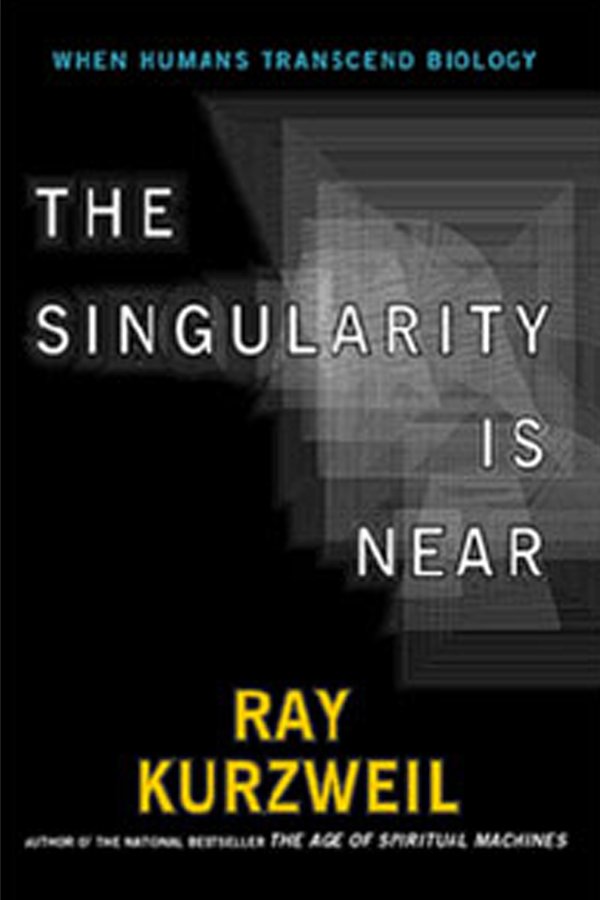
The Singularity is Near
We don’t have any requests coming up.
Thank you so much for having me. This is great.
Important Links
-
REO - Twitter
-
Stanley Bishop - Twitter
-
Shelly Palmer - Previous episode
-
Outer Edge - Twitter
-
@TryHowl - Twitter
-
@EdgeOfNFT - Twitter
-
iTunes - Edge of NFT