Top Podcasts
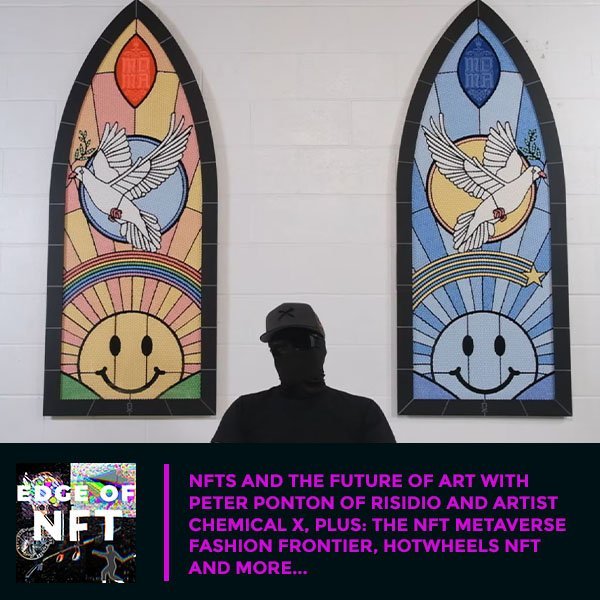
NFTs And The Future Of Art With Peter Ponton Of Risidio And Artist Chemical X, Plus: The NFT Metaverse Fashion Frontier, Hotwheels NFT And More...
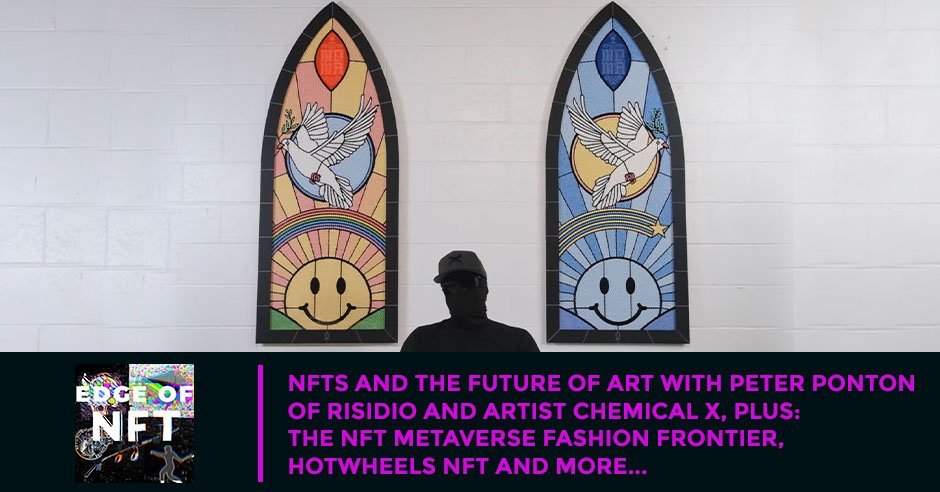
NFT is a topic that has disrupted the world of art and has launched divided opinions from both creators and collectors. Today, hosts Eathan Janney, Jeff Kelley & Josh Kriger bring in renowned guests, British contemporary artist Chemical X, and CEO of Risidio, Peter Ponton, to delve into the infinite possibilities that NFT art has to offer. They share a bit about their collaboration project, This is Number One, which has brought in the likes of Cara Delevigne, Fatboy Slim, Orbital, and more famous names as the world’s first Bitcoin NFTs. They also talk about electronic ink and interactive art displays that change along with your mood and discuss the numerous opportunities to be found in digital art and NFT.
—
Listen to the podcast here
NFTs And The Future Of Art With Peter Ponton Of Risidio And Artist Chemical X, Plus: The NFT Metaverse Fashion Frontier, Hotwheels NFT And More…
**This episode features guests, Peter Ponton, the CEO of Risidio and Contemporary Artist, Chemical X. Risidio is a company working to create a sustainable and artists-centric model for blockchain technology. Peter brings over many years of experience in launching, growing and serving high-tech companies all over the world. His passion for supporting artists, musicians and filmmakers is matched only by his concern for the environment and its relationship to technology. He’s been inspired to rethink what innovation means by integrating sustainable and environmental measures into the crypto world. Peter’s impressive list of international clients and strategic partners includes Fortune 500 companies and high-tech industry leaders. **
Chemical X is a British contemporary artist who keeps his true identity hidden. His work has never been exhibited in a gallery and does not appear on the secondary market but is regularly collected for prices in excess of $100,000. Within dance music, he’s designed the Ministry of Sound logo and the Paul Oakenfold Perfecto logo many years ago. Since then, he’s developed art projects involving Banksy and Damien Hirst. He was behind a Berlin street installation involving 100,000 ecstasy pills. His subject matter has covered the culture of ecstasy, juxtaposition of the rich and poor in Los Angeles, and he’s developing work referencing the plight of refugees in the UK. Chemical X worked on the world’s first Bitcoin NFTs in collaboration with Fatboy Slim, Orbital, Dave Stewart of the Eurythmics and Cara Delevingne. Welcome, guys
**It’s great to have you guys. **
We’ve been looking forward to having you on and we’re super excited. Let’s start with This is Number One. Tell us about this collaboration. How did it come together? What’s it all about?
When you hear about that profile of Chemical X, you’ve got to say, “How could you not want to work with this guy?” What it was all about was the collaboration. That was all set out to raise money for good causes. How can you not want to do that? To work with great artists on something unique was a tremendous opportunity from Risidio’s point of view. You’d better ask Chemical X why he did it.
Essentially, I knew all about NFTs when I started. Somebody else had been talking about the blockchain. It wasn’t so much about NFTs. I spent a long time out in LA. Somebody had an interesting idea which I’ll come to later on, it’s valid. Somebody came to me and said, “NFT is blowing up essentially. You need to do something. You’re friends with Fatboy Slim. You two should do something.” He explained what NFTs were. I thought that this is an interesting thing because there’s a journey between the Ministry of Sound. It’s an interesting one because it has been 30 years since that logo was designed. That was the last logo that I designed in the way that logos had been designed for decades, using artwork and all these ways that things have been done. The Oakenfold one, that Perfecto logo was done six months later on a computer.
The Ministry of Sound logo is pretty much still one of the rarities in these things. It’s pretty much still being used many years later. The V&A, Victoria and Albert Museum in London wants that piece of artwork because not only is it iconic, particularly in the UK but because it represents the end of something. Here we are years later and people were talking about, “Are you sure that’s the end of original artwork?” That’s the end of something being original because now we’ve gone digital. NFT’s came along and that’s what they represented. Suddenly, this opportunity came along to identify something as the original for the creator to decide this thing. This is what I consider to be the number one, the first and the original. That can be done through technology. It can be identified as a thing.
Weirdly, even in the way that artwork or music is even made, often you’re working on the same file. Only the ease with which these things can be replicated that devalues them, but you still have the original. Because it then becomes assimilated into the digital world, it has no value as original and that’s what interested me. Firstly, was this ability to identify something. Secondly, what it meant in terms of being able to give value to a digital and moving image. It’s a weird place. Long story short, somebody approached me to do this to Risidio. Me being a complete control freak, we ended up going, “We can’t just take this and we’re also doing this a completely different technology,” which will also come to and swimming against the tide which is up to my street.
There were originally inaugural five Number Ones. Can you paint a picture of what they look like and what inspired them?
The One thing is a digital 3D image that slightly moves a little bit. I love the fact that all these digital and 3D artists that have been in the space for a long time have never been able to monetize their work well as artists. That’s what NFT meant and they were there. Those are the first people to capitalize on it. As an artist, I have to tell my story in a single frame. I have to tell whether it’s like telling a joke where you’re telling the punchline at the same time. If you want to add in any narrative or layers of meaning, you’ve got to do it within the piece itself. That’s the skill itself that’s interesting. That’s one of the things that makes it a standalone thing and it means that it won’t disappear.
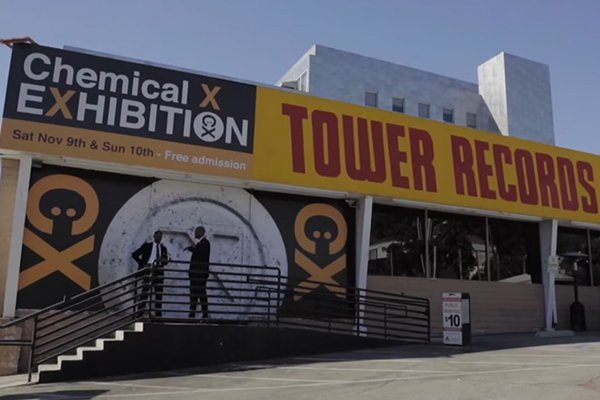
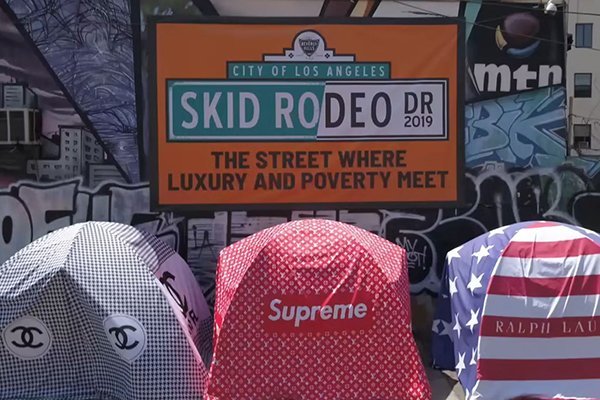
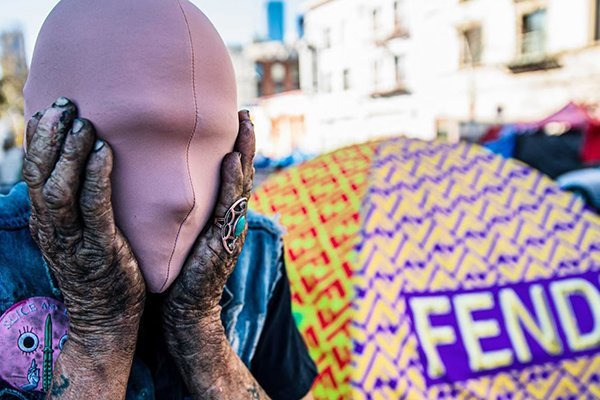
All these other artists, the people working in the arts, musicians, dancers, poets and everybody else had time and chronology. The best thing about a joke is its timing. It’s about sending you one way and then giving you something else. For me as an artist, my work is a lot about juxtaposing something. The stuff I did with Skid Row Rodeo Drive was about putting homeless people’s tent, covering them in aspirational brands from Rodeo Drive. I’d say that Louis Vuitton-Supreme collab tent, I want that but it’s also a homeless person’s tent in the middle of Skid Row. How do I feel about that? I love all of that.
The idea that you create something where you can start to tell stories. I’m interested as a medium in a way that opened things up a notch. I wanted to do something that wasn’t decorative in the way that a lot of art is. It was powerful, engaging, meaningful, as well as entertaining, frivolous and fun. All the things that art is, that it’s not just a picture to look at. You want some emotive engagement with something. I started when I made the piece with Fatboy Slim. That was the one where he wrote a new piece of music and everybody’s on it about his new piece of music. There is a piece that’s engaging, ambiguous in terms of it having no particular lyrics. I loved all that. We made it very simple.
Dave Stewart had a piece that he was keen to do. We did this and we told another story, a three-minute-long one. Orbital wanted to do something that was engaged around the idea of the way that TV idents work. All these things were almost like a visual jingle that gets stuck in your mind. We did something around that. I spoke to Cara and said, “You need to do something personal.” All of these things were called Number Ones. The brief to everybody was, “This is number one. You break down what that means to you. Is it the most important thing? Is it the biggest thing? Is it the first thing? What is that?”
Everybody is going to have a different view of what that is. That’s the thing about This is Number One. The idea is it’s an open creative greatness. It’s almost like an ice bucket challenge that people will come along and always have a different answer to it because art isn’t like Math. It’s not 2 + 2 = 4. It’s 2 + 2 equals whatever is most attractive about a particular time and relevant to the person that’s asking the question.
NFT Art: As an artist, you have to tell a story in a single frame. It’s like telling a joke where you’re telling the punchline at the same time.
The potential for what you’ve started here is unlimited.
It’s a space for people to share stories. For instance, one of the people that we’re going to be doing soon is somebody called Erica Lost. It’s not her real name. She is somebody who does TED Talks and has been painted around the world as somebody that’s making pornography but isn’t the mechanical male version of misogynistic white-fest. It is something that tells stories, has real people, has real characters of feature-length. It has a whole lot of women in the production. It’s growing up. It’s addressing the fatness. That goes beyond the idea of what is pornography. It goes into what is the way that women are seen, treated and about the patriarchy. I’m working with something like that. I’m working with them to try to drill down into making these particular Number Ones that I want to do. The word I would use is legacy. A piece of art is something that you put out and it’s a statement that starts conversations. Think about what that is. It’s not a decorative thing. You have to think about it.
If this isn’t the edge of NFT, I don’t know what it is.
I see the technology as the quickly moving ducks’ feet under the water that nobody worries about. You want to see a swan gliding across a lake. You don’t care about how it’s doing it. At the moment, there are a lot of people and assumed knowledge. That’s the reason that to a sense we’re on the cusp. I want This Is Number One to be Apple coming along when everyone has been treated like Microsoft as the understood code. Apple came along and although they were using IBM, they took, “Here’s a picture of a piece of paper and a folder. I take it over here and drop into that. I’ve moved that over there.” I don’t go, “Save,” or whatever all the rest of the stuff that they assume things. We need to make this whole industry seamlessly easy for everybody. All that complicated stuff, nobody cares. Everybody cares who does it as all programmers do. They care about what’s going on in the background. To make something truly popular is to make it invisible.
We’ve seen that time with the most successful, impactful projects out there. Let’s talk about what makes some of that happen. Peter, what makes Risidio and Stacks the right technology to drive these kinds of collaborations and projects?
The first thing is my personal mission is to do what Chemical X was talking about. It’s to make the technology disappear. That’s always a challenge with emerging technology. It’s a challenge with this space that we’re in at the moment where the technology ends up being a barrier to entry and where we’re still in an early adopter market. Where we want to be is in that place where anybody can be there, where the friction is gone and the barriers to entry have been removed, where people can just go and have an amazing experience. That’s the first thing.
Why Stacks? We love the Stacks project. We’ve been building on Stacks since before Stacks went mainstream and went on the Mainnet. It’s been a challenge and a journey of passion and love. The question that we ask is, “Why Stacks?” The answer we say is, “Because it’s Bitcoin.” We chose the Stacks platform because it’s secured on Bitcoin. Bitcoin in our view is a stable, very secure, long-term store of value. The other thing for us is that if you look at the Stacks positioning of, “Can’t be evil. That can’t be bad.” That’s something that we love. We look at it and go, “You can’t be evil. You can’t go there.”
The other thing that is important for us, for Chemical X and the project that we’re working on is to make sure that there are no additional energy demands in the creation of these NFTs. In Stacks, we’re reusing the energy and the security that’s provided by Bitcoin. We’re creating low-energy NFTs with no additional proof of work that’s required. That’s important when we think about the environment, efficiency, sustainability and all the opportunities that these NFTs and this industry open up. It opens up unlimited possibilities for charities. That was key for us. It opens up huge opportunities for environmental work. That’s where we are with this.
I am a terrible one for analogy. You’ll probably find that as this thing goes on. The way that I describe it is instead of digging up gold and destroying the planet, we go into a bank vault. We take a dusty ingot from a dark vault. We turn it into a piece of beautiful jewelry. People wear it, appreciate it, engage with it and we add value to it. If we take some of that value and we use that to invest in long-term storage, sustainable solutions to environmental issues then we’re doing something good. The idea of standing like King Cnut and trying to make the waves go back. That recognition of, “Now what we need to do is add as much utility to what exists and as much more of a reason to dug out the ground in the first place. Give it more utility and understand about adding perceived value.” Wherein NFTs at the moment and art, in general, are always about perceived value. You don’t buy a painting based on how much canvas and paint is involved.
**We talk a lot about the glory and this is an amazing collaboration. It’d be great to know one pain point or lesson learned from this first process that you’re never going to repeat for the rest of your life. **
Before I went in, I knew if I wanted to make a quick buck or make something easy, I’d have done it a different way. I was into the idea of what Stacks, Web 3.0 and Open Source are. “It can’t be evil,” I love that idea and Risidio. None of us doing any of this at any point talked about money. It wasn’t about it. It was about doing this thing in a particular way. To a certain set, that lovely blind thing of, “Let’s just make it.” Ignorance is bliss. For me, it was about how I wanted it to work and how it worked. Therefore, you went back and went, “Okay.”
A long time ago, I used to have an agency. We used to do brand development and creative work. We moved from console gaming into mobile gaming in the ‘90s. Long before you’re going, “It’s what everybody needs.” What I realized then was what they needed to do was get together and sell the concept of mobile games to people. When they sat on a train somewhere else, you’ve got a game on your phone. It might be Snake or whatever it is, just play it. They weren’t getting together to make people engage with it. From my point of view, what I realized was this is about onboarding. If this thing is ever going to work, it has to take people outside of the crypto world who know nothing about any of it, create a seamless interaction with it, find a way of giving something away for free so they end up with a wallet then you’ve got an install base.
We talked a lot about this transitional present we’re in and the problems we’re addressing to try to make things better. Thinking a little bit further into the future if we can even pretend to do that with the topic of NFTs. We discussed programmable, evolving, exploding time on NFTs, digital goods and lots of stuff like that on the show already. Anything you guys think that we or the general populace is missing about the future of NFT powered art?
My first introduction to Blockchain Art was a few years ago. They weren’t there yet. They were talking about, “Let’s do the blockchain-related art,” because they loved the idea about all the other stuff behind it but the art itself didn’t matter. You can get an HDTV and turn it into what thing sticks on the wall. The issue that we’ve got at the moment and the same way that I’ve been around for a long time, pre-internet, pre-digital photography, pre-people walking on the moon and colored television. All these things that come along. It existed for a long time to display digital art. It’s never been the issue. We’ve created a way to give it value but we still don’t have a way to display it. I believe that digital art is going to have its own particular thing and NFT is going to have its own thing. The encroachment of actual art and the advantages of NFTs and digital art will come from screens that use electronic ink that does not have a high refresh rate and have no illumination. They look like a piece of art on the wall. They do nothing else. You switch off the light, that’s it. I’m speaking to a few different developers around this.
They use tiny amounts of power to the point where you spend a day charging up and it’s charged up for a year. It’s connected and it changes. It can change incrementally like the hands of a clock for over a day. A piece of art that looks like there are sunrises in it. By the end of the day, the sun is setting. A bowl of fruit rocks in real-time. Colors change, whatever it might be. Something incremental and therefore you can live with it. You don’t need it. Art isn’t a distraction.
I’ve got my girlfriend a Vladimir Kush piece for her birthday. It’s an egg overlooking a skyline. As the day progresses, it looks like a different scene. It’s casting light in a very different way. The ability to do that powerfully with interactive art is amazing.
Imagine that it knows what the weather is outside because it’s connected to the internet. It knows what weather is happening outside your house. When it’s raining, it’s raining in the picture. You can change it. You decide that you can change the color to match your room. You can swap things out around there. The idea that a frame is able to understand which picture it has in there and that NFT cannot be displayed anywhere else at the same time that’s being displayed within that frame.
What if it’s connected to your brainwaves through one of Elon’s projects or your Apple Watch and it evolves based on your mood and your energy? It helps the highs be higher and the lows balance out.
Ultimately, all that works. It feeds into what your texts and emails have been for the day, understand it, read it. The AI reads into what you’re doing, what your mood is and what might it be. It knows enough about you to be able to go, “Here’s a pretty sunny picture because I think you’re feeling a bit down. Here’s a romantic picture. Here’s something cool and relaxing because you need to chill,” or whatever the idea about something can be interactive. Also, all the things about NFTs. You can sell it, own it, adapt it, the artists themselves. The idea that you’ve got this direct connection to art. Banksy wants to shred a picture. If Banksy wants to create a way of doing it by writing smart contracts or ownership, that’s the thing that makes it very interesting. I know that he’s not into NFTs. He doesn’t like NFTs but he doesn’t necessarily understand the potentials so I’m working on that.
For people that are looking to launch projects, we’ve seen tons of opportunities through various organizations that support these platforms, lots of money going into grants and access to funds to build things. My understanding is that you were able to access and won a grant from Stacks. Could you talk about that a little bit for people that are interested in launching projects? What that process was like and how that helped you?
Yes.
Chemical X, how about you?
A chicken. This time, it was dead.
Peter, how about you on that one?
Nothing.
Peter, how about you?
Mission accomplished.
**Peter, how about you? **
Peter, how about you?
What are you going to do next after the podcast?
Peter, how about you?
What handles should they look for you, Peter?
Risidio.com and ThisIsNumberOne.com.
As an artist, I have ChemicalX.co.uk. If people want to know what I’m thinking on a rare occasion, I share it on Instagram, which is @Chemical_X_Lab.
Thank you.
Important Links:
-
Emma-Jane MacKinnon-Lee – past episode
-
Instagram – Risidio
-
Twitter– Risidio
-
Seth Goldstein– past episode
-
@Chemical_X_Lab – Instagram
-
iTunes – Edge of NFT Podcast
About Peter Ponton
Founder and Chief Executive Officer
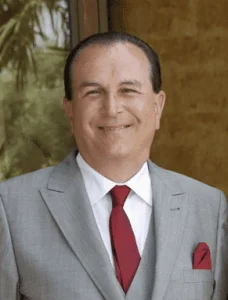
Born in Gibraltar, educated in the UK and living and working between Europe and USA since 1990, Peter is a truly global citizen, visionary, and out-of-the-box creative and strategic thinker, with a uniquely integrated perspective. He has extensive global expertise in launching, growing and serving high-tech companies and brings over twenty-five years of highly creative company, project and team-building experience. His impressive list of international clients and strategic partners includes many Fortune 500 companies and high-tech industry leaders such as Hewlett-Packard, Compaq, NEC, PictureTel, Texas Instruments, Toshiba, Microsoft, Olivetti, Autodesk and Intel to name a few.
About Chemical X
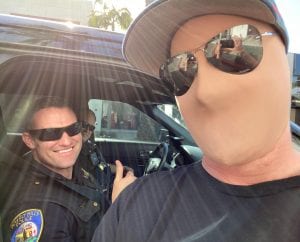
Chemical X is a British artist whose work is based on the world of the pixel and the human brain’s ability to fill in what it wants to see, in order to add detail that never existed. The proximity of the viewer to the subject can mean that one studies the detail at the expense of the bigger picture or, from a more distant perspective, one is forced by one’s own subconscious to bring order to the seemingly chaotic mix of thousands of pills, each charged with their own power to polarize opinion.
Artist Chemical X is not a newcomer to the art world. Working for more than two decades, the artist did some amazing design projects in the early 90s (the most famous one is undoubtedly the logo he did for Ministry of Sound), but he also collaborated with some impressive names like Banksy, Damien Hirst and Jamie Hewlett.
Chemical X lives and creates somewhere in the United Kingdom.