Top Podcasts
Monica Long Of Ripple, Transforming Movement, Management & Tokenization Of Value, Plus: Sean Dudly Of Animoca Brands On MotoGP, And More…
Globally recognized as a platform that builds breakthrough crypto solutions for a world without economic borders, Ripple is a household name in the intersection of blockchain and fintech. Monica Long has been with Ripple early on and now currently serves as its General Manager. She has seen how the company built itself into the world’s leading enterprise blockchain and crypto solutions provider by pioneering innovative solutions to international money transfers, central bank digital currencies, and decentralized financial services. In this episode, she talks about these, as well as recent developments, particularly the XLS-20 standard and how it benefits developers and creators. Meanwhile, Sean Dudley, VP of Product at Animoca Brands, joins in on the conversation to talk a little bit about the upcoming MotoGP Ignition Champions. Tune in and get a view of the future that’s already happening in the present, both in fintech and gaming, right here on the Edge of NFT.
—
Listen to the podcast here
Monica Long Of Ripple, Transforming Movement, Management & Tokenization Of Value, Plus: Sean Dudly Of Animoca Brands On MotoGP, And More…
Stay tuned for this episode and find out how Ripple continues to empower the masses to bank in a decentralized world and is set to roll out some dope new NFT tech.
Additionally, what’s the story behind our guest’s SpaceX artwork on her wall.
Also, on how to get into the next wave of your new gaming obsession through MotoGP. All this and more on this episode. Enjoy.
—
**This episode features Monica Long, who is the GM of Ripple, the leading enterprise blockchain and crypto solutions company. Monica leads the team, providing infrastructure tools, services, programs, and support for the creation of the XRP Ledger to enable the internet of value, as well as the RippleNet side of the business, which works on providing frictionless global money transfer using the power of blockchain tech. Monica served as VP of Marketing, having joined Ripple in 2013 as the company’s first marketing communications hire. **
**Throughout her career, she’s helped tech companies drive fundamental change in the financial services industry and was recognized among the Bay Area’s Most Influential Women in Business in 2020. Monica also supports the women at Ripple Employee Resource Group as its executive sponsor. Before joining Ripple, Monica worked in corporate communications at Intuit and supported startup clients in various B2B and B2C sectors with several in FinTech, including Prosper. **
—
Monica**, welcome to the show. **
Thank you for having me. I’m excited to be here.
**It’s great to see you, Monica. Are you back at home or are you still in Texas? **
I am at home. I sadly did not make the journey out to Austin. A lot of my colleagues did, and I heard it was a rock and a good time. I know we’ll talk more about it. It was also over 100 degrees.
**There are a lot of record highs. There are over 17,000 individuals that consensus. I felt like we were all showering in our clothes throughout the week, but the Ripple House was a clutch haven of cool air conditioning and interesting people in the midst of all of it. I scooted over there on the first day and your team did a great job setting up an event that was accommodating and integrated into things. There’s a cool graffiti art wall. We did a little clip on our show, showing this virtual graffiti. It was a cool event. **
Thank you for stopping by and visiting. It’s good to know we kept the air conditioning rolling too.
**That was the most important thing. We’ll talk more, but let’s talk about you and your journey with Ripple to kick things off. We love to understand more about your origin story with Ripple. Ripple is a household name. It’s not only in the blockchain community, but globally, it goes hand in hand with people’s understanding of Bitcoin and Ethereum. It’s an important part of the ecosystem, and we would love to understand how you got into the mix there. **
Thank you for giving that praise to us. I am a lucky duck. Let me say that. I entered the fray of Ripple in 2013, about a year after the company was founded. The entry point I had was in the set of Eathan, you mentioned that one of my clients when I was on the corporate communications public relations side, was Prosper. Prosper was one of the first people-to-people lending marketplaces. It was co-founded by Chris Larsen. He was also the CEO. I worked for him then and found him to be such a visionary leader, someone who truly looked at a problem in financial services around personal and small business loans and was seeking to make that whole system work more for the people. I found that to be inspiring.
I connected with that mission and with him. When he was the Cofounder of Ripple in 2012, I noticed that he had started this new project. I talked to him, and that was my introduction to crypto, Bitcoin, and this new revolution that he was talking about around digital gold and how important the internet of value would be to the future of humanity. He sold me on what this big adventure would be, so I was lucky to join then.
Blockchain Fintech: The XRP Ledger introduced some new innovations around tokenization so you could represent different types of value, not just the native cryptocurrency on the ledger.
**That’s cool, especially since it’s been for a couple of years since then. You’re still in the mix, so there’s an energy and culture of a mission alignment there. **
There’s nothing I’d rather be working on. With no other people, speaking to culture, I respect what Chris and then Brad Garlinghouse, our CEO for a number of years, on what culture, value system, and operating culture they’ve built. It’s a joy to work with the people I work with, and I’m always learning from them.
**I’ve got my Prosper account. I don’t know if you guys Jeff and Josh too, but I opened one several years ago. I always liked that idea. For people who aren’t familiar, you can be a lender instead of a bank. They do interesting things like set you up with a basket of assets. You’ve got some high-risk lending, some people who got an A credit rating, and different interest rates associated with it. It’s appealing to those people who are on the FinTech side of blockchain too. They want to get in on that FinTech a little bit deeper and play a role. **
The original vision the way he would describe it was he felt like lending should come back to community banking roots, like we’re neighbors, and you have car trouble. I’ll spot you, but you wanted to do that on a broader scale, first in the US and then more globally. The original form of it was borrowed from the eBay auction system. Different lenders could bid on the interest rates based on the borrower’s information. That was a people-to-people lending platform, the centralized method and now track that to decentralize finance and what the possibilities are that are so exciting to address the systemic inequities in financial services.
**I got to go slightly deeper down this rabbit hole. As a musician and somebody who made my living, like an independent contractor playing music and going to the bank, they would be, “Where’s your W-2? We want to see that W-2.” Things like this are so great because it goes, “It’s all this bureaucracy. I’m going to pay it back. I’ve got the income data that doesn’t have to be on this particular type of document.“ I appreciate that movement so much. **
**Let’s talk a little bit more about some of these big global obstacles that are being taken on here, and you’re in the mix. Money transfer has always been a major pain, particularly international transfers. I want to know how Ripple changes that and also say I deal with that. I’m just dealing with somebody that I know is trying to make a transfer to someone in Peru. They’re trying all these different services, and they don’t make sense. Tell us what you guys got going on there. **
It’s a headache. Early on, as the company was getting started in the 2013 to 2015 period, we were exploring a number of different use cases, in particular looking at XRP Ledger. XRP Ledger was one of the very first all-chains to Bitcoin. Mine launched slightly before it. It introduced some new innovations around tokenization so you could represent different types of value, not just the native cryptocurrency on the ledger. It’s a decentralized exchange, but right on the protocols. It would make it easy to trade different cryptos or tokens on the ledger.
There’s a different consensus mechanism for validation to try to make the ledger work efficiently. It’s a low fee and fast settlement at a high scale. Looking at that combination of elements, there’s something that smacks you in the face as, “This would be a good ledger for payments.” Those are the problems that we started to explore. It’s mindblowing how much money is sent around the world every year. It’s in the order of $130 trillion annually. The way that these different payment networks grew up over time was more domestically based.
If you’re trying to cross domestic systems, you require all these intermediaries to facilitate that exchange. Over time, what happened was in order for liquidity to be broad and deep enough to service global payments, very few, large banks control the FX markets. The top 5 banks control 95% of foreign exchange. You don’t have competitive pricing and open access to the foreign exchange markets. For those of us that are already down the rabbit hole of blockchain and crypto, these are things that blockchains are good at solving, creating a global fabric that is open distribution.
It’s good at connecting disparate systems and networks and making value or tokens move more efficiently across those different networks without all those intermediaries required. That’s what we started to set about solving. It’s important to note the timing at which we started doing this. 2014 to 2015 was right on the back of the Silk Road bust and Mt. Gox collapsing headline after headline about the dark web that Bitcoin is a haven for the dark web. You could put a frame that either way makes sense.
When we were walking into banks and other financial institutions to pitch them this idea of, “You should use a blockchain to solve these problems that you have with cross-border money transfers,” they weren’t open to that conversation at that time. As we started to build the software and technology to make cross-border transfers more efficient, it was focused on how we do it in a way that gives them total control over their compliance and doesn’t require the use of cryptocurrency in the transactions.
Around 2018, that changed. The whole industry was growing up so there was a lot more openness to the conversation about using crypto in cross-border transfer, which is the real thing. That’s the unlock that makes using a blockchain instead of a centralized system for cross-border money transfer ten times plus better because you can bring down costs dramatically if you’re able to use an asset like XRP, which is a global, independent type of asset. On an open ledger, like the XRP Ledger, that’s what makes those cross-border transfers 90% more efficient.
**One of the things that are always tricky about dealing with new forms of money, in general, is making sure that liquidity is there and the foundation is reliable and dependable. You guys have been around a long time and have established that. Can you talk to me about what that process was like from the early days to where you are now? **
Liquidity has always been at the heart of our story and the different types of solutions that we have built. In the context of RippleNet and cross-border payments, we were talking about that part of the product that uses XRP to facilitate cross-border transfers we call On-Demand Liquidity. Historically, these institutions we work with would have to pre-fund accounts internationally so that they had liquidity available in Thai Baht, Filipino peso, Mexican peso, etc., available to execute a transaction from wherever their customers wanted to send using on-demand liquidity results. They don’t have to outlay all that capital in those different markets. Instead, they can, on a transaction-by-transaction basis or in batch, create the liquidity for that transaction using XRP on demand.
Beyond that, the liquidity story has extended. We had an insight from our customer base where they increasingly want to offer crypto products to their customers. It’s the ability to buy, sell, and trade crypto, but they need efficient access to a broad open market around those cryptocurrencies that exist. We’ve been building a product called Liquidity Hub that acts as an aggregator, like the Kayak or Google Flights of liquidity, so that they can quickly identify the most efficient path for given crypto. With the XRP Ledger, talking about it as having the first decentralized exchange, that story around fast, efficient, liquidity, and settlement has always been what makes it different or special in the chain landscape.
**It’s such a key part of it. It’s something that people take for granted with projects like Ripple and assume that liquidity is at the forefront as a priority for other organizations. They assume it’s going to be there with certain projects. They get caught sometimes, and we’ve seen some things where that’s been the case. **
Yes, in terms of ensuring that the markets are there for payments with our institutional customers. Using a blockchain for payments sounds pretty simple or straightforward, but the liquidity challenge has been the long pole in the tent to build and support. We’ve been both very thoughtful, but aggressive in building integrations with exchanges around the world, partnerships with market makers and OTC brokers, and different institutions that can help make those markets for our customers.
**A great technology without a strong liquidity strategy can’t come to full fruition. On a similar note, on the monetary policy side, looking at that topic from a crypto perspective, I’m curious about this central bank digital currency concept and whether or not that’s helpful towards moving the needle here. **
There’s much talk about CBDCs. Stablecoins had a lot of airtime this 2022 and so on the back of that CBDCs as well. It’s because we have worked with financial institutions longer than anyone in this space, specifically to solve payment problems. It was pretty natural for central banks to engage with us on CBDC projects. We have a team that’s full-time focused on that now. With partnerships, we’ve publicly shared that we’re working with the Royal Monetary Authority of Bhutan, as well as the Republic of Palau on their CBDC initiatives.
CBDC is our compelling proposition if you think of it as a way to digitize a domestic system for any given country. You could see immediate benefits to people in that country toward things like greater inclusion that more people will have access to that rail and that system. Faster distributions of government aid are another example right into those digital accounts or wallets.
We think that there’s also an interesting role that CBDCs can play in a Web 3.0 or internet of value future, where you have digitized government-issued currencies around the world, connected through the public blockchains and those cryptocurrencies to facilitate that cross-border fabric that the world will eventually need. Just as there’s central bank money, as well as commercial money and the systems nowadays, we think that Stablecoins and CBDCs will come in the near future.
**In Bhutan, there are 750,000 people. That’s not a small pilot per se. It can make a meaningful impact on that population and that country. How’s that pilot going so far? **
It’s underway. We’re working with them on getting it fully up and running and launched. One of their key goals with this project is to increase inclusion. Another aspect or factor that mattered a lot to them was Bhutan is a country that takes sustainability very seriously. It’s core to the country’s values and the people. In working with us, they wanted to use XRP Ledgers since it’s a carbon-neutral chain and inherently very energy efficient. I’m excited to see how it all plays out and share those results.
**Those things take time when you’re working with a country. There are a lot of different milestones along the way and challenges to overcome. We’ll be following along and see how that goes. **
Thank you. I agree. That’s a positive thing that it’s going to be a development over many years with CBDCs, so it’s done right. Think of the history of the internet, it’s taken us many years from ARPANET to where the world saw pervasive adoption to fully realize its potential so we’ll see the same thing with blockchains and crypto.
**We should be patient. **
It’s still early, even though it’s been more than a couple of years.
**XLS-20 is something that’s supposed to help lower gas and transaction fees for users. Can you tell us a little bit more about its capability and usage? **
I’d mentioned at the top that since its creation, XRP Ledger enabled anyone to tokenize anything. To make the experience of tokenizing NFTs in particular, we developed and contributed this new standard called XLS-20. It would be a new standard added to the core protocol. The current status is it’s going through the amendment voting process. Eighty percent of the validators have to accept it for two weeks as yes on the amendment for it to pass. That’s still happening now. Here’s a little behind the scenes on what XLS-20 is.
One, it makes the NFT objects on the ledger very compact and efficient, so that if there are a lot of NFTs on the ledger, it reduces the impact on the performance of the ledger, which is something we’ve seen happen and affect developers and creators. A lot in the NFT world is congestion on other networks. The standard also has hard codes or hard wires in it. A lot of the core NFT functionality that developers use, like mint, burn, trade, auction, and even royalties, you can program it using that standard instead of having to write smart contracts.
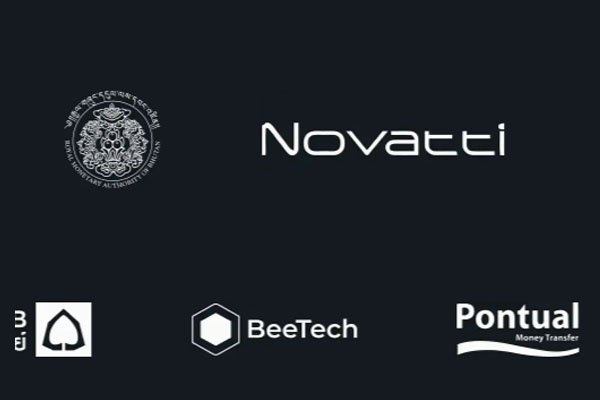
Blockchain Fintech: Blockchain for payments sounds straightforward, but the liquidity challenge has been the long pole in the tent to build and support.
The benefit there is the ease of use for developers, lower security risks, or risks of fat fingering something and making a mistake. We’ve read those painful news articles about mistakes in smart contracts that have painful results for a developer. Those are some of the benefits of how XLS-20 was designed. Because the XRP ledger is designed for highly efficient transactions at a high scale, gas fees are about $0.005.
**I don’t want to let go of my $0.005. Maybe when I do an ETH transaction, I could spend 100 $0.005. **
**It sounds like a lot of DRC 1155. All the goodness and none are less of the fees and other inefficiencies there. It sounds like a step forward, and that’s where the vote needs to happen. Do you have a sense of a rough timeline based on the direction things are going now? **
Because it’s this decentralized network of validators, it’s in their hands to vote on it. We’ll have to watch and see.
**Once that happens, as far as promoting people’s interaction with it and use of it, do you have something on the roadmap there whereby that vote is a trigger and things start to happen on an XLS one? **
We want to support developers and creators. In 2021, Ripple launched a $250 million creator fund to support creators building their projects on XRP Ledger. This XLS-20 standard has been available in DevNet for a number of months. Some have already been able to build what they’re building, and it’s ready to go with Mainnet acceptance if the validators do vote yes. We’ve had some cool projects. It’s fun to see the ideas that people submit. That’s probably some of what you saw at Ripple House in Austin, Texas.
I’m on the edge of my seat.
It’s boring, but groceries.
A table.
Was that Facebook Marketplace or Craigslist?
I’ll opt out for a while.
Thanks for having me on.
Thanks to Sean for being here.

I’m going to check it out.
Sean, I think we share a partner in Forte.
I guess we do.
**Maybe NFT LA branded REVV racing car? **
Never say never. We have a bunch of cool stuff.
It’s a pleasure. Thank you very much.
**Thanks, Sean. **
**Take care. **
Important Links
-
@AnimocaBrands – Twitter
-
@REVV_Token – Twitter
-
Discord – REVV Motorsport
-
Telegram – REVV Motorsport
-
@Ripple – Twitter
-
@RippleXDev – Twitter
-
@MonicaLongSF – Twitter
-
Spotify – Edge of NFT
-
iTunes – Edge of NFT
About Monica Long

Leading the marketing team at Ripple, where we’re enabling instant, reliable and low-cost payments everywhere, every way, for everyone. Inspired by our mission? Let’s talk and see if there might be a place for you on the team: https://ripple.com/company/careers/

About Sean Dudley
Leading, creating, designing, and advising on blockchain games and experiences at Animoca Brands.
Launched numerous Web3 projects across the family of builders, collaborators, and partners.