Top Podcasts
Miles Anthony Of Decentral Games - Metaverse Play & Earn Gaming, Plus: NFT Volume Up 200%, Dorsey’s Tweet Down 99%, And More…
Play and earn gaming has a lot of potential in the metaverse. Games like ICE Poker will let you play poker in the metaverse for free. You earn rewards and tokens when you win and lose nothing when you lose. It’s a win-win for the customer. That is what Miles Anthony of Decentral Games wants to do: to build a fun yet competitive environment in the metaverse. Learn the basics of ICE Poker and how they incentivize people to play seriously despite it being played with free-to-play chips. Find out how wearables work and how you can use them to your advantage. Discover the power of forming guilds that will help shape the community. Join Jeff Kelley, Eathan Janney, and Josh Kriger as they talk to Miles about ICE Poker, Decentraland, and play and earn gaming. Also, find out more about the NFT volume up 200%, Dorsey’s tweet down 99%, and more in today’s episode of the Edge of NFT.
—
Listen to the podcast here
Miles Anthony Of Decentral Games – Metaverse Play & Earn Gaming, Plus: NFT Volume Up 200%, Dorsey’s Tweet Down 99%, And More…
Stay tuned for this episode and find out how the guests and ICE Poker are straight-up populating Decentraland on their own.
Why dev team combo is the highlight of our guest?
The NFT market is continuing to explode with no signs of stopping. All this and more in this episode. Enjoy This episode features Miles Anthony, CEO and Founder of Decentral Games. The platform that builds games that reward you to play. Decentral Games build ICE Poker, a metaverse native EV positive poker game that gives players economic freedom through self custody and delegation of wearables. DG is responsible for roughly 60% of all traffic to Decentraland, boasts the largest numbers for any metaverse game, and is the number one NFT project on polygons network. Congratulations on all that, Miles, and thanks for joining us here on the show.
Thanks for having me on. I appreciate it.
It is a way to turn up the volume into Decentraland. It is a party over there because of you guys.
It has been great to see many concurrences. We have been following the project pretty closely since their ICO in 2017. Even when they launched in 2020, it was pretty much deserted. With our content, we wanted to fill up the metaverse because it is inherently supposed to be a social experience. That is where our thinking was when we built ICE Poker and our other games.
There is a lot of that in the metaverse now but it is coming down the pike in a big way. Let’s back up even a little bit further. For our readers, give us a little bit of background on you. Tell us a bit about your journey and how it led you to DG.
My first venture was an eCommerce business I started when I was at school at UCLA. I got more involved in crypto from 2016 to 2017. I realized that it was inevitable that it would become a larger part of technological innovation. I have made the jump toward crypto in 2017. I have experienced the whole ICO boom. It was more in it for an investor angle.
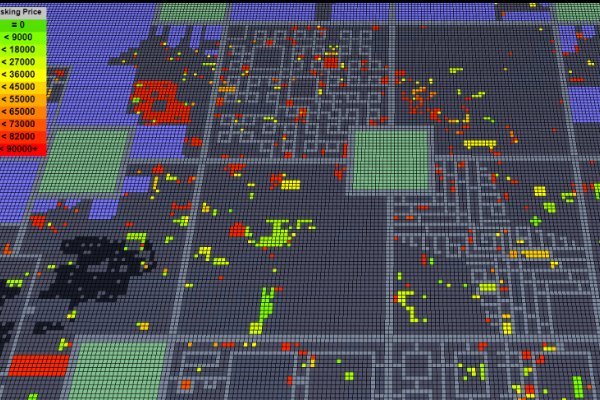
Once I started building different applications using Ethereum and other platforms like Polygon. I realized that it was a lot more fun to build things. We started DG in early 2019. It was after having tracked Decentraland’s growth. We are participating in the sales of the tokens, land sales, and auctions. We realized that the metaverse was something that was inevitable. It was going to grow. At some point, it was a matter of time.
We wanted to be one of the first actual games in the metaverse that was able to populate it. That is how we started DG. We started several different games like slots for a lead, blackjack, and backgammon. We found a solid product-market fit with poker. More specifically, play earn, free play poker because that is not technically wagering. It is based on NFT ownership. We can get into that a bit more in detail later on this show but that was the turning point for the project is ICE Poker.
We have talked a little bit about how the metaverse has been criticized for being a little bit sleepy. Certainly, you guys have turned the tables with ICE’s focus on virtual casinos and keeping things quite busy over there. How did the actual concept for ICE Poker come to be? How did that come out of the wash in terms of the project that you bet on? I will try not to use any more puns for the rest of the show.
We wanted it to be free play. It is accessible to anyone in any jurisdiction. It is not limited to specific jurisdictions based on Wagering Laws. Starting from that angle, when people play free to play poker on Zynga Poker and these other sites, it is not real poker. We wanted to add some token incentives so that people were incentivized to play well, even though they were betting free play chips, non-transferrable worthless chips.
That is was thinking originally around ICE Poker and inspired by a lot of other planner games at the time. We act being one of them. We wanted to tie it to these daily quests and challenges. If you achieve them by grinding and playing a decent amount of poker, you would be able to earn tokens. On top of that, we added a multiplier based on your leaderboard position.
Each day there is a 24-hour tournament. Everyone is ranked by their net chips. The leaderboard is broken into twenty different tiers. If you are in the top 5%, you are earning 2X. If you are at the bottom, 5%, you are earning .05X. Effectively, this delivers a completely EV-positive gameplay experience. Everyone earns ICE tokens at the end of each day. It is a matter of if you are earning more or less. It is based on your performance.
That is a pretty unique tokenomics model. I do not think I have seen that type of experience before.
We tried to combine both. The fun of playing a game where you are not losing funds if you lose but also the reward of actual tokens when you are performing well. It is a sweet spot.
How do you come up with that? Is it market research? Is it models that you are seeing in existence that you are basing it on? Did it take a while to get to a beta version to work out the kinks and stuff like that? How do you get to those ultimate mechanics?
We wrote the white paper for ICE Poker towards the end of last summer of 2021. This is during the whole wave of Axie Infinity‘s huge amount of hype that they generated over that period. It was inspired by a lot of these games that were live but I feel poker is skill-based. There is an element of chance and luck but it is for a large amount based on skill. That is why we wanted to incorporate the leaderboard system. It is not like farming tokens. You have to perform. As we expand the game and add more layers to the game, we are trying to make it as skill-based as possible but still maintain that EV-positive nature.
I’m trying to figure out how it works, “What is my strategy hopping in there?” I’m not a seasoned poker guy but it sounds like part of my strategy is going to maybe grab some poker books and get my actual strategy together in terms of the actual poker play. There are some rewards that are being present and practicing that poker play in your environment. Am I getting that right?
Every time I place a big bet, you should go all in. That would be the way.
Josh is always looking out for me. I always noticed that.
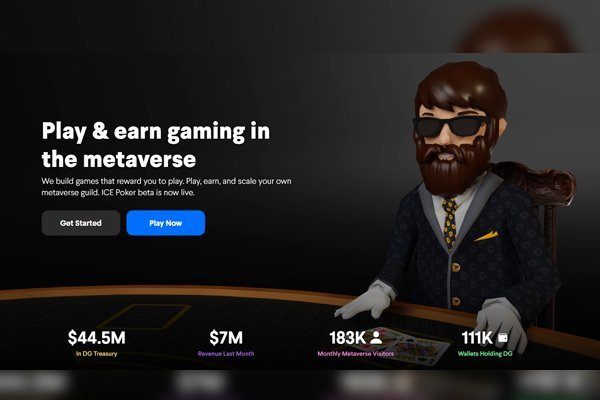
Decentral Games: Ice Poker had to be free-to-play so it’s accessible to anyone in any jurisdiction. There are also token incentives so that people are incentivized to play well, even though they were betting free-to-play chips.
W build in native guild tools. Guilds were an idea that was growing in popularity towards the end of 2021. We had a few advisors to the project that were heavily involved with guilds or part of guilds. We wanted to create the tools. Anyone in our community could build their own guilds. We have a native delegation on our site, and revenue is split between the NFT honor and the player automatically at the end of each day. Effectively, we have seen a lot of these guilds start their own poker table. They teach their players and educate them on the best practices of poker. We have seen the incentives play out. They want their players to perform well, and it is cool to see.
In the timeframes, I wanted to clarify the leader boards. You have different timeframes and different rewards based on those. The winner for a particular day versus the week or of all time. How does that function work?
We are giving rewards in multipliers based on daily performance. It is reset every 24 hours. We have leaderboards for the week and the month but we do not have any prizes for that quite yet. We are going to be adding more layers to our prize pools, but for now, it is nice because if you have a bad day, you get to reset the next day. If you have a good day, you get rewarded immediately for that. It has been a good base model but we are looking forward to adding more layers on top of the basic Ice Poker that we have launched and have applied for the last several months. It is a good starting point.
I guess drawing on some of the best practices that you see in fantasy, where the daily routine. The reset there seems to work pretty well. A very specific poker question here. Online, you have a lot of solvers that are in there helping folks play with optimal strategy. Is that something you are seeing at all with ICE or is that an issue at all? How do you address solvers and things like that?
We have seen people educate their players on how to play. Are you referring to collusion in general?
I mean specifically like the tech running using AI to optimize your plays in the background. Since it is all digital, you cannot see exactly what somebody is doing. They will run it through computers that give you the optimal outcome for each play.
We have not seen too much of that so far. It is hard to build bots to play for you into Decentraland because it is a 3D environment but maybe some folks input the data and use that as a helping tool.
Sometimes podcast hosts might give people an idea like that, and it might mess with your system or whatever. I don’t know how that would happen.
It is the evolution of poker. Everyone is always looking for an edge. That could be a challenge. What other challenges do you think you have experienced operating in the metaverse and Decentraland versus launching an online poker site? What other challenges are there?
I would say the main thing is there is no playbook. There is no one that has done it before. You can’t look at someone, see and point, “What should be a certain way and what should not?” Even building in the 3D environment, we took inspiration for ICE Poker from real-world poker and online poker. We combined both to deliver the experience that we have in ICE Poker.
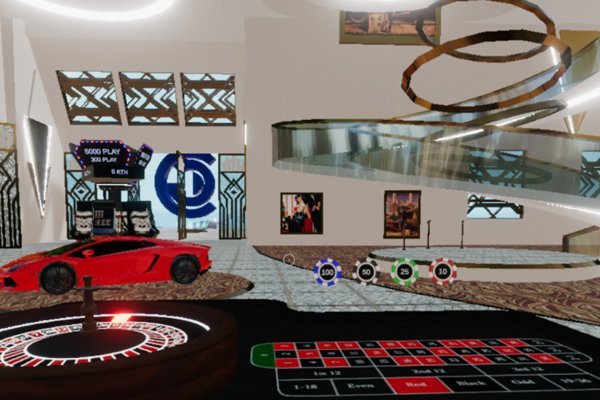
The main difficulty is not having anything as a president. In Decentraland, because it is a virtual space, you can’t crowd a certain room too much. Otherwise, people won’t have enough seats to play. It is the same issue you run into in a brick and mortar poker lounge. What ends up happening is you have to break it into different instances of the same building. These are called realms and servers. Managing that and trying to route players to open realms with open tables is a challenge that you do not have to deal with when you are having a website poker experience. Those are the two main things.
On the flip side, I’m guessing maybe there are some advantages to not having a playbook where you get to write the playbook. Maybe people are a little bit more forgiving. Anything that comes to mind, or are you like, “This is tough?” Any advantages of being the first mover there?
It is more fun to build something that has not been done before. It is more of a challenge, and there are things that we have rolled out flawlessly. There are things that we have taken a little longer to roll out because we did not have the playbook. Most communities in Web3 are forgiving, given the fact that most products are in beta. Even adding new features, the community is forgiving. They have confidence in our ability to deliver, and sometimes when things are quicker or take a little bit more time.
It is your iterating and working to create a more cohesive, stronger bond with your community. How do you improve the player ownership percentage by incentivizing stacking wearables? It sounds like this is something you are tackling as you move forward.
That has been a huge point of discussion within the community. We have a pretty large amount of guild owners in the community that delegate the wearables out. The players that play with them are renting. They are not a player owner. Part of our entire pitch or the backbone of our economy is this idea of upward mobility. It is going from a delegated player.
If you get to receive a delegation, you could play with an asset that is not yours. You have the revenue split between you and the owner. Moving up the ranks to the player owner, someone who owns their asset earns 100% of the rewards. It doesn’t have to split it with the owner because they are the owner. The guild owner is someone who owns several assets and rents some of them out to others.
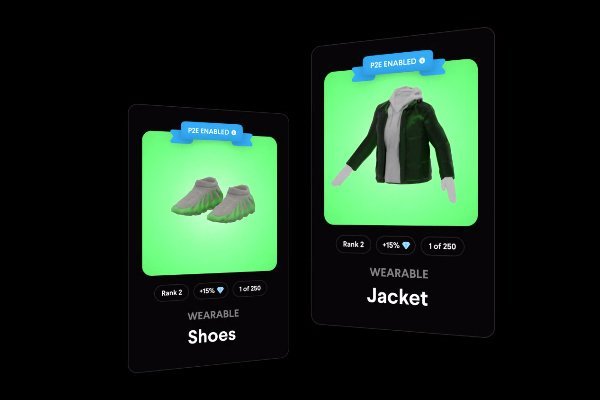
It was economically, and it still is economically best to delegate one wearable per player. We have been working with the community on a few governance proposals around incentivizing people to stack their wearables. This way, you are able to boost your rewards because you can wear up to five wearables at a time.
If you wear five, you can earn a considerable amount of more tokens than if you use one. Now, it is not enough to incentivize that. We are implementing it. We will see a lot more folks stack the wearables, play with five and secure those much higher rewards. We can hopefully see our player ownership percentage increase a bit from the players borrowing assets in guild owners.
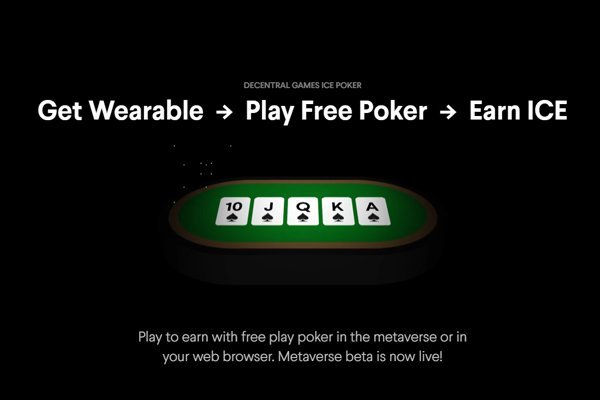
Decentral Games: Anyone in the Ice Poker community could build their own guilds. A lot of these guilds actually start their own poker stable where people can teach others about poker.
It will also make them look a lot cooler with all those different wearables that they are rocking.
It is interesting stuff to see how you are daily dealing with these tokenomics issues in how do you design the game, how do things change, and how do you incentivize the community again? We love it too. It is new and interesting. It is something and a challenge. You don’t have a path before you. That is fun. It’s because of that you had this success. You do well in this unfamiliar territory, and you are also going to be getting ICE Mobile released soon. When does that happen? What can people look forward to with that?
ICE Mobile has been a huge focus for us on top of our metaverse product because we feel that it will be a lot more accessible for people. A lot of players don’t have access to a computer that can run to Decentraland smoothly. Even though they launched their Native Client, it is still laggy if you do not have an advanced computer.
ICE Mobile will be browser-based. It will be accessible on any device, through the mobile browser, and it is going to be a PWA. You can save it to your home screen. This is what we are going to roll out as a proof of concept until we gather a bit of product-market fit with that implementation that we will roll out like a native app on the App Store.
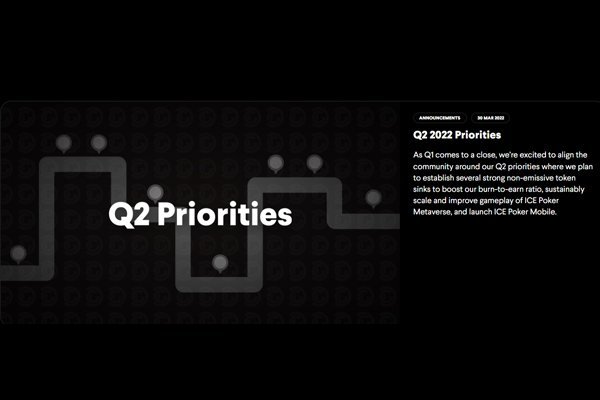
To get some market sooner, we are doing PWA, and we will probably launch it in mid-May 2022. We have been testing internally. The game is fully functional. We have a wardrobe experience. You can see your avatar still. You can equip wearables and take off wearables. Polishing the gameplay experience is the main focus.
Can you remind me of what a PWA stands for? Is it some type of web app?
Progressive Web App is a website that can be run on any device with a mobile browser. If you save it on your home screen, it functions like an app, you don’t have to deal with the politics of the App Store. From that standpoint, it is easier to go to market sooner with it.
One of the things we have talked about a lot throughout the episode so far is guilds and the importance of it to ICE. I want to go a little bit deeper on that and ask. For our readers that want to get involved, what do they need to know about the guild leagues and how they can take that step and become involved, earn more and collaborate with people?
Guilds, from a macro perspective, had a huge wave up towards the end of 2021. There is a bit more negative sentiment around them, more so in 2022. They do play an important role. It allows you, as an NFT owner, to monetize your yield-bearing asset but you don’t necessarily have the time to maximize its yield of it.
There’s no playbook yet in Decentraland. Click To Tweet
A guild setup is pairing the NFT owners that have invested in these assets with the players who have time that is able to play with those assets and earn yield. The structure itself is making the system more efficient. The main negative sentiment around guilds stems from this extract nature of maybe some that have experienced trying to extract value from the game.
Most guilds, if they are aligned with the community, that is why we wanted to make it. Everyone could make their own guild. We have 4,000 micro guilds within our community. We feel that approach is a lot better than having a few huge ones because if they own too many of your assets in the game, they control the entire economy. Decentralizing guild ownership, we thought, was the right approach to that.
With that being said, guilds, because they have skin in the game, it is great to see some of them run their own marketing campaigns and educational campaigns, educating players on how to play optimally and stuff like that, as opposed to farming and dumping all the tokens. It is good to see some of them play an active role and be fully aligned with the community.
Oftentimes, when I get into conversations with people about what is up with Web3 or the metaverse and what is interesting about it, a lot of people miss some of these foundational elements to it. What we were talking about reminds me of this response that I often give folks. It is that I don’t think there has been a moment in history where somebody can leverage their time and effort to build value and wealth, make a living for themselves, and change their lives more so now than ever.
We only have many resources that we can deploy. You have different forms of capital. You have time, effort, knowledge, relationships, and money. If you are lacking one of those now more than ever, you can make up for it with the others. What you are describing with guilds, pros, cons, it is de-evolving, it is iterating, it taps into that. Now, there is that opportunity for people, and what you are doing highlights that. It is very cool.
It is like the more specialization of labor. If you can contribute one thing and exchange that value with someone else, and it contributes to another area, it makes for a more efficient economic system. By design, they were inevitable because people had money and no time. People have time and no money. It made sense to build the structure.
You mentioned Axie Infinity, one of the big guns in space. It was cool to have GO at NFT LA along with you. What other projects in this space have been inspiring to you and continue to inspire you?
Axie has been the biggest one because of the amount of scale they were able to achieve and the turning the entire industry on its head. Blockchain gaming was pretty tiny before them. There have been several other games that have popped up like working off the Axie’s original model. Axie has been the main one that has acted as a benchmark. Not only the game and the reward structure but on how they are looking at in-game assets and deal with guilds.
I’ve got them up here.
NFT.

How did you get that dev team together?
Important Links
-
Global NFT trading volume grows over 200% in 2022, surpassing $50 billion – Article
-
Why Jack Dorsey’s First-Tweet NFT Plummeted 99% in Value in a Year – Article
-
Episode – The Joe Rogan Experience Past Episode
-
Twitter.com/DecentralGames – Twitter
-
Twitter.com/oxmiles – Twitter
-
Spotify – Edge of NFT
-
iTunes – Edge of NFT
About Miles Anthony

CEO, Decentral Games