Top Podcasts
Michael Kong Of Fantom - Scalability W/O Compromise On Security & Decentralization, Plus: Opensea’s Phishing Scam, Animoca’s Billion Dollar NFT Pivot, And More...
There’s so much influence in the NFT space today. Many new ideas are gaining momentum, and many cool things are happening. One of the life-changing innovations we encountered was the Fantom Foundation. Headed by CEO Michael Kong, Fantom Foundation is a blockchain development platform that provides scalability without compromising decentralization, and security. Michael sits with our hosts Jeff Kelley, Eathan Janney, and Josh Kriger to talk about the company’s vision and what it offers to the NFT community. Listen in and learn how to scale your business without compromise with this open-source smart contract platform.
—
Listen to the podcast here
Michael Kong Of Fantom – Scalability W/O Compromise On Security & Decentralization, Plus: Opensea’s Phishing Scam, Animoca’s Billion Dollar NFT Pivot, And More…
This episode features Michael Kong, CEO of the Fantom Foundation. Fantom is a highly scalable blockchain platform for DeFi, crypto dApps and enterprise applications. It is designed to overcome the limitations of previous-generation blockchain platforms. Fantom is permissionless, decentralized and open-source. Michael has a background in finance and IT from the University of Sydney where he published papers on smart contracts security. Previously, he was an engineer for Block8, a software development company based in Sydney. He later started one of Australia’s first hedge funds specializing in cryptocurrencies. Michael, you’ve been busy. We’re glad enough you got some time to hang out with us. Welcome to the show.
Thanks a lot. I appreciate the opportunity. I’ll be here to answer any questions you have and talk about Fantom’s ecosystem, NFTs and anything you like.
We were talking about how you’re based out of the Bahamas these days. It’s good to have you fully present with us. We appreciate it. Fantom is a massive undertaking. There’s so much influence in the space and momentum. There are so many cool things happening with it. Let’s take a step back though and look into the history of the company. How did this idea come about? How did it end up becoming what it is?
In late 2017, I started creating a cryptocurrency hedge fund in Australia. It’s one of the first. We have a few people in traditional finance that were working at the ANZ Bank or the Australian and New Zealand Bank. They were running the global markets division. It’s one of the big four banks of Australia. In the US, you might have Wells Fargo, JPMorgan and Goldman Sachs. It’s the same category of banks except for Australia.
I always wanted to start a cryptocurrency hedge fund for more than a year but I wasn’t able to fulfill the regulatory requirements because I didn’t have what’s called an Australian Financial Services License to run a fund, which is something that you need. Being, at the time, my age in my early twenties, I wasn’t able to get such a license but I’ve asked my partner for people who did. He also had a lot of connections in traditional finance and could raise money for the fund.
What we were doing there was managing my hedge fund’s money, institutional money and credit investor money and advising on a variety of different projects as well. One of the projects was called Fantom. That originally came out of Korea. Someone in the team knew this guy who apparently had a few postdoctoral or PhD students and people who were associate professors at Yonsei University, which is one of these very technical universities in Korea.
He told us that he had an idea about creating new asynchronous technology. It’s a new way of processing transactions in an asynchronous manner. It’s going to be faster and cheaper than Ethereum. They already had a paper that they were writing and what they called simulation code tested on the development. Back in late 2017 or early 2018, it was during the ICO boom. Projects out of Korea that were very much infrastructure Layer 1-based had a lot of hype around them.
Also, the backgrounds of these people that we were working with seemed to be strong. They seemed to have more credentials than serious people in IT. We started working with them and helping them with their ICO. For example, helping them fundraise. We put some of our own money in there and worked on their legals and smart contracts for their ICO. We walked them through the fundraising process. It was one of the most successful ICOs of 2018. They raised a bit over $40 million.
Unfortunately, their team wasn’t exactly honest about the technology they built. In reality, they didn’t have anything. Fortunately, at the time, Andre Cronje, I’m sure a lot of people in your audience know him, was involved with Fantom from the very beginning. He had found out about Fantom because he was working at Crypto Briefing at the time as one of their technology reviewers. He got into Fantom early on and figured out what was happening. When we all realized that the technology didn’t exist, I was prepared to quit the project and say, “I’m done with this. This is not good.”
Andre said, “I have some ideas about how we can achieve asynchronous technology. My background is in consensus technology,” whereas my background is not in consensus. It has more to do with virtual machine analysis, middleware development and how smart contracts execute. It’s a bit high up on the stack. His background is in consensus technology. He ended up suggesting a few ideas and we ended up hiring a new team. We got lucky on our hires. That team started working on the real aBFT technology. It took them a year and a half.
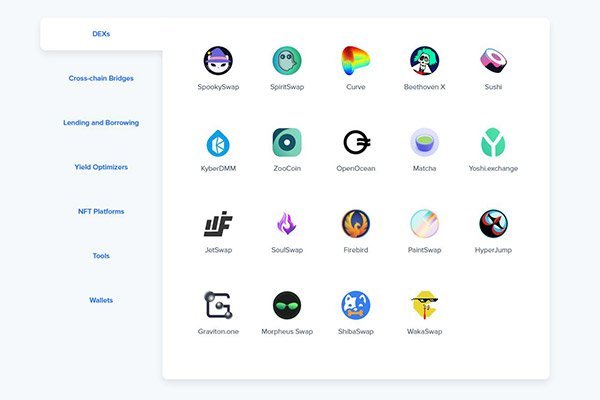
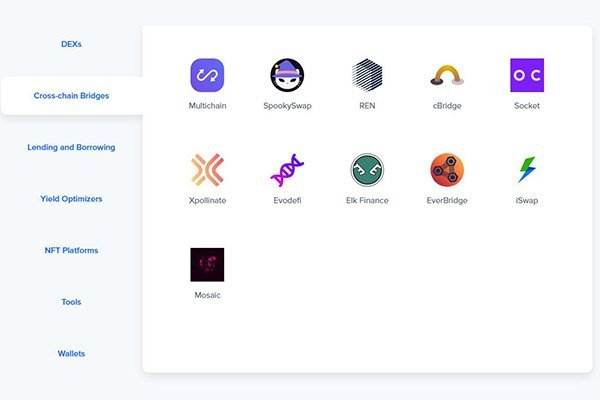
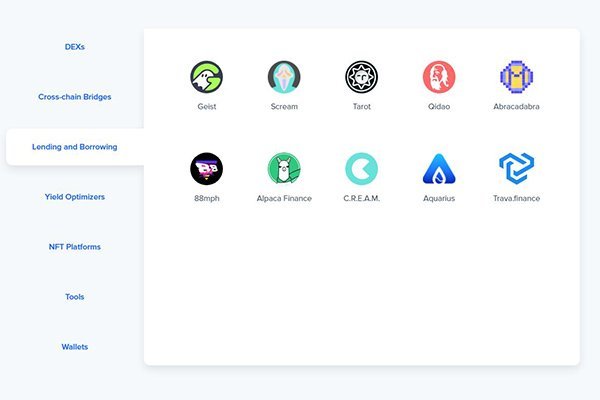
Towards the end of December 2019, we launched our mainnet. Since then, we started to get a bit of traction, more so on DeFi, beginning with a couple of DEXs, namely SpookySwap and SpiritSwap, which are forks of Uniswap and SushiSwap. These applications were of high quality. It helped attract more users, which helped attract more developers and better market conditions as well. It helped turbocharge the growth of Fantom. That’s essentially what happened. I can go into a lot more detail in it if you like. That’s the background.
Fantom Foundation: One of the key properties for all blockchains is that you need to have 100% certainty between all the nodes in the network from the very beginning of time to the most recent transaction.
That’s a saga. I don’t think I realized the full expanse of it. That’s amazing to be able to right that ship and get it pointed in a direction of productivity and real value creation. Kudos.
It has had a bit of a rollercoaster and a lot of ups and downs. On the whole, it’s looking pretty good. We’re going to keep building the technology from the ground up, improving the execution of smart contracts, going out there and trying to get as many users as possible in the ecosystem.
You’re on the show so we want to delve into what our NFT curious readers want to know about your NFT ecosystem on Fantom, how you look at NFTs, how do they fit in the picture and what are some of the unique superpowers that your system opens up in terms of NFT possibilities.
Fantom has been known by many as a DeFi chain at the moment. That’s for a couple of reasons. One is that how Fantom initially got a lot of traction was via DeFi. It began with a couple of DEXs and all of the functionality that you have on Ethereum to do with DeFi. There’s lending and borrowing, all the compounding and all sorts of protocols. They’re the applications you see on Fantom. That’s why Fantom is one of the biggest TVL chains in the world or has the amount of Total Value Locked on-chain, which is almost $8 billion.
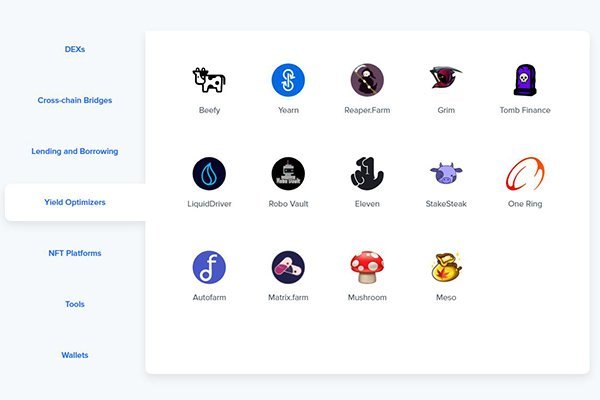
The other reason is that people like Andre and others have been building a lot of DeFi applications on Fantom. They have a lot of traction so that helps gain traction for Fantom. On the NFT side of things, we have been a bit lacking compared to other Layer 1s, to be honest. There has been a lot of focus on DeFi so I always want to have more focus on NFTs. What we’re doing on NFTs is that Fantom essentially is like a generalized smart contract platform. The way that you write, compound and deploy smart contracts on Ethereum works the same way as on Fantom.
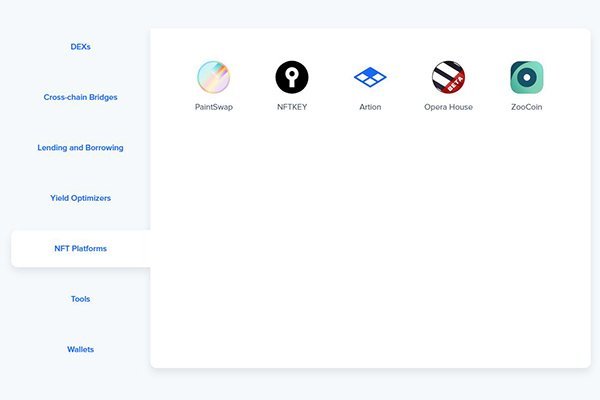
That means that the use cases you see on Ethereum such as DeFi and NFTs can apply in exactly the same manner as on Fantom except with faster and cheaper consensus. We can process those transactions in an asynchronous rather than a synchronous manner, which gets you a lot better performance. On the NFT side of things, we’re telling people, “There are a lot of NFT marketplaces out there.” There’s one that the Foundation put out that we want to give to the community on Artion. There’s NFTKEY, which has fast support on multiple chains.
There’s PaintSwap, which is a native NFT platform. There’s Fantom Opera and a whole bunch of different NFT platforms that are starting to generate more sales over time. People are creating more NFT collections like what you see on other chains. We’ve also got a few games we’re developing as well. The Foundation is investing in some NFT projects that we think are high quality and can help build the Fantom NFT ecosystem. We’ve also got a couple of metaverses, one of them being the 8BIT metaverse on Fantom that is getting traction.
We’re seeing quite a few land sales nowadays. The focus is more shifting towards NFTs on Fantom. We’re starting to see that traction pick-up. The Foundation is there open to supporting people with technical integration and launching on-chain and helping people with marketing and promoting on Twitter, Discord and other social media. On Twitter, for example, we have over 380,000 followers. We also have an NFT incentive program like the DeFi incentive program we have at the moment where your NFT project gets more traction. Let’s say it’s a game.
We want to help and support that by providing essentially an FTM grant, which you can use to help further build out your NFT application, for example, by staking or incentivizing users to join your platform. We’re offering a lot from the Foundation to help grow the NFT ecosystem on Fantom. People should try out Fantom for themselves. I talk about how it’s faster and cheaper than Ethereum. Don’t believe me. Go to MetaMask, connect with a Fantom network, do some transactions and see how fast it is and how much it costs. Hopefully, there’s a great user experience.
On that particular point, it’s faster and very similar in terms of the core functionalities of Ethereum. When people ask you how does it compare to Avalanche, Polygon and Solana, how do you differentiate Fantom in terms of its interoperability for NFT projects?
Compared to the other Layer 1s and Ethereum, the first thing to mention is that one big reason why a lot of these Layer 1 smart contract platforms have been gaining a lot of traction is that Ethereum is not scalable. The cost per transaction is based on supply and demand. It’s a pricing mechanism so the supply is the network throughput, how many transactions or how much computational power can you get from the network in a given period. On the demand side, it’s how much usage is there for the computational power of that same given period.
You need to ensure that you’re consistent even when you encounter failures. Click To Tweet
Ethereum doesn’t have much network throughput but there’s a huge demand to use Ethereum. That has driven up the price of executing transactions tremendously. For example, on Ethereum, you can do smart contract transactions. I did some smart contract transactions. One of them was $400 and the other ones were $100 and $75. On Fantom, you’re paying the equivalent of $0.75, $0.50 or $0.25 for more basic transactions. It’s just a few cents. You transfer one asset to another on-chain. That’s the tremendous growth on Fantom as well as the other Layer 1s.
How does Fantom compare to the other alternative Layer 1s? I can go for the three names you listed there. In terms of Avalanche, with the technology that Fantom has, we can do the same number of transactions as Avalanche and have a fraction of the fees. For example, there are some times where you execute a smart contract on Avalanche and you’re paying a few dollars for that transaction. On Fantom, you may be paying 20% to 10% of the transaction fee compared to what you’re paying on Avalanche.
This is when Avalanche and Fantom are processing the same number of transactions. It’s not like I’m saying that Fantom was processing fewer transactions. That’s stupid. We’re processing the same amount. We have seen that empirically play out. It has to do with the asynchronous processing of transactions that we have done on-chain. That’s just what we have now. In the future, we’re going to have much better performance because we have performance improvements in consensus and minimizing the amount of data.
For example, we’ve got SnapSync coming out, which is a variation of how SnapSync works on Ethereum. From our testing, it can minimize data by a fact of 85% to 90% on-chain as well as improve performance when it comes to consensus. We’re also working on the new middleware execution stack that replaces the EVM. There are a lot of performance issues there. We have a lot of different technology stacks. Compared to Polygon, Polygon is honestly a Layer 2. It’s not a Layer 1. It’s a lot more centralized than Fantom is.
With Solana, I don’t know what’s going on with Solana’s technology. They have had 7 or 8 outages. Fantom hasn’t had any outages except for one that happened in February 2021. It went out for twelve hours because there was an edge case in consensus. It was very unlikely for that event to happen but given enough time. One of the nodes was trying to decide which transaction to pass through to another node ahead of another one. It stalled a bit, essentially. There was a bug in the consensus.
We fixed that. Since we fixed that, we have had no network outages. It has been up 100% of the time. For us, it’s always developer-focused and testing things tremendously, which is why we have been testing out SnapSync a lot. We don’t want anything to go wrong, people’s funds to be missing and the network to go down at all. For us, there’s a tremendous amount of testing. I want the developers to test as much as possible before launching something into the mainnet. That’s how we compare.
Thanks for sharing. It’s useful to have those specifics. People are looking at all sorts of options to launch their NFTs and do DeFi projects. Sometimes those simple questions don’t always have the clearest answers until you talk to somebody from the platform. We have heard of something that you like to call consensus-as-a-service for distributed ledgers. Could you tell us a little bit more about what that is and how that gets used?
An idea that we had is separating the consensus that we have and connecting it to multiple different chains. For example, we connected it to Cosmos SDK and EVM. We’re not focused so much on the consensus-as-a-service at the moment, to be honest. We’re just focusing on the main Fantom chain that we have, which is EVM-based. It allows you to process smart contracts in a similar manner to how it works in Ethereum. Technically speaking, the consensus that we have developed is a series of algorithms combined together that allows you to get the final order of transactions.
One of the key properties for all blockchains is that you need to have 100% certainty between all the nodes in the network from the very beginning of time to the most recent transaction. It can’t be 99.99% correct. It has to be exactly 100%. Otherwise, people are unaware of what assets they own on-chain and what transactions they have done in the past. There are some inconsistencies. You can’t have any of that. What the developers have spent a tremendous amount of time building and still developing is how do you get that final order of transactions across all the nodes.
It’s having it fault-tolerant so if a few nodes fail in the network, the consensus still continues. There are no network outages. That’s what I mean. Occasionally, computers in the network go off from time to time. You need to make sure that your consensus algorithm keeps running even with those sorts of failures as the nodes restart and participate in consensus once again. What we have built is a series of algorithms. This series of algorithms can be plugged into different software. Technically, it’s not even a blockchain in and of itself. We have chosen to integrate it with a DAG.
A blockchain is a type of DAG or network structure. You can connect it to different services. We have a limited amount of resources. We want to maintain a chain that was integrated with Cosmos as well as maintain the EVM chain and different chains. We narrowed down our focus to just having our consensus technology connected to the EVM. It’s the EVM for now but we’re going to switch that over to a different smart contract execution engine. We’re focusing on one chain, which is the mainnet that we’re in at the moment. It is a chain that everybody uses when they talk about the Fantom ecosystem.
Fantom Foundation: Developers spend a tremendous amount of time building and developing to get that final ordering of transactions across all the nodes.
There are so many different interesting aspects of the whole thing. I wanted to dig in on a particular one. Lachesis is an aBFT consensus mechanism. What are some of the key features around that and Fantom? What else can we elevate about how that piece of the puzzle works?
You have to follow a number of different steps when you’re doing your consensus to make sure that number one, you do get that consistency across all nodes and number two, that it’s fault-tolerant. If part of the network fails, it doesn’t bring the whole network down. As long as 1 or 2 nodes continue running the network, that’s good enough for consensus to keep working until the other nodes come online again. That’s at a high level how the consensus technology works.
That is a crash course in blockchain technology that someone could pay a lot of money for. Clearly, there’s some impressive technology here that folks need to take advantage of when it comes to minting NFTs and doing interesting NFT projects. You alluded to it. Fantom is doing some unique things to support that ecosystem and encourage folks to onboard and give Fantom a try. Could you elaborate on that a little bit more for us?
There’s the Fantom ecosystem, which consists of a lot of developers from the community building all sorts of different applications for Fantom. On Ethereum, you have applications related to DeFi and NFTs. You have users who are using those applications and trading with one another. It’s the same ecosystem that you have on Fantom and applications except it’s running on faster and cheaper consensus and being able to process transactions more efficiently. Separate to that, you’ve got the Fantom Foundation, which originally raised a bunch of money in the ICO. It has used those funds to build the platform that we have at the moment.
Its mandate is to support and grow the ecosystem by focusing first and foremost on continuous development to the consensus, improving the execution of smart contracts and also engaging directly with people in the community. We have been getting a lot of inbound leads these days because Fantom has been getting quite a bit of traction now. A lot of these leads have to do with NFTs as well because I’ve been coming on podcasts such as yourselves and others, which is great, spreading the word, talking about the Fantom ecosystem and telling people to come and try it out.
That has helped us get a lot of inbound leads for people who are thinking of developing NFT projects or who have already launched NFT projects and other chains and want to experiment on Fantom. What the Foundation offers is assistance in terms of technical integrations. If you need some help launching on the Fantom chain, we can help you with that. We have a team of developers that can help you launch on-chain and answer any technical questions that you have. We also have marketing support putting out links to NFT applications that are deploying on-chain new releases or announcements from those NFT projects.
There’s a whole heck of a lot in there.
It’s a Game Boy Color.
I made a cup of tea.
Should we hit this next hot topic?
Let’s do it.
Let’s move on from hot topics.
Important Links:
-
How an NFT pivot turned a tiny mobile game company into a multibillion-dollar powerhouse
-
GitHub – Fantom
-
Discord – Fantom
-
Telegram – Fantom
-
@FantomFDN – Twitter
-
Spotify – Edge of NFT
-
iTunes – Edge of NFT