Top Podcasts
Merman’s “Mofaya” Mosengo And Jesse Bernstein On Creating An NFT Supported Doc About Conquering Oppression Through Music
MOFAYA is a story of dreams and the incredible grit it can take to achieve them. After losing his father and brother to corrupt armed forces in the Congo, Mermans Mosengo had no choice but to escape. Relying on just love, hope, and music as his guides—and with only a guitar on his back—Mermans smuggled himself across Africa in search of a better life. As he managed to share his musical talent along his hard road, the music became his spiritual passport and went on to inspired millions of people around the world. Joining Jeff Kelley, Eathan Janney, and Josh Kriger,along with MOFAYA director and producer, Jesse Bernstein, and the documentary’s protagonist, Mermans Mosengo, to talk about the film and the real-life adventure that inspired it. Learn more as Jesse and Mermans talk about the creation of the film and the CryptoMofayas NFT initiative they established to help fund a music school in Congo.
—
Listen to the podcast here
Merman’s “Mofaya” Mosengo And Jesse Bernstein On Creating An NFT Supported Doc About Conquering Oppression Through Music
Our sponsored spotlight episode features Mermans “Mofaya” Mosengo and Jesse Bernstein of the MOFAYA documentary and CryptoMofayas NFT project. Here’s a little bit about Mofaya. After losing his father and brother to corrupt armed forces in the Congo, Mermans “Mofaya” Mosengo had no choice but to escape. The MOFAYA documentary is a real-life epic adventure about how Mofaya smuggled himself from country to country in trains, engine rooms and Army planes.
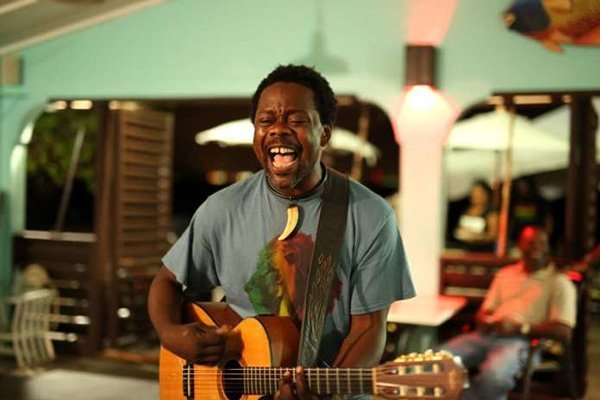
With nothing more than the guitar on his back, Mofaya’s musical talent became his spiritual passport that has inspired millions of people around the world. Mofaya crossed the South African border in a gas tank and was discovered in Cape Town by a music producer while performing in a bar on Long Street. Mofaya was granted an O-1 Visa, played music around the world and his life was forever changed. In September of 2006, Mofaya became the lead singer of the Playing for Change band. He received his Green Card into the United States and lives in Playa Del Rey, California.
Here’s a bit about the filmmaker Jesse. After spending twenty years as an actor on multimillion-dollar film and television sets, Jesse Bernstein transitioned to storytelling behind the camera. Jesse has written and directed spec commercials for Subaru as well as a handful of short films before documenting the courageous journey of Mermans “Mofaya” Mosengo. It’s great to have you both on the show. Welcome.
Thank you so much. It’s great to be here.
That’s quite a story there. I’m excited to be able to dive in on this thing. Let’s do that. Let’s start at the beginning and talk to us about how the idea for the MOFAYA documentary came about and how that led to the CryptoMofayas project.
Mermans has been living off of an O-1 Visa. He has been traveling and playing music around the world thanks to Playing for Change but Mark Johnson, the Founder of Playing for Change, is my neighbor here in Venice Beach. When Mermans was traveling around, he would be sleeping on Mark’s couch. Mermans and I had become like brothers. We were by Muscle Beach in Venice doing pull-ups and pushups with my dog, boxing and stuff. We were walking back from our morning workout and he received a message on his phone that he had received his Green Card.
We stood there. It was almost like the world had stopped spinning on its axis. We were there and everything felt like we were in the right place at the right time. I looked over at Mermans and said, “We need to make a movie about your life.” We couldn’t wrap our brains around what that was going to look like at the time. Mermans was telling me that he had to go back to South Africa.
That’s to get my wife and kids to come over.
He was planning on going back to South Africa where his wife and kids were living. I had to pitch the idea first to Mark Johnson, so we went back to his living room. I told him the idea is, “We should make a documentary about Mermans.” He was lukewarm on the idea. I said, “That sounds cool.” His plate was too full. That weekend, Mark had to travel to Seattle, and Mermans and I were left alone in the house. I wrote a treatment and we put together a video teaser. When he came back from Seattle, I said, “What about now?” He saw everything that we were thinking about doing and gave me the seed money to travel back to South Africa with Mermans. That’s how the documentary got started.
You mentioned the O-1 Visa and we know how difficult it is for folks to get Visa if anyone has ever tried or had family members. It’s an arduous process and this one is special. I want to read the definition of it from the USCIS.gov site, “The O-1 nonimmigrant visa is for the individual who possesses extraordinary ability in the sciences, arts, education, business or athletics or who has a demonstrated record of extraordinary achievement in the motion picture or television industry and has been recognized nationally or internationally for those achievements.” That’s a rare class to be categorized in and a special visa to achieve. That’s a pretty awesome accomplishment there. You got the documentary and we mentioned the CryptoMofayas NFT project. How is this related? How did this come about as well?
Mofaya Crypto: It’s really beautiful when the film maker has such a great relationship with the subject of the film. It’s beautiful how you blur the boundaries of friendship and filmmaking, subject and object, and all of these things that can really make for a great documentary.
Being in Venice, I feel like I’m at the crossroad of art and technology. I’ve been working in Hollywood for years and everyone around me is in tech. They’re creating blockchains and starting NFT galleries on my street. These are my neighbors and the people I talk to every day. It came about when I was introduced to crypto a few years ago. In the middle of 2021, I was introduced to NFTs and I thought, “We’re in post-production on our film. We just got back from the Congo. What a cool way to merge these worlds and expand our community.” That’s pretty much how the NFT collection or the idea came about. It was by the proximity of where I live and the awesome people that have been educating me.
What a hotbed of NFT activity in West LA and, in particular, Venice in the Santa Monica area.
A lot of the action goes on at Menotti’s Coffee right by the beach. They got great coffee and a lot of NFT and crypto folks hang out there. I always encourage people that are trying to get into this space to grab a coffee, meet some folks and go down the rabbit hole. Let’s talk a little bit more about CryptoMofayas. There are going to be 1,250. How are the folks that are reading going to engage with these CryptoMofayas? What’s going on with the utility side?
The cool thing about the NFT project and the documentary is we are in post-production on the film. Tying this NFT collection into the movie is going to not only help us get to the finish line but a portion of the proceeds are going to go toward building a music school in the Congo in Kinshasa, where Mermans is from. We were in Kinshasa in June of 2021. Do you want to tell everyone where the music school would be in Kinshasa? It’s a pretty special location.
The music school is going to be in Matete. That’s where I grew up. It’s a neighborhood in Kinshasa. Matete is like Compton. It’s dangerous. You get great musicians that come out of there. You see a lot of kids on the streets. There’s a lot of poverty. I struggled a lot. I used to walk around everywhere with my guitar because in playing music back there, you lose everything becoming a musician. The country was so corrupt. There’s no royalty for musicians. I got my metric in mathematics and physics. My mother’s wish was to go and become an architect, which I’m an architect in a way. When I became a musician, it was crazy. There was a big fight between her and me.
One of the reasons why I left was so that she would be proud of me when I came back. I believed in something nobody saw. The school is going to be there for those kids who were like me and who are like me. I wasn’t given the opportunity to study or play music but I want to give it to those kids who might be in the same situation. At least I can go to the parents and say, “I’ll look after them, do this, and make sure they can become great artists, bass players, guitarists, drummers, music producers or stuff like that.” That’s the idea. It’s to go there and to give what I didn’t have.
People often underestimate the power that music has, especially for young people, in emotionally processing their environment. It’s having that in some of these environments, the equivalent of Compton in your country or even some of the neighborhoods here in the United States where kids could use that as a form of expression, processing things and also a way of communicating in the world. That’s super powerful.
We appreciate how you’re leveraging that. I want to talk a little bit about the documentary. You are going to submit to some of these top-tier festivals like Toronto, South by Southwest, Sundance, Berlin and Cannes in summer 2022. That’s super exciting. Can you tell us a little bit about making the film?
Mermans is such a unique person and character that when I point the camera at him, I love following him around. When we got to Cape Town originally, he pretty much said, “This what we’re going to do. This where we’re going to shoot.” He set up all the interviews. We went around Cape Town, which was a little bit dangerous for me. In some of the neighborhoods we got into, there were about 5 or 6 situations where I had to be escorted out of an area because of the danger involved. There was one time we were filming on the street. I was putting on a headlock and someone grabbed my camera.
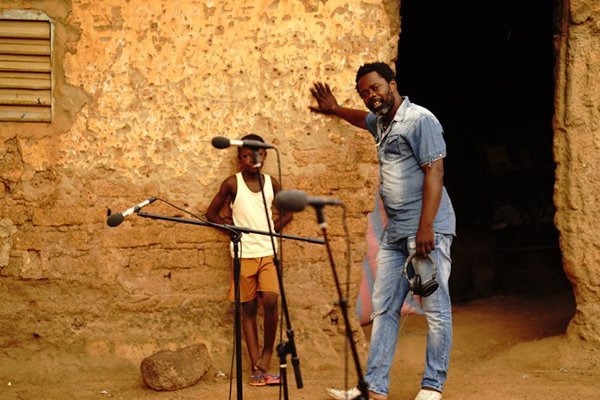
Thankfully, we had quite a big contingency around us, which broke up the scene quickly. As far as the doc, when I got back from Cape Town, nobody wanted to help me raise money or give me anything to help edit the movie. When COVID hit, I sat in my editing suite and taught myself how to edit this film. I raised some money. We went back to the Congo, where Mermans is from but this time, I brought a camera crew with us. We got some incredible footage from Mermans’ hometown, Kinshasa and all around. We are in post-production. We’re in the third act of completing this whole project.
My wife is a documentary filmmaker and she has made some films. She’s working on one and made some documentaries. It’s interesting to see the analogies here. It’s beautiful when the filmmaker has such a great relationship with the subject of the film. It’s awkward but it also is beautiful how you blur the boundaries of friendship, filmmaking, subject, object and all of these things that can make for a great documentary.
We’re like brothers. There’s a trust factor involved. His kids call me Uncle Jesse. I feel like I’m part of his family. When I was in Africa both times with Mermans, I felt protected and safe despite these environments and neighborhoods we were entering. There’s a level of trust that we have established where it makes the relationship work.
Jesse blends quickly wherever he goes. Do you remember that place in Woodstock where we were playing in the barn? You will see that in the documentary when it comes out. We played and Jesse was taking a picture of the guys and me. One of the guys was like, “Can you take a picture of Jesse with us?” If you see that picture, Jesse looks like this kid that was left behind in the Congo by his parents. He already grew up there and stuff like that. It’s the same thing up in Kinshasa.
Growing up in New York, race and color didn’t mean a thing to me. All my friends were of all races and different colors. For me, it was easy to assimilate.
That helps big time. We carry cameras. People come and bring water. Everybody calls him, “Jesse.”
They were so generous and welcoming.
I can’t help but call to mind here. I’m getting through an audiobook by Malcolm Gladwell where he interviews Paul Simon with his journey to South Africa, producing the music that he produced back in that time. It sounds interesting. I highly recommend that if people are interested in the musical integrations of the States and Africa.
We talked about the structure of the school. There are so many other cool things on that roadmap. I heard something about sending music into space and some other cool stuff. Tell us more. What’s on this roadmap?
Mofaya Crypto: What’s interesting about a great story is you can’t make up stories like that. You have to live through those stories.
Part of the utility of owning a CryptoMofayas is we’re going to some of these top-tier festivals and throw parties. Mofaya is going to be playing everywhere we go if you give him a guitar. Also, there will be unlockable content from his music and downloads and also being a part of this community with Playing for Change, music lovers, documentary film lovers and people who want to experience an incredible story. This man’s journey is unlike any journey I’ve ever heard in my entire life.
I was at Art Basel in Miami. I was at a SpaceX party and I was in awe surrounded by astronauts and that whole space. Everyone is getting into NFTs. I met an awesome NFT collector. Her name is MaryLiz. She is a photographer and filmmaker. She does all the launches of SpaceX. When I told her Mofaya’s story, his music, and where he has come from, she said, “I got an idea. Why don’t we launch his music from Cape Canaveral at the end of 2022 so his music will be floating in space for all of eternity?” I said, “I’m floored.” How did you feel about that?
I couldn’t believe it. I went back to Apollo 11, Armstrong and stuff like that. I was like, “No way.”
We’re figuring out what music we’re going to launch into space. We will be very discerning.
That’s what I was going to ask. It’s there forever.
That’s going to be some very traditional Congolese or deep in the jungle kind of music.
The sequel to the documentary has to be a futuristic fiction film about an alien encountering that music. That’s the next step.
I don’t know if it’s a chip or what, but this alien would be drinking coffee and the chip isn’t going to land in their coffee. That’s how it’s going to happen.
On that topic, IP rights, royalties and licensing have all been pretty significant topics in NFT-land of late. Do you plan on selling the MOFAYA documentary to top-tier streaming services like HBO, Netflix, Amazon, Hulu, Apple or Disney? What does that process look like?
I was fortunate. When I was growing up in New York, my best friend for one year was a guy by the name of Andy. We connected, I moved to Texas and we lost touch. We reconnected here in Los Angeles years later. He’s a movie producer. He did a movie with Matthew McConaughey. His brother has a deal at HBO. He has a deal with Netflix. I’ve been hitting him up since we reconnected, “Read this book. What about this script?” I’m like, “I have this doc I’m working on. I know you’re not interested.”
I played him a little bit of it and he was blown away. He said, “This is something that I can help you with.” Andy signed on and brought another friend called Michael, who’s big in the doc space. Andy and Michael are my producers. Instead of going directly to Netflix, they said, “Let’s go to the festivals. We will drum up some buzz for the movie and hopefully create a bidding war.” The plan is to go to a top-tier streaming service. His story will pretty much sell itself.
What’s the earliest that we would be able to watch this?
The way it comes together is if we submit to, let’s say Sundance and the deadline is September of 2022. They will premiere it in March of 2023. If we go to South by Southwest, Mermans plays at South by Southwest every year. Wilson’s Jazz Fest was canceled in 2021 and we still went to New Orleans. Do you want to tell them real quick about Congo Square?
First of all, when I came to the US, we did a lot of bus tours with the Playing for Change band. Everything went to New Orleans. The food in New Orleans felt Congolese. I heard about Congo Square and I was like, “Why not Nigeria Square? Why not Senegal Square? Why Congo Square?” I did my research. Apparently, the French people were giving the slaves one day to share their traditions. On Sunday, they will share, express themselves, and do their dances and all their stuff.
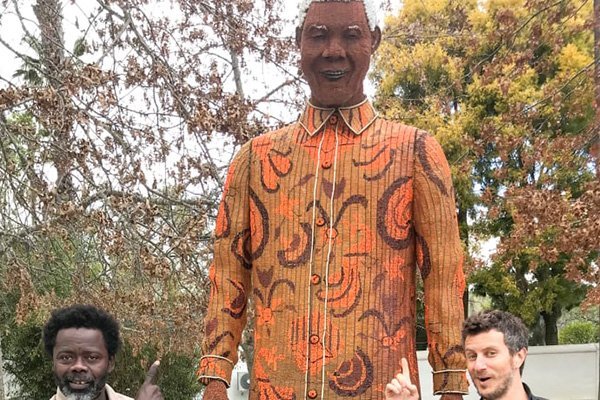
That happened in that spot called Congo Square. I was like, “Why Congo?” One of the guys came from the Kingdom of Congo. When we went, I was anxious to see Congo Square. I went with Jesse. We took some pictures in front of the artwork where there are people playing drums and ladies singing. I sat in front of this figure right behind me. If you look at the person, especially the nose. I showed it to my family and they said, “This is a Congolese guy.” He looked like me.
The question is could Jesse blend in with that? That’s what I want to know.
Have you heard me play music? You don’t want to hear me play music.
New Orleans is a beautiful place. That’s a wonderful connection there. It’s so beautiful to be there and see all of the ways that music is intersecting, growing and changing throughout history through New Orleans. Going back to something that you said about Mermans’ storytelling and selling itself and all these things, there’s one thing to highlight here. We are wrapping up the questions here. He has earned it. That’s what’s interesting about a story like Mermans. You can’t make up stories like that.
You have to live through stories like that. Clearly, there’s a lot of pain, struggle, disconnection, false starts and misdirections. It’s beautiful to see that it all culminates somewhere and be able to tell that story and share the good and beauty that comes out of that. You deserve every bit of it, Mermans. We appreciate you. I want to go back a little bit to the topic of NFTs here and get to know your opinions on other projects that you look to for inspiration as you build your NFT project around the film.
Living in Venice Beach, my neighbor started Bright Moments. Seth was on the show. Seth was my paddle tennis partner all through COVID. When he was building out the actual gallery right by Menotti, he was walking me in and saying, “I’m thinking about starting in an NFT gallery here.” I didn’t even know what he was talking about, what NFTs were and how they tied into art. It’s one of my early inspirations and continues to this day after I had minted a CryptoVenetian and a CryptoNewYorker and then the whole aspect. Seth is ahead of his time with wanting to mint IRL.
Everyone has been stuck behind their computers with the virus and COVID spreading. Minting in real life, meeting all these people in this community and hearing all these stories has been the biggest inspiration for me. We are looking to do a live mint and Mofaya performance from Venice Beach. We had to postpone the date. It was supposed to be Wednesday, the 12th of January 2022 but since the rampant COVID spread, we thought safety would be the number one thing to be thinking about. We’re going to do a live IRL mint in the middle of February 2022. It’s a couple of days after Valentine’s Day. That’s the long answer.
**We have seen the growth of Bright Moments from its inception as well. It has been quite an interesting journey to be lucky enough to see the minting of CryptoVenetians. On August 25th, 2021, not that long after the launching of Bright Moments, Fred Wilson of **Union Square Ventures
Sure.
Absolutely. I’ll mint the IRL.
I purchased pliers.
The last time I sold something was years ago.
I’ve seen her around town.
She’s my girlfriend.
It’s a precious thing. Mofaya, how about you?
I’ll buy a big land where everybody can fit it.
Where would you want that?
Anywhere.
I want to come to that party.
Would you play music there?
Yeah.
How about you, Mofaya?
I went to Home Depot and bought pliers.
I’m going to see an auto electrician for my car.
I’ll make time.
Important Links:
-
CryptoMofayas – Twitter
-
MaryLiz Bender – LinkedIn
-
iTunes – Edge of NFT Podcast