Top Podcasts
Max Song & Jon O'Sullivan From Carbonbase On Saving Nature With Blockchain, Plus: Lawyers On NFTs, Error In Web Source Code NFT, Tiger King NFT And More…
A common factor in some of the highest grossing NFT sales is that they benefit a good cause. That’s great, but often times critics complain that NFT tech accelerates global warming and ruins our earth’s environment. Max Song and Jon O’Sullivan of Carbonbase and Project Ark chose to focus on NFT projects that shortcut the critics and directly benefit the earth and its wildlife. Eathan Janney, Jeff Kelley, and Josh Kriger talk with the incredible people from Carbonbase and Project Ark who are assigning NFTs to various endangered species to save them from dying out. They also share about working with the World Wildlife Fund to save the planet using blockchain tech. Stick around for Edge Quick Hitters and Hot Topics and find out how Tiger King uses NFTs to make money from jail, learn about the impact of NFTs in IP protection, and find out what smart ideas Max and Jon shared for how they’d save the planet if they we gave them a lot more capital. Find about out all this and more on this episode of Edge of NFT!
—
Listen to the podcast here
Max Song & Jon O’Sullivan From Carbonbase On Saving Nature With Blockchain, Plus: Lawyers On NFTs, Error In Web Source Code NFT, Tiger King NFT And More…
We’ve got a great episode for you. Why did the World Wildlife Foundation choose to work with our guests to use NFTs to help save the planet and its wildlife?
How is Tiger King using NFTs to make money from jail?
What are some of the best do-good answers we’ve heard to that question of what would you buy if you could buy anything in the world?
**Find out about all this and more on this episode. Don’t forget to head over to EdgeOfNFT.com to sign up for our newsletter and dive further down the rabbit hole. **
—
We’re all here and ready to dive. Eathan, who’s joining us on this journey?
**Our episode features guests Max Song, the Founder and CEO of Carbonbase, and Jon O’Sullivan, Carbonbase’s Business Development Manager. Carbonbase is a Hong Kong-based climate startup building data and blockchain tools with enterprise solutions for measuring, managing, and reducing carbon emissions. Carbonbase got its start as part of the MiraclePlus Accelerator Program, formerly Y Combinator China, with an acceptance rate of 0.9% as well as New World’s Impact Kommons SDG Accelerator. **
**Max brings a wealth of experience and knowledge to his role with Carbonbase. He has worked as a venture partner at Pacific Century Group and a data scientist in Silicon Valley. He is also a graduate of the Schwarzman Scholars Program at Tsinghua University and earned a Bachelor of Science in Applied Math Biology from Brown University. In addition, Max serves as the Asia Director of the Kairos Society, a global network of youth entrepreneurs. **
Jon holds degrees in international development, social innovation and globalization, and business and development. Jon has worked in several roles centered around international development, social entrepreneurship, and indigenous rights across Canada, Sri Lanka, Kenya, and Europe. He also played a crucial role in the creation of Project Ark, which helps to save wildlife through the collection of unique NFTs. They are appropriate guests for our show. Welcome, guys.
Thanks for joining us. Max, we got a chance to meet at the DeFi Summit. This was a topic that we’re excited to have on the show because people love to talk about the environmental challenges of creating and minting NFTs and crypto in general. You guys are not only addressing those challenges but the broader issues around carbon emissions. Tell us a little bit more about what drew you to this set of topics and got you into the intersection of science in venture investing and climate change.
Thank you so much, Josh, Eathan, and Jeff. It’s a pleasure to be here. Jon and I are excited to share with you our journey getting to this point. I would want to preface this by saying that we’re living through extraordinary times. Seattle, where some of my friends and relatives live, went through a heatwave that killed off maybe 100 people in a city that’s not used to having weather above 25 degrees. Across the world, we’re seeing unprecedented amounts of environmental disasters become common day news.
What’s happening behind the scenes, in our opinion, is that the entire carrying capacity of the planet has been challenged by the industry activity the last 200 years of human revolution and mobilizing the energy stored in fossil fuels. We’re beginning to see the effects of this. Simultaneously, we also have this crazy technology that is the blockchain crypto digital asset sweeping the world and being able to now touch the lives of billions of people with little intermediation individually. We see ourselves playing this interesting role between these two things. On one hand, this revolutionary technology that’s now accumulated a market cap of $1 trillion plus. On the other hand, perhaps the greatest challenge on the survival of the human species.
Crucially, at the nexus here, is the ability for us to recognize the value. Much of the way that we calculate our GDP, our profits, and our net worth comes from the store of money. Money has a fascinating background history where the US dollar that we use is intricately tied to the exportation and utilization of fossil fuels, specifically, petroleum. If we want to change the way that we value things, we need to start from the base layer. The cryptocurrency revolution, the NFT explosion gives us now tools to redefine value and that’s the journey we’re on.
I come from a background in technology, where I studied a lot of machine learning computer science in California. I work there. I went to school at Brown University, where half the population went to occupy Wall Street and the other half went on to become heads of NGOs and other sustainability roles across major industries. I came to Asia in 2016. I was lucky to write a Master’s thesis as part of the first class of this program called Schwarzman Scholars, which started between Tsinghua University, the MIT of China, and then the founder of Blackstone. He wanted to build something else similar to the roads back in Oxford in 1900, except it was more tailored to the role that China would play in the challenges that we’ll see from a rising China to the rest of the world.
I decided to focus my research topic specifically on green finance and climate change policy because I found that was the one thing that no matter what your political views and religious beliefs are, climate change is going to wreck all of us. In the absence of alien invasions, this is the thing that will bring us to the planetary scale of consideration for what we need to do together as a species. What I found in my studies was bleak. We are way further along with the reckoning that we’re commonly talking about. The things we’re seeing now, the things that come up in the news, are the tip of the giant iceberg, the systematic change happening underneath the way that the weather system works.
Fast forward, I spent a few years doing investments because I had an inkling that to be a serious player in the space, you need to understand how money works. On the receiving end of money, most of us need to understand how the ultimate allocators of capital decide the decisions we make so that we can then figure out if we can reroute some of that capital towards things that touch the world. I was lucky to work for a multibillion-dollar family office where I was helping them look at the crypto space as it certainly evolved from 2018 to 2020. I came to see the thing that was happening in the crypto space is providing a set of tools that will help us create new conceptions of value.
There are a few pivotal experiences we had. One is in 2019 December. I had a chance to go to the UN Climate Change Conference. This is the thing that meets once a year, every year, with all 190 member countries of the world of the UN come together and talk about what we should be doing next. Paris Agreement was signed at the COP21, the 21st conference. I was lucky to attend the 25th conference. It was a remarkable feeling because all of us here think that climate change is a problem. We think that there’s someone else in the world smarter, better-resourced, and more capable than us working on this problem now. They’re going to take care of it. We can work on our own jobs.
I went to the place where the people are supposed to be doing that job in the room and I was terrified to understand that there was not a person in charge. There was a smattering of scientists who accurately could predict with three decimal places how fast the glaciers are melting. There was a bunch of diplomats and politicians who didn’t have the ability to make binding statements at the conference. There were 50 representatives from business at the 4,000-person conference. I came out of that depressed.
I was talking to Jon and other folks and friends of mine before we start working together. I was saying that there is an absence, a vacuum of changed making at the top level to drive climate change. We had 25 meetings for the confidence of the parties. We haven’t done much, to be honest. That was the impetus to starting this entity called Carbonbase. Our goal is to use machine learning, data science, Blockchain, and all of the other tools we have at our disposal to create something useful for this.
We had a special opportunity to host a TED forum with TED Countdown and the last speaker we had was from WWF. She told a compelling story of holding the last living species of a particular animal, a rhino, in her hands as it died. I was saying, “We are creating physical scarcity through actions. How do we represent that in a way that touches the lives of a lot of people around the world?” We saw NFTs as being a powerful way. That became the genesis of our work with NFTs. I’ll give the floor back to you. That’s a little bit of how we got here.
We’re interested in the application of NFTs and blockchain **and some of these massive problems we’re facing in the world as opposed to collectibles of NBA moments or whatever, which are cool and fun and we like that stuff, too. It’s compelling to hear stories like yours. It’s great. Jon, how did you and Max connect originally to help bring Project Ark forward? **
I was living in Kenya for about a year working with Nike, DFID, and USAID on a project to impact the lives of 1 billion girls by the year 2030 by investing in entrepreneurs whose products and services help young women. Max was speaking at a conference while I was there and we hit it off. We spent about three days rocking around Kenya, learning, talking, and trying to solve the world’s problems over a beer. I knew in my heart that’s the guy you got to keep in touch with. That was years ago. I hadn’t seen him in person since but he gave me a call and he said, “I started this company. We’re trying to save the world.” I said, “Where do I sign?” Here we are.
Project Ark came via that TED Talk. Anytime you hear a story of somebody holding the last endangered species in their hands while they die, it’s something that’s going to impact you in the heart, especially something that’s 550 million years old like a rhino. It’s a dinosaur. Conservation is 100% a human problem. Every case is a human problem and it’s going to require a human solution. Project Ark was destined what we hope to become this marketplace that directly funds animal and environmental conservation projects around the world. Whether it’s above land, under the sea, in the forests, or bees, whatever the case may be. If there’s a cause to be had, there’s a community to be found with it and a story to be told.
We are ultimately looking to create a triple win scenario between artists that are passionate about telling a story, want to give back via the power of their art, and want to get paid in the process. We want to connect those people with collectors that are purpose-driven, want to know that they’re creating some positive impact, and see that impact via the transparency of the blockchain with their purchases. Also, have something unique and valuable and hopefully, will increase in value on the secondary market.
The third part of this triple-win scenario is the projects themselves. We’ve spoken to everyone from the Jane Goodall Institute, WWF, Africa Peace Parks, and Global Ocean Coalition. We’ve spoken to every corner of the globe, different conservation projects. Every single group is fighting for the same grant funding. They’re spending 2/3 of their time fundraising sometimes. They are unable to host fundraisers because of COVID. There’s a massive resource gap.
What NFTs can do is help bridge that gap. At the same time, this could be arguably more important, NFTs and immersive art experiences can be provocative, emotionally evocative, political, inspirational, and educational. There’s a multitude of things they can do far beyond the traditional commercial of sad dying animals than, “Can we have $20 a month for your donation?” This is something where we can take it from doom and gloom to inspiration and all of those other things that we can do with NFTs.
The use case is straightforward with the scarcity of our planet’s resources and the scarcity of animals that we love, the rain forest, and this concept of NFTs having scarcity in different rarity levels. It’s a great interactive show-and-tell for the global citizen community.
To add to that, there is a place for all price levels here. We are working with some of the largest NFT artists and that’ll be announced and soon to come. We can sell one NFT for $50,000. That’s great. Why not 10,000 NFTs for $50 that can get every man, woman, and child involved in the sphere that they can feel positive about, can give them lifelong access to things, and can be a cool art experience. It’s important as well to share in the abundance like the biodiversity of the world and the number of people that can come into this NFT space that still don’t understand it or still are apprehensive about it. This cause is one that we can all get behind. It’s one of the few issues in the world that doesn’t start a flame war on the internet. I don’t think anybody wants to kill endangered species for the most part.
**You got to listen to a Radiolab episode about a project where people were selling the rights to kill one member of an endangered species to fundraise to save the rest. It’s an interesting episode. The black rhino is the particular species in question in this episode. Referencing other podcasts. I also have another podcast, the Run With It podcast, where we bring on successful entrepreneurs to share business ideas. This is one of the business ideas that came up on the Run With It podcast, using the blockchain to help manage carbon emissions. **
Within one of those episodes, we talked about an existing company called Nori, which does something similar to this. You can go to their site. You can purchase credits from those organizations and individuals that are capturing carbon like a farmer for example and then offset your own emissions for yourself or your business. How is Carbonbase different from a project like Nori? I know you are familiar with them.
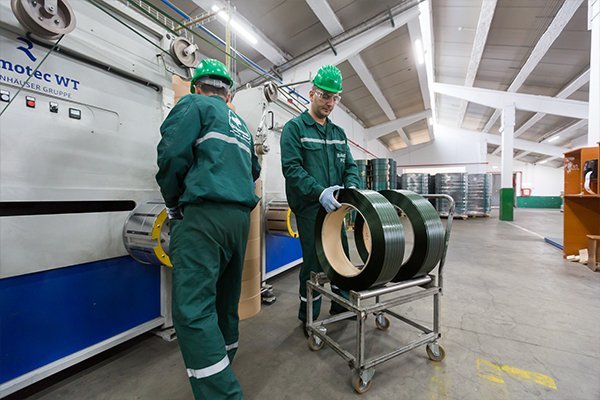
Saving Wildlife: The US dollar today is intricately tied to the exportation and utilization of fossil fuels, specifically petroleum.
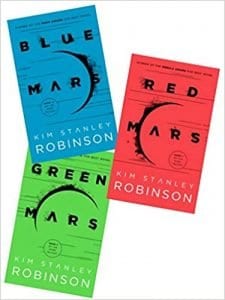
We’ve watched Nori grow. I did a brief consulting at CoinList. Nori was a client of CoinList to do a little bit of fundraising as well. I like Nori. I like Nori, even more, when I found out that they invited Kim Stanley Robinson to give a talk. He’s the author of Red Mars, Green Mars, and The Ministry for the Future, which if you haven’t read it, it’s my huge advocate book that talks about the next few years of human history, cryptocurrency, climate change, and the reorganization of the world. We’re living through this book. The opening chapter of the book is what happened in Seattle.
**Is this what they’re calling cli-fi, climate fiction? **
It goes into this bucket. This is a whole another level of books I’ve read. This is going to be more feasible than people think. They have this thing called carbon quantitative easing, which is the mandate for central banks to print trillions of dollars that would specifically first go to fund carbon removal projects and then trickle down into the rest of the economy as opposed to what happens right now. We print a bunch of money and the first people to get it are the huge financial institutions that already have a lot of cash and then they decide where that money goes. There’s a lot of background stories there.
Nori invited the author to come and speak at one of their company events. When I saw this on the Medium post, I was like, “These guys are in the know. They’re doing the thing. They understand that the blockchain is the tool to help transform this part.” The way that we see them working is that they’re focused on the agricultural carbon capture part. They’ve set up a bunch of farmers around North America and are empowering them to receive funds from the carbon they store.
On the Carbonbase side, we’re focused on the enterprise. We need to get a bunch of big companies, especially Asian companies, that go through the beginning of the process of understanding carbon footprints and then help them on the journey of purchasing credits. We found that, by a large, a company can buy 50,000 times more credits than an individual can. If you have limited time and energy, you try and get one of these clients on board. In Carbonbase, we helped make the first shipping company carbon neutral in Hong Kong.
We’re helping a large real estate company go through a process of labeling their products to be sustainable versus non-sustainable. In the pipeline, we have maybe a municipality that wants to go carbon neutral. Also, a large energy provider. These are the large anchor groups that we work with. Because we have this desire to touch the lives of a lot of people as opposed to only the corporate, Project Ark allows us to do the international thing. Jon has an incredible presence online. He’s been able to find, identify, and recruit tens of talented artists to come on and make art on the platform.
Specifically, what’s interesting is that we’re the first group in the world to have this working relationship with the WWF. They have been approached by people who want to donate crypto to them. They’ve said no because they weren’t sure of the source of funds. We had to spend a long time convincing them that we were credible as a counterparty that we cannot besmirch their name or lose the reputation that they have in the world. Fascinatingly enough, the WWF is one of the founders of 1 of the 4 existing carbon registries in the world.
Nori’s long-term goal, from what I understand of their market presence, is become a registry. The registry is a powerful concept. It allows you to become the central bank because you get to decide what projects are worth receiving credits for. If you plant this tree, you don’t get credits. It’s worthless. If you plant this other kind of tree, you do get credits. There are market incentives to plant the second tree. The WWF was instrumental in creating in the beginning what’s called Gold Standard. Now, that is the Harvard of carbon registries. That is the hardest registry to get into. That’s the one that focused exclusively on SDG impact.
There are windmills that do great work for renewable energy. They don’t have a lot of social impacts. One ton of CO2 removed from a windmill is about $22 of social impact. One ton of CO2 removed for a cookstove is about $160. For a biogas and methane digester if we’re using animal poop and turning it into clean cooking fuel, it’s about $460. There’s a spectrum upon which the positive externalities of the way that you do CO2 can ripple through the economy you work in.
The deal was made.
You’d be amazed. Max, how about you?
It’s probably the book I mentioned, The Ministry for the Future. I was excited to get a copy of it that I couldn’t find a physical copy. I had to buy a Kindle one. In general, most of my expenditures have been either crypto stuff or VR games.
**It’s a tough one. **
Max, how about you?
**Jon, what is your most prized possession? **
**Max, what is your most prized possession? **
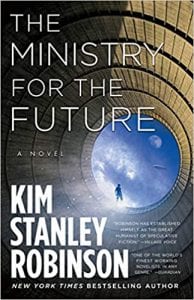
The Ministry for the Future: A Novel
**Jon, how about you? **
You’re being productive.
Thank you again, Max. It’s great having you on.
**Same to you. **
—
Jon, you mentioned him.
iTunes**, rate us, and say something cool. Go to **EdgeOfNFT.com
Important Links:
-
DIGITALAX – Previous episode
-
Not So Fun Facts On Climate Change – YouTube
-
@Pericarus – Twitter
-
Carbonbase – Twitter
-
Project Ark – Twitter
-
@WeAreProjectArk – Twitter
-
Instagram – Project Ark
-
@JonnyO89 – Instagram
-
iTunes – Edge of NFT Podcast
About Max Song

Max Song is the Founder and CEO of Carbonbase. He was a venture partner at a HK-based family office, where he conducted research into investments focused on AI, TMT and blockchain/digital asset opportunities. Max previously worked as a data scientist -first at DARPA-funded machine learning company Ayasdi in Silicon Valley, then as a visiting DS at Snips in Paris, and rotated through several of Formation 8 VC’s portfolio companies.
Max has a passion for public speaking and interacting with interesting people. He had the chance to open the iGEM World Championships in front of 1,000 people. He has attended and held workshops at Thiel Fellowship’s 20 Under 20 Summits, and was invited to Moscow as part of the 100 Young Innovators at the Open Innovation conference. He gave a TEDx talk at Brown about a globally distributed organization called OneSalon – that provides intellectual, emotional and experiential stimulation on a weekly basis.
Max was selected as part of the first class of Schwarzman Scholars, where he completed a Master’s at Tsinghua University and wrote his thesis on US-China cross-border investment opportunities for renewable energy. He is a graduate of Brown University, conducted research in genetic engineering at NASA Ames, co-founded Brown’s first startup accelerator, worked as a Teaching Fellow at Singularity University. He is currently a part-time PhD student focusing on climate finance and public policy.
About Jon O’Sullivan

Jon is a proponent of complex systems change, viewing a problem in its entirety and analyzing the relationships that influence and intersect over time. He believes true social change lies in being able to challenge people’s priorities, beliefs, habits and loyalties that uphold and sustain the status quo.
Jon holds an Honours Bachelor of Social Sciences in International Development from the University of Ottawa, two diplomas in Social Innovation Management from the Amani Institute and the UN University for Peace, Centre for Executive Education. As well as a Masters in Globalization, Business and Development from the #1 ranked Institute of Development Studies at the University of Sussex.
Jon has worked in a number of roles centered around international development, social entrepreneurship and indigenous rights across Canada, Sri Lanka, Kenya, and Europe. Jon is a staunch proponent of the notion that the private sector must play an integral role in the reduction of global poverty, improvement of livelihoods, and of course the fight against climate change.