Top Podcasts
Matt Sorg Of Solana - The World’s Most Performant Global State Machine, Plus: Gabe Frank Of Arcade - A Sophisticated DeFi Lending Infrastructure For NFTs
The opportunity to innovate has never been more within arm’s length, and humanity is taking advantage of this privilege to make life-changing products. Tech and product head of gaming at Solana, Matt Sorg, and his team have built scalable products that added great value to millions of users. Matt saw a chance to utilize the practical capabilities at each stage of the tech stack and ended up improving the quality of life of end-users. Matt joins our hosts, Jeff Kelley, Eathan Janney, and Josh Kriger, to discuss ways you can integrate once and never worry about scaling again. Listen in as Matt shares how Solana ensures composability between ecosystem projects by maintaining a single global state as the network scales.
—
Listen to the podcast here
Matt Sorg Of Solana – The World’s Most Performant Global State Machine, Plus: Gabe Frank Of Arcade – A Sophisticated DeFi Lending Infrastructure For NFTs
This episode features Matt Sorg, Tech and Product Head of Gaming at Solana, the high-performance blockchain with smart contract functionality that provides faster transaction times and cheaper fees than Ethereum. After a long history in gaming in 2017, Matt and a few colleagues at Riot started Korro Inc., a gaming NFT marketplace and launcher.
Through that experience, Matt recognized the importance of scaling blockchain solutions. Around May of 2021, Matt started talking to Raj and Anatoly, Cofounders of Solana with the goal of collaborating on what a successful games ecosystem strategy would look like. After a thorough process of vetting the various blockchain scaling options, Matt joined the Solana team in 2021 to lead the technical and product strategies around games.
—
Matt**, it is great to have you here. **
It is good to be here. I am excited about all of this.
It is super cool to have you. This show focused on Solana has been a long time coming. There are some NFT aficionados out there that live and breathe the Solana ecosystem and we need to dive in there but to start things off, for our readers that are less familiar, could you share the Solana origin story and how it serves the community and particular around NFTs?
I believe the official origin story has to do with Anatoly having a cup of coffee and it dawned on him. He has this long history with Qualcomm and a bunch of other things around synching cellphone services around cellphone towers and it dawned on him one day how you could synch blockchain activity. The shared clock problem is a very big one in blockchain so figuring out how to do that in a decentralized was the start of it, then there is a bunch of other lore around an underwater hockey league where half our cofounders came from and a bunch of things around that but long story short, the idea is to make a high-performance blockchain.
The proof of history is the branded scalable solution but there are about eight things that we are taking around bottlenecks and various different places. These are not theoretical limits that get posted. We can scale with hardware arbitrarily so the theoretical limit is not just 4,000 transactions per second. We are heading even upwards of 150,000 on test nets and we have never had a full block at live. That is where we are and what we offer.
**How do you fit into this story? I hear you guys have a fun and pretty large office now in Northern California. **
We are a very distributed team all around the world. The cool thing about how our office has worked out is we have pivoted them to being our in-person offices to anybody can work there, including our ecosystem teams. Phantom works there. Maybe people do not necessarily realize this but we do not own a lot of the companies that are associated with Solana. They are ecosystem teams.
There are about ten teams. Serum and Saber Network has been in and out of there. A bunch of protocols go in and work in the same office right next to myself and other people whenever they are there but they do not have to be in that shared workspace for the ecosystems. It is very Web 3.0 and it is pretty awesome.
Our core competency is making this very high-performing blockchain and building on top of that, there are primitives, the NFT solutions and other things like that. My role is making sure that those primitives are meeting the needs of various types of verticals, like the NFT media, how to fix games, doing stuff with DeFi payments, making sure that everybody is set up for success, meaning the people building on top of Solana and then communicating with our core engineering what are the next steps on how we evolve to meet the needs of the next evolution of how all this stuff fits together.
We heard nonstop about Solana long before it became mainstream over the last couple of years from Justin Wu and other people that were banging on the door constantly like, “Check Solana out. You got to understand what it is bringing to the table,” and you guys have continued to deliver on your promises, which is so hard to do in the space. It is very cool to live up to those high expectations and get started in the grand scheme of things.
People do not realize this but we have only been minting NFTs for a while now. The ecosystem has minted around 8 million and it is just accelerating.
It is bananas. We are all about NFTS over here. We always like to ask folks this. What was your first exposure to NFTs? Was it an immediate thing where you were like, “There is something here,” or was it a slower process for you?
For many people, games are an escape from their everyday life. Click To Tweet
My first exposure was CryptoKitties. I would not say it was immediate until I started looking at the code and understanding there is this shared data that anybody can build on top of them. The moment that it dawned on me was when people were making the hats. It was the silliest thing. There was this game on Steam, Team Fortress, where you put a hat on it and makes it fun. They started doing it on CryptoKitties and you did not need CryptoKitties’ approval to do this thing. Dapper Labs did not care because they were adding value to their CryptoKitties.
That is when it clicked. I was like, “You can have all those people building on top of your stuff adding functionality and you are happy about that. It fixes a lot of things in games.” Now, if you do that in games with the mods and other things, those are toxic to the original developer because they do not see any of that value. They only get the original purchase but if it is a free-to-play game, that can be a very toxic environment. The hats were my a-ha moment.
That is interesting. It is the little triggers along the way. For a lot of people in this space now, CryptoKitties was the initial thing but a lot of people didn’t cross that bridge so it is always interesting to hear about. That is cool.
**One of the outstanding moments for me with Solana and NFTs was at NFT NYC. I was wandering around in the evening, got separated from the rest of our crew and hung out at a nice hotel bar where, of course, a bunch of crypto people was there because of the convention. I met a few people who were jazzed about Solana. They were very connected to this brand if you want to call it that or the ethos. I felt a strong community spirit. Is Sup Ducks on Solana? It was a duck-related thing. **
There are definitely some ducks but I do not know the exact name.
There were these two guys who met because of this NFT project on Solana and they were both excited about it. I am sure the community spirit around Solana is there in different ways. It is almost like a grassroots thing. I want to know what do you think are the trade-offs when you think of Solana and you compare it to other chain options both inside and out of NFTs. I am sure we could ask you that.
I agree with you on the community aspect. It is like what I was describing earlier where anybody is in and out of our ecosystem. They can come in and out of our offices and work together. To me, outside of what lives in the consumer-facing part, the company has fascinating developments going on where everybody has the shared data and is building on that.
There is this composability because of that that anybody is financially incentivized to find the gap in the ecosystem and work with other people, which is drastically different than a Web 2.0 company where you have some C-Suite or overlord saying, “You build this.” Maybe there is some competition but you fit within these much-defined parameters where in Web 3.0, everybody is financially incentivized to find their place. That is pretty awesome and universal.
For Solana, the reason why this is relevant is that everybody is trying to scale. Even their team is trying to scale to meet the needs but Solana is the only one who is doing it in a shared state so anybody who mints on Solana or develops on Solana can use any programs from anybody else’s developing. If somebody comes up with some cool liquidity lending protocol, betting protocol or anything like that, anybody on the whole ecosystem can use it.
You do not have to figure out how to copy and paste it to yours, which matters for liquidity reasons because if that protocol requires there needs to be some sort of liquidity pool attached to it, how will you bridge the right amount over? You start running into a lot of issues when you start doing that, especially in terms of the utility of each of the NFTs.
Also, the way that our consensus mechanism works, it has a lot less forking. It is technical but for the user point of view, it is times finale. It feels very much like Web 2.0 with how quickly you can buy an NFT and have it come to your wallet. There is less of that terror of the spinny thing, having the network confirm it and all that other stuff. It happened so quickly in the throughput.
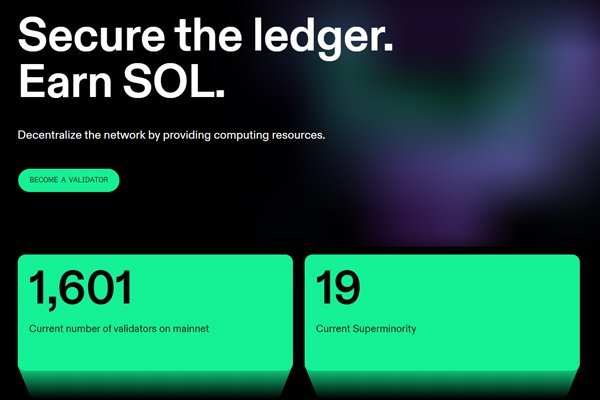
Solana: Working in Web3 gives you more clarity on what your incentives are and where you fit into that ecosystem.
Part of the reason why that can be so quick is we are the only chain that I know of, at least, that does parallel competition on-chain so if people are buying stuff, trading stuff, doing voting on things and they are not accessing the same memory to do so, those could be happening in parallel on Solana on different threads. That is how we scale with compute relative to other chains that are inherently single-threaded because they do not have as tight of a data model as we do.
The trade-off with that is the data model is slightly more complex. It is a much lower level language because you are having to program which allocations are where and do some serializations and deserializations. It is a bunch of hash tables. If you have to do it on-chain programming, which a lot of times you do not have to do, by the way and we can get into that if you want to, the execution is separated from the data so if something is executable, you do not have to redeploy.
In most NFTs, you do not have to copy and paste the core programming as you do on OpenZeppelin in the EVM world. That is a positive but the negative is if you do have to do some custom logic, you are managing more things. It is like the difference between maybe C++ and C whereas Solana is more like that lower-level language
Between us and the other scalable solutions that are doing shards, you have a little bit more configuration options on your specific shards. If you wanted to sacrifice maybe some decentralization for more efficient costs, you can. Solana is very cheap in terms of transactions but in order for all of this fast memory management stuff, the rent is going to be a little bit cheaper than if you are managing only 40 nodes and a private network.
You can define some of those trade-offs in your sub-net or your sidechain. It depends on how much decentralization you want and how much do you want to be in the shared state with everything else. That is the main at that cost but the competition model is so efficient that we are even cheaper than sidechains. It is just the way it works.
Thanks for that. It is a compelling case, for sure. I had to take a moment here and note for your pleasure, Ethan. I am sure there are several duck-related projects.
**Besides the proliferation of duck projects, which I do not think is necessarily true in traditional gaming, there might be 1 or 2 duck games out there but there is a lot of duck stuff going on Solana. There are a lot of fun concepts, projects and ways of giving gamers more joy. When you look at that spectrum of what is out there, how do you feel the perception of blockchain gaming is shifting and how does that influence your work at Solana? There has been a lot of different perspectives on blockchain gaming and how serious the traditional gaming industry is taking. I am assuming you can share your perspective. **
There are a lot of avenues that we could take this conversation. There are some that are well-documented on the number of scams and how early we are but there is another one that I want to talk about. It is a little more conceptual that you have touched on in your opening, which is games for a lot of people are an escape from everyday life and there is this worry that the minute you start adding real-life exposure to that then it becomes less of a game. Things necessarily become a job the moment there is any sort of capital or monetization in there. That is a binary thing. There is nothing that the evolution of blockchain or any chain will happen that will change that fact once that goes in.
That one is interesting because it is true. I do not think all games will necessarily need the same type of NFT integrations. Some of this is a battle of pay-to-win versus different types of free-to-play. It could also be pay-to-win versus vanity content but even the vanity content is also a walled garden. You pay some money and then you get skin back and you can’t trade it. Some people prefer that.
I know that is a very foreign concept for a lot of people reading. They are like, “Why would people not want to own that skin that they got?” It is this entry of the normal life of, “I do not want to become a marketplace when I enter a game. I want this walled gardening experience where I want to consume when I enter this. I do not want to enter a movie experience where I have to make some decisions around that.”
Part of this is a bit of a difference in perspective around the way the marketplace is and how we interact with our stuff. If you go up an income bracket, wealthy people very rarely, even for entertainment stuff, spend a significant amount or percentage of their money on something that can’t resell, potentially even for more money. There is this cultural difference. Rich people spend it on houses, boats, cars and all these things that they can resell pretty easily where the lower levels are used to not doing that.
The one-off tickets or things that are so cheap that they do not have a resell value even if they wanted to resell it. Part of this is maybe switching the narrative a little bit where once they start seeing that there is value in being able to resell some of the stuff that you once owned then you can start seeing that it is not as toxic as you may think it is, especially once the hype goes down.
Now, everything is new and hyped. Everything is so crazy but I can understand there is some skepticism around the money. Let’s say 5 or 10 years from now, you lower the difference between a rich person owning something and a poor person owning something. That gap is not as huge and part of that is because you lowered the friction at the lowest level from being able to get that back and that ownership means something a lot more for your time. Even if you put it up on a marketplace, if anybody buys it, they buy it. You can have a wider distribution of people who can get returns on their time.
It is a pretty foreign concept now because if I buy a $100 loan lawnmower, I am not realistically reselling that very much but this allows you to do that. That is a powerful concept. Part of it is seeing that being done successfully and normalizing that in a way that is healthy. The way it affects our strategy at Solana Labs or the first major things that will take off, especially in the West, are user-generated content because people are pretty comfortable giving money to creators.
If you are giving it to a creator, they would not have created that content anyways unless you paid them. It would have been hard for them to create a whole company for Roblox, for instance. A lot of the big creators in that have to make these big companies do all this stuff but if you put it on the blockchain, you can just have people collaborate and everybody knows how much royalty they are going to get off that content. That concept has affected our strategy a lot.
It is pretty helpful to understand that context. A lot of folks do not think about all those things.
A lot of it is an outgrowth of how you are structured as an organization. I am curious. I am going to go back a little bit for a moment. You have a lot of folks with legitimate Web 2.0 experience. They are in that executive realm with big companies and the structure of those companies, the processes and the different positions that people have in those companies so I am thinking that for folks that are looking to build something sustainable, scalable and repeatable in this space, talk for a second about your organizational structure around things like the boring admin stuff. How is this structured? Do you have a regular HR department? How do you handle things like vacation, employment offers, insurance and licensing? Is there this business layer that exists even in a company that is so Web 3.0 and future-oriented?
Im a two-time founder. I have a little bit of a hard time working for many layers of the stuff above me that does not have very much clarity. Working in Web 3.0, you have a lot more clarity on what your incentives are and where you fit into that. Solana Labs is not going to become a big organization at any scale.
If one part of it gets too large, we are going to set it off in its own entity once it has those clear goals where it is going to become its own entity. We have done this with Metaplex, for example, which is now a separate company that comes up with NFT standards and other things in this mix like plug and play or white-labeled solutions to making your own marketplaces. That is awesome. That never happens. Almost the reverse happens in big Web 2.0 land where there are all these acquisitions.
You still see acquisitions for sure but when you can maintain that lower size, a lot of the stuff that you are talking about, it does not need to exist as much. The incentives and attribution are way clearer. It is not perfect. It is not like you get away from the fact that there is going to be some lack of clarity on who did what to get the actual outcome but you are still much smaller so it is way easier for you to understand which part of the organization came to what parts of the outcome. You do not need an entire VP level looking around to make sure that the allocations are in the exact right spots as much.
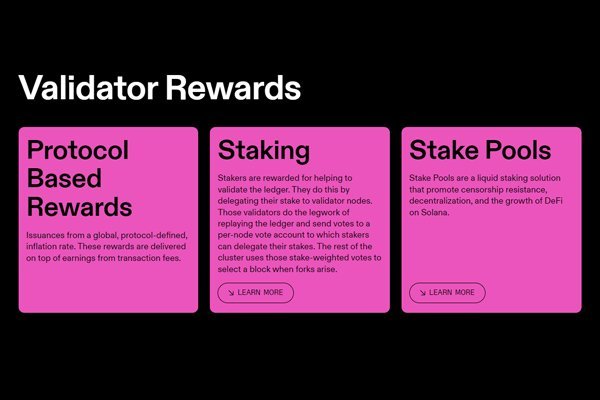
It is like that Rule of 150. As you keep these smaller groups, you can be way more nimble and you can do way more per person because you do not have these layers of redundancy or a bunch of people that do not even necessarily have a path. As I was saying earlier, all the sub-teams that get created that are now companies instead of sub-teams have the incentive to figure it out. You do not have to be an HR person or some C-Suite telling them, “You need to iterate.” They do it or they do not. What is cool about it is this is so new that even the failure cost means that you usually have tons of opportunities to go to one of the other companies that are doing well. It is super healthy.
**They all report to you. **
Let’s do it.
Have you slain any whales then?
It sounds like we are catching up fast.
Thanks.
You too. Bye.
Thank you.
Important Links
-
ArcadeBitGoSilver Surfer – Twitter
-
Pak – Twitter
-
Discord – Arcade.XYZ
-
Arcade_XYZ – Twitter
-
@TamGros – Twitter, Matt Sorg
-
Twitter – Solana Tech
-
Spotify – Edge of NFT
-
iTunes – Edge of NFT
About Matt Sorg

My passion at the forefront of applying cutting edge research to mission driven products. Over the past 12 years, my teams have quickly built scalable products that have added great value to millions of users.
We have hit the point with machine learning, infrastructure, data storage, battery improvements, and scalable decentralized state machines (Solana) that humanity has a real opportunity to make life changing products. Applying advancements in these areas to hearing health has been deeply rewarding. Utilizing the practical capabilities at each stage of the tech stack really adds up to a huge quality of life improvement for the end user.