Top Podcasts
Matt Mason Of Palm NFT Studio - From Pirate Radio To NFTs For Damien Hirst, Space Jam & DC Comics, Plus: NFLPA Dapper Collab, Epic Games CEO Is Anti-NFT And More...
Just like the internet, NFT is a technology that promises new global opportunities and stands to be integrated fully into our lives long-term. In this episode, Matt Mason, the Chief Content Officer of Palm NFT Studio, shares his thoughts on the NFT industry. He tells us how he got into the NFT space, taking us from his start at Pirate Radio, to his time at BitTorrent, forays into Bitcoin, and deeper dives into crypto and NFTs. Discover what Matt is doing now at Palm NFT Studio and find out some of their latest and biggest collaborations from Damien Hirst to DC comics. Listen in to about Palm NFT Studio’s big plans for the future.
—
Listen to the podcast here
Matt Mason Of Palm NFT Studio – From Pirate Radio To NFTs For Damien Hirst, Space Jam & DC Comics, Plus: NFLPA Dapper Collab, Epic Games CEO Is Anti-NFT And More…
Welcome, all you NFT curious fanatics. Check out this episode to learn about the biggest NFT drop ever and what the heck might be on the NFT floppy disk you get with it.
How our guests got started in pirate radio and how it inspired him to make his way into crypto.
Why De La Soul Plugs 1, 2 and 3 is the foundation of our guest’s entire personal operating system. All this and more on this episode. Enjoy.
—
**This episode features guest Matt Mason, Chief Content Officer at Palm NFT Studio, a collective of technology, entertainment, crypto, creatives and art industry leaders. The studio provides bespoke creative services for artists and rights holders looking to establish NFT marketplaces and next-generation work on Palm. At Palm NFT Studio, Matt is responsible for developing partnerships and creative strategies with artists, creators and content owners who want to launch NFTs on the Palm chain. **
**Matt is a Senior Executive with years of experience in marketing strategy, product management and content creation. He previously served as Chief Marketing Officer at Kraken, Chief and Content Officer at BitTorrent Incorporated and is the Founding Editor in Chief of RWD Magazine, one of the UK’s leading music magazines. He has launched and relaunched global brands and written a best-selling book on innovation, strategy and culture, The Pirates Dilemma. **
—
Matt, it’s a privilege to have you here. Welcome to the show.
Thank you for having me. I appreciate it.
We know you got a ton going on so it’s amazing to have you here for this time that we do have you. We want to reach back a little bit and start from the beginning. You’ve been in the disruption game for a long time. You were there in the early days of BitTorrent. Thanks so much for all those downloads. How did your experience there and since relate to you finding crypto?
If you want to go back to the beginning, I should probably go back when I’m 10, 11 years old growing up in London. There’s a big community of pirate radio stations in London. These are illegal radio stations, kids duct taping, scaffolding poles, construction poles to the sides of the tower blocks and linking them up to turntables. Literally, that’s your radio station.
If you’re in a city as densely populated as London, you can get out to about ten million people with about $600 worth of equipment. It’s hard for the police to shut down pirate radio stations because you only need $600 and if you’re putting on raves, doing advertising, people are paying your station to reach the ten million kids that you can reach, you can get another $600. It’s this game of whack a mole and if it sounds like a lot of things have happened on the internet, it’s because it is.
I grew up listening to pirate radio. I was DJing on pirate radio stations, handing out flyers for raves associated with pirate radio stations since I was eleven years old. To me, I didn’t know at that time but I thought this was amazing. I love all this music. I love all this culture that’s coming out of the city that I’m growing up in. I love the business model and mechanics of how we were able to do things.
At the pirate station that I DJed on, the police were trying to catch us. They would knock down our antennas every weekend but we always had redundant rigs and other tower blocks so we could switch on the backup. They’d call us and say, “We’re going to hit you guys this weekend. Please stay off for a few hours. It makes us look like we’re doing our jobs.” We would and they didn’t raid our studio. They didn’t put us in prison and treat us like criminals. We didn’t treat them like they were the police. In the end, the police were advertising with us because we had so many listeners.
I’m telling you this story because I grew up thinking this is how the content industries worked. I got a degree in economics then I went and did an internship at Warner Music. At which point I was rudely awakened to how the content industries were at a major label. As an intern, one of the things I had to do every month was to go into the press room. This was 1999 so the internet or the music hit. I had to take out all the files with all the photos of all the bands that Warner had signed that they decided they weren’t going to move forward with.
I would go in this room full of photos of bands signing a £400,000 deal, sell their name, their rights and everything they do to this company just to take all of those bands, hopes and dreams, their bios, their photos, everything they thought was going to magazines, put them in a bin and that was it. They were done.
That was a different way of operating from pirate radio. To me, it was clear at that point that things needed to change in the content industry. I’m not a technologist but that’s where I started on this journey. I ended up starting a music magazine with a music website and that became one of the largest music magazines and websites in the UK because it was telling the story of the music that was coming out of pirate radio. We got lucky when we saw that was where things were going. It was grimy and dubstep. These things were going to eat the world alive.
We got lucky with that and I wrote the book The Pirates Dilemma to outline how you think about piracy as a strategy and decentralized frameworks. We got lucky because people were asking this when it came out in 2008. People were starting to think about how this is a problem that we’re facing on the internet. This is an opportunity that we’re facing on the internet. It was a prisoner’s dilemma, which is the title of the book and that’s what led me to BitTorrent. That’s when I became interested. At least I understood what distributed technology was and it was like, “We can change things if we start to think about organizing in this way. This is the way that BitTorrent was architected.”
To me, it looked like a bunch of kids putting scaffolding poles on top of tower blocks. It’s the same thing. It’s peer-to-peer. This is about creators and making how we, as a society, decide to make a culture, who gets to say what that is, how it starts and where it comes from.
We’ve all seen in the last few years, many examples of why lots of centralization has happened in Web 2 has been bad for society and bad for the way we create and disseminate culture. What I hope is happening with NFTs is that they are starting to change. For me, it’s the Web 1.0 dream of the internet. It’s the Tim Berners-Lee style vision of the world that seems wildly optimistic now but NFTs can get back there.
To clarify, you’re coming from this decentralized world that is BitTorrent. When did crypto hit your radar? It makes sense that it would align with your vision and your core values of what content sharing could be but how did it arrive there? How did you even get into your vision?
It was a BitTorrent. The first person I spoke to about Bitcoin was probably Bram Cohen, the inventor of BitTorrent who was at BitTorrent the whole time I was and is still a dear friend. I remember talking to Bram about it. We were talking about it internally. I remember thinking, “Should we integrate this into the platform that we’re building for artists?” We didn’t because we had a limited amount of time. Everybody wants Stripe and PayPal. This Bitcoin thing has not got that many uses yet.
We’re like, “Let’s do that later,” which is how you should make product decisions but when I look back now, I’m like, “We should have done that first. We should have gone all-in on this and we did it because we had 117 million monthly active users and we were trying to make things as easy as possible for them.” That was the first time I heard about crypto and as things progressed BitTorrent, it was realizing that it wasn’t the record labels, the major studios or anybody in the world of content and that was going to hold us up. Everybody in the world of content wants things to change as much as we did.
It gets into credit card companies and payment processes. That’s when you start to hit the nub of, “Nothing’s going to change until we change how we do finance.” For me, that was like, “I’m not going to fix the problem I saw as an intern in the Warner Music press room until we have it until DeFi has scaled.” That’s what led me to Kraken. That’s why we release it and do that.
Let’s fast forward a little bit to NFTs. How did you first hear about NFTs? When did that a-ha moment occur for you about its potential to solve this problem around Web 1.0 not being what it could be?
I was super late to NFT. It was probably January or February 2021. When I was at Kraken, we did a project with Apple. We made Kraken customized CryptoKitties. I wasn’t calling them NFTs yet. I was working with Benny Giang and the team and I love what those guys have built nothing else in space for you without them.
**We had Vicky on the show and they’ve got the NFL as if NBA wasn’t enough. **
The deal stayed with Brud and we’re getting Brud Trevor Mcfedries. It’s another amazing company with an amazing founder. This space has so many smart people but in Kraken when we did this first project with CryptoKitties, I remember saying to everybody on the leadership team at Kraken, “I’m not being funny. You lot are DeFi specialists. I’m not. CryptoKitties is the only thing I understand that we’re doing.” This was what the mp3 was to the PC. This is how you say, “This is why crypto is important.”
We didn’t do much else with that for a time. We had a million other things going on but that I was like, “This matters a lot. This matters a lot more than these kittens and the people buying them. This idea is huge.” CryptoKitties came and went. Crypto winter dragged on and there was a point it’s 2020, I was super disillusioned with thinking, “We’re not going to do this. Facebook, Netflix, Spotify and these giant silos are going to keep inhaling all of the power, activity and attention in the creative industries.” Right at the beginning of 2021 so many people were saying NFTs. I was like, “I’ve tried it.” I was disillusioned. I felt nothing worse.
At some point, it’s like, “We’re doing this.” A friend of mine called Vector Meldrew is an NFT artist. He worked on Rewind with me back in the day. He was the first person that told me about it. He was like, “This is the thing you’ve been trying to do. This is it.” I’m like, “No, it’s not. We’re never doing it.” Eventually, he convinced me and we started working on a team project together. That’s when I got introduced to Dan Heyman, the chief strategy officer at ConsenSys, a man named Simon Morris who used to be the head of product at BitTorrent.
Palm Studios Collaborations: BitTorrent is like a bunch of kids putting scaffolding poles on the top of tower blocks. It’s peer-to-peer, and it’s about the creators.
Simon pinged me like, “Do you want to talk to Dan? He’s got this new NFT thing?” I was like, “All right.” I spoke to Dan Heyman, who’s the CEO of Palm. He’s super smart. He’s worked on this one too leading the largest team in the world working on the two ConsenSys. When he told me what he was trying to do and his vision and I met his brother David Heyman, who is the third highest-grossing film producer in history. He’s the producer of all the Harry Potter films and many others.
Joseph Lubin, Cofounder of Ethereum and Joe Hage, Damien Hirst manager. When I met that team and heard what they were trying to do, for me, I’ve either worked with content companies who don’t understand tech or tech companies who don’t understand content. Dan, Joe Lubin, Dan’s brother, David, plus Joe Hage, these people are operating at the highest level in their fields and it’s a 50/50 mix of creative and tech. I’ve never seen a team like this.
I was lucky enough that they asked me to be employee number one at Palm but to me, it was the right team, the right tech and it’s absolutely the right time. None of us have slept since but I’ve had the best career you could ask for in terms of being able to do what I love but I’ve never had an opportunity like this now. Nothing has come close.
**I want to ask you about that career trajectory. We love the idea of disruption and moving quickly. It’s a fun space to be in. it’s like what you were doing when you first got started with pirate radio. When the rules don’t exactly make sense and the people that are willing to at least bring that to everyone’s attention and push the boundaries a little bit. **
It’s a scary territory but it’s such an important part of our evolution. You’ve worked in the more disruptive areas and you’ve talked a little bit about working in less disruptive areas. You worked at Sony where you’re heavily into the entertainment influence on things and this established area. Having worked in more established genres and workplaces, how does that integrate into how you can approach things nowadays?
All the things I’ve been able to do mean I can speak several languages as long as you understand them in broken English. I might have to talk to a film producer, a record label executive, a solidity developer or an executor to a nonprofit. I know how their world operates, the incentive structures and the environment in which they exist and talk to people. That’s what most jobs like mine are about.
It’s knowing how to talk to people because there are lots of different groups of people from different cultures and different professions and backgrounds that don’t know anything about NFTs or developers who don’t know anything about what a film studio or a game studio necessarily needs from an NFT. It’s trying to get everyone to the table and come up with a vision that makes sense to everybody. I don’t know if I always appreciate the time but everything in life that I’ve done has taught me a little bit about how to interact with a group of people that maybe didn’t interact with often in a different way or whatever.
**NFT is definitely one of those spaces where a lot of people from places that don’t normally interact are coming together. That’s why people like you are so powerful. It’s not that you can go into this space and speak this language and go into that space to speak this language. You can bring people together to the table. You’re almost like a translator in a fact. I was able to watch some of the content, the video about Damien Hirst’s The Currency Project, which is awesome. **
It was fun to see him wrestle with his own project to talk about how he has NFTs attached to his physical artworks and the artworks eventually that don’t get claimed as physical objects are going to be burned and the artworks that remain the NFTs will be burned. The person who made the project is like, “I don’t know how to wrap my head around this. If they burn all my artwork, I might feel terrible about it. If they burn all the NFTs, why would I have even done this in the first place? What’s the point of the whole project?” You can see even somebody who’s so well versed in art doesn’t even understand the system. He needs a translation and people to come together with who know how to talk about it and do it.
I don’t know three of the most powerful words in the English language. You have to be brave to say those words out loud. Damien Hirst is good at that. With his project, especially, he’s been transparent. I have no idea what’s going to happen. He’s interested that it’s everybody else to see which way it goes. That beginner’s mind philosophy is something we’ve tried to instill in ourselves.
At Palm, it would be easy in the NFT space in 2021 if you happen to be one of the few companies that are building projects. It’s a weird space. It’s like 1997 that there are twenty companies who can build websites. Everyone wants to build a website. That’s how it feels in terms of all the people who come into the space, the deals flow and the interest. I’ve never seen anything like this from the content industries.
It would be easy to get a bit of a big head about that but I don’t know anything about NFTs. No one at Palm NFT Studios knows anything about NFT because we just started. It’s like saying you know about the internet in 1997. You’ve got no idea. It’s 1997. You probably know as much as anybody but no one knows what’s around the corner.
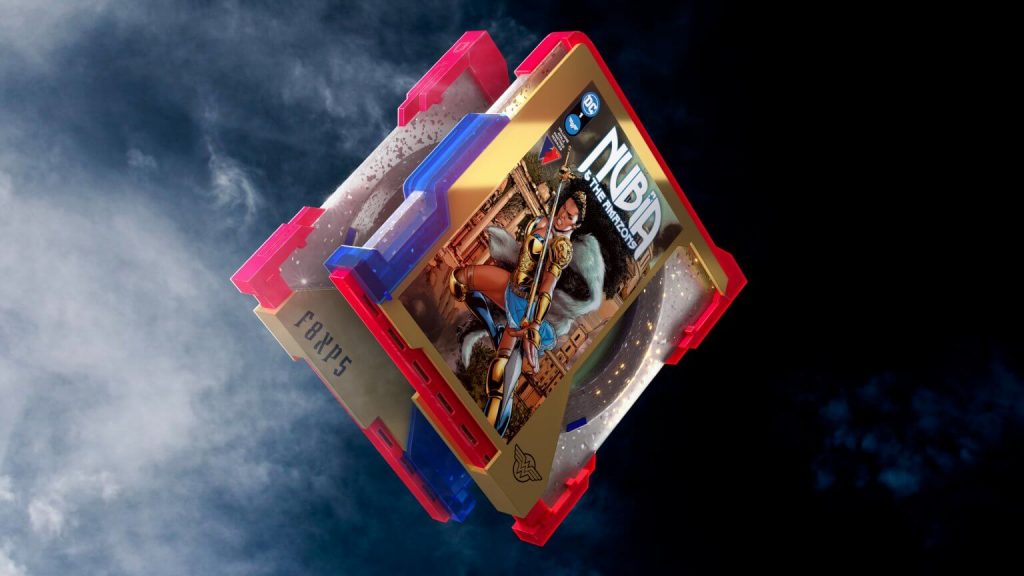
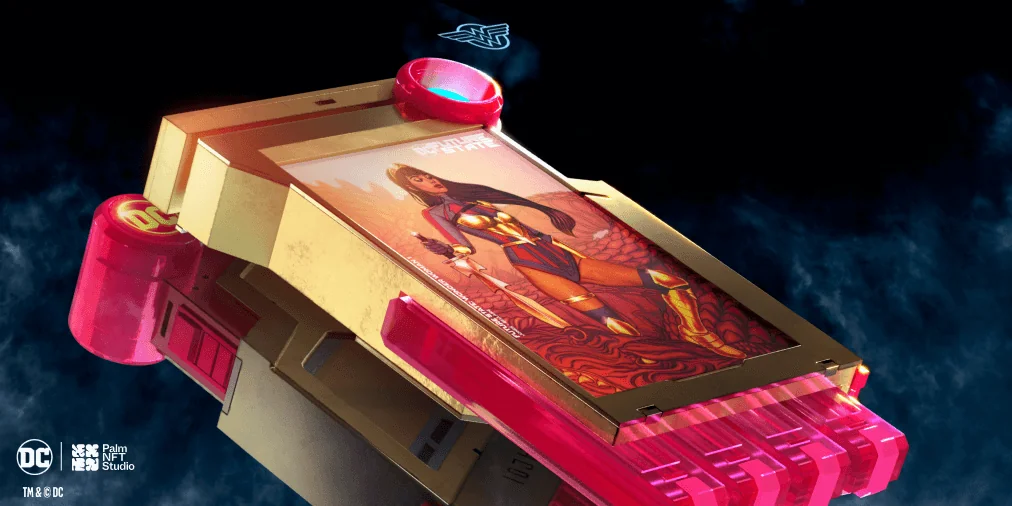
We are starting what will probably be the largest distribution of NFTs in history with DC Comics. They will run into millions of NFTs, possibly tens of millions. It’s not clear. We’re prepared for the best of the worst and how we look at it but that’s going to change things. We are approaching this moment with NFTs where suddenly you’re going to see projects with tens of millions of NFTs that are geared around fan engagement more than the things that we’ve seen with CryptoPunks or Damien Hirst, where it’s giant market caps. You’re measuring billions or fractions of billions.
Most NFT drops aren’t going to be about that. We’re still going to see trillions of dollars in market activity and sales on Bonhams and Christie’s and wherever. That pie is going to continue to grow but as a proportion of the overall NFTs is receipts and fan engagements, validators in one form or another. It’s going to be 1% of the market. That worries me. One of the things we tried to remain mindful of here is that we’re doing a lot of big projects like the project in DC. They are going to have game-changing implications for NFTs, we hope.
We’re trying to make sure that we are collaborating with the crypto artists that made this all possible, the collectives of developers and communities that have done ambitious cool crypto projects. I want to make sure those communities get monetized. I’ve been part of too many subcultures where the people inside things never made a penny off it.
Everybody in the world of content wants things to change. Click To Tweet
There’s going to be this bifurcation in the next few years. Crypto and NFTs are the same things. At some point, they’re going to become different things. For the audience for DC Comics, we’re going to try and get a Batman NFT. Half of them aren’t going to have a MetaMask wallet.
**It’s probably like 80%. **
On our Discord, a DC fan was like, “What’s an NFT?” It’s a different audience. Honestly, the word NFT probably is going to disappear the way the word cyberspace did because, at some point, it’s something that people do. It’s a cool Batman thing, it’s a social object from this franchise or it’s a concert ticket that continues to add value after the concert somehow. You don’t need to know what crypto is.
It’s the wrapping that brings it all together. It’s funny because earlier, we were talking about the Space Jam drop as the biggest NFT drop. It’s 91,000 NFTs. You guys were associated with that as well. You’d work with Nifty. What did Palm NFT Studio do there?
We designed and created the actual NFTs themselves and we collaborated with Nifties on the mechanism for how they’d be delivered and they did the whole site design. Drop them on Nifties.com but that was a true collaboration with the Nifties team. It’s one of the best teams in the business. They’re a great crew.
Are there any track cassettes?
That’s not a good idea.
DC is top of mind. I don’t know if that counts.
**It’s stuff outside of what you’re working on. **
Tell us about it.
It might be time for another one.
It’s something to do after this big drop.
I know what it is. I’m going to show you.
I knew it would be back there.
I watched The Matrix and that was helpful.
I’m my worst enemy on stuff like that.
You’re welcome.
—
The growth curve is volatile.
**I don’t get it at all. Go ahead, Josh. **
That could apply to my optimism about NFTs too.
Important Links:
-
iTunes – Edge of NFT
-
NFLPA and Dapper Labs Announced New NFT Deal to Create Exclusive Digital Video Highlights – Article
-
Justin Wu – Past Episode
-
Epic CEO Has Bad News If You Were Hoping to See Fortnite NFTs –Article
-
Tim Sweeny – Tweet
-
NFTs are Good for Bringing Non-crypto Users Onboard says, Metaplex CEO – Article
-
@EdgeOfNFT – Twitter
About Matt Mason

Matt Mason is a Senior Executive with almost 20 years of experience in marketing, strategy, product management and content creation. Matt has driven the growth of some of the most popular products on the Internet, launched (and re-launched) global brands, and written a best-selling book on innovation, strategy and culture.