Top Podcasts
Matt Colon & Seth Green Of ReplicantX, The First Ever Show Produced On The Blockchain
The Web3 and NFT space is making huge inroads into the entertainment industry, and we have a lot of big names starting to take notice of its potential. This exciting episode features Seth Green and Matt Colon of ReplicantX, a new PFP collection from Steve Aoki, Seth Green, and the makers of Robot Chicken. ReplicantX is the trendsetter of on-chain community-driven storytelling. Stay tuned for this episode and learn all about ReplicantX as our hosts pick Seth and Matt’s brains. Learn all about the pros and cons of minting friendships on the blockchain, plus why we now live by the words, “Thou shalt respect the ‘bago,” and how the early ’90s classic comic books still are guiding our present-day Web3 livelihood. Tune in for all these and so much more!
Listen to the podcast here
Matt Colon & Seth Green Of ReplicantX, The First Ever Show Produced On The Blockchain
This is Seth Green and Matt Colon of ReplicantX, the trendsetter of on-chain community-driven storytelling. We are on Edge of NFT, the trendsetting podcast, bringing you the latest stories within the NFT ecosystem. Keep listening.
Stay tuned for this episode and learn all about the pros and cons of minting friendships on the blockchain, plus why we now live by the words, “Thou shalt respect the ‘bago,” and how the early ’90s classic comic books still are guiding our present-day Web3 livelihood. Don’t forget, we put together a gathering called NFT LA that brought out thousands of the world’s most innovative doers in the NFT space. Head to NFTLA.live to get tickets to our bigger, bolder, and better but also as intimate and impactful event happening in Los Angeles from March 20th to the 23rd, 2023. See you there.
This episode features Seth Green and Matt Colon of ReplicantX, a new PFP collection from Steve Aoki, Seth Green, and the makers of Robot Chicken. An industry veteran, Seth Green is an actor, voice artist, comedian, producer, writer, and director who has entertained audiences for nearly four decades. Green has starred in countless films, including iconic roles in cult classics like the Austin Powers trilogy opposite Mike Myers, Can’t Hardly Wait alongside Jennifer Love Hewitt, Without a Paddle opposite Dax Shepherd, Rat Race with Whoopi Goldberg, Old Dogs opposite Robin Williams and John Travolta, Idle Hands alongside Jessica Alba, and The Italian Job opposite Mark Wahlberg and Charlize Theron.
In 2008, he co-founded Stoopid Buddy Stoodios with partners John Harvatine, Matt Senreich, and Eric Towner. The prolific animation Studio has produced multiple critically-acclaimed series, including its flagship show, Robot Chicken. The series, now in its eleventh season, is not only Adult Swim’s highest-rated original program but has won multiple awards including three Emmys for Outstanding Short-Format Animation Program and numerous Annies including a Best Directing win for Green. Other hits from the studio include Adult Swims, Titan Maximum and Hot Streets, Sony’s SuperMansion, Hulu’s Crossing Swords, Marvel’s MODOK brand, and Netflix’s Buddy Thunderstruck. Seth is yawning at his list of achievements. When you get bored with your own, it’s a slog.
We get it. What’s next?
Let’s give Matt a chance. We scoured the internet for any information on Matt. We’re doxing Matt compared to Seth.
We had him do a quick IMDb for Seth but we scoured the internet for you.
We had to scour the internet. Matt hasn’t achieved much. He’s hiding it all.
In the dark web.
Diamond mind Matt Colon is redefining talent management as YMU’s Global President of Music as well as managing superstar producer DJ Steve Aoki. Colon directly oversees the US Music Division and leads global strategy and integration across the world, creating synergy between the UK and US music divisions. He also leads the growth strategy for the organization with new manager acquisitions and key hires, leveraging an agency built on unconventional thinking. Managing elite clients in sports, music, social, art, literature, and entertainment, YMU combines its rich understanding of diversity and culture to go beyond traditional management. There are a couple of other chapters here. That was chapter one. Let me get onto chapter two.
You forgot that Matt has also been a resident advisor to NFT LA and helped to make the first one that much more epic. Thanks, Matt, for all that.
Seth, do you usually get without a paddle quoted in your recent credits?
It depends. People know me from who knows at this point. I’ve been with people most of their lives.
That’s my favorite bear attack joke of all time.
Your cat has been there right along with you the whole time.
For seventeen years, I got this ass in my face. That’s her favorite protocol. This is the POAP.
There you go. Subbing in for Jeff Kelley is the one and only Zach Sekar, our head of NFT LA and resident Twitter Spaces MC. Zach, it’s good to have you on the show.
It’s great to be here. This is going to be a fun one.
Seth, we talked about decades of incredible things that you’ve been doing to entertain the world. Stoopid Buddy also had a lot of milestones and success since its inception, and now ReplicantX. How has all of this good stuff that you’ve done in the past helped to create the mold for what you’re doing with ReplicantX?
I’ve always been interested in emerging technologies and how they relate to entertainment. Distribution is the main obstacle for most people trying to make a name for themselves or any brand trying to get any publicity. The fun thing about Web3 and NFTs is being able to take advantage of immediate distribution. That’s what got me interested. It started with Steve Aoki and Matt coming to us and saying that they wanted to create linear content on blockchain, which sounds cool.
There’s an immutable stream of data and information. Even if you’re identifying NFTs or blockchain as a certificate of authenticity, the idea of being able to mint programming or even open the door to some kind of collective ownership over any large-scale IP is interesting to me. When they approached us saying they wanted to make something, we all said, “That sounds like a great idea.”
Why not?
It’s less of why not than the why. There are a lot of whys. The why not is because it can fail. It was too expensive. Nobody is going to like it. It will destroy your career and reputation, but the why is so much more compelling. It’s the opportunity to be first in the space and set a tone for how this thing should unfold, which I always think is important. The tone of it is critical.
In the introductions of any of these kinds of technologies that bring people together or potentially rip them apart, the tone is the most important thing. It’s probably my biggest grievance with anything that Elon Musk has done since he has taken over Twitter. He invited and fostered a tone of communication and interaction that is valueless in my opinion.
Break it down for us a little bit. It’s the next chapter in the Character X saga. We’ve got 4,000 NFTs.
The background of the character is Steve did his first NFT drop or that giant big wave with Beeple and 3LAU in March 2021. In that reflection, there is a lot of great art and gritty stuff. The one thing Steve wants to do is take his signature. When he writes Aoki, the O has little extra eyes and a little mouth thing in it, “Can we turn that into a character?” He wanted to show up in a few of the NFTs. For whatever reason, those NFTs became the hallmark of that collection.
We then started speaking with Matt who is Seth’s partner and the rest of that team about what this could be. They came up with the idea, “Let’s take that character and see what he would look like. Let’s give him a world. Let’s see what he would look like as we ideate out from that.” They created some rivals. We call them Chonk and Swole. They took what was a figment of Steve’s imagination and gave it a real life in the world and a personality. That was what we did.
Our first drop with Stoopid Buddy was called Dominion X. It was a sizzle reel or a little short animated film. We dropped with Nifty Gateway in August ‘21. It sold out in a few minutes. People got different scenes. We played by the gamification of the collection. People got different scenes. They tried to combine scenes and mint new scenes. Eventually, at the end of six months of gamification, they were able to mint the entire long-form version of it.
We also gave out the physical puppets that were used in the show. You could see it was an actual physical collection, not just something you see on the computer. Not that it’s a bad thing but it’s a different style of animation. We talked about what we would do next. Seth’s partners were like, “That was a lot of fun. There might be something real here. What if we tried to make a real show out of this? People seemed to like this short.”
Season 11 of Robot Chicken came into play. We had to take a slight pause on the dev for a few months while we did the gamification part, and then picked up the conversation at the beginning of 2022 and started ideating what would be a way to finance it and grow the community because we have 400 NFTs, which is a relatively small community. How do we grow it? What are popular PFPs? What can we do with it? Long story short, it all came to something called ReplicantX. We replicated Character X, the character, and different iterations of it.
The money from the sale went to finance the first episode of this short animated series. We now have thought about what it means to be a holder more than just, “It’s my PFP,” but what if you could participate in the writing of the show? What if you could see it as it’s being done? It’s a physical collection. You’re watching someone behind a computer screen. You can watch someone physically making these puppets. Seth has been talking about it way better than I can but they set up real sets, stages, and cameras. It’s a real live production on a 1/6 scale or something.
Seth, how does it feel to have thousands of additional writers in the writer’s room with you?
It’s a new concept, but what we’re talking about is a new concept. You wouldn’t apply that philosophy to a standard pilot for television. You’re not going to get 10,000 people to gang-write a feature. It’s untenable. That’s why all of the choose-your-own-adventure interactive stuff that people have tried to pitch for a theater experience doesn’t work because you only get the majority of the collectors. Unless you’re doing something like Bandersnatch, which is a personalized interaction and get this, it won’t work. This is fun because it’s designed specifically for this purpose.
You’re creating a scenario by which this whole audience of passionate enthusiasts are collectively writing the intellectual property that they all own. That’s a completely different idea. It’s not like we’re saying, “Let’s get 10,000 people to write a Batman movie, a Spider-Man movie, or even a compelling story about a guy and a girl breaking up over the summer.” You’re specifically saying, “All of these people are already invested in this idea. They like these characters. They want to be a part of telling the story.” We just have to shape the experience in a way that allows for that.
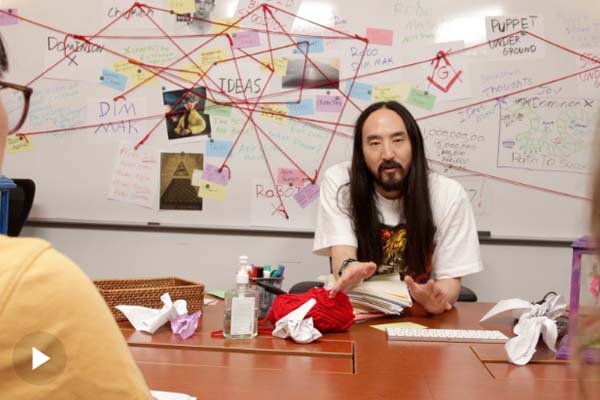
ReplicantX: You’re creating a scenario by which this whole audience of passionate enthusiasts are collectively writing the intellectual property that they all own. That’s a completely different idea.
Some of it is making it as simple as an A, B or C. We’re asking people to come up with prompts. We will say, “What is Chonk’s favorite food?” They will give us all of these kinds of suggestions. As a result, we know things that will fit in the narrative of the storytelling. It’s less like what happens in this episode than when Chonk opens the refrigerator, what does he find? We focus on the points of ideation so that everybody can collectively be involved but we tell a story along the way.
In a longer view, in this pretty new version of community-based writing, how much do you expect the community to evolve the characters themselves?
There’s a real opportunity for it because we started all of this stuff with almost nothing. Through each of these points of persona that the holders help us to define, we determine what the personality of this character is. The audience or the holders are collectively incredibly involved in the growth and evolution of the characters.
I’m looking at it now. I’m in our Discord. Some of them are completely aesthetic, “What poster hangs over Swole’s bed?” That’s like, “You’re going to see the poster. I chose that or I voted on that.” “How does Chonk soothe a crying baby?” Whatever they choose is going to be what happens on screen, “What does Character X Dream about?” That’s a blank palette. You can come up with whatever you want. The way we structured it was we partnered with an artist named pplpleasr and another one named Maciej. Steve has done a collaboration with both of them.
They have a platform called Shibuya, which is more of a choose-your-own-adventure narrative storytelling. We partnered with them. There is going to be a version of this where you get to watch an animation and choose what happens next, but we want to get people involved a little earlier than that. Rather than us spending the next 3 or 4 months animating all these scenes and these end results, let’s have people involved in what that’s going to be.
It’s what they’re voting on now in our token-gated Discord. It’s like Whose Line Is It Anyway?. It’s an improv show happening in our Discord, “Give me a prompt.” People shout out 20 to 30 suggestions. They will narrow those down to the ones they like. Those will become choices in the Shibuya experience. These are who are involved from day one from the writing of the episode.
Later on, we will start designing things, “What color do you want this chair to be?” They can take some ownership over what they end up seeing on screen. When we do this thing, it’s not going to be a completely polished animation. They’re going to see little armatures. It won’t be a fully finished thing because you’re part of the production experience. You’re going to see an 80% done thing. You’re going to pick the ending. We’re going to animate that ending in real-time and then go back, color correct, animate, and do the SFX and all that stuff but they’re also doing it.
We joke that it’s the South Park version, “Can you animate in real-time?” They’re going to animate for four days. That’s the setup. People will have a day to vote, and then they’re going to animate for another two days the end result. On day 7 or day 8, you’re going to see the fully-produced fifteen-second short. We’re going to put all these fifteen-second shorts together to make a two-minute episode.
We’re also dangerously bending the audience’s expectations with respect to the speed of a capable accomplishment. When you’re talking about stop motion, it just takes time because it’s time-intensive. When you make a stop motion, you have to build everything. There are a lot of hacks with respect to just a photographic background. We learned from the Mandalorian that you can shoot a giant LED screen behind a stop-motion setup.
Depending on the scale, it looks like a flawless fall-off background, but it is one person or maybe a team of people at best moving something incrementally, and then taking a picture of it frame by frame. It’s like cinema in that you build the sets. You light it with proper shadows and actual beautiful lenses and all this great technology. At the end of the day, a single person has to move the thing and click. Over hours, it looks like a sequence.
When you said it’s like cinema, I want to see somebody do a movie with real actors but they have to go stop motion position actors. Does somebody do that?
Peter Gabriel’s Sledgehammer video is that. There have been a lot of versions of that where people have used human beings as stop-motion props. OK Go did one. The effect that it achieves is not worth it for an entire film.
It’s an expensive massage bill for those actors.
You should watch Waking Life. It’s Richard Linklater’s movie. That’s a cool example of that.
That’s one of my favorite movies.
I watched it in so many various stages of inebriation.
That’s what it’s there for.
You said inebriation. Drunk History is a cute one.
I was so sad they canceled that show.
Did they? I’m glad there are so many episodes.
There’s a library.
There’s a lot there.
They had so much more to make. I’m upset about it.
It’s a genius show. You mentioned the Discord that’s open for the holders of ReplicantX. Can you tell us a little bit more about the development process for the collection in and of itself? How has that been rolling along?
It was interesting because, at one point, we talked about doing claymation. We talked about physically doing it, and then we realized that trying to make 500 traits physically and taking photos was not economic.
I saw somebody do that early on in NFTs. Somebody made a stop motion or rather an asset trait spectrum that everything was handmade. They only did 2,000 of them. It’s an insane thing to do. It’s also not necessary. I don’t know that you get an extra benefit from having photographed it.
That was the takeaway. At the end of the day, what are we trying to accomplish? Number one, we’re trying to grow the community. Number two, we’re trying to finance the first episode. Number three, you want something that people can flex, floss, and use for some sense of identity. All that didn’t predicate it being physically manufactured.
We never would have been able to get back in black. We had that upfront spend more than we could make to produce it that way.
The Stoopid Buddy team brought in a handful of illustrators and came up with a bunch of drawings and character acts. Steve kept going, “Yes and no,” and narrowed it down to the current illustrator who did the entire collection. It was a matter of coming up with traits. That was Steve and the Stoopid Buddy team going back and forth on what are the traits that suit the collection because of what it is and some of the storytelling that we have done. Some of it is taking cues from cultures, whether it’s diamond hands or gold grills. There’s Pixelmon’s Kevin in the collection. There are a couple of Goblintown NFTs hidden in there.
It was a lot more work than you think to do a good collection and have the traits well distributed. We’re still working on the rarity as we speak. Seth, God bless, you didn’t have to do any of this part. We’re going through them, looking at them all, and seeing. There’s a tool you use to put it all together. You make a bunch of rules like, “The glasses go on top of the head, not behind the head. The hair goes on top,” but then you realize the hair goes on top but it went over the glasses. We have to go back, change that rule, and render the whole damn collection out again.
You do it 500 times. You go through them all like, “The belt buckle felt is on top of the jacket instead of under the jacket. We forgot that one.” We go back, change that rule, and render the whole thing again. You keep going through this process. Even when you’re done, you have to render more than you think because even if the rules are all right, some of them are aesthetically shit. I go, “That’s a bad trait. I don’t know what we were thinking. We can’t have that many clowns in the collection.” You see these things pump out. You’re like, “How hard could it be?”
**We had a similar experience with **PizzaBot
There’s something like that.
Friendships are the real gains to make.
It took me a while.
I’ve got their number one with the ad on it.
I bought an Adam Bomb Squad Badam.
We heard about that.
I’ll buy a couple more when we’re done here.
There you go. Seth, what about you?
You’re not chilling.
Don’t buy it. I want it.
Seth, what is the most recent thing you sold?
I sold a Punk.
Will you get another Punk? Do you have a Punk?
Not everyone has a type.
Matt is holding up a picture of him and Stan Lee.
They didn’t authenticate it.
I do love that.
It’s 100% carbon-neutral.
It comes with duct tape.
My sense of humor.
Over-talking.
It annoys my wife all the time though.
I always take offers.
I’m going to say hi to my wife who just got home.
I have to wrestle with my kids for a while.
Do you want us to give us what we’re working on?
Thank you.