Top Podcasts
Manu Alzuru Of DoinGud - The Creator & Social Impact NFT Ecosystem, Plus: Impact Theory's MerryModz, NFL NFT Tickets, Decentralized Disney, And More...
Humanity’s greatest asset is our ability to adapt and evolve for any situation, and our ability to care for others. Social good is part of our collective DNA and the NFT space is responding with projects with heart. Jeff Kelley, Eathan Janney, Josh Kriger sit down for an insightful interview with the founder of DoinGud, Manu Alzuru. Manu describes how DoinGud was born, its focus on the creator and giving community, and its future in the space. Curious about social impact NFTs? Tune in and learn more from Manu and company.
—
Listen to the podcast here
Manu Alzuru Of DoinGud – The Creator & Social Impact NFT Ecosystem, Plus: Impact Theory’s MerryModz, NFL NFT Tickets, Decentralized Disney, And More…
Check out this rocking episode to learn how doing good is doing great. Thanks for creators, givers and those in need.
How the computer, internet and Ethereum community collectively provided incredible leverage that has liberated our guest as a human.
Also, why rare marbles might be more valuable to a younger version of our guest. All this and more in this episode. Enjoy.
—
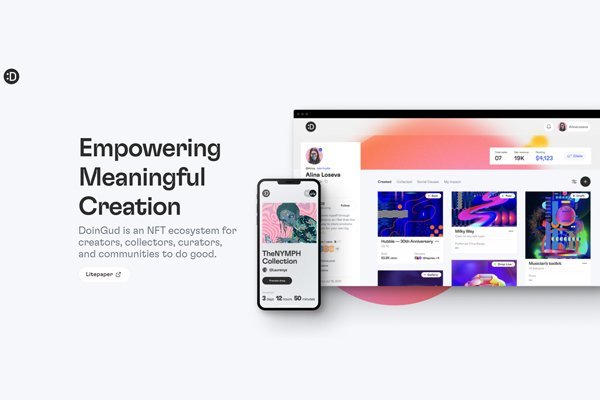
This episode features Manu Alzuru of DoinGud. It is an NFT marketplace and social platform focused on the future of creators and giving economies by bringing creators’ brands, curators, collectors and social impact organizations together to support one another and become self-owned, self-governed and self-sustained.
Manu, Cofounder of DoinGud is an engineer, humanist solarpunk and optimist who believes in humanity and its capacity to evolve and adapt for creating a more equitable future. Manu has led teams at multinational organizations, helped with the launch of multiple traditional and blockchain organizations is advising venture capitalists and angels and founded FightPandemics.com, a social platform where those who need help can connect with those who can provide it. Manu, welcome to the show. It’s a pleasure to have you here.
Thank you guys for having me.
We know you’ve been under the weather. We didn’t know if we’d have you live and in person but we’re glad you’re recovered. You’re on track. Although we would have enjoyed a little bit of a trippy episode on some fun drugs. We’ll save that for next time.
We have a lot of projects on the platform and social impact social good comes up a lot as a topic. It seems like it’s embedded in the DNA of what you guys are doing. I’m excited to dive into that.
Let’s do it. Let’s start at the beginning. How did the idea for DoinGud come up? How did this amazing team come together?
This story of how the idea of DoinGud was born is basically the story of my life. It’s been very difficult but it’s been also a great experience. It’s difficult because I lived in Venezuela before and I experienced governments taking away stuff from us and my family. I experienced the expropriation of land. Since I was a young kid, I’ve been protesting for property rights and also for freedom of speech. When I became an engineer, I started working with one of the largest oil service companies in the world. I realized how we humans value natural resources, human capital and social capital, which we don’t value.
I started to see all the problems that we have in our humanity and how we are using natural resources to extract as much value as we can. Before that, I was also building websites. When I realized what was going on with the oil industry, I decided to quit. After that, I got into a lot of trouble because I was protesting back at home. I was organizing a protest against the government and the government doesn’t like that. I had to leave the country.
When I came to Europe, I started working again on the internet and then realized that the new oil is data. We were using data against users and exploiting users again but in another way. I got disgusted again by the industry. That led me to getting into blockchain years later after working in multiple multinational organizations. I explored the power of community ownership and the blockchain itself. As you mentioned, I also created one organization that was called Fight Pandemics. The idea at that was to create a platform that helps people connect when they need any help.
When I was building that platform together with over 1,900 people from all over the world, we didn’t raise one single US dollar. It was only people contributing to something that that they wanted. The idea at that time was to create a social DAO but I realized that most people didn’t get the concept of community ownership and community-driven projects. I realized that we needed to combine human capital and social capital with financial capital.
When I saw what’s happening with NFTs, I thought that this was the perfect combination because you don’t lock so many types of new capitals or a new type of value that people don’t necessarily need to understand but they know that they exist. That was easier to understand than managing a social platform that was community-owned. To me, NFTs were perfect. Why? It’s because when I was still being Fight Pandemics, I also realize that most of the people that were behind nonprofits and NGOs are artists and creators.
To me, it was quite a click that we need to bring the creator economy and the giving economy together because there’s a huge overlap in those two economies. That’s how DoinGud was born. The initial group that I started working on DoinGud came from the Fight Pandemics project. It’s been just friends and friends of friends that have been joining, supporting a lot and here we are.
First of all, compliments on your activism, optimism and your willingness to keep going through difficulties and the awareness that you’re bringing to these things. Sometimes, we can turn a blind eye to things but it seems like you’re moving with eyes wide open, which is exciting and inspiring to me. I’m sure a lot of our readers as well.
To comment on your idea of these new forms of currency among artists and givers, we won’t focus on this on the episode but we were releasing our Spirit Coin project along with Nicole Buffett. One of the essential principles we’re celebrating with her is digital art as a new form of currency. We totally resonate with what you’re talking about. My next question is for readers who are unaware, what is the DoinGud ecosystem? How does it go about elevating art and creators?
We call DoinGud an ecosystem because we’re not only a marketplace. Initially, we’re starting as a marketplace. As a platform that enables creators to come in and tokenize their creations in the form of NFTs and stream some percentage of their sales to social causes that they care about. This is how we’re starting but the idea is that we distribute ownership to those people that are contributing to the protocol. We can collectively curate all the different social causes that are listed within the protocol. The protocol could be used by DeFi, by DAOs and by other different financial instruments.
We’re starting with NFTs because we see that there’s a huge overlap between the creator economy and the giving economy right away. We think that humans, in general, want to do good and we just need to find ways and give them the tools so they can express themselves and do good. The idea here is to go beyond NFTs and enable these protocols to become a way for us to show to the world that we humans can do good for ourselves and for the world.
We’re seeing over and over again these themes in crypto and NFTs of giving back and how well that’s working. We brought on someone from Endaoment, this organization that goes to nonprofits and says, “Don’t turn down those crypto donations because you don’t know what to do with them because you’re going to get a lot of them and it’s going to increase.” They facilitate the distribution of those cryptocurrency donations by making it easier for sometimes slow-moving not-for-profits to hop on board and benefit from all this. It’s a wonderful trend that’s going on and I appreciate you being yet another arm that facilitates that.
A thing that people haven’t realized is that we can make net-positive games instead of creating zero-sum games because when you give, you’re losing while you’re giving but what if you could earn by giving? You can create different mechanisms that empower the community that gives and create a more sustainable ecosystem.
For us, that is about rewarding people for giving us their time, attention and spending that very valuable awareness of theirs on what we’re doing and everything that we’re about. There’s something in there that’s special that is elevated within the NFT community, even above and beyond the general crypto community and blockchain community. It’s one of the things that we’re most excited about in this space and. It’s exciting to hear you talk about that because we’re much aligned.
Social Impact NFT: Most of the people that are behind nonprofits and NGOs are artists and creators. It was quite a click to bring the creator economy and the giving economy together because there’s a huge overlap between them.
The fundamental idea needs to be emphasized to our readers that you can have social impact projects with NFTs, where everyone can make money and the cause can be benefited at the same time. This is the power unleashed with NFTs, which leads me to some curiosity about your announcement of your launch. This is pretty exciting news. I know how much goes into these launches. What can people do on day one and then what are some of the features down the road and how do these features differ from what’s out there already nowadays in addition to this contribution component?
Let’s start with the first one. What can people do is they can come to the platform and create a profile. They are going to be able also to participate in the different drops that we’re going to be having. This is a soft launch that we’re doing initially. It’s not going to be open for people to start minting and creating NFTs themselves but later on, at the beginning of Q1, it’s going to be open for everyone.
We see ourselves as a platform that is open for all the different creators but the main differentiator is that we have a curation element that is going to be community-owned and community-driven. What that means is that we can collectively decide who are those creators that we want to have within the platform, not have all of these decisions made in the back of the horse but made together with the community.
Another thing that is important to say is that the NFTs are not going to be directly minted. They’re going to be minted only when they get bought. We’re not using resources of the blockchain that are not necessary. Another thing that is important is that we’re envisioning a multichannel ecosystem. In the same way that in the real world whenever you buy an asset, you’re thinking, “Where should I put this asset? Should I put it in the world? Should I put it in a vault? Should I put it in a museum?” In the digital world, we believe that it’s going to be exactly the same.
Collectors are going to think about where they want to hold their assets. Maybe if an asset is worth $10, maybe they want to hold it on Polygon but maybe if the asset is worth a couple of hundred thousands or millions, maybe they want to hold on to their Ethereum because it’s more secure and stable for them. We want to enable the creators to do what they know best, which is create and not think about anything related to the blockchain but the collectors who are the ones that care where they’re going to be holding their assets, they’re going to be selecting in which blockchain they want these NFT to be minted in.
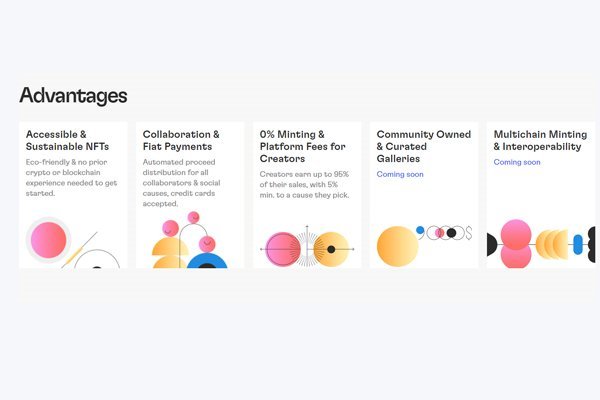
This is something that we think is going to change the way that people interact with NFTs because we also don’t want to block the creators to one chain. We believe in the multi-chain world. We believe in pluralism and in different forms of expression. We want the creators to focus on what they know best, which is creating. At the same time, be able to collaborate with multiple creators to have up to 200 creators in one creation and split all the different revenues between all the different collaborators, not only in the primary market but also in the secondary market as well.
The donation part is a minimum of 5% in the primary sales and a minimum of 2.5% in the secondary market. That means that the creations are always funding public goods and public infrastructure. Another thing that is important to mention about the platform is the way that we envision NFTs or how they should behave. People are storing NFS only on IPFS but IPFS for those that don’t know is not a permanent storage solution. IPFS is a protocol. If you don’t pay those node operators, they can drop the data that is being hosted on IPFS.
We talked about that before in the show that not all NFTs are created equal and people often don’t know the code that they’re buying.
The idea here that we have is to make NFTs more resilient. You might be asking, “How can we make NFTs more resilient?” What if we had on IPFS but also we had on Filecoin, AirWave or Sia and all these different decentralized storage networks so if one doesn’t work, there’s another one that still has all the beta of the NFT so that the NFT is resilient and hopefully it could be permanent.
There’s a lot that you covered there. I want to go back to the governance, the DAO and the choosing the charity side. Could you elaborate a little bit more on how you’re balancing what the creators want to support versus what the collectors want to support and how those decisions get made? Are there any nonprofits that are off the table like extreme political causes and things like that? Is it truly up to the community on how that would work?
Initially, we are not a DAO/Jet. We are a team that is building the basis for these to become a DAO and to be managed as the DAO. I’ve been in the DAO space for a while, I’ve been participating in the ecosystem for years and I have realized that you cannot release a project and call it decentralized from day one because that’s not the reality. That’s not how things work. There are a lot of information asymmetry and things that people don’t talk about and we believe that the best way to create a solely decentralized organization is to do it progressively and to do it with consciousness.
What that means is creating the values that everyone is aligned because if all the stakeholders in an organization are not aligned with the values then it won’t go where you’re aiming the organization to go. We are taking a step back and building the foundations for this to become a decentralized autonomous organization. Initially, we, the team, are curating those organizations that are being listed within the platform. The way that we’re doing it is we’re doing KYB, which is Know Your Business and KYC, Know Your Customer.
We’re doing KYB for the organization and there you will find that the people behind those organizations are who they say they are. They can then become an approved organization for the time being. We don’t know what organization is doing a good job or a bad job and it’s not our job to decide that. It’s the job of the community to decide what is good and what is bad because what is good and what is bad is very relative.
Now something might be good and tomorrow, it might not be good anymore. We want this to be very flexible. Initially, we, the team are selecting those social causes based on what the creators that are going to be on board initially want to support. It’s the creators who are deciding what organizations are going to be receiving money from their creations. It’s not coming from their pocket. It’s coming from what they create. Whenever it gets sold, a percentage goes to those social causes.
The way that we envisioned this organization is that after we have our token out and so on is that we can collectively decide who are those organizations are listed within the protocol. Maybe one organization might be listed now. They might be receiving funds for a couple of months but then we realize that their organization is not doing what they say that they were going to be doing and we can just relist there as a collective. We can decide, “This is not up to the standards that we want.”
I totally get it now. I understand the pushes and pulls there. What you’re doing is quite similar to a project you probably weren’t expecting me to mention the same show, which is a SuperDoge. This is a cartoon animated series formed from a meme coin. We did a show with them. What the creators did is they chose three charities at the beginning and then the community got to decide if those charities continue or other charities got nominated and they got voted on by the community based on a governance process. Essentially, what you’re saying is you’re going to kickstart things, send things in the right direction and then let the community support the future progress from there.
We’re setting as a foundation and then hopefully can run by itself and be managed by the community. That’s what we’re aiming for.
Speaking of the community and the creators in the community, could you fill us in on what artists are in the platform and in the ecosystem here ahead of the launch?
When we’re going to be working together with H+ Creative. They have multiple creators within that collective like Render Fruit and Skeeva. Also, we are going to be working with the guys from Blunt Action, Jewelsmart, Allison Bamcat, Ben Heim and Chris McCann. We also have another platform that is called Agora. Agora has over three million users and is a community-managed platform for photographers. They have selected the best photographs for the 75 years of the United Nations. They have 75 pictures in the United Nations headquarters. They curated with the community.
They also have curated the best pictures of 2021 in black and white and so on. They’re going to be auctioning all of this directly on our platform and we’re going to be working together with that community very closely. That’s going to be one of the first cases where it’s going to be a combination of communities coming together and doing good for humanity. This is one case but there’s going to be more different projects that also are community-managed, owned and so on that are going to be working together with us. These are the initial artists. The idea is to kick this off and have this soft launch until the end of 2021 and then make it open. That’s the goal.
We talked about this flexible structure with a strong foundation, bringing art creatives on board and also organizations that get to benefit from everything. Can you highlight some of the social causes that you’ve welcomed ahead of the launch? I know there’s the Tanzania Development Trust that you’re working with. Can you tell us a little bit about that or other projects that are on board?
We have the Open Earth Foundation, Rainforest Foundation, Every Shelter and Crucis ex Rosas which is a Latin foundation. We have the Blockchain Education Network, KABOOM!, Malala Fund, Save the Children, United Way Worldwide, United Way Miami, Musicians on Call, Ocean Defenders Alliance and multiple more that have been requesting us to be listed as well within the platform.
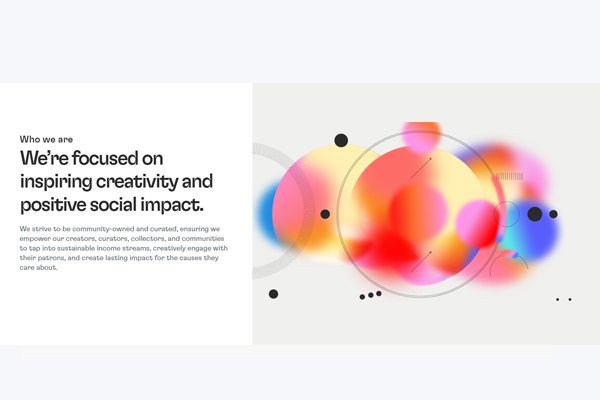
Social Impact NFT: We want to enable the creators to do what they know best, which is create and not think about anything related to the blockchain.
Initially, we’re starting around 30 but we have received over 280-something requests to be listed on the platform. This is the very beginning. Another important thing to mention is that the platform is going to be also in multiple languages as well. We can cover the communities that haven’t been able to use NFTs if they don’t know English, for example. We want these platforms to be more than a platform. It’s going to be a movement.
Let’s go.
Anything you wish to disclose?
Not really.
It’s a public possession. To me, the internet.
Optimism.
I was on another call.
I’m going to call my mom and say that I love her.
That’s the cherry on top of everything.
Important Links:
-
Show – previous episode
-
Tom Bilyeu and Impact Theory Studios upcoming NFT drop Merry Modz
-
Tom Bilyeu – previous episode
-
The NFL is attaching NFTs to tickets and the Lions Thanksgiving game is on the list
-
Asad Malik – previous episode
-
@ManuAlzuru – Twitter
-
iTunes – Edge of NFT
About Manuel Gonzalez Alzuru
I am not an average Mechanical Engineer.
Of course, I know how to calculate heat, design with a factor of safety, analyzing processes and develop a maintenance plan for mechanical systems. However, I’m also an entrepreneur, without fear of new challenges, who loves innovation, multicultural, highly motivated and with excellent communication and interpersonal skills (and also good organizing parties, I’ve been told).
In high school (USA) I started to explore the internet with some web design classes. In uni during my engineering courses, I designed a couple of websites, participated in the creation of a car for Formula SAE, part of AIESEC and the student government. Worked at Schlumberger where I managed operations of 7-8 digits USD, created maintenance manuals for all the parts used in the Rig-Up. After I went to France, where I studied French and also created some websites before starting to work at Jumia.
At Jumia (backed by Rocket Internet, Goldman Sachs, Orange, AXA, MTN) I worked in the SEM and Metasearch teams that were responsible for +35% of the bookings and had a growth of 350% for SEM & 230% for Tripadvisor, reducing the cost by 55.92%. After that period, the CMO allowed me to lead the Mobile team and manage a significant budget for launching apps and ensure a high retention of the acquired users.
After few months, I realized that I wanted to move to Europe’s Silicon Valley (Berlin) & I started working at Jobpal (500 Startups) where I had the opportunity to learn about AI, set all the marketing strategy for both B2B & B2C side. Few months after, I landed @Medlanes where I managed the marketing (B2B & B2C), BI team and product. CMO & CIO @Brickblock I managed the fundraising campaign (ICO + VC).
In a nutshell, my passion for innovation and entrepreneurship is coupled with a good sense of humor, love for my family and friends and great motivations for improving day over day while doing what I love.