Top Podcasts
Luke Stokes Of Foundation For Interwallet Operability (FIO) Talks About Consumer Accessible Blockchain And How DACs Are Shaping The Future
One complaint that is often thrown against blockchain and crypto is its complexity and difficulty of use. With advances in the space, we now have people working on ways to make consumer accessible blockchains for everyone. Jeff Kelley, Eathan Janney, and Josh Kriger introduce us to one of the people helping make crypto and blockchains more accessible, Luke Stokes. Luke is the Managing Director of the Foundation for Interwallet Operability, and here he shares his vision and goals for the crypto industry. Help shape the future by tuning in and learning about what’s going on at the Edge of NFT.
—
Listen to the podcast here
Luke Stokes Of Foundation For Interwallet Operability (FIO) Talks About Consumer Accessible Blockchain And How DACs Are Shaping The Future
This sponsored spotlight episode features Luke Stokes, the Managing Director for the Foundation for Interwallet Operability. FIO is to crypto, what HTTP is to the internet. FIO is the open-source and decentralized crypto usability layer that makes sending, receiving, and even requesting crypto easier than ever and dramatically less risky to use. Luke has been a consensus witness for the Hive previously Steem Blockchain since early 2018 and a custodian for eosDAC, a community-owned eos.io block producer and DAC enabler since its inception. He’s an awesome guy that we know well. Luke, welcome to the program.
Thanks so much for having me. That was a long-winded intro.
There’s always a lot of wonderful stuff to say about our guests. It’s always a privilege to have the folks on that we are able to talk to. I want to start with the basics with you. Tell us a little bit about what is FIO and how did it originally form?
We are trying to make crypto easier. Crypto is complicated. It’s hard to use and frustrating. I have been in blockchain since 2013. It was January 2013 when I’ve first got started. I’m a Science major guy, so I get tech but I also get how often it’s engineers building tools for other engineers. Those are super frustrating. FIO is a human-readable address. They exist as NFTs.
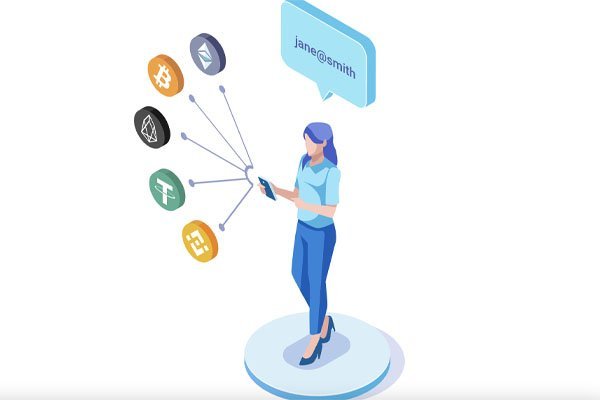
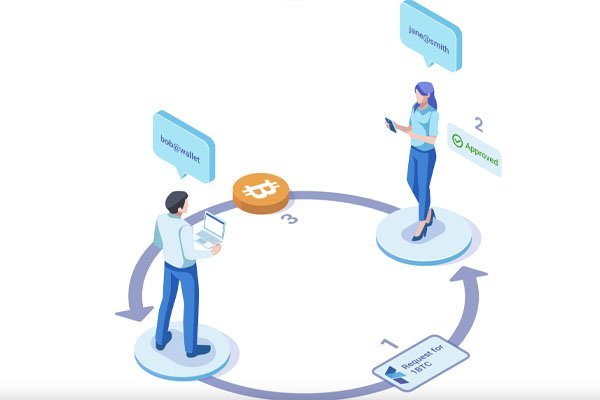
It’s a two-part NFT. Stokes is the domain part. Luke@Stokes would be the crypto handle that I use to send and, importantly, receive crypto. We have the ability to request funds from someone, including an encrypted memo. That’s a feature that people are used to in the traditional financial world, and they don’t have it in traditional crypto. It’s send-only. We have this usability layer sitting on top of your experience.
We’re trying to make crypto easier. Click To Tweet
If you are in a wallet, you are an exchanger in some type of crypto-enabled experience, you can have that nice human-readable expression instead of these long, crazy public addresses that confuse everybody. That’s what we are building. I started as a consultant. I came in as a part-time consultant for the project. I found myself as the Managing Director, and it has been a few years now doing that.
Probably some folks that are reading are familiar with ENS and how that simplifies transactions on Ethereum. Maybe you can compare what you are doing to ENS to start as a point of relevancy to folks.
We have this little diagram that we use. It’s like a Venn Diagram of how these things got to overlap. There’s a concept of wallet naming like ENS and Unstoppable Domains. There’s a whole bunch of other ones like ADA Handle. There’s a new one on Solana. They all have these wallet naming solution providers, which we feel is pretty important. There are many of them. What we do a little differently than Unstoppable Domains and ENS is we are not doing decentralized DNS. We are not trying to solve that problem. That’s a big, great problem to solve but we are focused on usability.
We do the wallet naming, and that’s where we are similar. We do additional things such as NFT signatures, which we want to talk about on the show. We also do that FIO request functionality and the ability to add a memo. One of the challenges that we see with some of the existing solutions is that they are on a layer one that’s too expensive to use. That’s why Unstoppable moved to Polygon and other examples like that. It’s so expensive. People aren’t going to use it.
The other part about it is the ability to request funds and have a message or a memo and to be able to work in a permissionless way with every single chain. There’s no approval that you need if you are a new blockchain with a new token to be able to use the FIO Protocol. It’s an open and permissionless protocol that anyone can participate in. Prior to ENS having a token, we were the only tokenized decentralized business model, which they are exploring as well. It demonstrates that we had a good idea there.
Walk us through how this enhances the crypto experience for someone that loves NFTs and is starting to dabble in that space. Maybe they’ve got something a little bit crazy that they didn’t expect to put in their wallet, and it’s there. Now they want to protect it because it’s going up in value. How does FIO help?
I will caveat it with the entire industry is too early. What I mean by that is remember when the internet was first going. I built my first website in 1996. Things were frustrating and difficult. It takes time for usability to catch up and for people to prioritize usability. I will say that as a caveat. I read an article. It was one of these metaverse land NFT sale things, and it was a big critique about the project. As I read through the critique, I was chuckling because most of the critique was about the blockchain industry. It was like, “Metamask is too hard.”
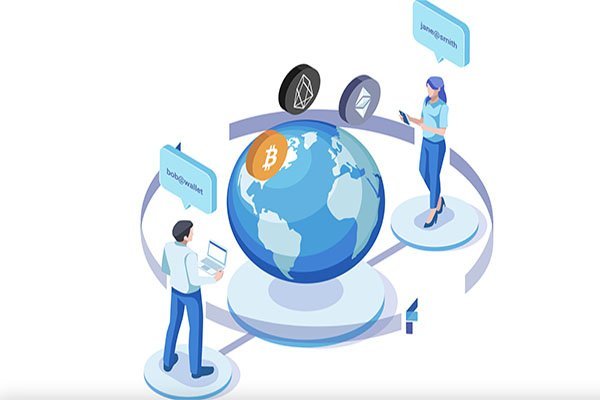
Consumer Accessible Blockchain: If you’re in a wallet, exchange, or in some type of crypto enabled-experience, you can have that nice human-readable expression instead of these long, crazy public addresses that just confuse everybody. That’s what we’re building.
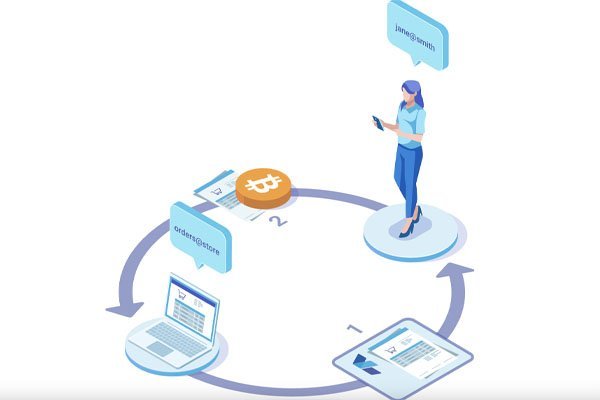
They were looking at a blockchain transaction on the Etherscan going, “This is my receipt? You’ve got to be shitting me. This is crazy.” The idea that this isn’t a human-readable receipt to know exactly what I bought and I spent a whole lot of money for it. Those are the type of things that we are trying to solve with the FIO Protocol. Instead of some random Ethereum address or an Ethereum contract address and you have seen hex data for metadata that you are supposed to interpret as this thing you bought, it’s not user-friendly at all.
What we are trying to bring is, for example, you could have the Spirit Seed NFT that could be signed by the Edge of NFT. That could be displayed right in the interface. Unique.One is the first integration of the NFT signatures by FIO, where you can go and say, “That’s a human-readable thing. I know that I’ve got something that is real. It’s not just a hash. It makes sense to me. It’s usable.”
It’s like the difference between typing in an IP address, and you are randomly trying to go to some website or having a way to go to the webpage directly, or as we say, HTTP for the blockchain. It’s the idea that you have a way to have these routing of images and text and eventually streaming media and all this stuff packaged in a web browser experience.
Is comparing what you guys are doing to Bitly a fair comparison?
Yes. That’s a good way to think about it. Instead of some big, long, gigantic address that you are not going to remember, it could be a super simple, user-friendly address. The nice thing about this is, it’s cryptographically improved in terms of you can have absolute certainty that the person who controls that NFT or the person who controls that address is the same person who sent you that request.
You are never going to send an NFT or tokens to the wrong account because you have absolute certainty that Luke@Stokes is me. Better yet, you are not going to buy an NFT on a marketplace that’s fraudulent. It’s not actually from people, for example. Instead of people or any other artists wanting to sign their NFT with FIO handle, they know, “I’m buying the original thing. I’m not buying a knockoff.”
This is great stuff. The interesting thing about the crew we have right here is we are all nerds. To some degree, we enjoy going to the transaction hash and being like, “I figured this out. I know what’s going on. It’s cool to be able to decode this cool new thing that’s going on.” I remember working with a solidity developer, working on a human-facing interface, and there would be error messages that get thrown up if they enter the wrong information. I said, “We’ve got to make that error message say something that the user understands.” He’s like, “They did the wrong thing.” I’m like, “They did the wrong thing. They need to know what it is that they did wrong.” You have so many technical people that they get it that way, and they don’t even get what it’s to not get it that way.
We can’t highlight that enough. There’s something about engineers, and I’m speaking as an engineer, a Computer Science major that we are like, “2 plus 2 equals 4. It’s 1s and 0s. What’s the problem?” We don’t realize that when everyone else is out at the party, hanging out and having a good time, these people are up until 2:00 AM or 2:30 AM reading white papers, and their brains work in different ways. They are like, “Gas fees and the Gwei were too high than the contract failure.” They expect that people understand what that is.
I’m an engineer. I want to say this to your audience. I’m a technical dude. I can’t figure out this stuff. It’s so complex and confusing that it’s important for this industry itself to level up, especially as you are bringing in the mass audience with NFTs. These are artists. These are not technical engineer people. They need to have their hands held, and error messages are a perfect example.
Before going to this next question, we talked about easy buttons a lot but I can’t help but recognize in this specific conversation, this analog with the Steve Jobs, Steve Wozniak thing. It’s like, “We are nerdy. We want to do it. We want to make it cool,” and have someone not only say, “We need to make this user-friendly.” Also, what’s cool about NFTs and this Apple ethos is we want to make it creative. We want to make it fun. We want it to have a personality and have an ethos behind it. It’s fascinating. In the light of telling us about things in a little bit more human-friendly way, Decentralized Autonomous Communities, DACs, tell us a little bit about them and how they relate to FIO.
I wanted to give a shout-out to everyone who has been doing DACs and DAOs. DAOs are probably the more common term, Decentralized Autonomous Organizations. It’s one of the things that whichever term gets more popular, it gets used and that one is probably more commonly used. Essentially, I describe it as a group of people with a shared goal and come together and say, “How can we pool our resources, our time, attention, and energy to do something that we couldn’t do as individuals? Once we get into that situation, how do we have more of an autonomous process for that?”
It’s not a bunch of people being like, “How do we communicate? How do we talk through this? How do we decide financially where the funds go and everything?” The community part, the corporation, the company or their consortia like FIO, we run as a Decentralized Autonomous Consortia, or if it’s a DAO or an organization, what does that all look like? It’s a massive subject that is probably going to be a big deal. Everyone talks about NFTs as the big thing that happened in 2021. 2022 or 2023 is going to be huge for DAOs and DACs.
The existing financial systems and structures for human organizations are based on extrinsic motivations. We are not going to throw you in a cage because you broke some law, you smoke some plant you are not supposed to or whatever it might be, or we are going to pay you money, and if you don’t do it, we are going to take that money away from you. It’s threats and rewards. It’s an extrinsic motivation to do stuff. As I’m talking to a creative audience, you guys understand that there’s provable science that shows that destroys your creativity. It’s not a good way for humans to collaboratively do cool new stuff. Essentially, we want this intrinsic motivation.
Consumer Accessible Blockchain: We’re not doing decentralized DNS. We’re not trying to solve that problem. It’s a big, great problem to solve, but we’re focused on usability.
A DAO model or a DAC model is a group of people that come together and say, “We’ve got these processes like worker proposals and a mechanism where you can have people vote on what type of things they want their community treasury to go towards.” Also, for example, a way to do something called a multisig. A multisig is essentially a group of people that have the keys and permissions on a specific account, and the funds can go into the account. Unless they reach a certain level of consensus, the funds can’t leave that account.
We have a way with these different blockchain processes to coordinate voting, membership, and expenditures of the community treasury. This is a summary of what DACs and DAOs are in the nitty-gritty. Ultimately, it boils down to a group of people with a shared goal, coordinating the resources together, so they can agree and come to a consensus on how that money is going to be spent.
You could do some cool stuff, and it’s going to fundamentally change society. I have been to Honduras, Panama, and El Salvador, with these different delegations meeting with the governments. They are talking about blockchain technology, and I get brought into those by Brock Pierce and others because of me playing around with DACs and DAOs and being fascinated by this new model.
Can you imagine governments that were completely voluntary? Can you imagine governments that were service providers? Can you imagine nonprofits where everything is completely transparent in every single transaction they do? Can you imagine corporations like Apple, for example, if all that money didn’t go to a small portion of shareholders but went to everyone creating that value? The Facebook example is often used where the people creating value directly could participate in value creation is something that’s interesting.
That’s core to our ethos, Luke, and that’s why we like having you around. We use the word co-creation a lot. It involves doing things because you want to and not because someone has created leverage. To me, that’s the essence of what you are talking about. There are a lot of ways to do business, have success, and put wins on the board but the Web 3.0 world is one where you are living in abundance. You are creating something bigger than any one individual is capable of doing. You are willing to forego some of the need for rigidity on the front end in return for accelerating progress and knowing that things will work out. It’s a different mindset.
As you see, people come into this space, they like the energy. They want to be part of it but they have to adjust. Sometimes that takes a little while, and that’s a good segue to a little bit more of a philosophical question. I know you like to go deep. We talked about blockchain NFTs and their power to improve human lives. How do you see FIO contributing to this goal, and what else has to happen for this to happen on a macro scale?
The reason I’m involved in FIO is as I was building and working with FIO Stack, building DACs and DAOs, exploring this stuff in 2018 saying, “How can we redo governments, corporations, and nonprofits using these amazing blockchain tools?” I quickly ran into the reality that it was too complicated. It’s too confusing for everyday people to use these amazing tools.
We can have incredible solutions, supply chain management tools, and all these different things, DACs, DAOs, everything in between, incredible games, and all these things but if they are too complicated, people won’t use them. My passion with FIO is being able to say, “Can we make crypto simple, joyful, fun, and not stressful. You are not sitting there freaking out and going, ‘This immutable transaction. If I screwed up, everything is gone. My savings are gone.’”
I have heard those stories so many times in the last couple of years that I have been in the space. It was the pain of recognizing my industry is not ready for mass adoption and recognizing on that top, this Law of Diffusion of Innovation where there are these adoption curves are happening, whether we like it or not. It’s these doublings that have been happening for many years. If you look at these curves and the exponential growth that most people are not equipped to recognize that it’s happening, and this is definitely going to change the world.
In the next few years, you are probably going to have a billion users in crypto. How do we prepare this industry for that? For me, immediately, we are already saying that it’s the Steve Jobs of the world that are going to come to this blockchain crypto space and make it easier. I figured, “This is the most important thing to do. If we can make it fun and interesting, then we can bring freedom tools to more people.”
It can be accessible by the people I met in El Salvador and other countries where they don’t have the level of technical sophistication that a lot of us early innovators, the 2.5% or so. We are at about maybe 3.9% in the whole world using crypto on a regular basis. We’ve got a lot of growth, and it’s going to be people that aren’t at the same educational and technical know-how that your audience is and that we are mostly. It’s going to be a whole larger group of people. We’ve got to make it simple. I look at it as more of a prerequisite requirement to bring the freedom tools and the promises that this industry has made for over a decade.
My mom reads this, so I’m sure she appreciates being told that she’s among the technically literate. I’m sure she’s excited about that.
If she’s into crypto, she is. She’s an early innovator. Congratulations.
Could I get my mom to read this?
You’ve got to make it easy.
There are a couple of terms that are interesting to dive into that circle about what you are up to, Luke. Nonviolent consensus is one and voluntary hierarchy. Can you unpack those? There’s some self-explanatory in this but also something worth exploring there. Talk about, where’s this term nonviolent consensus come from? Why do we need a term like that?
Consumer Accessible Blockchain: Ultimately, it boils down to a group of people with a shared goal, coordinating the resources together so they can agree and come to a consensus on how that money is going to be spent.
For me, when I look at what’s wrong with the world, I look at a lot of people being pushed in a direction they don’t necessarily want to go. Maybe they are in a job they hate or in a system where a lot of people aren’t familiar with. The term democide, for example. When they have these causes, we are like, “We’ve got to do this cause or that cause to help humanity.” Democide demonstrates 260 million people have essentially died because of the government.
Even those who agree with the government won’t necessarily disagree with this definition but it’s essentially a monopoly on the initiation of violent force in a geographic region, and some people are okay with that. The Hobbes in Leviathan is like, “We need somebody in this area. They get to use violence but nobody else gets to.” That was important. I’m not frustrated with the history of how we’ve got here but it’s not going to serve us going forward. Humans do their best work when they aren’t forced to, when they love it, it’s fun and intrinsically motivated.
Let’s do it.
What is the most recent thing you sold?
Also, it paid for that wedding ring.
What is your most prized possession?
Important Links:
-
@Luke Stokes – Twitter
-
PeakD – Luke Stokes
-
Hive.Blog – Luke Stokes
-
Telegram – Luke Stokes
-
@JoinFIO – Twitter
-
iTunes – Edge of NFT
-
Ash Howe – LinkedIn
About Luke Stokes

Luke Stokes is the Managing Director for the Foundation for Interwallet Operability. He’s passionate about voluntary systems of governance and has been involved in bitcoin since early 2013. He’s been a consensus witness for the Steem blockchain since early 2018 and a custodian for eosDAC, a community-owned EOSIO Block Producer and DAC Enabler, since its inception.
With a computer science degree from UPENN, he built, bootstrapped and co-founded the shopping cart software company FoxyCart over a ten year period and is now focused on blockchain technology as a means to create a world we all want to live in. He currently lives in Puerto Rico with his wife and three children and enjoys discussing everything from philosophy, to consciousness, to voluntaryism, to love and awakening.