Top Podcasts
Linda Adami Of Quantum Temple - The #Web3 Platform Preserving Cultural Heritage
Who would have thought that the blockchain can be used to preserve cultural heritage in the best way? That much is apparent with the work that Quantum Temple is doing in this space. This innovative Web3 platform helps to preserve cultural heritage by bringing the art and culture of ancestral communities onto the blockchain. Joining the Edge on NFT team all the way from Bali, Indonesia is Linda Adami, who explains everything there is to know about Quantum Temple. Tune in and learn how this idea of taking cultural heritage to the blockchain might be our best chance to preserve the knowledge, traditions, and art forms of cultures around the world in perpetuity. Plus get the latest scoop on some of the hottest topics in the Web3 space right now as we hear about Vitalik Buterin’s NFT collection and Yuga Labs’ embrace of Bitcoin NFTs.
Listen to the podcast here
Linda Adami Of Quantum Temple - The #Web3 Platform Preserving Cultural Heritage
This is Linda Adami of Quantum Temple, the Web3 platform that helps to preserve cultural heritage and connect with ancestral communities. I’m on the Edge of NFT, the show that helps you connect with a diversity of personalities and cultures in Web3.
NFT-curious audiences, stay tuned for this episode to learn how Quantum Temple is bringing the art and culture of ancestral communities onto the blockchain.
How our guest’s prize possession is a special type of document that unlocks new worlds of experiences.
Also, how Yuga Labs continues to trailblaze within new forms of NFT and Web3 innovation.
Finally, NFT LA 2022 was a blast. It was also a blast-off in a giant plume of bright burning rocket fuel. Web3, NFTs, blockchain, decentralization, and a suite of immersive new tech developments have exploded onto the canvas of life. Outer Edge is the theme of 2023’s event dedicated to those of you building with us at the outer edges, making the future happen.
The community-centric gathering returns to LA from March 20th to the 23rd, 2023 to uplift creators and technologists through interactive experiences, a wide variety of discussions and presentations, and entertaining surprises that transport participants to the outer edge of what’s possible when we co-create a new paradigm, embracing the decentralized web, AI, extended reality, and more. To register to attend or learn how to co-create an experience on the Outer Edge, head over to OuterEdge.live. The event is being organized by the Edge of Company and the founders of the show. See you there.
---
This episode features Linda Adami of Quantum Temple, a platform that enables equitable exchanges between conscious collectors and ancestral communities through Web3 technology. Linda is a passionate multicultural innovation and impact strategist with many years of experience in emerging markets across Central America, Southeast Asia, and the Gulf. After graduating with honors in Political Economy from King’s College London, she worked at the nexus of international development, research, and innovation at top-tier private and public institutions.
She has been working with the government of Dubai at the Dubai Future Foundation. She developed public strategies and a global community platform called Dubai Future Talks, which hosts pioneers, academics, and artists including Jeffrey Sachs, will.i.am, Neil deGrasse Tyson, Bjarke Ingels, and Nick Bostrom. As CEO of Quantum Temple, Linda works around the globe with local communities, governments, and NGOs to preserve cultural heritage. The goal of Quantum Temple is to protect and share the knowledge, traditions, and art forms of cultures around the world in perpetuity through blockchain technology.
Linda, welcome to the show.
Thank you for having me. It’s a pleasure to be here.
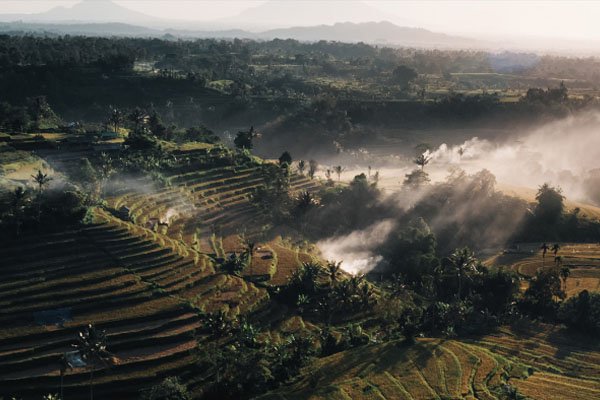
For the audience, she has a fun background. I see some step farming going on. It reminds me of Peru. I don’t know if you even know the origin of that photo but that’s based in Peru or some Latin American country.
That’s based in Bali. It’s called Jatiluwih Rice Terrace. It was named a UNESCO World Heritage site back in 2012. Our project touched on that a little. If that’s interesting, we can talk about that.
I spent some time in Peru. My partner, Christine, works with indigenous communities in Peru. This will be interesting to cover. The first thing we can chat about is some history of Quantum Temple and how it came to be. What’s the origin story here?
Thank you for that. I spent the last few years working with the Dubai government. That’s when I got introduced to blockchain back in 2016 when we endeavored to place 100% of government services on-chain by 2020. That was achieved. The Dubai government runs most of its government service on a private blockchain, which then spearheads more Web3 and crypto initiatives such as the early crypto regulations. In 2022, the creation of the Virtual Assets Regulatory Authority under which the Binance and Kraken of the world have taken a license.
I got introduced to blockchain and this potential early on. During the pandemic, I took some time off from my government job and ventured East to Indonesia. I’m currently speaking from Jakarta. I spend most of my time in Bali. Everyone knows this amazing island is the only Hindu island in the whole Indonesian archipelago. The economic driver for the island is tourism. Seventy percent of the total economy relies on tourism. We all remember what happened when COVID and the travel restrictions were put in place. Everyone was staying at home so there was a pretty dramatic impact on the ground.
I was very interested not just in the hospitality side and how they were reacting to this but more importantly, in all of the data sectors that are heavily relying on tourism for distribution, specifically the cultural heritage sector, which is a sector that we all have interacted in different ways, whether we go to a museum or when we travel. A lot of the reasons why we travel is to learn about new cultures. Think of communities of artisans, performing artists, or heritage site keepers. Some didn’t have any income. In Bali, most of them had to default back to farming for almost three years to provide for their livelihoods. This was not a problem that was specific to the island. It was happening all over the world.
I began to think more about the space and also learn that there were wider structural issues that were happening. Cultural tourism and the creative sector at large represent 40% of tourism, which was a $9 trillion industry before COVID. It’s also the second-largest employer in the developing world but it’s heavily underfunded. The value is very much concentrated by hospitality players. The United Nations World Tourism Organization or the UNWTO estimates for every $100 that is spent on a tour holiday, only $5 stays in that country when that country is a developing country.
We all think that when we travel, we’re positively contributing to the places we visit and the communities that are part of it but we are not aware of what’s happening with our purchase decisions and contributions. I began to think about what solutions are variable here. In March 2021, we remember Christie’s auction with the Beeple piece that was sold and then the wild adoption of NFTs by digital artists.
Quantum Temple: We all think that when we travel, we’re positively contributing to the places we visit and the communities that are part of it, but we are not aware of what’s happening with our purchase decisions and contributions.
I thought that the cultural heritage sector would have also equally benefited from blockchain application and Web3 at large and began to think about how to do it. That was the genesis of Quantum Temple, which is currently building end-to-end Web3 infrastructure to power and preserve the cultural heritage space and unlock regenerative funding to communities that work in the sector. I’m happy to talk a little bit more about how it works and how we’re thinking about this but that’s the origin story.
That’s super fascinating. It’s one of the more pioneering social-impact projects we have heard about in the space. It sounds like what you’re doing is enabling equitable exchanges between these conscious collectors and traditional ancestral communities through Web3 technology, which is fascinating. Can you dive into that for our audiences in terms of what that means and how that intersection came to be?
We have built our native infrastructure. We are launching our own multi-chain native NFT marketplace. We currently support both Ethereum and Algorand. We’re going to onboard more Algorands later in 2023. We have built a specific infrastructure that is catered to heritage. Heritage is a little bit more nuanced than digital art at large. It was very important to protect the interest and especially the cultural heritage IP, which we can go into later to make sure that we have created a dedicated space and a safe environment to pilot this. As we all know, it is heavily unregulated. We wanted to create a safe space to bring this to market both for the communities that are involved and are the custodians of what is called traditional knowledge or cultural heritage IP. Also, for the donors and the collectors that are contributing.
We have built our native NFT marketplace. The key concept is about using blockchain for creating immutable records of heritage. As we know, because of sea level rise, conflicts, or failed financial incentive models, a lot of cultural heritages are at risk. Every year, we lose languages, knowledge of how to make artifacts, and so on. Creating an immutable record on-chain is the best way or the best technology to preserve heritage where that is decentralized and immutable.
That would enable collectors to be stewards of that and contributors to the preservation of this heritage. More importantly, once these cultural heritage assets are tokenized, we can provide royalty streams in perpetuity in a transparent fashion to the communities that are involved. What’s unique about Quantum Temple is that we have spent a lot of time and resources to provide true Web3 inclusion for the communities that are involved. As you will see and we will discuss, our cultural heritage NFTs collection is creating partnerships with local communities from many countries around the world.
Our first one is built in Indonesia. We have supported them in getting onboarded onto their first crypto wallet and understand how that works so that in the royal split mechanism of the smart contracts, the collector will have full transparency and visibility of how their contribution is going and trickling down to the communities that are involved. We’re using NFTs as a new way to enable transparent philanthropy and social impact but also this new way to connect and bond to the communities that are involved and have that transparency of how our contributions are impacting change on the ground.
It’s fascinating to see people working on this. As someone who has traveled to a place where you can interact with indigenous communities and purchase artifacts or their handcrafted things, it can be a bit of a conundrum to figure out, “Who is this person I’m buying from? Is this ethical? Is the price right?” Even if you go to a market, you purchase something from somebody. You could be like, “How much should I be spending on this? How much would a local spend on it? How much would somebody from another country?” Maybe it should be a different price to honor discrepancies in the economy and things like that. It’s a fascinating world.
There are problems on both sides for the communities on the ground.
Fascinating isn’t the appropriate word. It’s complicated and there are negative aspects. It’s not just fascinating.
There are issues and challenges on both sides. It’s always about trust. On the one hand, for the local communities, the inability to access global marketing distribution prevents them from realizing the true potential and the true value of the artworks or how to capitalize on their culture IP, especially in the case of artifacts. How many times have we seen a local community creating a piece of artwork that is sold for $100 and then gets sold for tens or hundreds of thousands of dollars in the New York, London, or Paris of the world in this big ethnic art fair and so on?
We all know that value creation is not being shared with the original creator. We are big proponents of royalties and sharing that value creation with the original creator, especially when it comes to traditional artifacts. It’s something that has a lot of potential. On the other hand, on your kids in the example that you gave, it’s about provenance and authenticity. There are so many issues with the quality of general artifacts. Also, the illicit trafficking of cultural heritage is a huge issue. It has been used even to fund terrorism that not everyone talks about. There are a lot of illicit artifacts that have been traded around the world and have not been properly tracked.
There are a lot of different use cases for blockchain being applied to the sector. We’re very interested in showcasing how this could be a new funding model, especially living tangible and intangible heritage. It’s providing new alternative income streams in a transparent and accountable way for all the communities that are practicing cultural heritage but we have many different ambitions. We see many different applications that can provide a lot of value.
I see you have won this Awake Tourism Challenge that the UN World Tourism Organization hosted. Congratulations on that. What a great honor. Can you tell us a little bit more about this and how being involved with that affects the vision of the company?
Thank you so much for that. The UNWTO, for anyone who doesn’t know, is the United Nations World Tourism Organization. There are many different innovation programs that United Nations is driving but UNWTO has been active in driving, especially responsible regenerative tourism. We’re very honored to be awarded the Awake Tourism Challenge for the category of Local Community Involvement. It’s a great sign also that a traditional institution recognized the role of Web3, specifically in this case like NFTs, in creating a positive impact. We’re happy about the award. There are many different programs that we’re going to be involved with that we will be happy to talk about.
It sounds like you’re getting the resources and support you need for success like $2 million in pre-seed funding, which you’re using to leverage Web3 for cultural heritage preservation. That’s amazing. $2 million still needs to be stretched pretty far to make a big impact. How are you going to use these funds for the next stage of the project?
Thank you for that. We have a big ambition. This is a very challenging problem to solve. It’s large and deep because it’s also a sensitive sector. There are communities involved. These are also many times vulnerable communities. There’s a lot of intentionality and purpose that needs to go into this.
It’s not about taking Eathan, me, and Jeff on a trip to Bali to talk about this. There are other things that you need to do to do with the money. I got it.
We spent the first year, especially 2022 understanding the use case. The origin story was in Indonesia but we ventured out into other countries, specifically in LatAm to understand how to best do this at scale in a way that can work in multiple geographies. We have been working also with the government of Peru and Panama, which will be the next collection we will release, and understanding both from the bottom up and the top down how to approach this. From the bottom up, first of all, we’re protecting the interests of the local communities involved, which are the custodian of cultural heritage IP.
Cultural heritage IP is insanely messy. Even the top-level institutions involved with UNESCO and the World Intellectual Property Organization have not been able to create a fully comprehensive global framework of how to protect this in a way that is globally recognized. Every country is different. We’re not going to get into any of that but all of this is to say that there are a lot of nuances.
Quantum Temple: Cultural heritage IP is insanely messy. Even the top-level institutions involved with UNESCO and the World Intellectual Property Organization have not been able to create a fully comprehensive global framework of how to protect this.
That’s why even in our approach, we are creating more of a centralized pilot format to bring this somewhat in a safe way. From the bottom up, we spend a lot of time with the communities, understanding what their challenges are and how they also see this positively contributing and providing solutions to their use cases because cultural tourism is very vast. There are artisans, heritage sites, performing arts, and intangible heritage.
On the other hand, we’re working with the government institutions in those countries to also understand the boundaries of the law. For example, in Indonesia, we have been working alongside the Ministry of Tourism and Creative Economy. In other countries, we have worked with the Ministry of Tourism and Culture. It depends. Every country also is different. We’re understanding their side and their view on Web3, NFTs, and how to vertically integrate them into their sector.
The good news is that there’s a lot of excitement from the institution side or the government side, especially in Asia. We have all seen the metaverse strategy that we announced in Japan and also where I live in Dubai. In general, in the region, there have been a lot of support and initiatives that have been driven by the government leadership. In LatAm, there’s even more need for the application of the sector because cultural heritage is a sector that has been incredibly underfunded and under-digitized. It hasn’t benefited other digital transformations as other sectors have.
In LatAm, 51% of the population and certainly all of the communities that work in heritage are remote and completely underbanked. Sometimes they even lack basic energy infrastructure and therefore, digital connectivity. If we invest in Web3 inclusion, we can solve other macro challenges that are happening on the ground. This is not a small sector. This is one of the largest sectors and the second-largest employer in the developing world after agriculture. There’s a lot of value and impact that can be unlocked into putting the resources in place and creating the best system to enable the solutions.
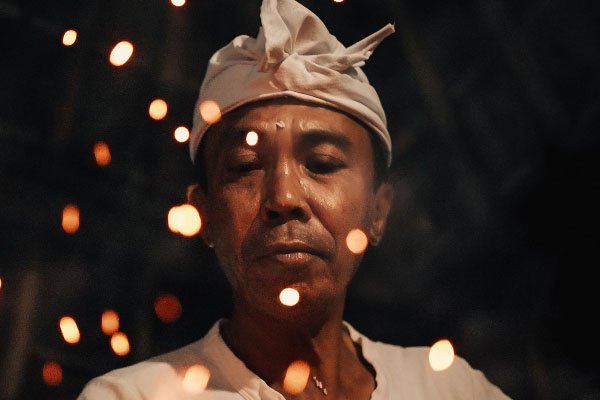
Quantum Temple: If we invest in Web3 inclusion, we can solve other macro challenges that are happening on the ground.
It’s such a complicated world. We get to put a pretty face on anything like that but I’m sure it becomes quite stressful sometimes to navigate all the details. It’s great to have folks like your taking on the challenge. You have an NFT collection, Paths to Alangö. It’s inspired by the Balinese culture in Indonesia. Tell us about it. Is it launched yet? When will it launch? What should we know about it?
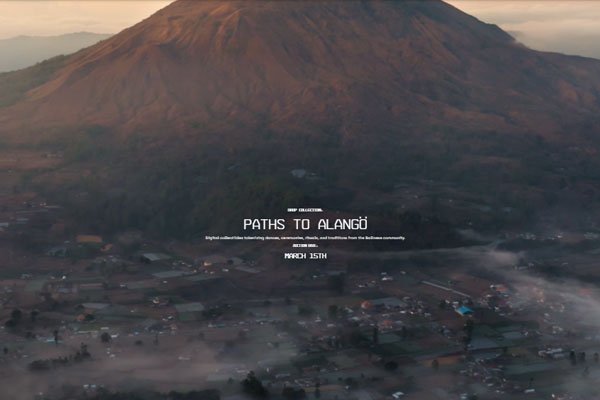
Paths to Alangö is our inaugural cultural heritage NFT collection, which is based in Bali, Indonesia. It’s already live on our website, so you can check it out at QuantumTemple.xyz. It’s an amazing collection because Alangö is an old Javanese word, which means transient beauty, perfection, and harmony. It’s a very complicated word but in English, it would be explained or translated as such. It showcased how the Balinese people through their philosophy, ceremonies, rituals, and relationships with themselves, people in their community, and nature are achieving this sense of harmony and balance.
Well done.
Hopefully. I’m nervous about this.
It has to be pasta or pizza because I’m Italian.
It was a BlackBerry phone.
What is the most recent thing you purchased?
Dinner. It’s about the food. I’m Italian.
I hope it was a good one.
I want some food porn pictures at some point.
That’s the question. What did you sell?
I cannot.
You can’t say.
My passport.
Teleportation.
That’s why we’re building the Quantum Temple.
Patience. I need one for also my present self.
Stubbornness. I’m also a Taurus.
That could be a tough one.
Eathan, I have a bonus question.
Go for it.
It’s a good one. It’s a long one though.
Give it a shot.
Let’s do it.
Sure.
If you want to learn more about us, I’ll encourage you to check out our website at QuantumTemple.xyz and also follow us on Twitter @Quantum_Temple or Instagram. Our content is very much visual. We have amazing videos that showcase all the different cultures and traditions we’re exploring. Check out IG. We also launched our YouTube channel. You can check us out there.
Important Links
-
Vitalik Buterin Has an NFT Collection? Quadratic Funding Drop Pulls in Millions
-
@Quantum_Temple - Twitter
-
Instagram - Quantum Temple
-
YouTube - Quantum Temple
-
Spotify - Edge of NFT
-
iTunes - Edge of NFT