Top Podcasts
Jules Urbach Of RNDR Network, Providing Distributed GPU Rendering On The Blockchain, Plus $6B Jan All-Time High NFT Trading Volume, And More...
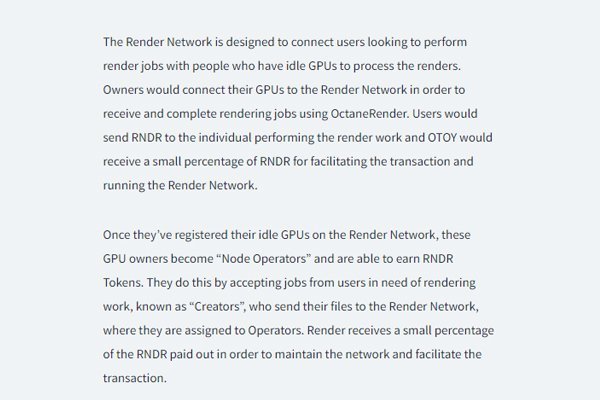
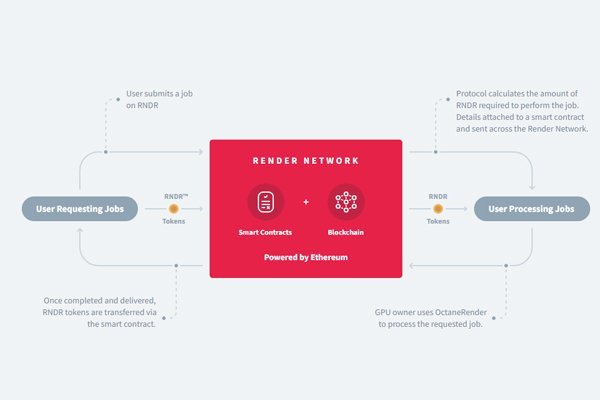
The future is being built today and hardware limitations should not be hindering you from being a part of the new digital renaissance. Founder of RNDR Token, Jules Urbach, sits with our hosts, Jeff Kelley, Eathan Janney, Josh Kriger to talk about the potential of GPU rendering in the metaverse. Jules believes that RNDR puts the power of GPU rendering at your fingertips at a fraction of the cost and speed of in-house rendering. Jules shares his views on the role of GPU-based rendering solutions in revolutionizing the digital creation process. The Render Network creates a much more efficient, powerful, and widely-scalable rendering network and Jules is here to elaborate the technicalities in its beauty.
—
Listen to the podcast here
Jules Urbach Of RNDR Network, Providing Distributed GPU Rendering On The Blockchain, Plus $6B Jan All-Time High NFT Trading Volume, And More…
This episode features guest Jules Urbach, Founder and CEO of OTOY and RNDR. The Render Network is the leading provider of decentralized GPU-based rendering solutions, revolutionizing the digital creation process. Jules sets the strategic vision for the company and is the Chief Architect of the company’s tech roadmap. He is widely hailed as a pioneer in computer graphics, streaming and 3D rendering with over 25 years of industry experience. Prior to OTOY, Jules created the web’s first 3D video game platform and licensed the software to Macromedia, Disney, Warner Bros., Nickelodeon, Microsoft, Hasbro and AT&T.
Jules has written and spoken extensively about blockchain tech to transform creative economies and realize the potential of an open, decentralized metaverse and is the author of one of the first patents for decentralized GPU computing, initially published in 2009. In his role as CEO, he has overseen the development of partnerships and technology integrations with the world’s leading media and entertainment companies like Apple, Google, Microsoft, Endeavor, Disney, Epic Games, Unity 3D and NVIDIA and has led the growth of the Render Network to surpass the combined GPU rendering power of the combined public cloud. That sounds pretty easy, Jules.
It’s not surprising that Jules was listed as one of the top 50 futurists in the world in an article that our friend Rachel was also in, if I’m not mistaken.
I did not know, but it’s all in a day’s work. It has been a long journey. I started doing all this frankly from high school and the early ’90s. For me, it has been one long continuous journey exploring graphics, democratizing content creation, hoping, wishing and helping build the future of the metaverse, which is everything can look real like it does in films. The creative narrative skills that you previously needed are democratized and video games. If you make those look real, then you start to get into the whole metaverse simulation theory aspect of creativity and even living in. It has been decades of fascinating developments. Frankly, I’m proud of all our work as a company and a decentralized organization with RNDR.
I would love to learn specifically about the genesis of OTOY and RNDR. If you can get us back to the origin stories of how those two kicked off, that would be great.
I started OTOY in my mom’s house in 2002. When I registered for OTOY, I got the domain name. Prior to that, I was working on 3D graphics and video games. My background is right out of high school, I wanted to make games. My first game at eighteen was called Hell Cab. It was a CD-ROM game. Time Warner published it. It came out right around the time that Myst did. Shortly thereafter, my goal for video games was to change the industry, not necessarily to make games. I wanted to create tools and technology that could do that. The first thing that I did shortly after Hell Cab was I used the browser mechanism system in Netscape and Internet Explorer to embed a 3D engine. That’s where we started to do games for AT&T, Warner Bros. and Nickelodeon.
On Fandom.com, there’s a whole 3D Groove section. That was my company before OTOY. A lot of the people that worked with me in 3D Groove, including our CTO, Charlie Wallace and Clay Sparks, the Chief Creative Officer, have been with me for this journey. OTOY was meant for me to start from scratch and build a company, it was initially just a few of us, that could change graphics technology. My real vision with OTOY was I wanted to bring GPU rendering, a Pixar quality, which at that time meant things that would go into a final movie or something you’ve seen in a $200 million tentpole. I wanted to have that run in a graphics card, make it 40-times faster and 100-times cheaper and ultimately make it run on the cloud and in real-time. From that perspective, OTOY succeeded.
We have been selling a GPU render called Octane. It was the first GPU production render on the market. It’s to this day used by everyone from J.J. Abrams to Pak and hundreds of thousands of artists doing NFTs. The openings of most TV shows are done in Octane. It’s amazing. We revolutionized the CG industry by paving the way for almost everyone, including RenderMan. Pixar’s RenderMan is doing a GPU version mostly because we opened the door to that. We have had success with Apple and partnered with them, showing Octane running on the new Macs and on iPhones and iPads. The future of GPU rendering from all of the goals that I had when I started OTOY has come to pass. The story of how we have grown and got here and how RNDR came from that is worth a second leg.
The big thing here is the recognition of the ability to envision this capability for rendering and being able to execute against it. I would love to know more about how that came to be. How do you have the confidence coupled with this skillset that you developed over so many years to be able to translate this vision into reality specifically for OTOY? Before we get to RNDR, it seems so ambitious to set that out, have that vision, go out and execute against it knowing that it’s a several-year venture to get to the spot where things start to look real. We’re just getting there. I would love to know where does that come from?
It does come from a passion on my part to see the product and know in my head how it could work. GPU rendering came from that because I knew that if you run the laws of physics in light and a simulator, you should end up with something that looks like a photo. The rendering equation was written long before I started OTOY. My frame of reference was like, “Let’s not worry about computing power. Let’s think about what’s available and how we can do this.”
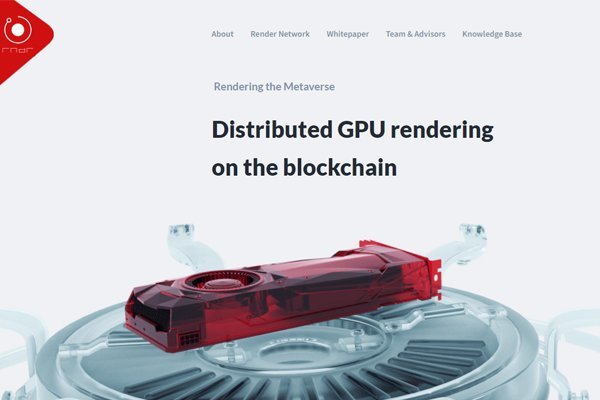
RNDR Token: The big thing here is the recognition of the ability to envision; this capability for rendering and actually being able to execute against it.
Two things occurred to me right off the bat that was interesting. One is you have video game hardware that’s programmed for simple but faster real-time graphics. You have tons of those video cards that are out there latent in people’s machines. You had things like SETI@home at the time that were paying people. You would run this screensaver and solve offline work. I’ve harnessed both of those things as I was starting OTOY. First of all, it’s GPU rendering.
The way that OTOY got started as a company was through a longtime friend, collaborator and business partner, Ari Emanuel. If anybody has ever seen the show Entourage, Ari Gold is based on him and his relationship with Mark Wahlberg. He came to my house when I was starting OTOY almost in year two. He saw what I was doing and said, “I want to help make this happen. I’ll introduce you to everyone.” The next thing I knew, I met J.J. Abrams, David Fincher, and James Cameron within a year.
I was showing the concepts that I had for how GPU rendering could work. In the early years, a lot of people were saying, “You can’t do GPU rendering because ray tracing, which is different from rasterization for PlayStation games, wasn’t possible. You can’t do that because anything on a GPU needs to be run in parallel. You need to do a thousand things at once. You can’t do it one after the other.” Every single big break that OTOY had in its early years was because I’m a GPU guy.
I was writing shader code that could do ray tracing and figured those pieces out. That broke through the whole mechanism. Once I started down that path, I kept pushing forward with it. I could see the product. In the early days, they didn’t have any financing. It was mostly me and a couple of guys. I did 95% of the coding in the early years of the company enough to prove that all the pieces, including running GPU rendering on the cloud and streaming it with low latency.
If you look at all the pieces of OTOY’s tech, the prototypes were written by me years ago. While we have a team now and the company has been successful, we productize Octane as a sub like Adobe Photoshop. We have tons of user growth that have certainly funded all of our investment and capital into other longer-term projects in recent years, but we’ve also raised money. All of that came about because I imagined a future where GPUs, one, would carry on Moore’s Law and two, we have a cloud of GPUs that I could monetize for decentralized distributed computing.
I also saw many other things. I had other things when I was trying to do cloud rendering and low latency. If you remember back in the 2008 and 2009 days when OnLive, Gaikai and OTOY were at the beginning of cloud gaming, people thought it wasn’t going to work. It wasn’t possible. I had tested out and written my own server and low latency protocol. All those things did work. We got our first investment from Autodesk to build streaming apps. That technology is now being used on RNDR for streamable NFTs and all these other elements.
I still do that and think about 10 or 20 years from now. I see holographic display panels, terabits per second speeds and all these things. I think about what I would do if I had the power and know that that’s going to happen at some point. I build for that and I’ve been pushing the company towards that. There have also been many things that have inspired me as well. I want to see open standards as a creator and somebody that wants to create art with my own tools. I want to see an open metaverse and something like the open web.
I don’t like the fact that you have to write things five different times for five different platforms. It shouldn’t be that way. Certainly, as we get into the metaverse and things become much more fluid and modular, it doesn’t feel like we want to be in the App Store model or the app model at all. We want to be something closer to the vision for the open web. Along the way, Brendan Eich has been a mentor for both RNDR and OTOY. He created Firefox, JavaScript, Mozilla, Brave, and Basic Attention Token.
He’s giving such deep insight into his aspirations for the open web and why it didn’t quite happen. He didn’t put a buy button in Mozilla that would have changed everything, but he possibly forced the iPhone, which was initially built on the open web until the App Store was created to leverage that. There are so many different pieces in my journey here, but the thing that has always given me the confidence to move forward is I don’t have a problem writing code in my head on hardware that doesn’t exist yet, thinking about that scale and working backward from there.
There’s so much to unpack there but let me ask a specific question as it relates to NFTs. What was your first exposure to it? How did that change your thinking as it related to the work you were already doing?
I was thinking about NFTs, not in that specific form but in terms of the actual ERC-721 token. Objectively, my first real experience was Mike and people calling me up and being like, “I sold $1 million in a Pak. This is crazy.” There’s another artist that uses our tools to clue me into this. We both had this a-ha moment, “They’re buying a JPEG. We should do something to shore that up,” which is why we have RNDR Archives all of the people’s work. Pak’s NFTs, the carbon ones, are rendered on RNDR.
The seriousness of doing something objective around the NFT space came around November of 2020 when people’s stuff started kicking off. I realized that we had almost a mandate to do something for artists, developers, and the industry. NFTs and the word metaverse created this crazy gold rush. It’s like somebody has hit the worst of the dot-com bubble days. There are a lot of things that people try out as NFTs that dilute the value of what great artwork is.
There are amazing NFTs. This is fundamental to the future of art. I was thinking though about the space as early as 2017 when I was writing the whitepaper for the Render Network. First, we should discuss what RNDR does. RNDR was an ERC-20 utility token for GPU compute power. However, I was seeing that there are four phases. Once we replace all of Amazon’s compute, I can get this working and everyone is fused around the network, it’s not just compute power that RNDR is providing.
It’s going to be this provenance for IP. If you create something on the Render Network and do a render, all of the source files and original assets, whoever uploads, owns and mixes the model, all of that gets restored and received on-chain. It’s incredibly powerful. I was like, “This is going to be some funnel for royalties.” That was for NFTs, specifically around ERC-721 or ERC-1155 tokens and all that. I was thinking about that and RNDR is still fundamentally that value.
When you get into the discussion specifically about NFTs and how they intersect with RNDR, I’ll share my thoughts about how we are nowhere near the point where we should be because we’re still selling, in some ways, simple pointers into things that are off-chain. I always wanted to have digital art, digital objects and something that would validate that. Some of those ideas predated crypto. I took that and decentralized PAINT tokens for ray tracing in 2009. The initial work on it was 2004.
This was before there was Bitcoin or anything like that. I was thinking ahead. It’s great that crypto occurred because it creates a value that everyone agrees with. You can have virtualized currency for anything and sometimes nothing. In the case of what we’re thinking about both art and utility, that has been great. It allowed us to get RNDR off the ground and scale it in a way that I don’t think would have been possible pre-Ethereum and pre-crypto.
It’s incredible to hear the way you’re thinking about this stuff. I might make a special request to Jeff and Josh that we have more episodes where we could hang out with you and something will rub off on us or something. This is incredible stuff. You alluded to it. We talked a little bit about RNDR and how it intersects with NFTs, but then you said there’s more. There’s a new direction that you want to go with this. It goes a lot deeper than it might be obvious at the moment. Can you speak a little bit about your vision for NFTs and RNDR as we move forward here?
RNDR Token: What’s really interesting is, if you get rid of the monetization part of it, the entity itself has value because the artist says this image represents the work.
Where we are at for a lot of NFT is you have an asset and some variation of templates for smart contracts. A lot of things are some simple media files. In a lot of the marketplaces, you can just upload. If it’s fancy as glTF or maybe it’s an iFrame or a webpage, it’s a static thing. You can create some interesting things around that. Speaking from the experience of NFTs that have been done with our tools, which somebody checked, about $800 million worth of NFTs were created with OTOY tech. Some of those are directly rendered on RNDR. A lot of that is Beeple and Pak. There are thousands of artists that have done well.
Almost with all cases and this was where we started with Beeple. They take the output of what’s coming out of RNDR, which is essentially an image. That gets uploaded to Nifty’s or something, you sell that as an NFT and maybe there’s something else to it. What’s interesting is that if you get rid of the monetization part of it, then the NFT itself has value because the artist says this image represents the work. What’s even more interesting is if the image is rendered on-chain. We have proof for RNDR. All of RNDR’s value comes from actual work that is coming off of a ledger. We have our ledger. It preexists as with decentralized.
Every asset 3D model is hashed. You can look it up. That’s for AR, for example, if you wanted to have that on-chain. The rendering itself is validated by decentralized nodes. The job of creating the image is an NFT. We have yet to hook that up to the marketplace because large marketplaces like OpenSea are too simple. We can have a receipt that shows this image done on RNDR. What I’m trying to do with Beeple, other artists and even our relationship with Solana and Metaplex, is we need to rethink what an NFT could be.
For that to happen, we need to connect the actual RNDR job, not just its output as an NFT, so that owning it triggers RNDR. That can generate a procedural cavalcade of things where it’s the people rendering two things. Early NFTs was whoever won the presidential election, you would get it from a video, but you did the videos twice. We have people using RDNR to render 5,000 different images for each collection. That’s great. RNDR can deliver all those things and give you that computing power. What would be more interesting is on a purchase based on some oracle, RNDR is triggered. Those tools are what we’re working on.
Artists have been doing interesting things with that for a while, but we need a partner where I can have those NFTs that are essentially pure render jobs and, shortly after that, real-time streams and virtual worlds where the same logic is applied. I need a partner where I can put that into a marketplace and that is willing to work with me in the royalty streams for that. Out of all of the ones we have been talking to over the years, that partner turned out to be Metaplex and Solana. I’ve had a great relationship with Raj and Anatoly, who founded Solana and entered deep into this.
Their open-mindedness around how did they find how this works is why I went to Lisbon in November 2021 and did that whole presentation around rendering the metaverse with Solana. With that, now that you have Solana NFTs going on to OpenSea and others, this will help push NFTs into a much more interesting space. Doing something procedural and mixing with NFTs is kind of a 3D model and you put something in Decentral. That, to me, is not what this is. If you want, I have true collaborative workflows and something where 100 people contribute to an NFT and get paid accordingly.
These are some of the things that we want to figure on Metaplex with Solana. It’s not just on Metaplex. It would work in Magic Eden and other places. There’s the whole concept of real-time NFT. If you go to OTOY.com, you can go to a menu called Stream, which shows our streaming tech. You can have Blender as streaming, Chrome and Octane itself as software, and also a bunch of unreal projects that were done with our tools. Those are the things that I want you to be able to build on RNDR and then livestream.
In other words, all the assets would both have the same validation and royalty checkpoints that we have for an offline procedural render. That’s how NFTs and the metaverse should work. Certainly, with Solana as a partner, where we can test this, it will be exciting. We need to hook that up. Once those things are even live and a few of those types of NFTs are available, the conversation will get people to explore as artists. Creators had to leverage this tech. That’s what the potential of NFTs and the metaverse desperately needs.
Did they do a good job? Is it pretty close?
It’s beautiful.
They can certainly follow me on Twitter @JulesUrbach, @OTOY and @RenderToken, which is the Render Network account. There’s OTOY.com and Render.x.io for the Render Network.
Important Links:
-
Monthly NFT trading volume reaches an all-time high of $6 billion in January 2022
-
Facebook Group – Octane Render
-
@JulesUrbach – Twitter
-
@OTOY – Twitter
-
@RenderToken – Twitter
-
iTunes – Edge of NFT
About Jules Urbach

Jules sets the strategic vision for OTOY, and is the chief architect of the company’s technology roadmap. Widely hailed as a pioneer in computer graphics, streaming and 3D rendering with over 25 years of industry experience.
He made his first game, at 18, and went on to make the web’s first 3D video game platform and licensed the software to Macromedia, Disney, Warner Brothers, Nickelodeon, Microsoft, Hasbro and AT&T.
His life’s work has been to revolutionize 3D content capture, creation and delivery.