Top Podcasts
Josh Katz From YellowHeart—Environmentally Friendly Music NFTs, Tickets, And Community Tokens, Plus: KOII Garden Party, MoNA, Immutable Raises $60M, And More...
Scalpers are hurting artists and fans. Is there a better way to sell tickets? There is – by using environment-friendly music NFTs! Eathan Janney, Jeff Kelley & Josh Kriger welcome Josh Katz, the CEO of YellowHeart. Josh explains how YellowHeart allows artists to sell their tickets, albums, and merchandise directly to fans. The platform is autonomous, fully decentralized, and runs on a public blockchain. YellowHeart gives tremendous freedom to artists on how they want to sell their tickets. They can even decide who shares in the profits! Doing so allows artists to reach their fans in a more authentic way. Tune in to learn more about the future of NFTs in the music industry!
—
Listen to the podcast here
Josh Katz From YellowHeart—Environmentally Friendly Music NFTs, Tickets, And Community Tokens, Plus: KOII Garden Party, MoNA, Immutable Raises $60M, And More…
This episode features Josh Katz, Founder and CEO of YellowHeart. It’s the first socially responsible live event ticketing platform. The YellowHeart platform is autonomous, fully decentralized, and runs on a public blockchain, which enables artists and teams to identify the market and sell directly to their fans. Artists can define a set of rules to govern how their tickets are sold, traded and who shares in the profits. Artists can set a maximum to resell prices, ensure tickets are distributed to genuine fans, elect to earn a share of tickets resold and YellowHeart’s secondary marketplace.
—
Josh Katz, welcome to the program.
It’s great to be here. Thank you for having me.
It’s great to have you. We are big events guys. We throw a lot of events, we attend a lot of events and we are also huge NFT guys. We have been talking and hearing about how events, tickets, and NFTs are all going to intersect but we have yet to see something come to life. We are super pumped to discuss YellowHeart and what it’s all about. Let’s dive right in. How did the concept come about? Tell us a little more about where you are at now?
It came about in 2017. At that time, I was hosting the New York Ethereum Meetup. I was deep in the Ethereum ecosystem, fascinated and caught the bug. At the same time, I am a diehard Phish fan, meaning the band Phish, who I follow. That summer, they played something called The Baker’s Dozen, which was thirteen shows at Madison Square Garden in New York. Needing to go to all thirteen, I was forced to buy tickets for thirteen shows in a row.
Those tickets, that summer, you would think would be less expensive because of how many shows there were but they kept getting more and more expensive. It’s one thing if you go to a show when you buy a scalper ticket, spend a few hundred dollars, and have a great time, the next day you forget about it. It’s a different story if you wake up the next day and you have to buy them again and then the next day.
In going through that experience, I said, “Scalpers are hurting artists and fans, there’s got to be a better way.” At that time, I was getting super deep into the distributed ledger and I realized that tickets issued on a distributed ledger with a smart contract governing them could potentially get rid of scalping. That’s where the whole idea came from.
What was the first project you did with your platform?
The first project that we did on our platform was Kings of Leon.
What was that like?
I should back it up a little bit because there was a lot of stuff that happened before Kings of Leon. People must understand that this has not been easy. We started building this in Q4 of ‘17.
You’ve got to make it sound easy. That way, people who try to compete, once they see any obstacle, they will quit.
Scalpers are hurting artists and fans. There has to be a better way. Click To Tweet
Going back then, we built out our ticketing platform and we launched it in Q1 of 2020. We launched it with a bunch of beta events around New York, and they were all going well. Of course, our first one had a lot of bugs. The second one had fewer bugs, and the third one was no bugs. We were off to the races and we had planned on launching production in June of 2020. Unfortunately, in March, we are a New York-based company and COVID hit us hard.
Basically, we’ve got lumped into the live event industry, even though we were an NFT mint and wallet system. We’ve got sidetracked in 2020 off of live events. I spent the summer of 2020 speaking to every artist and band you could think of, trying to convince them to put out music as an NFT, not tickets, but music. Kings of Leon are one of the first ones that bit and said, “We are off the tour. We have a new album. We can’t promote it. We could use something to get some visibility and this might make sense.”
We began that conversation out of not being able to use our ticketing product, raise money, being lumped into live events, which returned off, furloughing almost our entire staff, and pretty much going out of business. I’m waking up every day hustling my ass off, leaving no stone left unturned, calling every band, whether you are Kings of Detroit or Kings of Leon. I didn’t care. I was talking to everyone. They happened to be the ones that stepped up first.
The hard realities of entrepreneurship and the grit, persistence, and curiosity take the relentless pursuit to get some of this stuff done, even if you have the big ideas and the team to back it up.
We enjoy those hard realities. Don’t we?
In retrospect, yes. Sleepless nights, doing the Asian calls all nights, the European calls all morning, the American calls through the day, leaving no stone left unturned yet everyone telling me, “The platform looks amazing. Tech looks great. When live events come back, you should call us.”
What an accelerant COVID ended up being for everything virtual and everything NFT. This is such an advancement that we have made like a decade-plus on this front. It’s all opened this whole world of possibility.
It’s crazy because I circled the entertainment and the music business through ‘18 and ‘19 and the first quarter of ‘20. We literally took NFTs. We were calling them nonfungible tokens. We took them out of our deck in the summer of ‘19 because people were glazing over. I will never forget going to a meeting with one of the top people in entertainment. I’m not going to say who it was. He turns to me and goes, “I want to sell digital merch. What the hell do I need a blockchain for?” We walked out of the meeting. We were like, “We give up. This is not going to work.”
Times have changed. Here we are now. Give us a view on the world of ticketing now. What’s the industry look like now? How does ticketing on the blockchain fit in? What are the use cases that you are trying to drive forward and differentiate from the pack?
It’s an interesting question because live events are coming back. They are coming back on incumbent or older ticketing platforms. When you look at the US, in particular, it’s dominated by Ticketmaster. They hold 80% of live event ticketing for concerts primarily. They are using very old technology. They are still using paper. TicketWeb, which is their small to middle-sized venue platform literally does PDF over email. This lends itself to rampant fraud, counterfeiting, and middleman population to the tune of, before COVID in ’19, secondary market ticketing in the US was $11.5 billion. It’s a huge industry that got built off of bad technology.
Fans pay a 40% premium for that wonderful experience.
It’s usually more. It’s funny when you look at fees alone, which have no description other than service fee, fees on the lowest end are 12%. On the high end, we have seen fees over 50%. There’s no rhyme or reason. It’s all just a game. It’s a game to get the fans to pay more anyways they can.
I hate seeing that line item on my ticket purchases. It’s the worst.
Obviously with problems like this creates opportunity. What do you see as the big opportunities as events ramp back up?
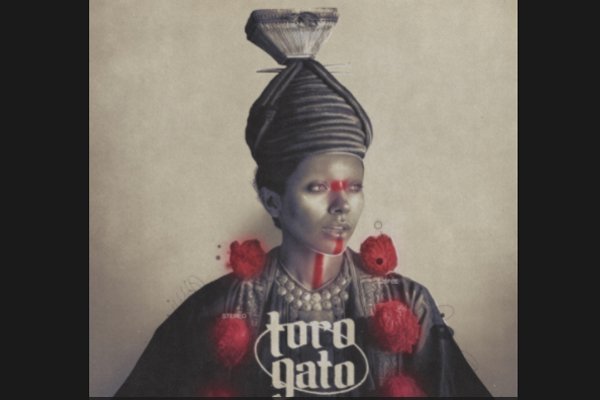
Music NFTs: We could sell a fraction of the albums. We give Kat 90% of the money on the primary and 10% on the secondary.
We are seeing the opportunity of using this new technology to foster in Web 3 for live events, where when you buy an NFT, you have proof of ownership and authenticity. Our tickets have a ticket history or a ledger, as we know it in crypto, where you could see who’s minted it, where they minted it, how it traded, who paid what for it, and full transparency around it. That opens up the opportunity for the fans not to get ripped off and not to have middlemen jacking them up.
The other thing about the state of ticketing, which is very disturbing, is the fragmentation where StubHub does not talk to SeatGeek, Vivid, Ticketmaster or any of these companies. They are all completely fragmented and walled off from each other. You had cases in ‘19 before COVID where BC, you would have 11% of tickets bought on secondaries were fraudulent or double sales.
I had spoken to Mumford & Sons at one point or their manager. He was telling me how he would go to shows. The shows would be selling out and there would be a huge pool of people that would show up with their tickets that were already be scanned. The reason it would already be scanned is that person would sell it on StubHub, SeatGeek, Vivid and maybe somewhere else if they could.
They keep pushing over the PDF and someone would show up, and someone would have already used it. That’s a big problem. If you are a fan and you are going, getting a babysitter, going a meal, taxis, meeting friends, and putting all this expense and energy into doing something, you show up and your ticket was scanned already? It’s pretty crazy.
I literally had to wait on hold for two and a half hours to talk to somebody from StubHub because they sold my tickets that I listed on their site twice, and then charge me back for the second one an extra couple hundred bucks or whatever. It’s because of some tech issue on their end, you can’t even get through to them, never mind the fact that they allowed the same two tickets that are designated the exact same way to be sold twice on their platform. It’s nuts.
That’s what’s going on. There’s no rhyme or reason, no checks and balances. It’s a Wild West out there. The issue has been that live nation and Ticketmaster, where the majority of these tickets route from and where they are born, do nothing about this. They benefit from an open ecosystem where it’s a Wild West because they have one goal. Their goal is to sell those seats out no matter what. Who cares? Scalpers are our friends. We want to sell our inventory and move to the next show.
Doing that, you look at who the customers are, and you realize that in that pursuit of selling every ticket out in the stadium or arena, they stopped thinking about who their customers are. Who are the fans? What are the fan’s needs? I will never forget where I went to a ticketing conference in ‘19. At that time, I’m still a newcomer. I don’t have much experience in the space other than building this platform. I had spoken to one of the heads of a major ticketing company. He told me that people go to 1.4 concerts a year, and that’s the number. I said, “Who the hell wants to go to 1.4 concerts a year? You make it impossible for people to get tickets and feel confident in you.”
We could talk all day about this. I heard a radio story where somebody went through the trouble to expose a service that would sell basically the opportunity to buy tickets. People thought they were buying tickets and they bought the opportunity to buy a ticket. They have to get on the phone and go through this thing. It’s a little bit more expensive to get that ticket. It’s not in the area that you thought it was. It’s crazy.
Going back to what you said about giving that investor presentation and having someone look at you deadpan, too. It reminded me of hearing William Quigley on another podcast talking about WAX. Back in the day, he was selling websites before websites were something that you needed. It was the same exact story. “You are going to need a website.” “Come on, get out of here. I don’t need a website. What are you talking about?” It’s great to see that we are getting some momentum in the space you worked so hard to co-create. That leads me to my question about wallets. We have a wallet like a YellowHeart Mobile NFT Wallet that does sound like something is functionally important for ticketing and potentially other in-person use cases. Can you tell us a little bit about endeavoring to create that wallet? What it’s good for?
There are a lot of wallets out there. Obviously, you have Coinbase, MetaMask, and all these traditional payment companies introducing their wallets. What we realized was we are looking at NFT now in a 1.0 space where the first iteration of NFT has been this boom in collectible art or digital collectibles as we are calling it. We believe that the 2.0 or 1.1 of NFTs, it’s moving quickly, will be utility-driven NFTs and the ability to use the NFTs for something.
In doing that, we realized that we needed to create a wallet that allowed a ticket to have a rotating barcode, correspond to the redemption of a seat for ticketing, and open up additional long-tail engagement. When your tickets are in our NFT wallet, were engaging with you from the minute it comes into your wallet. Now, if you are opt-in where you want to be part of that event community since you are in our wallet, we can message you.
We can send you deals from sponsors. We could essentially give you more opportunities to see upgrades. Maybe you want to upgrade your seats in there, some empty seats or a couple of sections in front of you. You can upgrade through the wallet but it’s basically creating utility around the NFTs. That’s the purpose of our wallet. The wallet is a Layer 2 wallet. It runs on Layer 2 Polygon. It also runs on Layer 1 Ethereum. It will also be interoperable into additional blockchains in 2022 but we thought the utility portion was incredibly important where we want to give people the ability to use the NFTs. That’s where the wallet comes into play.
I think about the Ticketmasters of the world. I’m trying to take a step back and incorporate NFTs into their world somehow. That’s hard as a big organization to try to deconstruct what you are doing and incorporate these things. I feel like building this from the ground up is a major advantage for anybody looking to make a dent in this space. If you are thinking about it, right along the right lines, form follows function.
We need certain elements of functionality here to make this thing work well. That’s amazing. You guys are already putting so many of these things to use. You are already out there doing it. We heard about an NFT only album that you collaborated Kat Graham AKA Toro Gato on. Tell us about that. What was the story there?
It’s a great project. It’s for sale on YellowHeart. Kat Graham came to us with a vision, and her vision was to embrace this technology and the world that’s behind it. She thought that what we were doing was the next wave. Basically, it was like, “I have this album.” She’s a very famous Hollywood actress with major accomplishments but she has this altered personality called Toro Gato. She’s done quite a few albums as Toro Gato but realized she wanted to embrace the NFT community.
She brought us the album and insisted on us doing a two-week window before it is available via NFT. The only way to get to this is to buy the NFT. It’s a $15 NFT, minted on Polygon. No gas fees, unless you buy with Layer 1 but you can buy with a credit card as well. It’s exclusive to YellowHeart as an NFT, plus there are six videos. Once you get the album, you can redeem six corresponding videos that work with the actual album.
What’s most interesting about it is that we are building Kat’s community around Toro Gato. That’s what’s so compelling. We did a release party in New York City where she had fire eaters and contortionists. The party was absolutely dope as hell. It was a sick party. The community came out, at least the local New York community. Through selling these tokens where in the past, you take your music, you give it to a third party, which gives it to another third party. If you are an indie artist, and then another third party, if you are a major artist, you only have 2 or 3 people in the middle. It goes out to a streaming service, and the report comes back to another third party.
You then have to ask what your streams are. You then have to ask where your money is. By the time it gets to you, you collect a tiny portion of the money. In this case, we could sell a fraction of the albums. We give Kat 90% of the money on the primary and 10% on the secondary. With that, she potentially can make more money and self-defense directly. It’s a win-win for the fans and her. The best part about this is that these records are sellable on a secondary market.
You can take a stream that you are renting from Spotify or Apple and resell it. I could buy a Kat Graham record for $15 now. That addition is going to close in five days and it’s going to be memorialized. That’s it. Anyone wanting this record again is going to have to buy it on a secondary, plus me, as a fan, if I bought one, and I say, “I listened to the record. I love it. Now, I’m done with it. I want to sell it or I need the money.” It’s resalable across secondary markets, which is amazing.
Can I ask a clarifying question there? I want to make sure we don’t gloss over but one of the remarkable things about what you are doing is to decentralized public blockchain nature of it. There are a lot of closed-looped NFT marketplaces now, like NBA Top Shot, for example. Are you saying that people can buy this on any platform or do they have to use the YellowHeart platform to make the secondary purchase? How does that work?
We are full EVM compatible. We mint on Polygon on YellowHeart, it goes into our market, you can take it and go anywhere you want with it. You could sell it anywhere. We are not like Top Shot that stuck on Flow. Flow is a closed blockchain. We are fully open to any Ethereum-based blockchain. You could go anywhere. You can take it to the open sea or anywhere around the world to resell it.
That’s such a bold move. I have to give you some kudos for that. The standard response to why start with the more closed-loop system is you have to ease into this decentralized world. It sounds like you decided, “No, not really.”
I can give you a great example. In May 2021, we did a drop for XXXTentacion. Now X is a deceased rapper. He’s an iconic rapper, a genius in my mind. In my world, as a hip-hop fan or a rap fan, it’s all about moralizing Biggie and Tupac. I have a son. In his world, it’s all about Juice WRLD and XXXTentacion. I was introduced to X through my son. That happened through COVID because we were locked in quarantine. My wife and I are saying, “What the hell is our eight-year-old listening to? This is obscene. He can’t do this thing with the music like this.” It turns out it’s X. I then caught on to X and became a fan myself.
When you buy an NFT, you have proof of ownership and authenticity. Click To Tweet
I went out and I sought out his unreleased tracks and we acquired them. We released the first five. We have fifteen more that we are going to release as well. When we put out that drop, we put it out where we did daily moments, where every day for five days, we had a live moment. No one had ever seen him live before because he was murdered in the middle of his first tour. There was not a film crew there.
We had basically taken cell phone footage from bodyguards, his mom and other people. We pieced together digital moments from the tour. We put those out as a free moment for 24 hours where this would be an open edition and be free. People came in and bought them in droves. We did 30,000 minted in five days across the different formats.
We’ve got some fans in this group as well.
It was all a setup. It was a stand-in.
It’s probably candy.
I sold baseball cards in junior high school.
Was there some arbitrage going on there?
Of course.
What kind of guitar? Is it customed in some way?
It’s NFT.
It was an ape.
Anything that you own owns you. Click To Tweet
Anything we should be excited about?
Hopefully, we will see.
Believe it or not, I’m going on another show.
Can you tell what it is?
I don’t know.
Yes. He’s making me hungry.
No, I don’t think it was.
That’s awesome.
Josh, have you heard of KOII before?
I have not.
It sounds brilliant.
It’s a very handsome bunch.
Thank you.
Important Links:
-
YouTube – XXXTentacion
-
Immutable raises $60 million for NFT games platform on Ethereum – Article
-
Derek Lau – Past episode
-
Foodmasku – Instagram
-
Metaverse Realty Group – Past episode
-
Twitter – KOII Network
-
iTunes – Edge of NFT
-
@EdgeofNFT – Twitter