Top Podcasts
Jonas Seiferth Of Boson Protocol, Building The Future of dCommerce, Plus: World Wide Web Code NFT, JAY-Z Reasonable Doubt NFT, NFT-Powered Digital Comic, And More...
Boson Protocol is developing the underpinnings of tomorrow’s virtual shopping experience. Physical items will be ordered through virtual marketplaces using decentralized technology. Game theoretic smart contracts will ensure trust and reliability. Amazon won’t be the only resource that can guarantee your purchases will be shipped on time and received as advertised. Learn more about the unique and powerful technology of NFTs encoded with game theory with Jonas Seiferth, the Head of Strategy at Boson Protocol. Join your hosts, Eathan Janney, Jeff Kelley & Josh Kriger as they quiz Jonas Seiferth on Boson’s technology and vision. On a personal note, learn a little about Jonas’s lifestyle and perspective as a young person in tech. As always, we’ll also cover the day’s hottest topics in NFTs.
—
Listen to the podcast here
Jonas Seiferth Of Boson Protocol, Building The Future of dCommerce, Plus: World Wide Web Code NFT, JAY-Z Reasonable Doubt NFT, NFT-Powered Digital Comic, And More…
We’re all here at the show and ready to dive in.
This episode features guest Jonas Seiferth who is the Head of Strategy at Boson Protocol, a decentralized commerce ecosystem where all participants share in the value they create. Boson Protocol automates digital to physical redemptions with minimized arbitration using NFTs encoded with Game Theory. Jonas, welcome.
Thanks for having me.
Jonas, let’s get to know you and what Boson Protocol is all about. You guys connect the real world with the meta world. Can you walk our readers through how that works?
What we’re doing there is what we call digital to physical commerce. If you want to buy any digital on-chain goods, that’s automated and trustless. If you buy an NFT on any platform, you don’t have to trust that platform necessarily. It’s going through a smart contract and you have these nice guarantees that in the end, you will receive the NFT you buy or you want to buy. What we’re solving with digital to physical commerce is how do you get to the same thing for real-world physical goods.
In eCommerce, we have this fundamental basic trust problem which is, if I want to sell this item to you, be it in the metaverse, in a virtual world or in an online store, as a buyer and seller, how can I trust you that you’re going to send me this item if I give you the money? We solve this with centralized platforms to take on this risk and trust and mediate these transactions. What we want to accomplish with what we’re doing with our core exchange mechanism and NFTs encoded with Game Theory is that we enable people to buy and sell things online without relying on a third-party. It’s the same as how you can create your NFT or buy and sell NFTs without relying on trusting a third-party.
This is a follow-up to that. If I buy something on Amazon, let’s say it doesn’t show up or something like that, I’ll complain, “This didn’t show up.” Maybe they have some record that they shipped it. It’s like what they do with credit card companies, they chalk it up to the cost of doing business. They maybe send you a second one or something like that. Are you saying that the platform that’s being built to the ecosystem and being structured here is going to delete the need for that like, “I’ll send you a second item.” Is it that it will help facilitate that?
It’s exactly what you said. It’s Amazon’s business model that they create this trusted environment and get through these network effects. You can buy carelessly on Amazon because you know that if it doesn’t show up, you can go to Amazon, complain and they will make you whole. This introduces a lot of problems because then you have Amazon building a monopoly through this role. What we’re saying is instead of a buyer and seller having a centralized party, facilitating the transaction and having the trust, you have an escrow contract. It’s a smart contract in the middle that facilitates the trust between buyer and seller and there is no third-party involved. It’s the buyer, the seller and a smart contract. This is not fundamentally a platform model. You can think of it as more of a primitive that can be used by everyone wanting to buy and sell physical things.
Can you tell our readers what is an NFT encoded with Game Theory? What does that mean?
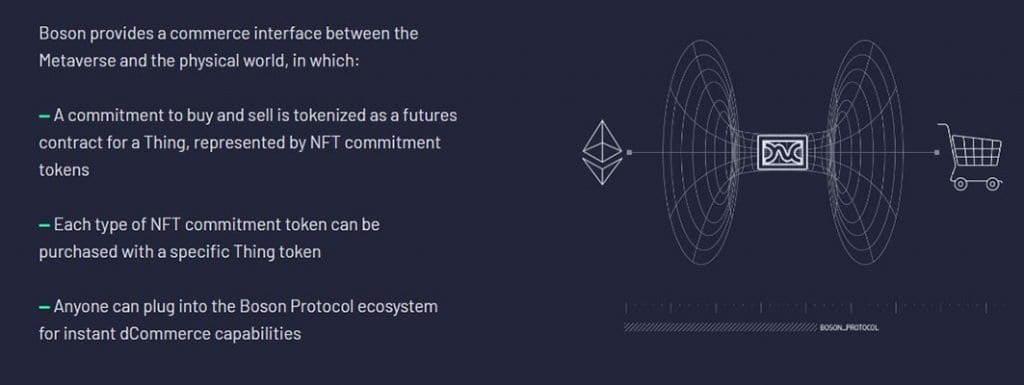
The fundamental way we achieve this trust-minimized exchange of real-world things is that we don’t try to tokenize real-world assets. If you think back to the 2017 approach, a lot of projects tried to tokenize real-world goods and are still doing it now and that is quite challenging. If you get to it, it can be quite expensive. What we do is we tokenize the commitment, a promise to exchange something and we do that in the form of an NFT. As a seller, when you create an offer for an item, you create what we call a commitment NFT. It’s the promise saying, “Whoever buys that NFT has this IOU promising whoever holds that NFT can redeem it for the real-world thing.” These are NFTs.
The Game Theory comes in with the rules by which to exchange is governed. You have this commitment NFT and then it gives this IOU. It gives you the right to interact with this escrow contract and call certain actions in this escrow contract of rules that facilitate the exchange. This might be something like signing for redemption. If you want to get the item, you redeem and only the person with the NFT can call redeem.
In the next step, let’s say something goes wrong and you want to complain. Only the person with the NFT can call complain. Based on these actions, the outcome of this game between buyer and seller, what they get back from their deposits and their payment is different. This is the NFT encoded with the Game Theory concept in a nutshell. NFTs tokenized an IOU promise to exchange something and the Game Theory then facilitate that exchange.
If I buy an NFT as a gift for somebody else and it transfers ownership, does the ability to do these functions also transfer?
Yes. This is a nice property where you could buy an NFT for, let’s say, a real-world sneaker. You then could resell the commitment NFT and the next person that you resold it to can then get the sneaker. We call it a futurist market for everything that you lend and create. You can trade these claims and whoever holds the claim at the end can redeem it for the thing it promises.
I saw a tweet from Boson that $30 trillion in opportunities is lost because smart contracts cannot exchange real-world things. Can you dive a little bit deeper into the economic opportunity? Does that mean that Boson is a $30 trillion market cap potential business? Is that how the ecosystem can be monetized eventually?
$30 trillion is the big number of the whole industry that this is facing. What is important about this is, in the comparison, let’s say it’s like the banking system. If you have a system that fundamentally relies on these institutions and human institutions working properly, you lose a whole range of use cases. People who want to exchange don’t have access to these institutions. For instance, if you look at North Africa, there aren’t big eCommerce players there. There isn’t a real functioning Amazon, in that sense, that we have here. If you go from institutions to automation, this opens up this whole possibility of things. This is what we mean with the $30 trillion opportunities. All of a sudden, if you make it a more democratic open system where everyone has access to these eCommerce capabilities, the industry and the scope of the opportunity are large.
When you look at the value between person and company, you alluded to it before, this question of trust. Do you see this as a cornerstone of what you’re trying to do is to build that relationship and take it beyond how it exists today between individual consumers and the companies they interact with?
Yeah. What we’re seeing is that the relationship between consumers and companies is changing in that way. You see it with Pride Month. Every company all of a sudden has a political statement. You see the extreme in the crypto world where you all of a sudden have fashion DAOs, community-governed fashion brands. What we think enabling this trust minimized exchange of real-world things without relying on the third-party is that it becomes a way more direct connection to the brands you interact with.
If you think about marketplaces like Amazon and eBay, you don’t have a direct connection to the seller but you have more of a connection to Amazon. The sellers are mostly locked into this platform system. Once you unbundle these platforms that are building economic infrastructure and then locking people in, if you unbundle that, the relationship line between companies and people is blurring. People then come all of a sudden and their fashion DAO can govern what T-shirt is the next T-shirt and all of this stuff. The lines will get more blurry and the interaction will be more direct between consumers and companies.
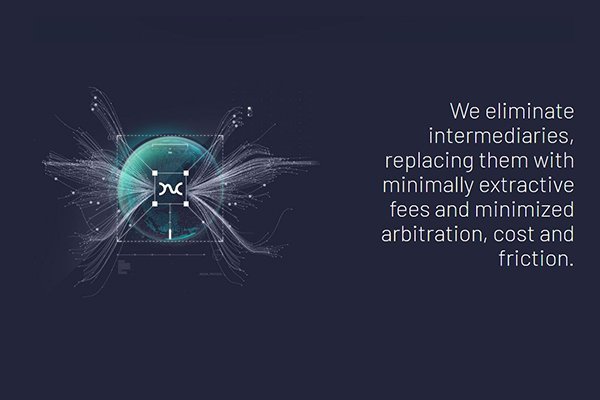
Game Theory NFT: How can you trust someone online when you’re making a transaction? You should use centralized platforms that take the risk and trust and mediate it.
When we’re building a company, we try to work with people and serve people who believe what we believe. We have this alignment around the core values and the products we’re offering and we see the value in it. This takes it to a whole new level. That’s cool.
You guys made the news with a big purchase in Decentraland, $704,000 for some virtual property. Did someone get fired for using their credit card for that one? How did that all come about? What’s the deal there?
Buying a plot of land in Decentraland is something we look forward to for months. It’s not that easy to get a big plot of land. You have to find the right deal. Why we did that is we see the metaverse as a whole concept that you have these virtual worlds that are decentralized and more democratic in their ownership and decisions rather than gaming boards today that are owned by one company. It’s one of the major next adoptions of crypto if you see how many people are attracted there. Why we bought this land specifically is that there’s this great opportunity for what we call metaverse commerce. We’re seeing more and more of these huge games that are like Fortnite and Roblox games.
The gaming industry is bigger than the whole entertainment industry combined. We see that people want to start to buy and sell real-world things there. We’ve seen Roblox selling Gucci items in-game. What we’re going to do in Decentraland with this part of the land is building virtual shopping experiences and allowing players in this virtual world to exchange real-world items and go shopping in a truly virtual environment. It might sound crazy spending $704,000 on a virtual plot of land but we’re confident in Decentraland and a team there and the adoption that’s going to come. The metaverse commerce and in-game buying of real-world things is a major application that we can focus on.
Do you see this opportunity with Boson to replace the eCommerce system altogether? Is that the direction we’re going?
We often talk about this larger concept of decentralized commerce. We’ve written a lot of reports about this idea. What we see Boson doing is building a core primitive for that. I talked about a lot solving the core trust problem between buyer and seller and these execution guarantees. Once you have that then you enable this whole ecosystem to flourish. If you think of eCommerce now, it’s these platforms like Amazon that offer 1,000 services. Amazon has a reputation, identity and fulfillment centers. These platforms are offering 1,000 services. To unbundle them, you need this whole ecosystem as we’ve seen with DeFi.
The gaming industry is getting bigger than the whole entertainment industry combined. Click To Tweet
How we see Boson’s role is like with Stablecoins are to decentralized finance where they’re kickstarting this environment. Unbundling eCommerce now with these blockchain primitives will become the way we exchange value online. Once we get there, it’s going to be fun because you’re going to see all these new innovative ideas that have been stalled by these major eCommerce platforms having this monopoly. The same as how we’re convinced or I’m convinced that decentralized finance is going for the real-world financial stack, we’re going for the real world eCommerce stack with decentralized commerce.
It’s coming quick. Do you think the main interface exists now that we’re going to use to participate in this ecosystem in a big way? Is Google Glass type things going to bring us into an augmented world? Is it VR? Is it either through desktops, laptops or mobile? Is it something that we haven’t hit yet that’s going to provide that interface?
Is it the interface for exchanging real-world things?
**Yes. What’s that tipping point where I can go into Decentraland and start buying things and feeling like it’s a part of my day-to-day life where it’s normal, seamless and ubiquitous? **
AR and VR are going to change fashion shopping. Shopping for fashion online is counterintuitive. You go on this website and then you scroll through 2D pictures. You read the descriptions of the sizes and you’re not quite sure. You get it and then you probably send it back because it’s not the right size or it doesn’t look as good. In comparison to what you see already in AR being used to measure sizes as well as this digital fashion concept where you then have a digital representation that you could wear and check out the item. Where it’s fundamentally going is it’s a way better shopping experience than clicking through some pictures. How we shop online is radically going to change to more virtual environments. I wouldn’t say that the classic clicking through different offers in the normal marketplace to the marketplace is going away completely. AR and VR are exciting for this area.
You’ve got companies like Deeper Network, DeFinity and even Helium that are creating a new network of Internet of Things. What is Boson Protocol doing that is going to fit into these other players? Are you having conversations with these guys? Do you see them as partners along the way or is your mission laser-focused?
We have some conversations but not exactly with these players in the Internet of Things space. What we’re doing is not interfacing completely with the Internet of Things. The blockchain intersection is highly industry-driven and industry-specific. What we’re doing with commitment NFTs and this escrow becomes interesting once you have machine-to-machine commerce. This is also what we’re talking about. We’re laser-focused on solving the hard problem for real growth humans. Once we solve that, we can think about IoT and the opportunity that comes there.
I was curious enough to follow-up on the integration with how all this works. Jeff and Josh helped build a cool decentralized meal prep service. What does it look like for their business to integrate with the Boson Protocol-type platform where now there’s an exchange of monetary value for a meal being delivered to somebody’s home? Is that achievable and relatively easy at this point? Does it take a lot of setups? What’s the process like? When you have food prepared for you because you are lazy or you don’t know how to cook and you need something healthy to eat. Do you just sign up for the service and it comes to your door when you need it?
Is this sending you the ingredients or the done meal?
“We’ll make it for you. All you got to do is it heats up,” as far as I know.
For all these businesses where especially in the beginning, you want to give safety to users. Give them the confidence that they can go on your website and buy this meal without knowing you. This will become relevant as well. Because the fee is super minimal that Boson Protocol implements, it’s better once you have certain crypto adoptions for the business than accepting credit cards or PayPal. From a business perspective, it’s cheaper.
When you think about the opportunity, it’s huge to interact and build partnerships with several different folks. When you think about game developers, in particular, and this place where commerce is happening already even long before NFT became part of the vernacular, what does that look like in your roadmap? Any projects you could tell us and that you’re excited about that are forthcoming in that regard?
If you have such a big challenge such as eCommerce, we’ve seen several projects that also tackle this area. If you directly want to compete with existing eCommerce players like Shopify and Amazon, you’re probably going to lose because you have all the friction of interacting with crypto and the user experience is not 100% there. We’re looking into and working on our crypto native use cases. One of them is metaverse commerce. These are people in these metaverses familiar with crypto, with NFTs and wanting to exchange things.
Another one where we had a lot of conversations is real-world NFT art. You probably know that some artists give a physical counterpart to their NFTs sometimes, the physical print of the digital artwork. We’ve been exploring that space in conversation with different marketplaces and solving that problem for NFT artists and NFT enthusiasts that they can rely on that they’re also getting the physical piece without having to trust anyone. These crypto native use cases are how we see giving the biggest advantage to users and driving adoption that far that then we can then tackle the mainstream use cases. One thing I’ve been excited about is having a digital counterpart to a physical item. Imagine you buy a jacket or a pair of sneakers and then you also get that pair of sneakers as an NFT and then you can attach an NFT. You can have it as a skin in some games. You could have exclusive access to some Adidas drop. Once you merge these lines between physical items, NFTs and digital goods, that’s interesting and one thing we’re also working on.
I want my digital NFT of my pair of jeans to come with the pattern to how to make them so that when the brand changes the style the next season and I can’t find jeans that fit me, I could have them remade based on the digital item that I own.
Game Theory NFT: You can tokenize a commitment. It’s a promise to exchange something. The game theory comes in with the rules by which to exchange has governed.
From the jeans DAO. You have full supply chain access to the jean’s producers. This is the dream.
Some of our readers are going to be writing to us and asking, “I heard about the jeans DAO. Tell me about it. Tell me more.” Are there any specific once that you can mention that you’re working on or that you’ve announced?
On partnerships, we’ve worked with a lot of more DeFi-heavy projects. This is interesting to us. Once you get these commitment NFTs, these promises, you can have them flow through all of DeFi. We’ve worked with insurance projects, decentralized exchanges as well as DeFi wallets to allow people to interact with these things. A major partnership for us is that we were closely aligned with Ocean Protocol.
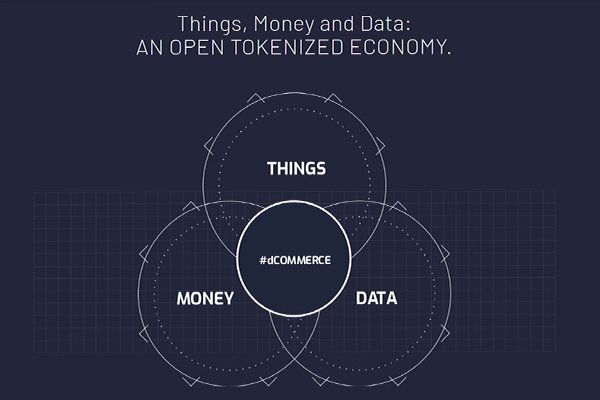
Data is a major part of commerce and thinking about how can you go from the current state, which is you have no control over your data to the user being in control of how to monetize that data and if they want to monetize their preference data and commerce data in general. We’ve announced a partnership with Decentraland for what we’re doing there with exchanging real-world things into the metaverse. We’re looking into how we can integrate that to make it easier for people building in Decentraland to enable this exchange to take place in whatever environment and event space they’re building.
Let’s do it.
Arbitrage opportunities, I’m sure.
Number four, what’s the latest thing you sold?
Which one did you read to?
That could be.
Let’s hit it.
That’s it for hot topics.
That was fun.
Thanks for having me. This has been a lot of fun.
Important Links:
-
Emma-Jane MacKinnon-Lee – past episode
-
Chemical X – past episode
-
The Sh*ttiest NFT Drop – past episode
-
episode – past episode
-
@BosonProtocol – Twitter
-
iTunes – Edge of NFT