Top Podcasts
John Patrick Mullin Of SOMA.finance On Building A Globally Compliant Multi-Asset DEX, Plus Scott Yeager Of IPrivata, And More...
Looking for a token issuance platform that can do it all? Today’s guest might have just the thing for you. John Patrick Mullin is the co-founder of SOMA.Finance, the world’s first globally-compliant multi-asset DEX issuance and lending platform. In this episode, he joins hosts Jeff Kelley, Eathan Janney and Josh Kriger to discuss their platform and the many use cases for customers. John is able to share about SOMA with incredible breadth of understanding. He speaks on everything from idea to execution and implementation. What makes SOMA stand out from other platforms? Tune in to find out. Plus, listen in as Scott Yeager, Chief Strategy Officer of IPrivata, chimes in for hot topics and discusses the details of digital identity in the NFT space. Stay tuned and keep updated with The Edge of NFT.
—
Listen to the podcast here
John Patrick Mullin Of SOMA.finance On Building A Globally Compliant Multi-Asset DEX, Plus Scott Yeager Of IPrivata, And More…
This sponsored spotlight episode is brought to you by SOMA.finance and features its Cofounder, John Patrick Mullin. SOMA.finance is the world’s first globally-compliant multi-asset DEX issuance and lending platform. John is a FinTech entrepreneur, investor and educator living in Hong Kong. Besides SOMA.finance, he is also the Cofounder of MANTRA DAO, a popular decentralized finance platform.
Prior to this, he served as the Managing Director of Tritaurian Capital, a FINRA-regulated boutique investment bank focusing on providing financial services and capital raising solutions for startups and SMEs. John also has a traditional investment banking background, having worked at Guotai Junan Securities in Shanghai, China. As an educator, he has spoken at leading universities across the world, including Harvard, London Business School and Peking University. John, welcome to the show.
Thank you very much. I’m glad to be here.
John, welcome. You have quite a deep bench over there. Your cofounders and team members with banking and crypto backgrounds are super solid. They’re some of the deepest experiences we have seen in this space. How did you bring this crew together? How did the concept come to life?
Thanks so much. To be honest, it has been a work in progress for a long time. It has been iterated upon. I don’t want to say we stumbled upon the creation of SOMA.finance, but there were things happening and then not working. Finally, it clicked in and it all came together. At least it’s all coming together. For a bit of a background, we met the team or our cofounders, Bill and Jim, in a prior crypto exchange business that we were working on. It was relatively early on.
Around that time, we had the idea to create a regulated multi-asset exchange platform that could trade various asset classes, whether it was cryptos, equity, stocks or commodities. Back then, you didn’t have that NFTs, but in theory, you could have traded NFTs too and a bunch of different other things. This was all in a centralized exchange model. The Tritaurian guys have this broker-dealer license. We have the crypto experience. It’s this nice combination of the two sides.
There’s a little bit of an age gap, but we all get along well. That works. That’s good because they have the experience and we’re a little bit more in the weeds with the crypto bros. We went out and we were like, “Let’s take this license that they have from FINRA and this broker-dealer license, do exactly what we say we’re going to do and utilize this license to issue, distribute and do all this stuff with the securities license of this brokerage firm on a centralized exchange.”
We went to FINRA, which is the self-regulatory body governing broker-dealers. They’re like, “Do not do that. It’s not the same. It’s crypto. It’s blockchain. It’s different. Stop, cease and desist this thing.” Roughly a two and a half-year process later, we finally got the go-ahead to get this license. We created a pretty new and special license together with FINRA essentially. Since then, we believe we’re pretty much the only ones with the full breadth and depth encompassing what license we have.
This means that we can essentially connect both institutional as well as retail market participants through the type of offerings that we can do as well as do it on any different chain. That’s extremely important because it means that you’re not doing these things, which are effectively considered securities in the United States but let’s call them tokens for the time being. You’re issuing these tokens on a permissionless blockchain ledger. It’s on Ethereum, Solana or something like this rather than being issued on a permissioned chain like Hyperledger.
You had the ability to connect both the retail and institutional guys and then you could do it on a chain that everyone was familiar with. That allowed us to then say, “We can do all these types of DeFi activities that people are already doing on Uniswap, Compound, Aave and all these other places. We can do it in a compliant environment and utilize the existing regulatory body and framework that we have to then be able to do this in a way that is perceived to be the right way by the regulator of these.”
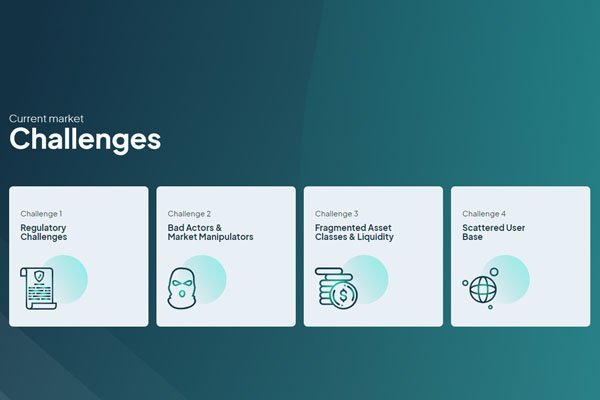
SOMA.finance: We stumbled upon the creation of SOMA.finance but there were things happening and then not working. Finally, it clicked in and it all came together.
That’s a big hurdle to overcome.
It took a lot of time.
To anybody who has ever looked into that world of FINRA, regulation and compliance, it’s not small even for doing traditional work like SEC-regulated work or financial work being a broker-dealer. Any of that stuff in the traditional sense is hard enough, but then you introduced crypto to it. Forget about it. It’s through the roof.
It throws them in a whole other loop.
It certainly creates a sustainable competitive advantage when you think about the possibility of doing that versus, “Let’s change our model.” That would have been the path that 999,000 people would have taken versus, “Let’s look at FINRA. That sounds like a fun time.”
To be honest, there was a lot of education throughout that process on teaching them how this stuff works and there’s still handholding. That being said, they legitimately are looking for a way to say, “We’re not the bad guys always.” At least in their mind and what their purview is, our job is to protect the US retail investor, whether that is protecting them. In some cases, maybe it’s not. That’s debatable, but that’s their job. They’re doing the best they can.
They’re bureaucrats at the end of the day. They’re trying to do the best they can. It is a process. That’s why it took so many years to finally get something. It’s still going to take some time. That being said, we believe that through that process of working with them to come together with this license as well as educating them about the technology that we’re building, we have gotten them a lot more comfortable with overdoing.
We don’t foresee these huge hurdles going forward. As the regulatory bodies and framework begin working together a little bit more in the United States, we see a path towards, ideally something a little bit friendlier. At least in our mind, it will be friendly and conducive to protecting the retail investors but still giving them access to the things they want, which are DeFi, NFTs, yield farming, and cool things.
It’s like having overprotective parents and letting them know, “I’m going to go to this party. It’s going to be fun, but I’m going to be responsible and get home in a reasonable time.” It’s like having nine other siblings waiting in the wings and saying, “Please do this for me.”
We honestly do think if this is done properly the way that we’re doing it, brought to market and then scaled properly, it can be quite a unique and big thing.
We’re talking about the first globally-compliant multi-asset DEX and token issuance platform. That’s a lot there. What does that mean from the user’s perspective?
The way that we’re doing it is you have a user experience that’s akin to a DeFi environment. That means you’re essentially logging on or connecting to our platform. We have both a web-based and a mobile platform via some Web3 decentralized wallet, whether that’s your MetaMask, Ledger or Coinbase wallet. It will allow you to connect and then you connect to the platform.
You’re holding your assets in a non-custodial manner. We don’t have custody of most of your assets. I say most because the one thing that we do have to custody is if you’re bringing us the traditional real-world assets. Let’s say that you’re going to be trading some tokenized versions of Tesla’s shares on our platform. You might have a tokenized version of Tesla in your wallet, which would be called S-Tesla, but the actual backing of the real-world asset and the paper security we hold in custody.
For every S-Tesla token that exists in our world or platform, you’re going to have a real share of Tesla in the background. What that means is that not only can you do all the fun things and have the composability of trading on an AMM yield farming with it and swapping your Tesla for Google or Bitcoin, but you also maintain ownership of the actual underlying asset if you have it in your wallet.
That means you get the actual dividends, voting rights and all these different things that are the good parts about having them in the real world, but then you get the additional good part about having the functionalities that are blockchain-enabled. Let’s go like that. You have this Web3 experience, but you have real-world accountability and assets that are being brought onto a Web3 environment.
The other thing that is important to note is that because we are doing this in a “compliant” way, that does mean that we will also have to go through an AML, which is Anti-Money Laundering, and a KYC process as if you were signing up for your Coinbase exchange account. Honestly, it’s a very similar process, but we do it by creating a walled garden around our system or products.
Everyone has to come through this compliance choke point or bottleneck and say, “This is the wallet that I’m going to be interacting with the system with and my personal information that I would use for any other exchange platform and whatnot.” One thing we want to do is create an NFT of this identity so you can go use it in other places. That’s another thing that we can get into later.
Once you’re in, we can know, “John is from America. He’s an accredited investor or a non-accredited investor. He can interact with all these different products and this one because maybe that’s for non-US people only.” We can permission them at the lowest level, which is the smart contract level. Only the people who we have approved can interact with the various products on-chain.
Going back to that Josh’s comments about tackling something that seems a little bit hairy, stuff like that always reminds me of a company like Stripe. Processing credit card charges for websites is relatively boring. There’s a lot of regulatory stuff you got to go through and get to that. If that’s the domain you want to get into, there’s so much potential opportunity. It’s like being the guy that can last the longest in the fight.
You brought up Stripe and I honestly think it’s a good example. The reason I’m saying that is because what we’re trying to do in essence in a lot of stuff is to abstract all that compliance and the plumbing away so that you’re interacting with this interface. It’s going to be easier for you to use but you don’t have any clue what’s happening in the background and in some complex shit that’s happening in the background both on the compliance side as well as on the technical side. It is a pretty interesting analogy you made there.
SOMA.finance: For every S-Tesla token that exists in our world or platform, you’re going to have a real share of Tesla in the background.
How does the SOMA token weave into all of this? What’s the utility there?
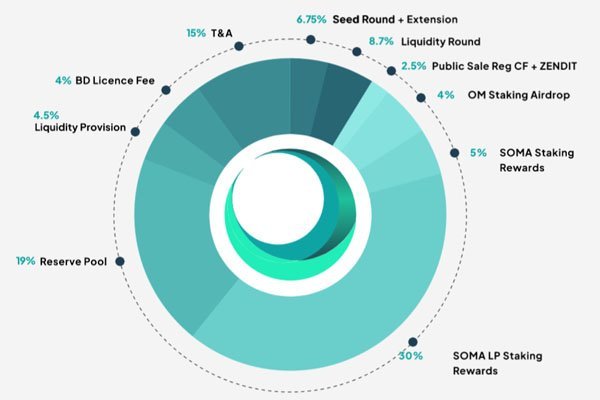
The easiest explanation that you can have is the SOMA token is an exchange. It’s not too dissimilar from an FTT, which is the FTX token, a BNB, which originally was the Binance exchange, or even Uniswap, although Uniswap doesn’t do anything at this point other than governance. It’s meant to be a token that governs and takes apart. It’s supposed to have economic value accrual through the exchange, the platform or the various products.
That’s the fundamental core, but the tricky thing here for many of these tokens that I named is that you’re treading that fine line between being a utility token and not being construed as security. This depends on your jurisdiction. Let’s use the US, for example, because honestly speaking, most things in the US are securities. You want to be able to try to avoid being construed as that because you’re trying to avoid all that compliance overhead, registration or all these other things.
It’s essentially our bread and butter. We’re straight up saying, “Irrespective of all these other places around the world, in the United States, we’re issuing this as a security.” I’m trying to move away from the acronym of STO or Security Token because it has a little bit of a bad memory from the 2018 and 2019 days of being the next big thing that never turned out to be. The reason why in my opinion, was because there was no retail involvement, real DeFi and this stuff that makes it useful.
We’re issuing it as a security, which means we can have all the elements that would make it a security, meaning we can straight up pay dividends to our token holders and do buybacks-and-burns and all these different things. The SEC would be like, “You’re a security. We don’t care.” We’re going to issue it as we’re going to issue it. We’re going to do it the compliantly but in a way that is retail-friendly. It has one unified smart contract across all countries. It’s not like you’re doing different token tranches for the US versus the EU. This is a pretty powerful thing.
You can have all these economic levers of value accrual, whether it’s fee rebates, dividend payments, buybacks-and-burns, and these things that are often avoided in many places. Uniswap straight up will not turn on the fee switch because they know as soon as they do that for the UNI token, while it might make the token go to the moon, it also means they’re immediately securities in the United States. Uniswap is based in the United States.
Uniswap Labs or whatever the name of their entity is, doesn’t want to get into that regulatory risk. We’re like, “We can do it. We’re going to call a spade a spade.” I believe if we’re able to gain any semblance of traction across the number of the very interesting products that we’re going to be launching with, in theory, the revenue and the potential for dividend payments on these tokens should be immense. That is not financial advice.
That’s a relative word. I have one follow-up there. It’s maybe a more complex question than I want it to be. What does that entail? Is it just that the SEC can watch you however they like? Do they check in at a regular clip and you have to report quarterly? What does that tend to look like when you say this is security even though it’s not a stock or something?
I’ll try to make it relatively simple. I won’t go too in-depth because it can be pretty in-depth. You have to do a couple of different things. It is all about reporting and generally how you’re offering them the actual asset, depending on how we offer it. Essentially, we’re offering it to a bunch of different types of investors, US retail for one. We would be doing it under what’s called the Reg CF or a Regulation Crowdfunding.
We can sell securities up to $5 million to US retail investors with the Reg CF exemption. We can sell $5 million worth of SOMA tokens to US retail guys in one tranche. You combine that with a Reg D, which is for US credit investors, or Reg S, which is for international investors. They all have various trading restrictions if you haven’t done a registration statement. How it will work is we will fundraise, show these tokens and then register the token itself.
Once you’ve gone over a certain amount of token holders, it’s construed as public security. I believe it’s 2,000 token holders, which 100% we’re going to have over 2,000 token holders. We’re going to have to register, do some audits and different things and report requirements. Essentially, there’s an interesting difference. People think that going public means you’re going to go on NASDAQ. There’s a difference between going “public” and being listed. We’re not listing necessarily on NASDAQ, but we are going public.
There seems to be a major difference in liquidity potentially with something, but if you have liquidity on some crypto exchange, then maybe you don’t have a huge difference with liquidity.
Hopefully, we won’t at some point in time further down the line. It is an interesting thing because the requirements there are significant in getting listed on NASDAQ. Big companies take years with all types of reporting and compliance requirements to get listed on something like NASDAQ or ICE. In our case, it will be a little bit less stringent, but that doesn’t mean that we’re not going to at least hold ourselves to a similar standard of the things that we’re trying to achieve with the token and the products that are going to be on the exchange.
It sounds like you are for sure a high standard here. We want to go a little bit deeper into the roadmap here in a moment. Let me ask this from a 30,000-foot view. In current market conditions, what are the high-level problems that you’re trying to solve? What are some of those 30,000-foot solutions that we haven’t touched on yet?
It’s easy to break that down by product. When you talk about the issuance side of things, that’s a very easy place to start. Essentially, we touched on it a little bit with capital raise. Particularly for the US market, you’ve never been able to, as a US retail investor, legally access primary token issuances, whether it’s an ICO or STO. Let’s call them token issuances. You’ve never been able to access that. I can’t buy into token offerings. They either block US investors fully or require you to be accredited, which is not the majority of people.
How many coins list offerings for 100X frickin returns? We saw them. We knew they were amazing, but we couldn’t touch them. It’s crazy.
Essentially, what our licensing and our platform will allow us to do is to straight up say, “We can do it properly. We can directly sell to US retail investors,” which we think is going to be a huge opportunity, particularly as some of the people and partners that we’re working with are creating these very interesting tokens, which are across all different elements of not just Web3 but culture in general, whether it’s in sports, music, entertainment, art, NFT projects or whatever it may be.
There are interesting tokens that can be created with very high-quality IP, brands and people behind them that can then sell directly to US investors, but because we’re selling them as securities in the United States, there are these economic levers that can be switched on that you’ve never been able to do before. Let’s use a simple example. I’m not saying that this is happening tomorrow. Let’s use a sports team that wants to sell maybe 1% of its equity or 1% of its future royalties or revenue. You couldn’t do that before, but now you can legitimately sell that to your fan base.
I’m down. I’m happy to come back anytime.
I’m ready to go.
I liked chocolate.
I remember the Push Pops. It’s citrusy.
It’s lemonade. I had a lemonade stand.
Was that your own lemonade stand?
It’s a joint venture.
Maybe we can do a lemonade stand token on SOMA.
How far back does this watch collection go?
Did you get one of those NFT watches?
I wasn’t on the phone. I was just texting.
You were texting and sampling.
I was looking at the questions for this chat.
Thanks. I appreciate you for having me.
That’s against the law.
Thanks a lot. I’ll see you.
You can ping me directly if you have any questions at JP Mullin on Telegram. That’s a pretty easy one or our website, SOMA.finance. Hit us up on any of those. We’re going to be launching a new website pretty soon. You get the first version of it. Once you’re on the website, make sure to sign up for our waitlist. We have over 500,000 people signed up for it so far, which is a lot. Hopefully, there will be even more soon. That’s one of the next things you’re going to be asking. Maybe we can talk a little bit about how to get some people on the waitlist.
Important Links
-
Roman Tirone – Previous episode
-
@ValKilmer – Twitter
-
Brittany Kaiser – Previous episode
-
@SOMA_finance – Twitter
-
Telegram – SOMA.finance
-
JP Mullin – Telegram
-
Spotify – Edge of NFT
-
iTunes – Edge of NFT