Top Podcasts
Jesse Johnson Of Aavegotchi - A Yield-Generating NFT That Doubles As A Digital Pet, Plus: Chris Boundikas Of Quoth - Real-Time NFT Rarities, Search & Authentication
Do you want to play a fun and engaging digital pet game where you can farm yield-generating NFTs? It’s Aavegotchi you’re looking for – a community-owned blockchain game. Eathan Janney and Josh Kriger welcome Jesse Johnson, the founder and COO of Pixelcraft Studios that created Aavegotchi. Since an NFT’s only value is whatever experience it gives you, the game delivers personal value. When you take care of your Aavegotchi digital pets, they will take care of you. Join the conversation to learn more!
—
Listen to the podcast here
Jesse Johnson Of Aavegotchi – A Yield-Generating NFT That Doubles As A Digital Pet, Plus: Chris Boundikas Of Quoth – Real-Time NFT Rarities, Search & Authentication
NFT curious readers, stay tuned for this episode and find out how to find a sitter for your NFT pet and keep your kinship score flying high.
Why you should keep an ear to the ground for when our guests mints NFTs of the childhood comic book characters he created?
Check out our hot topic for a new and interesting player in the game of tracking rarity metrics. All this and more on this episode. Enjoy.
—
This episode features Jesse Johnson, the Founder of Aavegotchi, an open-source, community-owned NFT gaming protocol that enables true asset ownership for gamers. Jesse AKA GldnXross is among the earliest visionaries pioneering NFT product design. Prior to launching Aavegotchi, Jesse cofounded Ethereum‘s first NFT minting platform, Mintable, and also created Bullionix, the first NFT to be staked directly with ERC-20 tokens.
Jesse is focused on the Gotchiverse, Pixelcraft Studios’ ambitious flagship experience. Launched in March 2022, this DeFi RPG delivers a number of innovative use cases that only a Web3-based game can. Introducing an on-chain sharing company, the Gotchiverse is poised to be crypto’s first mass-adopted metaverse, all built on top of the Aavegotchi protocol. Jesse, welcome to the show.
Thank you, Eathan. It’s good to be here.
It’s great to have you.
There are some similarities to the genre of branding to our show’s logo and intro on YouTube. There’s some synergy there for sure.
They are kindred spirit projects.
This has been a long time coming. I have been admiring what you have been building this space for a while. It was only a matter of time before we got you on the show. It’s an honor to have you here. The vision of Aavegotchi is something special but before we go into that, let’s talk about where it all began. What’s your genesis story?
I was very fortunate to be exposed to Bitcoin early on. Relatively speaking, it was in 2013 or 2014. I was curious about what we could see in digital life, how sound money could play a better role in the economy and how things could be done better without a central bank. That was my starting point, as so many were. After the financial crisis of 2008 and all of those problems that came with it, I was graduating right out of university when all that was going down. I had a distinct reason to question things and think about how could things be done better. I was open-minded to Bitcoin and the solutions it offered. I was living overseas at the time.
After the financial crisis and I graduated, I looked around the US and didn’t see much opportunity at the time. I had done a semester abroad in Mainland China. The Beijing Olympics had happened. The economy was growing there. I said, “I’m going to follow up on that, go spend some time there and see what I can uncover.” I’ve got involved with some of those real-life meetups with the Bitcoin community in China and ended up working for one of the oldest Bitcoin crypto exchanges. It’s China’s second oldest one. They rebranded but they are called ZB Group.
I ended up doing BD, listings, some product improvements, and things like that for their platform. That was my first few years in crypto. I was working on the digital assets side of the exchanges. I also was intellectually curious. I was going for my Law degree. I did a Chinese Civil and Commercial Law Master’s degree and ended up dedicating the thesis research to Bitcoin regulations. It was all primary research that hadn’t been done at the time. Through that process, I started reading more about smart contracts. I was like, “This is some next-level stuff.” Now we are beyond currency.
We are talking about extrapolating and eliminating middlemen and completely reorganizing so many different economies this could touch. It was very exciting. That’s when I was like, “I’m going to dive into Ethereum and see what we can do here.” I don’t write the code. I was more looking at it from the front-end side. What can we do with the user interface and experiences?
My background, even before all of this was more from the creative and artistic side. I’m a musician at heart and an artist. The way I approached it was more like, “How can we create valuable experiences that you can’t have without crypto or smart contracts?” It was all brand new ground to break. The sky was the limit.
After Ethereum launched and you started to see some of the ICOs and all of that come out, most of them were PDFs that were fundraised on top. That was pretty disheartening but there were a lot of good PDFs. I will give them that. There were a lot of good ideas. That led to me looking for more and respecting those that we are building something, even if they were proof of concept smart contracts. In those early days, an example would have been prediction markets and some of the early exploration there of what you could do with funding predictions instead of typical voting or polling and aligning incentives to choose the right person for some job. It’s interesting stuff.
Somewhere along the way, I was doing listings for ZB, and I met some teams at some conferences or something that did not have ERC-20 tokens to list. They were like, “We don’t want to list on your exchange. We have this thing called NFTs. We are playing with these NFTs over here.” I was like, “What’s that? Why don’t you want to list on my exchange?” Going through that was fortunate for me because I’ve got to meet some of these very early projects and be exposed to the idea of NFTs as a way of having digital culture have a place on the blockchain. That seemed important.
Intuitively right away, I was like, “This is a whole different pillar to the economy or the blockchain landscape. It’s completely separate from what Bitcoin had already done.” That was where I’ve got started. I linked up with Zach Burks, who was building out an alpha version of Mintable at the time. That seemed like the perfect project to leave my post at ZB and go full-time on building out something special that could help a lot of people. Mintable’s original use case was the first place you could go to upload your metadata and mint your Ethereum NFT without any coding background. I, somebody who doesn’t write Solidity, appreciated that and wanted to contribute to that how I could.
Create valuable experiences that you can’t have without crypto. Click To Tweet
We ended up moving to Singapore, joining the LongHash accelerator program there, and bootstrapping it from there. Mintable continues to live on. Zach still runs that. It’s multichain now and very busy. For myself, I went on to work on Bullionix. I want to tinker with some of the more granular ideas of what you could do with NFT standards. It was the first time you took an ERC-721 and stake ERC-20 tokens into it. The premise was that there was a Singapore company called Digix, and they had gold-backed stablecoins. It’s cool but stablecoins are the most boring part of the entire crypto landscape.
What if you could take boring stablecoins and wrap them in an interesting and compelling NFT? It would be a digital piggy bank for your stablecoins that’s also collectible. You have this speculative collectible value on top of your stable value. That was the premise of Bullionix. It’s a very cool project with limited and rare mints that were collaborative. I didn’t want to do all the art myself. I did some of it but I worked with a lot of the crypto artists in the space who were already up-and-coming or established. It was still the early days then. This was in the pre-NFT breakout. We are talking about 2017 to 2018.
That is OG status when it comes to NFTs for a lot of people that didn’t hear about NFTs until 2021.
It might have been 2019 by the time Bullionix went live. Even then, it’s still pretty early. A lot of R&D went into those smart contracts and stuff. We ended up working with people like WizardX and many others in the space that were getting their feet wet and getting on SuperRare and things like that. They made cool, rare 3D gold coins that had actual gold inside of them. That was great but if it was a Venn diagram, you don’t have a ton of gold bugs and a ton of Ethereum people hanging out, necessarily. It was a niche market inside of a niche market. The team I had put together worked on that.
Zach helped with the smart contracts. Coder Dan, who’s my Cofounder at Aavegotchi, came in and helped out initially with a lot of front-end work with myself. We did leaderboards and all sorts of things like that. We got into the UX of how you melt the gold and create this cool product. We started having conversations about his global hackathon, where he had won first place at an Aave-sponsored hackathon. He was like, “I’m getting to know Stani and these guys that run Aave. DeFi summer is, at this point, taking off. It would be cool to build something like Bullionix but with DeFi inside of it instead of gold.”
That’s where we started looking. If you hold Aave tokens, they natively generate yield. If you have 1,000 Aave LINK in your wallet today, you would have 1,001 in your wallet tomorrow. You didn’t even have to push a button. I love intuitive products like that, and there’s nothing more intuitive than Aave’s yield-generating tokens. We were like, “Let’s put that inside of Aave.” It eventually became an Aavegotchi. We put out a call for the right art to reflect the sentiment and aesthetic of what we are looking for. We had a checklist of things we wanted.
Initially, we knew it would be similar to Bullionix and that you would stake. We wanted it to be on-chain like what the team at Avastars had done. This was when Avastars had put their NFTs 100% in the smart contracts on-chain. We thought that was very important. There’s no reliance on the visuals being stuck on some server somewhere that could eventually go down. That informed the aesthetic choices. We wanted lightweight pixel art to be our go-to for the project. From an aesthetic standpoint, it was important that our art reflected the sentiment of the wider space.
If you zoom out even now, we’re in that mostly in a good way naive, “Web3 is going to change the world,” phase. I hope it does but it made sense to start with the 8-bit gaming and then reflect on where we are in that space. That was what we did. We put out the call and met Xibot, one of the top crypto artists in pixel art particularly. We looked at probably twenty different submissions from twenty different artists or so. He immediately had that quality of a mimetic and cute Aavegotchi you want to get to know. It was hands down. It’s easy at that point. Luckily, he’s a wonderful person to work with. The three of us got together.
We reached out to Nick Mudge, who is the author of the ERC-998 standard. We want a heavy-hitter on the smart contracts, and he qualifies as that. He came in and started building out the initial contracts for Aavegotchi. It’s because of him that we are able to take wearables, which are ERC-1155 NFTs and equip them to the ERC-721. You have NFTs layered on top of NFTs. When people say Aavegotchi, sometimes it’s complex. There’s an ERC-721 with ERC-1155s on the outside as wearables and ERC-20s inside as the piggy bank. Every major standard can be tied up in one Aavegotchi at the same time.
For our readers who aren’t on YouTube, and you should check out our YouTube channel as well, Jesse is rocking his Bitcoin shirt with the entire Bitcoin white paper, which is pretty awesome. I have seen it before but now that I see it on you, I’m having some FOMO. I’m going to have to get one myself. I’ve got to ask one question before Eathan jumps in. We will get to know you more in our next segment. Where did you go to school? What did you major in?
I originally grew up around Chicago and went to school in Tampa, Florida, at Eckerd College, a wonderful liberal arts school with great programs and mentorship. I majored in Business Management and had a minor in Southeast Asian Studies. That explains the whole detour through Asia, where I ended up spending the next ten years.
I also went to the most liberal arts school I could find, which was the college of William & Mary, and then chose the least liberal arts major, which was Business and Information Technology. You get a little of both, which is great because, at the end of the day, it’s creative thinking plus technology equals disruption. That makes sense. Now that I know like your roots there that you are a liberal arts/business guy, it’s all coming together.
It sounds like we had a similar strategy there. Let’s strike a balance here. It’s a Business degree from a liberal arts school. Let’s do it.
I’m in Chicago, and I grew up around here as well. The answer to the last question was great. It all blurs together. From hindsight, everything makes sense. This turned into that. I’m sure along the way, you had no idea what was going to come next at each point in the journey. That’s fun to see how it all connected in retrospect. You’ve got to the point where you developed Aavegotchi. It’s a yield-generating NFT that doubles as a digital pet, which sounds kooky but awesome. Can you tell us a little bit about how that works?
To play off the idea of a digital pet, that’s a whole subgenre of NFTs. It’s this crypto pet. CryptoKitties kicked off the whole NFT conversation to a new level after the early experimenters. They were the “mainstream” and first household name. I had a bunch of CryptoKitties. The first NFT I ever had was a CryptoKitty gifted to me to pay for lunch, no less. It was cool but they just sat in my MetaMask. Even on my mobile phone, I would only take it out to show somebody and be like, “This is what an NFT is.”
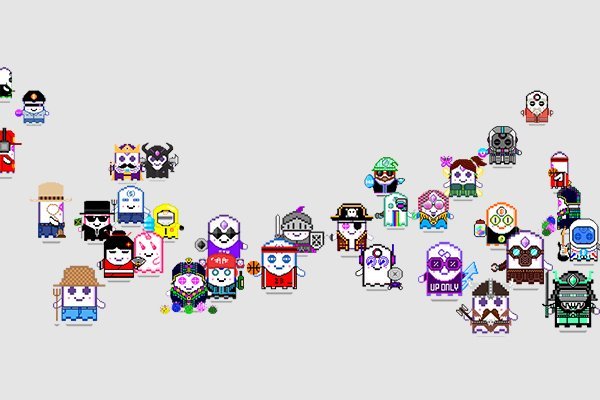
Digital Pet: We want lightweight pixel art to be our go-to for the project.
Other than that, I was like, “This doesn’t live up to what a pet is.” It’s not a crypto pet to me, at least. I’m not interacting with it daily. A real pet would be something you interact with quite often. As we were going through that process of designing what an Aavegotchi can be and I had that checklist, there was another one on the list where it’s like, “Let’s make a better crypto pet.” That’s a big part of this. What would a better crypto pet look like? That’s where the name comes from. It’s a reference to Tamagotchi.
We wanted to address that in an on-chain way if possible. The big idea was this idea of a kinship score. This was the proto idea that branched out to everything else. The kinship score is simply a measurement of how often you interact on-chain with your Aavegotchi. Typically, it could be changing its wearables but most of the time, it’s how often you pet it. We always say, “You’ve got to pet your Aavegotchi.” If you go into the Aavegotchi.com UI, you got your Aavegotchi floating there and waiting for you to greet you.
You got a couple of options, one of which is Pet. When you pet it, you submit a transaction on-chain. It updates the metadata to increase your kinship score by one every time you do that. There’s also an internal clock. You can only do that once every twelve hours. This was a cool premise that made Aavegotchi quite unique. The idea was stickiness.
From a UX perspective, you want to have a sticky product but not in a deceitful way. Also, you want to have a relationship with your NFT. Other than flipping it and speculating on OpenSea, we wanted you to be quite attached, if possible, to your NFT to the point that you don’t even want to flip it. We have achieved that.
The natural question is people get attached to so many NFTS. I’m sure people have asked and hired a babysitter when they are often doing other things.
It’s because it’s on-chain that people have built those services. There’s GotchiPet and GotchiCare. These are different services that will pet your Gotchi for you. It’s pretty cool. The premise was we had to look at what would make you attached even more than its beautiful art. It was kinship and naming it. You name your Aavegotchi. It’s like an ENS name. When you name it, it goes into a registry, and nobody else can have that name.
There are a couple of things you can do to personalize it and make it yours like dressing it up. You are making it yours at that point. It’s different than most PFPs where you get your generative art. That’s the cool trait it has, and that’s it. In this case, they start naked or nakie, and then you build all your wearables around it as you see fit.
Unfortunately, you are tied up deep in the dev process during NFTLA, so you couldn’t make it. Is that where the land side of it comes in? Was that the build that you were cooking up?
The Gotchis, as we are talking about now, this all happened in 2021. The first generation launched in March of 2020, and then there was a second generation in the summer. It’s Haunt 1 and Haunt 2. NFTLA was going on the weekend we were launching the Gotchiverse. This has been a long time coming. We had to stay at our stations for that and get the team to ship that right. Luckily, it shipped without an issue. We had an amazing launch. Our users always say, “Never ask a Web3 builder what their daily active users are.” That’s the joke. It’s hard to get many but we have had an amazing month since it launched.
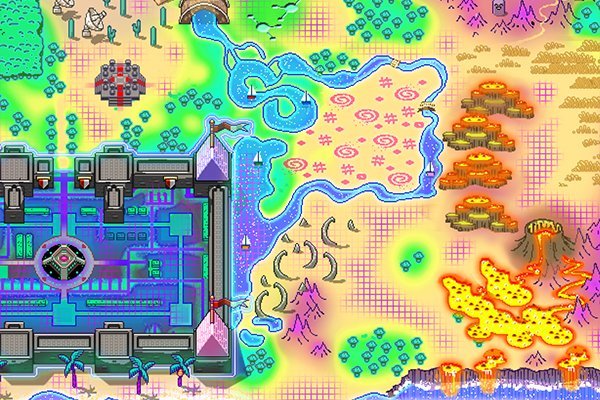
In that weekend, the NFTLA, we were averaging honestly about 5,000 daily active users visiting the site to pet their Aavegotchis, check statistics or trade on our marketplace. As soon as that game went live, it was like a hockey stick. We had 80,000 people after the first weekend coming into the site. It has been nuts ever since. We’ve got, at any given moment, about north of 4,000 Aavegotchis running around in the Gotchiverse. It’s a 2D RPG-style game. At any moment of the day and any time zone, there’s consistent playing. There are new highs every couple of days.
How do the land parcels get generated? Why are they important to the play-to-earn model that you built?
We wanted to take our lessons learned from that first year with Aavegotchi and bring some of that to the land subgenre. There’s this idea of land. We have always been a DeFi NFT project. You’ve got the DeFi Aave aspect inside the Aavegotchis. Honestly, one of the highest points of friction for the original UX of an Aavegotchi is if you want to summon one, you have to open a pack of cards, open a portal door, and get ten randomly generated Aavegotchis, choose your favorite one and bring it to life.
You do that by staking the Aave tokens inside because I don’t have the liquidity to put millions of dollars into the Aave site for all 10,000 Aavegotchis. The user does that. They put the initial money in to bring it to life. That’s a lot of friction. It’s worth it in the end. People do it. It has worked out well but it’s a lot of friction. We inverted that for the land. Coming back to the land, what we said is, “Here’s a land sale.” We’ve got an amazing world we have built here. We have onboarded people from Capcom and World of Warcraft. We’ve got 45 people full-time on the team at Pixelcraft building this game out.
The land twist is there are already play-to-earn tokens buried inside the land. It’s Clash of Clans-style. You are going to farm or mine those out of the land later, and because they are brand new tokens, we were able to mint them ahead of time and have those waiting for you inside your land parcel. That’s the twist. When you get a piece of land, it represents your physical space in the Gotchiverse and your opportunity to build and customize but it also is this opportunity to get access to these play-to-earn tokens.
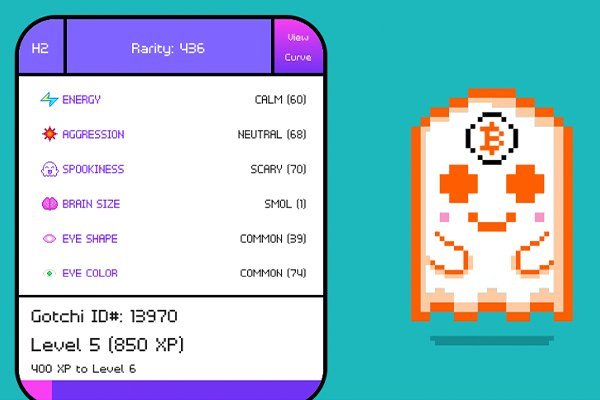
What do Aavegotchis run for?
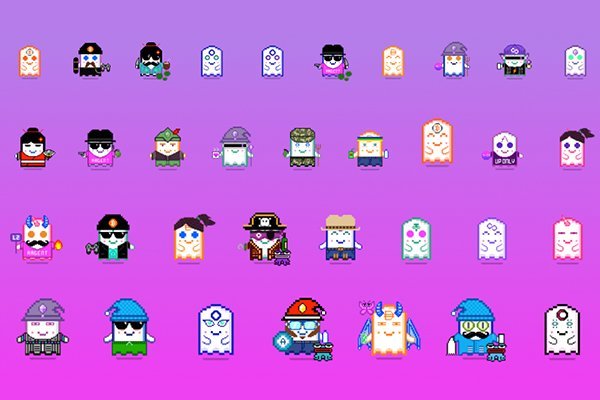
You’ve got to embrace that. There are always these rabbit holes. You arrive at Aavegotchi.com and see all these little Aavegotchis floating there. If I hit refresh, which I’m safe to do, you will notice all the Aavegotchi has changed. That’s because we are highlighting here that we are pulling from the on-chain Polygon smart contract we deployed. These are real Aavegotchis live and how they are currently dressed by their owners. If we click on any one of them, we can go learn about that particular Aavegotchi. It’s cool in that sense that this is all live and dynamic data.
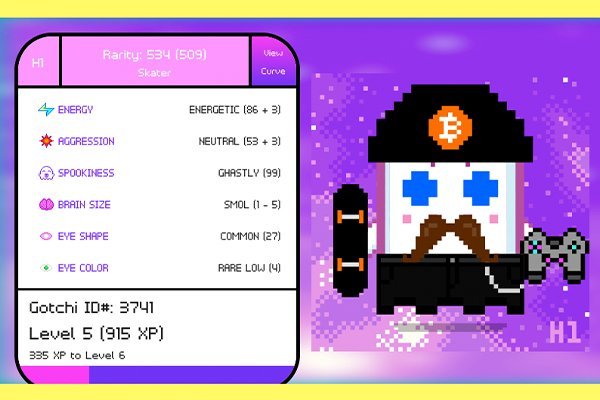
Let’s do it.
Do we have any Zippy NFTs?
No.
It was a lemonade stand with paper and staples.
What is the most recent thing you purchased?
Let’s get this man an NFTLA mug.
—
Thanks for having me.
An NFT’s only value is whatever experience it gives you. Click To Tweet
It’s all a big schmear of vanilla frosting.
Talk a little bit more about that.
There’s no problem.
—
I would suggest Aavegotchi.com. The landing page will show you the way to all our socials like our Twitter. Our YouTube channel has a lot of video guides. There’s great content for onboarding. There’s one thing to point out. We addressed it but everything is on Polygon. If you do want to lend an Aavegotchi and borrow one, try it out. You don’t even need GHST. A lot of them are being lent for free. You just need a little bit of that Polygon gas, 0.01 MATIC, and you are good to go. You can try that out that easily.