Top Podcasts
Jay Ess And Dom Rodwell Of Ozone - The Ultimate Metaverse Technology Empowering The World With At Scale
Today’s guests are bringing in the ultimate metaverse technology aimed at empowering the world at scale. In this episode, Jeff Kelley, Eathan Janney, and Josh Kriger sit down with the Founder and Inventor of Ozone, Jay Ess, and the company’s Chief Strategy Officer, Dom Rodwell. They are bringing in 3D and graphics technology in the metaverse space like never before. The goal? Making it more accessible for consumerization as we step into the future of digital cyberspace. Learn all about the exciting things they’re doing with the platform by tuning in to this episode.
—
Listen to the podcast here
Jay Ess And Dom Rodwell Of Ozone – The Ultimate Metaverse Technology Empowering The World With At Scale
This is Dom Rodwell Chief Strategy Officer.
I’m Jay Ess CEO of Ozone. The platform that is empowering the world with the ultimate metaverse technology at scale.
We are here in The Edge of NFT, the show that empowers you by keeping you up to date with the best projects in the NFT space. Keep reading.
—
Stay tuned for this episode and find how Ozone has left no stone unturned in developing an internet-scale metaverse for everyone.
**Also, why system thinking and resilience are the cornerstones to support our guests. **
Finally, learn how to get dibs on early access to NFT LA 2023 by visiting 2023.NFTLA.live. We are set from March, 28th to the 23rd, 2023, and it’s going to be the can’t miss Web3 event of 2024. All this and more in this episode.
—
This sponsored spotlight episode features Jay Ess, Founder and Inventor of the Ozone Metaverse along with Dom Rodwell, Chief Strategy Officer, focusing on product strategy and go-to-market. Ozone is building the fastest and easiest to use platform for designing and creating metaverse experiences. Whether you are an individual, a brand, an IP owner, or a DAO, they have got a solution for you. Jay and Dom, welcome to the show.
Good to be here.
Thanks for having us.
**Thanks for joining us. We had the pleasure of chit-chatting a bit about some of the amazing features, elements, and plans of Ozone here before the show, and I’m excited to jump in. We feel like it’s important for our readers to get some background on the genesis of this project. Let’s do it. Let’s jump right in. Give us the scoop on the birth of Ozone. **
I used to live in Silicon Valley for seventeen years before moving to Colorado. About the end of 2015, I was crossing Castro Street, Downtown Mountain View. For those who know it, it’s a mile down from the Google headquarters. I thought that the internet interface has not evolved since it was invented as hyperlink-based. Why isn’t it like a video game? That was the genesis question.
After a few weeks of thinking through this, I called my oldest friend and best friend in life, Alexis, whom I have known for many years, who is our Cofounder and CTO, and ask him about web technologies. Does he know about programming? We met up and he liked the idea of building a 3D interactive web platform. I remember early on, we met at Hacker Dojo in Santa Clara, and we were looking at different technologies like the Unity engine or the Unreal Engine, and we decided that we should build our own to make it web-native. The rest is history.
It was more of a hobby when we started. Eventually, we decided to do that in 2019. We incorporated in the UK because we found an Angel investor in the UK. He was super excited. Paul Gordon, a big shout out to you here. We have been pushing hard to build the platform. In 2021, we have invested heavily in building the blockchain infrastructure and released our token raise, NDT, and flow blockchain integration, which we are very happy to talk about.
**People have been circling the metaverse for a long time and doing things in there, whether it was in the gaming space or things that are tangential to it like second life and these things that have evolved over time. It’s so interesting to understand the fabric of the history there, which goes to dates back a long time. You guys are part of that. It’s very cool to hear some of the elements of that story. Thank you. **
We have happened to learn a lot about this core infrastructure of the metaverse through the show, but also one of our investors has been working on building vivid, real-life metaverse experiences. Another one of our friends works on concerts. I got to say, there is a lot to what you guys are doing. I want to unpack it step-by-step with you so that everyone understands what it means to be trying to compete with Unreal. This is not, by any means, a small fee that you guys are tackling here. Let’s break it down step-by-step and let’s start with the graphics technology. What does that look like to start with?
I will speak a little bit to that and try not to get too technical for our audience. Here’s the short version. 3D technology along with this dream of a metaverse like Jeff mentioned is nothing new. However, it’s been notoriously very burdensome to access, interact with, and most importantly, deploy. Getting people to see 3D in real-time was pretty much impossible until a few years ago, which is why most of the 3D we see is in video format.
Think about Pixar and all the Disney animations, where our love and our kids grew up in all that. We watched the movies. There are technical limitations to that. It’s to test the graphics technology, how big the files are, and so on. In 2012, new technology made its way to the web called WebGL, and it stands for Web Graphics Library. This is the first time ever a 3D model was able to be rendered and put on the web.
What’s very interesting is it’s only several years ago, but back then, the only thing you could do was a cube. Literally, you could only put a cube on the website and if you put the second cube, then the website crashes. WebGL has come a long way. We are supporting the latest WebGL 2.0 standard. It is a web standard. That’s set up by the W3C, World Wide Web Consortium.
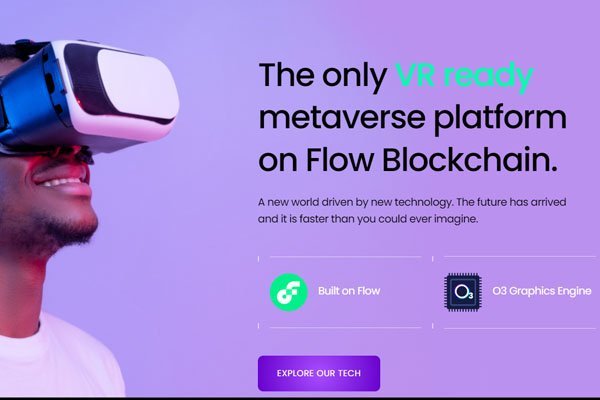
In coordination with our partners and friends of the Khronos Group, which set all the standards for 3D graphics technology, we have been building on that. Our system is based on WebGL at the core. That’s the graphic side. What we have done at Ozone is we also have a very extensive web technology cloud that enables all the handling of the data or information integrated with the 3D technology.
**That’s super helpful. I’m not a technologist and I understand what you are saying. I think that’s a start. I’m sure our readers will appreciate that as well. There’s also this marketplace and a platform so anyone can build or have their own metaverse. Can you break that down for us? **
It’s not like a lot of the metaverse projects. The whole intention from the start, whereas that it was metaverse is the service. I use this phrase early on and I’m not sure if it’s entirely accurate, but if you think of it almost a way as the AWS has metaverse tooling. The intention is to provide all of the underlying toolings and the user interfaces with the methods by which people can build their own spaces and worlds. To put that in context, Ozone split into a number of key components, but there are a lot of them but the main ones are districts. The districts are the foundation of the Ozone Universe if you like and there can be an unlimited number of districts.
One of the critical things that the team set out to do is deliver as Jay mentioned. It’s a platform that could truly operate internet-scale rather than be constrained by some of the limits that you see in some of the other existing metaverse platforms. It doesn’t mean there aren’t technical challenges, and you’ve got to push the envelope and all of that thing.
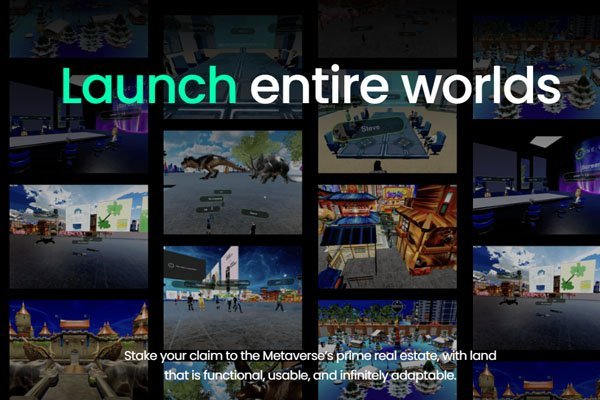
Districts are the foundation element and Ozone is launching the Initial three districts and they will probably be a few more that Ozone manages on behalf of the communities there. Each district can include one parcel akin to many of that. It’s a metaverse platform that you see out there, and indeed they are going on sale for our genesis land sale. There’s not a hard and fast limit on how many land parcels can exist within a district, but there are additional districts.
We are going to have about 5,000 in each and we are going to sell a small subset of those in the initial land sale. They are two core components that we have got to the platform, but around that, as I mentioned before, we are building a whole set of tooling. There’s an NFT marketplace that enables users obviously to buy and trade land parcels, but there are additional layers of components on top of that. Some of which we think that our approach to them is quite unique.
There are accessories, which are NFTs. They are tokenized digital assets so they could be things such as vehicles, pets, and buildings. There are throwing things that you might want to decorate and style your land parcel. The layer on top of that is what we are calling Power Ups, probably because everyone understands what a Power Up is.
Power Up are NFTs, but they are tradable assets, which inject a land parcel with additional features. Those features could be custom lighting, ticketing, or commerce. We have got a huge pipeline of things that we are intending to roll out, and indeed, some of those Power Ups are going to be delivered in partnership with other organizations.
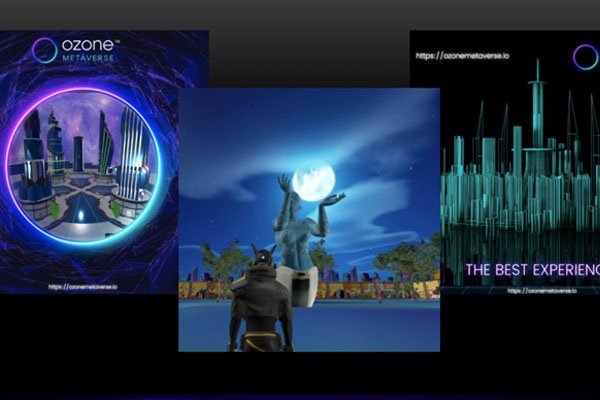
The Ultimate Metaverse Technology: That was the genesis question: Why isn’t the web like a video game?
We can’t say what those things are at the moment, but you can imagine some Power Up is giving you access to music from specific providers. It’s a wealth of possibilities in the architecture that we put together. A lot of our ability to deliver that level of composability and interaction between assets is very much. Thanks to Flow and Cadence and the fact that we have chosen to build on that platform.
**It feels like those integrations are so critical to have all these elements dialed for this platform. We are talking to people that are asking about Web3 and why are we so long Web3? Why are we long NFTs? Why do we care about this? I always go back to the evolution from Web1, Web2, to Web3. There was a moment in the mid-’90s when nobody had a website as a business and nobody visited websites. It was there, but you didn’t do it. A decade or less later, everybody did, you either had a presence or visited a presence. The same with Web2 with the social presence. **
To us, even though it’s still so early in Web3, the train has left the station. It is the same thing. Everybody will either have a presence and/or interact with other presence, or presence is in the metaverse period. That’s what we see on that horizon, but to enable that in this layer that you are building is critical. It’s essential and there are a lot of people trying to go at it from different angles. Those integrations, taking the care and being so deliberate and thoughtful about building out each of these pieces is going to be a distinguisher between Ozone and many other folks that are trying to do this, but maybe not tackling all these different elements. That is so critical and people miss that.
I 100% agree. I’m not one of the founders of the company. One of the things which sold me on what the team is trying to deliver as they are very closed-focus on consumerization and building a platform that is accessible where all of the benefits of the blockchain disappear under the hood. It’s super easy to onboard people. It’s super user-friendly to use this composability that we are trying to deliver with these tools. The common thread throughout my career is a continuous fascination with the consumerization of advanced technologies. It’s well-aligned with what we are trying to do here.
I don’t know about you guys, but I want to get a sneak peek at what’s going on here. When you talk about consumerization and builder, who are we talking about? We are thinking about how we have a builder track at NFT LA. We are seeing an array of definitions of who builders are to someone need to have an Advanced Calculus and Advanced Computer Science degree here to be a builder, or if not, what is the definition of your builders?
Look at the early internet and the 2.0, and then the Web3 space basically. Our original target is we call them the pioneers and we’ll show you a sneak peek of the upcoming website. We are rolling it out. It talks about the pioneer. Maybe Don can build up on that some more.
In terms of who these users are, there’s a range of them. We are not going to deliver all of this overnight. We have got a very clear roadmap internally and we shared a large portion of that externally. Our delivery of these tools is of course going to come in phases. One of the advantages that we have is that we already have a fully functional 3D engine that’s integrated with Flow. These are working. We’re spending on Flow Mainnet. There are very few other platforms that can claim not to do that necessarily, but to be able to deliver the kinds of 3D experiences and flexibility for users to design things that we can.
As with any early platform, a lot of our early users and builders are going to be fairly comfortable in the space. We are under no illusions around that, but we were very keen to very rapidly. My belief is that through the next years, despite the market conditions, we are going to see a wave of consumerization and adoption. We could debate the reasons for that forever, but we are going to quite rapidly see some of these tools become a mass market. That’s driven by the blockchains like Flow, which make it very easy and simple. A lot of this complexity is around wallets at the price and the security there. There are counter-arguments that we made around ease of use that reduces security, but it’s going to drive adoption.
**I will say to that effect, some of these builders are assessable to others in the community like on Discord and whatnot. Say someone is excited about your metaverse experience, but they don’t have the chops to do it on their own. I’m sure they can find friends in your Discord and our Discord to help them build whatever they are looking to create, and these are opportunities for builders in this space to be part of your ecosystem. **
I want to echo this very strongly because Tony Parisi, the father of 3D web wrote a Medium article called The Seven Rules of the Metaverse in which he made a very strong statement that the metaverse equals the internet. The metaverse is the new internet. For all our audience out there, I would say every time you think of the word metaverse, replace it with the word internet. Does it make sense? If it does make sense, it works. If it does not, it’s not metaverse.
That’s a good point. I fully agree with that. In fact, that aligns with something I was thinking about before we came on. If you talk to people about smartphones, their Instagram app, and everything else they have got on their smartphone, no one mentions the internet. Years ago, it was all about, “Are you going to go on the internet?” For 90% of people out there, it never crosses your mind that that’s what you are doing. You are engaging with the app and the tool that you are using. The metaverse going to be presented the same. In some respects, the metaverse becoming an un-useful label for some of this stuff. It’s both generic and means many different things to many different people.
I do want to add for the community to know that you don’t need to be a programmer, developer, or mathematician to build on the Ozone system, which cannot be said about other engines. We have this concept of a no-code development platform and also we want to roll out the SDK for the development community. We see this moving like the web. There are some drag-and-drop tools for mom-and-pops, kids doing projects at school, and nonprofit organizations. Anyone should be able to own this new 3D space.
It’s like a new website. That’s what it is. It’s the replacement of the website. At the same time, there are more advanced tools for game mechanics and programming. Things like physics, custom shaders, and more advanced where there’s a whole new creator economy that we see blossoming in the metaverse as well as services, which are already showing up all around the world.
Give us a sneak peek, guys. We got to get our eyes on what we are talking about here.
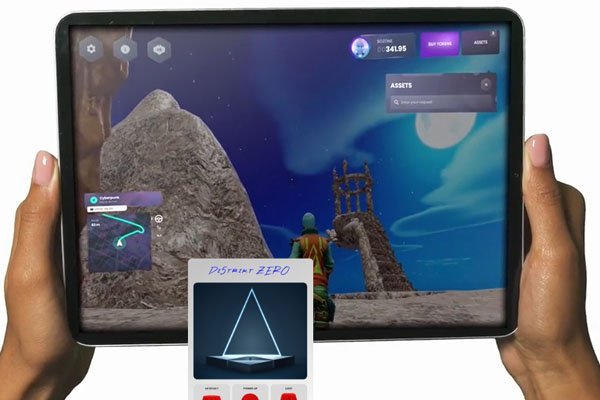
I will show you a couple of things here. We are going to be making some more roll-outs. For the land sale, you can see my background is the Di5trikt Zero, which is one of the first two districts we are going to roll out. In this case, it’s a Cyberpunk district and there are parcels there. What you going to see in this image is there are many parcels available.
One thing that’s cool about our parcel system is the different configurations. Think of websites or how you’d set up a different server for your web infrastructure. Think of that like parcels. If you are a small, not commercial metaverse creator, or you want to get a land in the metaverse like buying a domain back early on. You can come in and buy one for $300.
If you are a major IP holder or an entertainment group that has a bunch of artists in their portfolio and want to bring them in and make a venue. Working with a few of those, and we’ll make some announcements, we have some mega metaverse worlds. For commerce, entertainment, and shopping overall like accessories and so on. You need a bigger parcel, more room, and functionality like eCommerce, custom lighting, animations, and things like that. In that case, you’ll get bigger parcels. Dom’s background is the FlowZone. The word zone comes up by him. Do you want to talk a little bit about the Flow district?
The Flow district got a completely different aesthetic there. It’s named almost to Flow, the blockchain that we are building on. It’s got that more green futuristic feel to it. It’s got a similar number of parcels to Di5trikt Zero, but it’s going to have some unique features to it. I’m not sure if Jay mentioned it. I think he did, but all districts have community spaces within them that aren’t owned here. It can’t be acquired by the users of those districts and people looking to buy lands.
Those community spaces are run by the owners of several districts. In the case of the first three, they were owned by Ozone. Within the Flow district, we are looking to run events around developer events, other things the Flow community, discussion, and showcases. There are a lot of nice features that Ozone has gotten already supported as a platform. Things like screen-sharing, special audio, all of the stuff that makes up interaction, and those kinds of real-world use cases are really nice.
There is a community hub in every district, and they can be more civic spaces. We want to show you a sneak peek of the Flow community. This is a very early version. This is far from being completed, but you can see it running into a dump point. We are glad to have paid it forward. It is what we did. Without knowing we would be here because when we began, we wanted to make the web like a video game. It’s that hobby project back in Silicon Valley.
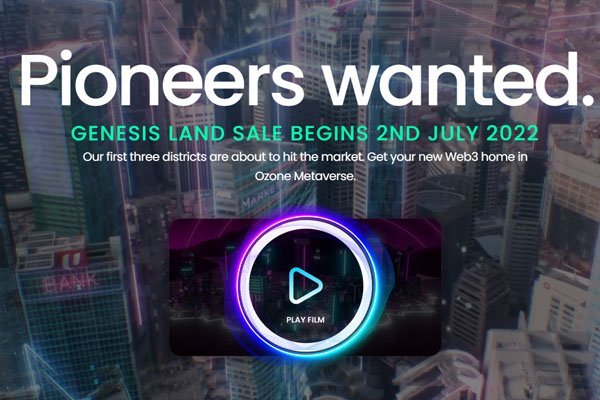
The Ultimate Metaverse Technology: 3D technology, along with this dream of a metaverse, is nothing new. However, it’s been notoriously very burdensome to access, interact with and deploy.
We are sitting here at the doorstep of the next generation of web computing and we are here to help. We are here to serve and make it easy for folks who save basically time and money. That’s why some of our commercial partners come to us. They want to get into the metaverse, but the options are limited. Our system enables us to do things like this. This is our sneak peek at the Flow community hub. This is an environment that is, in development, we prop this up now to share you guys have a fly mode where our full integrated avatar system.
Probably.
That is an Avengers hat you are rocking, right?
Yeah.
**Where were you living? **
**That’s one of the best pastries on the planet. **
It’s always about the food.
Our OzoneMetaverse.io is where it is. The land sale will be deployed on OzoneMetaverse.com. You’ll find us on any social platform. It’s Ozone Metaverse on Discord and Telegram. We are working on ramping up the community some more. We have been deep in engineering. We are looking and hiring folks who are into community management. A few executive positions are as well open as we are securing more funding, growing, and looking at the next phase of our post-launch journey. Everybody is welcome.
Thanks for having us.
Thank you, guys. Looking forward.
Important Links
-
Dom Rodwell – LinkedIn
-
Ozone Metaverse – Discord
-
Gareb Shamus – Previous Episode
-
Telegram – Ozone Metaverse
-
Twitter – Ozone Metaverse
-
Spotify – Edge Of NFT
-
iTunes – Edge Of NFT
-
Discord – Edge of NFT