Top Podcasts

Jason Brink Of Gala Games — The Largest Decentralized Network Of Gamers In The World, Plus: Yuga Labs and the SEC, Binance NFT Ticketing, And More…
Gala Games is the largest decentralized network of gamers in the world. Among a lot of other things, it seeks to level up the Web3 gaming experience into something that even Web2 gamers would want to participate in. Key to this is the concept of play-and-earn. Joining our hosts in this episode, Jason Brink aka BitBender of Gala Games makes this important distinction between the play-and-earn and the play-to-earn models. He also takes us on a tour to see what the guys at Gala Games are up to in this bear market. Plus the crew share their opinions on what’s going on with Yuga Labs and the Sec, Binance’s move towards NFT ticketing, and more. All these in this episode of Edge of NFT!
Listen to the podcast here
Jason Brink Of Gala Games — The Largest Decentralized Network Of Gamers In The World, Plus: Yuga Labs and the SEC, Binance NFT Ticketing, And More…
This is Jason “BitBender” Brink. I’m the President of Blockchain at Gala Games. We are an ecosystem that empowers players, listeners, and watchers all over the world. You are reading the Edge of NFT where we empower you with the best intel on the edge of tech. Keep reading. I’ll see you later. Peace.
NFT-curious readers, stay tuned for this episode and learn why an NFT by any other name may be the preference of the masses, our guest’s clever way to find customers in a second-grade class, also our candid thoughts on what’s hot in the news with Yuga Labs, Binance, and a lot more. Don’t forget that we put together a gathering called NFT LA that brought out thousands of the world’s most innovative doers in the NFT space and beyond. Head to NFTLA.live to get tickets to our bigger, bolder, and better, but also as intimate and impactful event happening in Los Angeles from March 20th through the 23rd, 2023. We will see you there.
This episode features Jason “BitBender” Brink. He is an entrepreneur, blockchain theorist, and avid gamer. He is the President of Blockchain for Gala Games, the world’s leading gaming platform with blockchain integration. Jason’s involvement in the cryptocurrency market space started in 2014. He focused on the use of blockchain for the decentralization of various ecosystems. In 2014, he won the Bill and Melinda Gates Foundation Global Development Network Prize for the creation of the AidDollar, a novel blockchain-based solution to solve the problems endemic to foreign aid.
Jason is a strong believer in the ability of blockchain to create transformative change both in business and society. As the President of Blockchain at Gala Games, he devotes considerable resources to the creation of stable play-to-earn ecosystems as a means to generate new opportunities for gamers around the world. It appears he’s coming to us from outer space, which is pretty damn cool. How is it going, Jason?
I’m glad you like it. This background here is from Last Expedition, which is one of the titles that we’ve got on the burner. It’s going to be pretty cool.
That’s some good-quality art for sure.
It’s extremely high-quality. The entire game is built in UE5. It’s gorgeous and riotously fun to play.
That’s very exciting. Jason, I was reflecting. We had you on the show.
It has been a long year.
Are you on the dog year philosophy or cat year? Is it 7 years or 9 years? Has it been twelve years?
I didn’t have white in my beard at the beginning of it. Let’s put it that way. It has been a rough year. I have been traveling almost nonstop. I’ve probably done pretty close to at least 600,000 to 700,000 miles, which is a nightmare. It’s so much travel. It has been quite the year and then all of the stuff in the market and, in general, meltdowns that the whole space has been having.
I would agree, but there have been some cool innovations that have speared in. You’ve kept a strong and positive beat on Twitter that has been helpful in terms of carrying that torch and some personal anecdotes in there mixed in with more traditional posts. I appreciate where that’s coming from. I’m curious, how does that reflect your feelings on the overall gaming industry as a whole? What’s your postmortem on 2022 for the gaming industry? How about that?
There’s a lot of progress that has been made. There’s a lot still that needs to be done. Let me back this up a little bit. In a bull market, any rubbish can survive. There were all sorts of terrible projects that were launched during the last bull market. This bear is shaking them out. That’s important because one of the biggest challenges that we have in the space, especially in gaming when you look at it from the perspective of Web3 gaming, is pushing through the traditional Web2 narrative that blockchain, NFTs, and all of these things are bad.
It was an interesting rundown by Kotaku, which always hates NFTs, blockchain, and all of these things. It was talking about how NFTs are this terrible or awful thing, “They’re still here. Damn it,” but for me, it has been an amazing and ridiculous year. It’s killing bad projects. It’s going to leave room in the long run for good projects to grow, flourish, and thrive.
There was a survey we put out on Twitter about the word NFT and its impact on adoption. About 3 out of 4 people thought that word isn’t doing us any favors, but the underlying technology there, the innovation that’s happened, and the cultural evolution that occurred in 2022 are unmatched.
Especially around the circles that we roll with. There are a lot of very self-reflective people. There’s always that moment when people are decrying some specific thing about what’s going on with NFTs or the term. You take a minute and go, “Let me check in on what’s going on here.” I think of the movements that we’re involved in around ownership, creator economy, and decentralization in terms of the Web2 evolution or even the internet revolution. Something is going to arise out of all of this, which we’re going to look back on. Whatever the name is going to be, it’s going to be something special regardless.
We do need to work on that name as an industry. This is something we have always been terrible about. The blockchain space predominantly has two types of people. They have people who are cutting-edge or people who love new tech. They’re early adopters. They’re willing to take risks and things like that. These types of people can accept a name that is not ideal.
We’re okay calling things NFTs or cryptocurrency. We’re okay talking about different cryptographic disciplines, ZK-rollups, SNARKs, and all of these different things. For people like this, calling something a different name doesn’t matter but for the rest of the world, those names mean a lot and matter a lot. That’s one of the things that we as an industry have to fix. We have to come together on that.
It was Shakespeare that said a ZK-rollup by any other name is still a ZK-rollup.
I read that on Wikipedia. I’m pretty sure that’s how that works.
I wrote that on Wikipedia. I’m a musician, which you may not know. I played music, went to music school, and played jazz. My participation in this whole revolution of blockchain has been this show. I haven’t been able to integrate my musical life into it per se.
We will have to fix that.
I’ll put out 1 or 2 tracks on NFT or something. I’ve got some ideas. Gala Music is a thing here that I want you to get into. I want to talk about it. If I want to get involved in Gala Music, what are my opportunities as a fan, a creator, and those other players in the industry like the producers and that kind of thing?
It’s the structure. The first thing that I would say is if you want to dig in deep into Gala Music, the person that you need to talk to is Bux. Gala Music is her baby. I can give you some rough ideas of the shape of the ecosystem, but it’s not my thing. I’m more on the game and ecosystem side of stuff. I’m wearing my Snoop shirt. One of the things that Snoop likes to talk about is when he first signed his first record deal when he was much younger. He got screwed by the record agency because they had all of the power in that relationship. They were able to do that. It took him many years to have creative control over what he was doing and even longer before he owned the stuff that he had done in the past.
That’s a problem. What we want to do is open things up for more musicians to be able to own their product, release their product across our ecosystem integrated with our network of decentralized nodes and players, and make it so that fans have something special that they can access but at the same time, the artists themselves are in a position where they’re much better served by the industry as a whole. That’s what we’re aiming to do. We would love to bring you in there somehow.
Speaking of Wikipedia, that was one of my claim-to-fame music projects. I wrote a song a day based on the Wikipedia article of the day. It’s very nerdy.
That is horribly nerdy.
That’s about as nerdy as it gets but maybe that’s the place.
Where are these? I need to see these.
They’re on an Apple website. You can’t even access the MP3 files anymore. I’m going to get it up and about there.
Reverse interview question, what was the weirdest song that you had to write about?
There were so many because these articles are so random like Gremlins 2, the movie, the Wonderbra, antioxidants, and lead (II) nitrate. It’s a classic. It defined a generation.
We’re talking about music, but there’s also the Gala Film side of things. A film is such a massive medium and an influence globally. What’s going on that side of the house? We heard there are some revolutionary things happening.
There’s a ton that’s going on in the music and film side of things. They will have been burnt, but there’s a sale on RZR. RZR is this amazing film piece that we’re working on in conjunction with a few other people in the industry. That is going to be very cool. When you look get games as a business, it’s larger than film and music combined but the reason for that is film and music are set up in a way that is inherently inefficient. One of the things that we’re working on doing is correcting some of those inefficiencies to unlock some of that value. That’s something that we’re excited about.
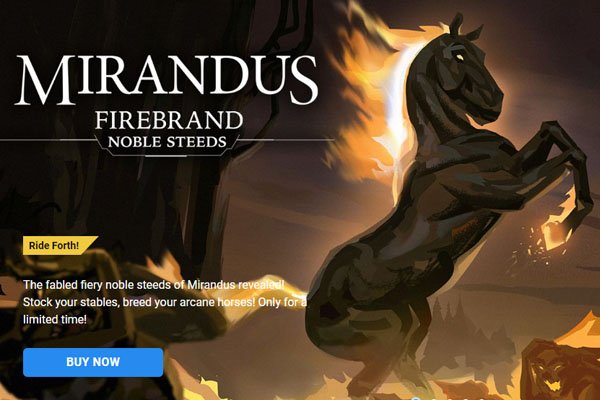
Gala Games: Film and music are set up in a way that is inherently inefficient. One of the things that we’re working on is correcting some of those inefficiencies to unlock some of that value.
It sounds like it. There are all these different moving pieces. It’s rare to find a company that is focused and recognizes the DNA of all these different spaces and how they’re intertwined.
They are all intertwined.
We talked when we last connected about how important the talent pool was that you have there and the deep experience across these industries. Kudos for pulling that together and seeing those connections.
Thank you. We have been building this entire bear. We have been building. We’re starting to release things. Things are starting to come out. We’re in a good spot.
David Bianchi** is a good friend of ours. He spoke at NFT LA and performed there. Eathan met him too at a fun Hollywood Hills party. That’s the LA style. He was telling us, “Something is brewing. I want to tell you.” He couldn’t tell us until the deal was done. He called us up. We heard the news directly when RZR was getting off the ground. We had been falling closely since then.**
It looks cool. Did you get in on the drop?
We shared it with all of our fans on the show and on Twitter. We were involved. Part of what you are doing that is unique starts with gaming and goes beyond music and film. It is these nodes, which provide a framework for powering up your ecosystem. I would love to talk a little bit about why these nodes are so important to the infrastructure function functionality of what you’re building.
The first thing that you have to keep in mind is that we want in the long run to have an ecosystem that is truly decentralized. As you build towards that, the concept of decentralization means that you have to have other people involved. You need a bunch of different players. This is where the nodes come in. In all of these ecosystems, nodes do specific things. The Founder’s Nodes, which are the original ones in the game ecosystem have a slightly different role but what the film and music nodes do is host content, specifically for that ecosystem. Eventually, you will be able to pair your nodes with NFTs and be able to have your content be served as part of the growing ecosystem.
The nomenclature here is cool. We talked a little bit earlier about the way these things work. I’m familiar with nodes in terms of Ethereum, mining, and things like that.
It’s a slightly different thing.
It’s an echo of that idea. One thing powers the other. You’ve got a very unique lens here into this play-to-earn ecosystem. There are different ways people like to call it. What’s your take on the new opportunities gamers are looking forward to here in 2023 and beyond in this ecosystem?
The first thing is that I want to think of this, not as a play-to-earn but a play-and-earn. That’s a very important distinction. A play-to-earn means that the reason that you’re playing is to earn something, which means that you’re not playing because it’s a fun game. That’s a problem for us. We believe that gaming should come first.
Give us a little bit more on this topic of play-to-earn versus play-and-earn. I certainly got some comments on that.
One of the criticisms that we oftentimes get from Web2 gamers is they look at blockchain gaming, and they’re like, “These are crappy games. The only reason I would play this game is if somebody paid me.” That’s a problem. That criticism is, unfortunately, oftentimes extremely valid. What we strive to do at Gala is make quality products to create something that is a good game and make it something that you would play regardless as a Web2 game. With Superior, we’re experimenting with a dual-launch strategy where we launch it on our platform as well as on Steam as two separate SKUs specifically to show what a quality game can be produced in a Web3 space. You can access it via Web2 as well to get people into it.
In the circle where I run in, there’s this deep human almost intuition around a possibility, a need, or a desire. The things that you naturally do have value. That’s why we love these stories of the filmmaker that spent all his days working in a video store watching videos and geeking out. One day, he gets to make films and be a success at it, or the MrBeast YouTube star whose mom is upset that he failed out a community college but somehow his passion works out. I agree with that. It’s not play-to-earn. It’s play-and-earn. We have a deep desire to have that recognized. I appreciate that framing.
When you look at it from that context, what gamers are going to be seeing more here in the future is a much greater focus on participating in the creation of bigger and better ecosystems that are more tailored to normal gamers and less tailored to the almost FinTech side of blockchain.
It is its own niche, which is cool that there’s a niche for gamers who want the rate of return on their investment to be tied to some troll. It’s cool but I get what you’re saying. It’s something that should be more accessible.
Not to poo-poo on the DeFi movement but I was in a conversation with someone about the hollowness of that segment of the business or of the industry in 2021. When you don’t add a layer of culture and utility to DeFi, it’s just bigger returns after bigger returns. Inherently, it’s a bubble.
It is specifically designed that way, which is horrid because it is all of the things that regulators are afraid of. It’s something that’s designed so that number always goes up until it doesn’t. It’s no wonder that they clamor to want to fix it when you look at it from that perspective.
When we look ahead here, we covered a lot of ground. You have a lot going on but there’s a lot more here in the pipeline. When we look ahead here to 2023, what else can you share with us that we haven’t covered yet? There’s a lot of stuff under wraps but give us some of the goods.
There’s a lot under wraps but the games that are starting to be released are freaking awesome like Spider Tanks and Superior. Last Expedition is one of the ones that I’m looking forward to a lot. There’s Mirandus. The progress that has been made on these things is phenomenal in the time that has been allotted to them. It’s interesting. In 2021, we were having Galaverse. Galaverse was the big event that we were having in Las Vegas. We announced a bunch of different games and things like that.
Three months after we announced those games, the community was like, “You announced those games. They’re not out yet. It has been a whole three months. Why haven’t you released the games yet?” A typical game development project is a 2 to 3-year timeline. We have made such incredible progress over 2021. I cannot wait for people to be able to see what we have pulled off in 2022. It’s cool stuff.
That’s the distinguishing element. When you look at blockchain gaming and what Gala is doing versus so many other people, it’s what we talked about and what you are following through. That’s delivering high-quality games or games that are of the quality that would attract Web2 gamers. It’s so important. It’s critical for this next phase of what’s happening in blockchain gaming. That’s cool to hear. I’m excited about it.
Can you talk to us a little bit about your game development process? Is there anything unique about it that you consider to be your competitive advantage? Is there any particular insight that you have about how you collaborate with the community on these games? There are a lot of games being built. Some are good and some are not so good.
The way that I look at this is we have two different ways that we build games. The first is we have a first-party internal studio where we’re building games for ourselves. The second is we have a third party or somebody else on the outside building for us. Either of these models works. What we’re finding is that when you have a game and you’re building that game internally, you have much greater control over it.
Gala Games: When you have a game and you’re building that game internally, you have much greater control over it. And that can have a huge positive impact on the overall outcome.
That can have a huge positive impact on the overall outcome. You could say that our secret sauce is the team that we have that works with these various games. We have a team of economists that will go in and help put together a viable economy. We have a bunch of different things like that. It makes a pretty big difference to be able to have an actual team that you can dedicate to something like this.
It’s helpful to understand. There’s one last question that we would like to ask folks like you. You’re taking a broad view of the space. You’re active on Twitter. You’re seeing what else is out there. Are there other projects that have come along in 2022 or that are starting to come along that inspire you?
There’s not a lot in the Web3 gaming space that I find inspiring that we’re not already doing.
That’s a good thing.
That sounds awful.
It’s past the statute of limitations though.
That’s a dad’s present.
They paid you money.
Can you make me one?
I am paying for this.
I’m a big fan of stoic philosophers.
That’s a long time.
It gives everyone a sense of your world.
Even saying it sounds like a difficult task.
It’s painful.
None. It’s terrible.
That’s well done and well played.
He’s a giver.
It’s Christmas cards.
Add, “Other than a holiday or birthday card.”
Important Links
-
@leashless - Twitter
-
Gabe Weis - Previous episode
-
SEC investigates Yugo Lab’s offering of unregistered securities
-
GalaGames.chat - Discord
-
@BitBenderBrink - Twitter
-
@GoGalaGames - Twitter
-
Spotify - Edge of NFT
-
iTunes - Edge of NFT