Top Podcasts
Janine Yorio Of Republic Realm On Leading Metaverse Innovation, Investment, And Education, Plus: John Paller Talks About ETHDenver & Bufficorn NFTs
The Metaverse has opened up a whole new world of business and career opportunities. Republic Realm is one of the platforms in the metaverse space, focused on metaverse innovation and investment. Joining Jeff Kelley, Eathan Janney, and Josh Kriger today is Republic Realm’s CEO, Janine Yorio. Janine discusses developing the Metaverse and pioneering its innovation through her community. John Paller also drops by for a conversation about ETHDenver & Bufficorn NFTs. Tune in to learn more about how Janine sees the investment, development & infrastructure innovation across the global Metaverse & NFT ecosystem and know more about what John has to say about the latest ETHDenver Conference.
—
Listen to the podcast here
Janine Yorio Of Republic Realm On Leading Metaverse Innovation, Investment, And Education, Plus: John Paller Talks About ETHDenver & Bufficorn NFTs
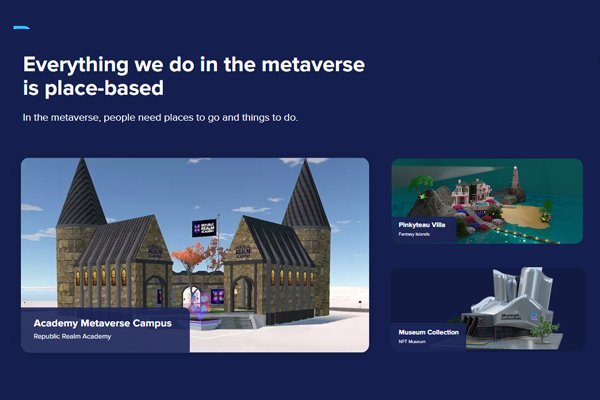
This episode features Janine Yorio, CEO of Republic Realm, a metaverse innovation and investment platform. Republic Realm is among the largest owners of digital real estate NFTs in 24 metaverses, including Decentraland, The Sandbox and Axie Infinity and among the most active developers of in-metaverse developments, including the Metajuku Shopping Center and The Fantasy Island’s ultra-luxury, master-planned community NFT project.
Janine was previously the CEO of Compound, a FinTech app focused on real estate investing backed by leading VC firms, NEA and Founders Fund, which was acquired by Republic in 2020. She also previously worked in private equity for Northstar Capital and real estate and hotel development at The Standard Hotels. She is a graduate of Yale University.
—
Janine, welcome to the show.
How are you?
We’ve got another Yale grad deep in this show’s commercial real estate business. It’s not Eathan and me, so take a guess who?
We’re both refugees from the real estate industry. Clearly, we find this a lot more compelling.
When I met you and the whole team in Miami, I was so pumped because we’ve been watching you since the news broke about Republic Realm and what you’re doing. It sounds like you have been very busy. It would be great to understand the genesis of this concept and how it came together. Let’s dive in deeper.
As you already revealed, I used to work in the real estate industry and did for a very long time. Like any good real estate, FinTech, PropTech entrepreneur, I’m always a little bit too early in doing things that are new. I’m a bit of an early adopter. One of the things I had been following with some of my colleagues was metaverse real estate because it has the words real estate in it, so we felt like we had to.
A bunch of us put our money together and bought lots of land in Decentraland in the fall of 2020. We had a lot of fun doing it. We didn’t sell, so we didn’t make money, but we were certainly watching price appreciation happen. We felt like if we were doing this, then other people might want to do it too. We had sold our startup to an equity crowdfunding company called Republic that was in the business of creating investment products for retail investors.
We thought, as an experiment, “Let’s put up a card on their website that says metaverse real estate investments and see if anybody clicks on it.” One of the first people that clicked on it was Galaxy Digital. We went from this investment product or concept that was meant to be something on the third page of the Republic website to suddenly being thrust to the fore and that was in March of 2021.
An article came out about how Mike Novogratz’ Galaxy Digital was investing in this vehicle. It’s been history made ever since. We very quickly had some early successes. We invested in Axie Infinity before people started talking about it, largely on the basis of doing what I call very active social listening. We saw Twitter and Telegram exploding with excitement over what was happening at Axie Infinity. We knew there was something special there, so we bought land when they first started selling it.
We were big buyers of Decentraland and The Sandbox before everybody focused on it. We made the largest acquisition in Decentraland, which is $900,000 for a plot of land there. We have since blown that record out of the water. We bought a plot in The Sandbox in November 2021 for $4.3 million. As you can see, the dollar amounts have gotten ever larger over time. We’re one of the most active investors in metaverse real estate. We own over 3,000 NFTs, but more importantly, we’ve built an entire company around this concept.
We started making investments on behalf of other investors. We do lots of different things and see ourselves as one of the key developers of the metaverse ecosystem. We build metaverse NFTs and create metaverse games. We have our own gaming guild that’s at DAO. We continue to invest. We’ve invested in 25 different metaverse investment platforms, but it all started as a happy accident last March of 2021 when we put this card up on the Republic website. That metaverse card has over $75 million of reservations from investors. There are 15,000 people who have reserved and it’s now on a waitlist situation. We had an idea that this might be something. We had no idea it would be something quite this big.
March 2021 was when we started the show and now we have NFT LA and all sorts of other stuff cooking. It’s been a remarkable year for the industry.
What’s exciting is even after we’re all on the edge of our seats watching what’s happening in the crypto markets, clearly, we’re all having mild panic attacks when we’re not doing a show. On the one hand, you have the crypto markets crashing and on the other hand, you have the NFT markets exploding, which I think is interesting. I don’t know exactly how it’s going to shake out, but it’s certainly an interesting statistic to watch.
It’s interesting because LooksRare has come and is competing with OpenSea in adding its own traffic to the NFT trading space. That’s in addition to what’s going on over there.
I’ve been very vocal about my thoughts on how Corporate America is approaching NFTs. I’ve written an op-ed about why Corporate America is getting NFTs all wrong. If you look at what LooksRare did, they did it right. They started with the community and figured out how to incentivize the community for building and participating. What’s going to be a recurring theme in this space is how do you make the community feel like they’re part of the project not later but in the very early days. Bring them along for the ride and help them to feel like they’re building the roadmap.
This isn’t a corporate money grab or something that’s being pushed down from a boardroom, but rather something that’s being built from the ground up. LooksRare is a perfect example of how that can work. Let’s see what happens. It will be interesting to see how it plays out, but the early traction is certainly very impressive.
Speaking of building things from the ground up, we’re talking about metaverse real estate and a lot of what you guys have done and are doing. How would you describe it to our readers who aren’t in the world of metaverse real estate yet? How do you view this as a part of the broader crypto sphere?
That’s a very multi-layered question. First of all, I hate the phrase metaverse real estate, especially as somebody who comes from real estate. I know that sounds particularly ironic, but I’ve been on a bit of a bandwagon lately, trying to get people to think about it differently. I think it’s very misleading. It’s led a lot of people down the wrong path. It has nothing to do with real estate.
Real estate is the thing you do with your money when you’ve made a ton of money in a windfall and you want to make sure you don’t lose it. If that’s what you’re thinking about here, you’re thinking about it all wrong. You should be prepared to lose it. It’s crypto, a derivative trade of crypto, so it’s as risky if not more so. It doesn’t trade like real estate and has income-generating prospects like real estate does. It’s highly speculative.
It’s more like early-stage venture capital investing than it is real estate investing. The skills required to invest in real estate have almost nothing in common with the skills required to invest in metaverse platforms, which, again, I realize the irony as somebody who comes from the real estate investing world, but I’ve also spent 2021 learning a lot. It’s the only thing I do all day, every day. I think that it’s required me to rethink how we approach this asset category.
It took me nine months to come to the conclusion that metaverse real estate is the wrong way to describe it. You are basically investing in a dedicated block of pixels in a software application. That’s what it is. Mostly, you tend to invest before that particular software. I hate to use the word metaverse because even that confuses people. It’s software and it’s usually prelaunch.
You’re buying a part of the software before the software is even available to the public. It’s a dedicated piece. You can’t do whatever you want with any part of that software. You can only work with a very specific set of pixels that are designated to you. You’re betting on a lot of different things happening. Number one is that the team that’s building this platform can execute and that they can continue to evolve the platform in a way that draws end users.
They can market the platform so that people show up for it and that they are able to create a viable ecosystem and economy of people that buy the pixels, develop the pixels, do interesting things there so that more and more people come and keep building. It’s a complicated and almost sequential order of things that you have very little insight into when making the investment.
Usually, when you’re investing, even if you look at Decentraland, what are you investing in? You’re investing in the future prospects of that platform. Whether you believe that there is room to grow in that particular NFT’s price, it’s based on what you think is happening in the market and the platform? Do you think more people are going to show up and make this thing more valuable?
That’s fascinating and I appreciate that inside perspective from somebody who’s viewing it. It’s all a whole new world. We have to invent and clarify these terms and all of that. You mentioned it is more like venture capital funding or startup funding too. There’s always due diligence in that process of maybe meeting the founding team and seeing a pitch deck and stuff like that. I’m guessing initially that wasn’t a part of your process, but maybe once you’re writing bigger checks, is this part of how you investigate where to invest? Are you talking to founders? Are you looking at their roadmaps and plans? Are you making agreements around that? I don’t even know if that’s how it goes.
It’s always been part of our process. We are a team that came out of professional investing. We’ve always looked at things with a healthy dose of cynicism, trying to find whatever information we can find. It’s not like we spent time on the phone with the founders of Axie Infinity before we invested, but we invested small and watched what happened. We wanted to see if the traction continued at the same pace that we were seeing.
We spent a lot of time researching who the team was behind it, whether we believed in their ability to navigate nimbly a lot of the changes that we saw as inevitable to the space. We certainly approached it as an early-stage venture investment, but it’s more nuanced than that because you can do things to it when you buy it.
It’s like betting on whether their technology is going to allow us to customize it in a way that adds value or allows us to create alpha. It’s a very interesting category and a lot of fun. You’re buying an NFT that’s attached to a platform. You have an NFT, an early-stage venture investment tied to a platform and then you have “How creative can I be as the developer of those pixels and building something that’s going to create even more value for me as the holder.” It’s very layered, creative and it very much depends on the platform itself, the human ingenuity can come behind it and build collaborative things that can make the owners a lot of money.
I’ve been hanging out in our Discord a bit lately, and Upland’s topic came up. I noticed something we listed in what you’re into but is that a platform that counts for what you pay attention to?
For sure, they’re on our list. I don’t believe we’ve invested in an Upland and have a clear answer for you exactly why not? Sometimes, it’s not a function of not liking the platform. We might love it. We might be a little bit scared of the valuation. I don’t know exactly why we haven’t invested. Maybe it’s in process. We have a lot of investments that we’re looking at simultaneously, so it might be something we’re looking at now. We’ve tracked over 300 different platforms already. We don’t focus on them all equally. Some we do a much deeper dive. Some we invest small and then we get larger over time. If you go to our website, RepublicRealm.com, you can see a list of all the logos on the portfolio page and see what we have invested thus far. We keep it very up-to-date.
To piggyback on that question, how do you pick what you invest in? Are people coming to you at this point? Do you have a research team that’s selecting based on certain criteria? Maybe a few details before we move on to the next topic.
We approach this like professional investors. We have a team of analysts. We have one who is a nationally ranked gamer whose job is to spend time in the space, getting to know everybody, talking to users, test driving platforms when that’s even a possibility and seeing the alpha and beta versions of things. We have somebody on our team who looks at Discord channels. He is one of the moderators of Reddit’s WallStreetBets channel.
He’s particularly qualified at assessing the health of an online community. He spends time literally lurking in those channels, telling us where people are positively inclined, saying good things and are blowing up. That’s how he describes it. He means that people are buzzy about a specific thing. They’re excited about what’s coming and happening.
We view that as one of the early tells that something has traction, a lot like a venture capital fund would. Long before a company has metrics, they have things like social media follower accounts or a number of press hits or web hits on their website. Things like that are very helpful when we’re trying to assess the viability of a platform in the very early days and whether we want to spend more time looking into it.
On a similar note, when you’re thinking about what to build and value creation, how does that relate to your days in the real estate world? In the early metaverse real estate days, a lot of focus was on sex, drugs, rock and roll and gambling. Has that changed?
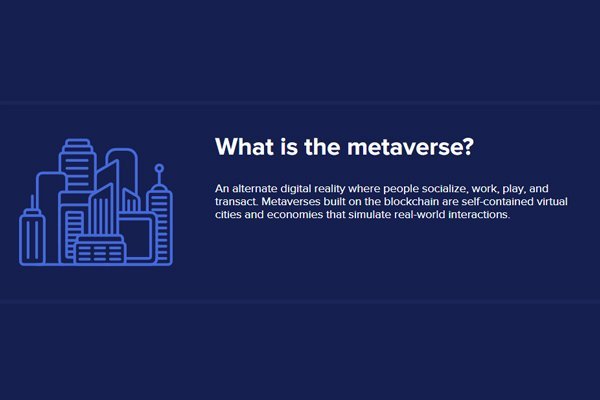
Metaverse Innovation: The metaverse is already here. It’s here for children who have spent years in lockdown in Fortnite, Roblox, and Minecraft.
No, it’s the same basic human drivers. We try to think creatively. The first project we did was an experiment. We built this shopping mall called Metajuku that I came up with within the back of a taxi where I thought, “I love Japan, Tokyo.” The metaverse looks very cartoonish. We wanted the theme that was loud. It can’t be subtle in the metaverse. It doesn’t fly. You can’t do beige and neutrals. You have to do neon lights and flashing.
I don’t know if you’ve ever been to Tokyo, but the signage is incredible. There are light-up signs and everything. We borrowed from the video game district of Japan and the stripper district, which is part of Juku and called it Metajuku. We put all the lights and the signage on it to evoke Tokyo. We leased it to tenants selling digital clothing that they can buy for their avatars.
That was the first real estate project that put us on the map. We did it intentionally to be a little bit quirky and weird. I think that’s what the metaverse is about. I think a lot of people come to us and they say, “I own a bunch of hotels and apartment buildings in the real world. I don’t want to duplicate them in the metaverse.” I have to tell them, “Unfortunately, buddy, nobody cares. Nobody wants to go to your office building in the metaverse. I’m not going to the metaverse to do more boring things like I already can do in the real world. I want to go to the metaverse to do things I can’t do in the real world. I want to go fly.”
It’s like Westworld. I don’t know if you guys have ever watched the show, but nobody wants to travel back in time to go work in a cubicle. They want to travel back in time to shoot people and have a Wild West adventure. It’s the same with the metaverse. It has to be trippy and otherworldly. It has to be pushing the envelope of what people can do because, in order for a metaverse experience to be compelling, you have to lure people away from playing on their phones, sleeping, Netflix, social media or video games. You’re competing with a lot of choices. Nobody has to be in the metaverse.
You’re choosing from all the other forms of procrastination when you decide to spend your time in the metaverse. In order to bring people into those experiences, you have to push the envelope and think, “What do people want? What is their lizard brain want to do when they’re stuck at home? The bar was a lot lower when we’d all been locked in our houses from the pandemic. Now we’re starting to get out, and we’re a little more choosy. “I don’t want to do a Zoom birthday with my uncle from Iowa anymore. I want to go out and do things.” We’re becoming more stingy with our time and therefore, things have to draw set.
It also takes good partnerships to make things happen in this world of NFTs and Web 3.0. You guys are working with Polygon, Galaxy and Animoca Brands, who’s also a partner of ours. We’d love to know what your roadmap looks like in terms of other partnerships we can expect.
We haven’t announced a lot of the partners we have intentionally because we wanted to do so with great fanfare. We can talk specifically about one, which is the partnership we’re doing with Atari. We see ourselves as landlords in the metaverse, which is bad because it relates back to real estate, which I told you earlier that I didn’t like.
We create content in the metaverse, and I find it helpful to people when that content comes in the form of things they already understand. Architecture, buildings and places are something people can grab onto. We’ve built an NFT store called the GFT Shop and their NFT is designed for gifting. Each GFT is a gift box that opens on a specific date in time and inside it is something that relates to a cult brand.
The first brand collab we’re working on is with Atari, which is one of the most loved brands. We love it because it’s all about video gaming. It’s where video gaming started. As anybody in the metaverse will tell you, we have to give the nod to the video gaming industry, which is where this all came from. That’s our first GFT product launch that we are offering through the GFT Shop.
In time, we’re doing collaborations with other beloved brands that will be gifts. They’re designed so you can buy it as a gift and give it to somebody else, but it’s an NFT. It has all of the typical NFT bells and whistles in a sense. Some are rarer than others. There’s a scarcity chart and a roadmap of cool things that you’ll be able to do with it in the future.
There’s so much cool stuff retro-wise and nostalgia around brands like Atari and others. I feel like there’s not enough of that, honestly, yet. Many of the things that we love don’t yet have a presence in the space. I’m curious, do you have a phrase that you want to use for virtual real estate or what it is that Republic Realm hasn’t nailed it yet?
It’s here and it’s only going to get bigger.
I’m a little scared, but sure.
A sweater.
Are you from someplace of a cooler climate?
That was easy, snow cones.
Those machines were not made for scalability.
Lunch.
Could you divulge the contents of that lunch?
I had sushi.
I sold some shares in a company.
Does your cat have a name?
It’s Cannoli. She looks like a cannoli.
It depends on where you’re shopping.
If it’s not for sale yet, it will be soon.
Persistence.
It’s RepublicRealm.com.
It’s @JoinRepublic_re. We’re working on getting vanity URLs. On Discord, we’re Republic Realm.
Thank you, guys.
—
I’m looking forward to it. How are you?
Important Links:
-
@JoinRepublic_re – Twitter
-
Republic Realm – Discord
-
Twitter – ETHDenver
-
@PallerJohn – Twitter
-
iTunes – Edge of NFT