Top Podcasts
Jamie Jackson Of Mythical Games - Venture-Backed Next-Gen Game Technology, Plus: Jasper Donat Of Branded, And More…
The gaming industry is perhaps one of the most prolific industries today. With the significant advances and developments in the blockchain and NFT space, integration of the two is inevitable. Today’s guest is a games industry veteran of 20 years making all the right moves to do just that. Jamie Jackson is the Co-Founder and Chief Creative Officer of Mythical Games, the next-gen game technology studio creating universal economies driven by player ownership of NFTs. He joins Jeff Kelley, Eathan Janney, and Josh Kriger to discuss the exciting innovations they’re working on to bring blockchain tech and player ownership into the classic gaming world. They’re all about having that “game first” mentality to bring the best experiences to gamers everywhere. Plus, join our chat with our special Hot Topics guest Jasper Donat, CEO of Branded, as he shares the latest news about his company and the upcoming All That Matters event in Singapore later this month. Stay tuned!
—
Listen to the podcast here
Jamie Jackson Of Mythical Games – Venture-Backed Next-Gen Game Technology, Plus: Jasper Donat Of Branded, And More…
NFT curious readers, stay tuned for this episode and find out how Mythical Games is at the tip of the spear in blockchain gaming, why ninjas and shells hold a special place in our guest’s heart, and how All That Matters and Web3 Matters are pushing the envelope of IRL events and bridging Web2 to Web3. All this and more on this episode.
Don’t forget that we put a little gathering together called NFTLA that brought out thousands of the world’s most innovative doers in the NFT space. Head to NFTLA.live to get tickets to our bigger, bolder, and better but just as intimate and impactful event happening in Los Angeles from March 20th to 23rd, 2023. See you there.
—
This sponsored spotlight episode features Jamie Jackson, Cofounder and Chief Creative Officer of Mythical Games, the next-generation game technology studio creating universal economies driven by player ownership of NFTs. A games industry veteran of over twenty years, Jamie has an array of experience, including developing titles on every platform from PlayStation to PC, directing movies and game trailers, and so much more. Prior to Mythical, Jamie founded Slingshot Cartel and FreeStyleGames, later acquired by Activision Blizzard.
As Studio Head at Activision Blizzard, he was the creative responsible for games such as DJ Hero, Guitar Hero Live, Sing Party, and Call of Duty Online. Jamie also won and has received several nominations for multiple awards across industries, including four BAFTA awards. Mythical Games is a next-gen game tech studio at the intersection of blockchain and games. The studio’s first game is Blankos Block Party, a multiplayer game styled like a giant block party for collectible digital vinyl toys. Jamie, welcome to the show.
That was the best intro I’ve ever had. Thank you.
You deserve it. You’ve been crushing it for a long time. It’s always great to talk to someone deep in an industry, which we will call Web2, that has transitioned to Web3 and is also a pioneer in that side of the house. Certainly, you qualify in that regard. Mythical has been crushing it. It was great to have you at NFTLA in March 2022. Much has happened since then even in your world. We would love to start learning more about the origin story of how Mythical Games came to be, how it has grown since its conception, and how you got it all started with your partner.
When I was in Slingshot, it was my wife’s fault a little bit. My wife also works in the industry. She’s at Nintendo. She’s a super big deal and way cooler than me and does cool stuff for me. She was living in Europe. She came to move to Europe to live with me. She transferred over to Nintendo Europe. The deal we made with each other was that I finish Guitar Hero Live because I was thinking about not finishing it. She was like, “You will be an insufferable asshole if you don’t finish that project.”
She moved to England. The deal was whenever it was ready for her to have a career move, I would move. That’s what brought us to America. I’ve been in Seattle for years. I was done with video games. I was burnt out a little bit. I felt like we kept making the same game over and over again. Through Slingshot is where blockchain as a concept and technology landed on my radar. We were looking at it from a point of view of building funding models around games.
I was working with one of my investors on that project around 2015 or 2016. Everyone had all this crypto and knew where to spend it. People wanted to invest and grow. We started to work on this concept, “Let’s put a game on a chain but people could fund it, sell it, or diversify their funding. It would all pay out.” That was the high-level way we were looking at it. I spoke to my lawyers in England. They were like, “You’re going to go to jail. Don’t do it.” I was like, “That’s depressing,” but that’s where it started to bubble up for me.
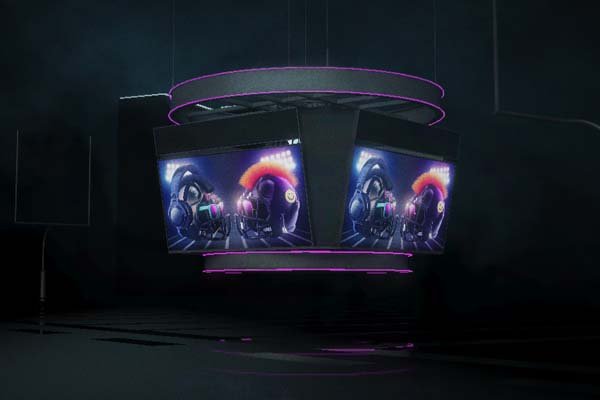
Mythical Games: Let’s put a game on a chain, but people could fund it and then they could sell it, they could divest their funding and it would all pay out.
When I moved to America in Seattle, I was going to be a kept man, take it easy, and kick back. John, who I’ve known for years, worked together at Activision. That’s how we met each other. We both ran different studios. He called me up and was like, “I’m going to start a new studio. Have you heard of blockchain?” I was like, “Funny enough, I have.” At the time if you paid attention, CryptoKitties was a thing.
He’s like, “There’s this thing. This would be cool.” He threw this whole concept at me of using it for player ownership. We hadn’t drilled into that before. I was like, “It’s interesting.” We were noodling around on it. The idea of player ownership and using that technology to give you this digital history sparked an interest in me again. It was something I thought was cool. My retirement lasted about 6 or 7 weeks.
Let’s face it. Twizzlers, Cherry Coke, and even Diet Cherry Coke get old eventually.
We don’t have kids. I was also like, “I’m going to be a stay-at-home dad.” That would have been the hardest job on the entire planet. That’s how it all began. John, I, and Rudy started to needle around with those concepts of how these things change players’ own assets that they’re either grinding out or paying for. That’s what became interesting. That was the spark that birthed Mythical.
It’s such a cool story. Talk about applicable experience. You’re the ideal person to co-found a gaming company with. For the people that aren’t as familiar as we are with Mythical, give them the background. Give us an understanding of what the platform is and what you view as its place in gaming.
Mythical started with John, me, and Rudy, and then we grew quite well so quickly. We brought another team in with Chris, Cam Thacker, and stuff. We were a very small team. We were trying to move quickly and using a little bit of the concept of how we build games a little bit different but we also believe in the need for this as a tech. It’s interesting tech. It changes the way you think about games. No one in video games realizes they don’t own anything that they have spent the money on or grinded their time through. It’s complicated.
When I got into video games, you made your engine. That’s insane. No one would do that. Everything we use is a tool, which makes a ton of sense. Our idea was, “Let’s build a product.” That’s where Blankos started but that’s also turning everything we’re doing into a tool so developers can plug it into whatever they’re using, whether it’s Unity, Unreal, or even if they are using their engine. Plug it in and build these economies. Everything can come off the back of it.
Your marketplace can be attached to it. It’s taking away all of that hard grind but we spent a lot of time with patents and looking at the legality of things with taxation. We have done a lot of work across the board. That was our thesis, “Let’s build a tool that makes something that appears quite complicated and make it easy for developers to ingest into their product and demystify it a little bit for them.” At the same, time we want to build products. John, I, Rudy, all of us, and all the people we have added to the team since came from games.
We all come from big products like Zynga, EA, and all that stuff. Everyone has got their hands dirty and has been a developer in some way, shape, or form. We wanted to build games and prove the theories that we believed in, which was to still build great games. You have to have a cool game. John was saying all that, “Putting blockchain in your games isn’t going to make your game good. You’ve still got to have a good game at the beginning.” We’re coming at it from trying to make great games but leaning into the idea of collection and ownership.
I don’t want to guess how old you are but when I started getting games, it was not like you had multiple skins for things. It’s not like we could all turn up in different ways. Online didn’t even exist when I first started playing games but now, it’s different. We all have different personas. We all show up to play multiplayer games in different ways. We all like to show off what we have done. We all want to look different as we do in real life. That was where Blankos came from. It was showing people what ownership could mean.
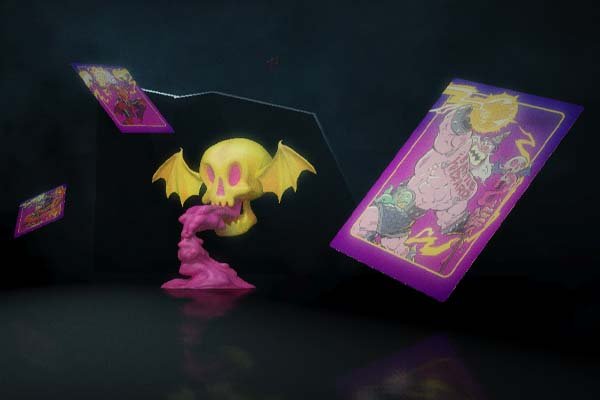
The other thing we wanted to do as well was bring creators in. We felt that blockchain allowed creators to come into the game world. How do you change the way games are made by allowing all of these creators in? Blankos was inspired by vinyl toys. The way we build it was so those creators and artists could come in and paint a Blanko in a different way. If you follow Blankos, you will see how diverse and different everything looks given it’s the same base model. We wanted to show how that could work as well and also show how brands could start to participate in games in an interesting way.
I have to point out also that in blockchain gaming, there isn’t a rich history of gaming experts that populate the space by and large. There are a handful of companies that are doing it. The difference is stark between folks that have spent that time in gaming and understand the ins and outs and the limitations of gaming in the traditional sense versus on the blockchain. The opportunities for ownership are not. If you dig a little deeper in the space for anyone reading, go on YouTube, watch demos, and understand what’s out there. You will see the difference. It’s evident. We appreciate those insights from someone with such a rich experience in gaming and the whole team. It’s an amazing team that you put together.
It’s a killer team. It’s a good pedigree from the top down all the way through. People care about games. That has been one of our mantras, “Games first.” We’ve got to put a game out that’s fun to play.
Let’s talk about that a little bit because you’ve amassed more than a million users in a relatively short amount of time. Certainly, in the blockchain space from tracking dApp reports on activity, that’s extremely significant even relative to some of the commonly talked about games in the space and some of the early pioneers. First, how did you do that? What’s the secret sauce? Personally, I wouldn’t mind a million readers for the show either but beyond that, talk to us more about the game, the mechanics, and how it came to be.
I’m going to probably sound like a broken record but, “Games first,” was always our thing. There are two billion-plus gamers in the world. There are probably less than a million blockchain gamers in the world or people that very much come from the tech. Our goal was always like, “Let’s bring this tech into the gaming world rather than try and force gamers into the blockchain NFT world.”
I’ve spent all my career with those gamers. You know how hard it is to move these people around. You know what makes them tick. That was always our thing, “We should come at it from games first.” We didn’t talk about blockchains to tech with Blankos at the beginning either because it can be intimidating. New technology scares people unless you’re intrinsically into it or you’re native of that technology. People freak out about it.
A good parallel is mobile gaming. Once the iPhone came out, mobile gaming took off in a development world. I was one of them. Someone was like, “There are free games.” I was like, “What are you on about? It’s hard enough to make a successful game anyway. You’re going to give them away for free.” People freaked out. Ten years later, you’re like, “Everything is free.” You’ve got to build your game and economy in a certain way that makes sense.
We started with Blankos. We wanted to build a game that looked and had a broad appeal visually. We wanted zero barriers to entry. That was the other thing. We didn’t want to have to push people down complex wallet setups and things like that. There’s a single account coming in through a Mythical account. The barrier to entry was pretty low. The cost of entry was super low as well.
We dropped some founders packs at the beginning but that was for the Web3 natives who cared about rarity, scarcity, and all that good stuff and got it. We wanted this to be a low-price point entry so you could play Blankos for free right from the beginning. That resonates with gamers. If you say it’s free-to-play, they get it. If you say blockchain, people are a bit like, “You’re killing polar bears.” I’m like, “No.” We thought about how do we talk to the audience at the beginning.
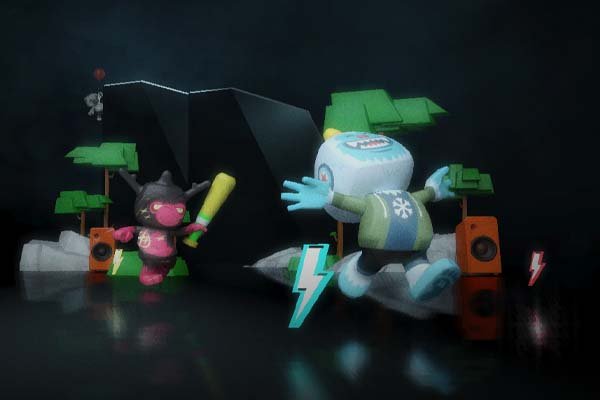
Mythical Games: We spoke to one audience who got it in one way. And then we spoke to that wider gaming audience in a different way.
We weren’t intended to double down on, “This is blockchain,” to the wider audience until the NFT explosion. All of a sudden, questions started to come up. It started to be a bit different. We weren’t trying to be nefarious around it. We spoke to one audience who got it in one way and then we spoke to that wider gaming audience in a different way. We talked about things like ownership. You own this. We were like, “We’ve got to educate two million people who don’t get what we’re trying to change.”
I’m curious. You seem to have a sixth sense for this stuff now. When you look at the demographics of the current audience, how does it compare to what you originally expected? Is it more a Web2, Web3, younger, or older?
It’s pretty broad from an age point of view. That speaks to the look and feel of Blankos. The vinyl toy collection appeals to most people. You could be our age or you could be 15, 16, or even younger. My kid loves all this stuff. Visually, it was brought up all. We still see that. The audience stuck with us. We brought some traditional gamers into this world. They have stuck with us from a community point of view. We’ve got the Web3 natives that have stuck with us as well. We’ve got a decent mix of people. It’s pretty broad. That speaks to the type of game it is.
We’re launching on Epic Games Store soon. It’s a big deal for us and for those of us in this space that care about this type of technology. My ideal world is we stopped saying blockchain gaming at some point. This is gaming. I don’t mean to devalue it. We don’t say 3D gaming anymore. I’m looking forward to getting to that place. That was how we talk about all of our games.
You are in a great position to help bridge that gap between traditional gaming and blockchain gaming and help make that merge happen or come to be. When you think of gaming in general as it relates to the adoption of blockchain, where do you view it? Is this the main driver in how you go about this? Are you thinking about driving mainstream adoption in your day-to-day or as part of your vision?
We think about the two billion gamers all the time. What matters to them? That’s not to say we ignore the Web3 crew because we don’t but we try to bring the tech to the gamers. The easy access point is number one. Gamers churn so quickly if you put too many barriers to get them into something. Making that simple at the moment is a big deal, which is why we have had fiat and crypto as payment methods from almost day one because we were like, “If we have only a crypto payment method, we limit our audience immediately.” We put that in from the beginning.
We’re allowing that stuff to happen and making it a low barrier to entry. We played with lots of different game types as well like the Blankos play-and-own method. If you look at our Party Pass, it’s a pretty traditional party pass-type approach. If you play any free-to-play game at Fortnite or anything else when you’ve got those different tracks, the paid track, and the unpaid track, we are using gaming terminology and gaming methods that most gamers know. It’s not intimidating. It’s familiar. That’s important.
With NFL Rivals even though we’ve got our Rarity League collection, which is the helmets, it sits in that Web3 world pretty firmly. The way that translates into Rivals the game or in a guild and being able to have other gamers and players come into your guild and then having that as a space, there will be traditional or regular guilds and rarity guilds. You can have access to different tournaments. You get access to the rewards. It all makes sense even to a gamer.
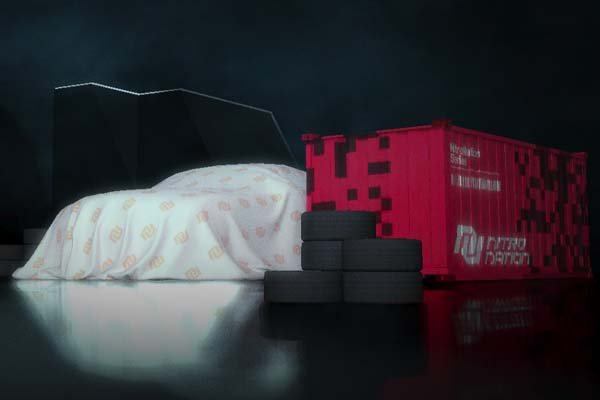
The cool thing about the Rarity League side is you’re getting access to early player drafts, which are NFTs that you can sell. If you know what that means, it’s super important to you but even if you don’t and you get into it, it’s all familiar. If you’re a player that’s into guild-type play, it’s familiar. It’s not scary. You get it. We think about that in a lot of the games. We’re bringing Nitro Nation World Tour. Nitro Nation had the original game. There are 75 million players.
We’re not changing that and shoehorning blockchain into the back of that game. We’re elevating the game with the team. We’re thinking about different stories, settings, creatives, and visuals but blockchain allows interesting ways to own cars and do cool things with those cars or whatever it might be. In each of the games we’re working on, we’re looking at different ways to bring in blockchain so it adds value rather than trying to shoehorn it in.
Bringing the masses in is a big part of it. You’re keeping it simple and easy. You are the easy button for mass adoption.
We hope so. I’m excited. I love all of our games. Getting Blankos out on Epic Games Stores is huge. We’re excited.
Let’s talk about another big partnership. You’ve got something going on with the NFL, Rarity League, which is exciting. Tell us a little bit more about that project and the drop. What’s it like to partner with the NFL? Not too many people can say they have done that.
It’s wild. We have had that relationship going on for a while now. Negotiating this and getting it to places took a hot minute. It’s core because the NFL has got an interesting look at technology with what they have done elsewhere. They’re a brand that is constantly evolving as well, which is super exciting because they’re trying to reach a new audience all the time, which is what we are trying to do with blockchain.
They’re innovative. Not every professional sports league is that innovative.
They’re top of the chain for North America in terms of how they try to think about reaching a new audience. It’s exciting. I fell in love with NFL and the Seahawks years ago. This season is going to suck. I’m not looking forward to this season but whatever. It has been cool. The way we have worked with them is this. We want to build a game that sits higher up the funnel than some other NFL products that appeal to that broader audience or that casual fan. It’s going to bring them in.
Imagine how dangerous that would be.
Have you heard of Fetch.ai, Jamie?
I haven’t.
Thank you.
I’m ready. Let’s go.
You’re officially in the tribe.
I am. I’m in PNW for life now.
It’s a 1967 Mustang with a 427 side oiler in it.
It’s for an audience of one.
Why is that?
You got a little carried away.
I’ll go.
I’m in.
Get a clearance.
See how much trouble you can get yourself into.
I am appreciating the classic British puns.
I’m in Seattle.
I can’t wait to see Josh and Jdizz in Singapore.
Thanks so much. I’ll talk to you soon.
It’s awesome. It will blow your mind.
Thanks for having me.
Thanks, Jamie.