Top Podcasts
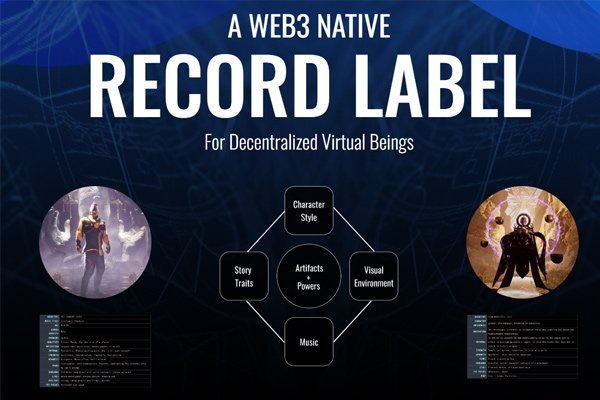
Ian Simon Of Strangeloop Studios, The Web3 Native Record Label For Decentralized Virtual Beings, Plus: Austin 2022 Recap, Decentral & Consensus, And More…
Especially in this day and age, music has transcended beyond our ears. It is now an entire sensory feast! One great aspect that has helped shape this industry is the visual arts. And in this episode, Jeff Kelley, Eathan Janney, and Josh Kriger invite Ian Simon, the CEO and co-founder of Strangeloop Studios. Strangeloop is an LA-based media production company focusing on concert visuals, immersive experiences, music videos, and new narrative forms. Ian speaks with us about how they are providing a new artistic medium, where they put art above ego. He takes us across their journey towards becoming one of the leading creative pioneers of the new digital realm, working with big names such as The Weeknd, Kendrick Lamar, Lizzo, G-Dragon, and more! Putting NFT into the mix, he shares the projects they are currently working on and how they are working as a conduit for bringing the works of visual artists to life.
—
Listen to the podcast here
Ian Simon of Strangeloop Studios, The Web3 Native Record Label For Decentralized Virtual Beings, Plus: Austin 2022 Recap, Decentral & Consensus, And More…
**Stay tuned for this episode and find out how virtual artists are here and how our guest is a conduit for bringing them to life. **
Also, how our guest turned a journey that started with studying the history of jazz into jazzing up the future of the music industry.
**How DCentral and Consensus Austin confirmed our suspicions about what Kevin Smith does off-camera. All this and more in this episode. **
—
**Our sponsored spotlight episode features Ian Simon, Cofounder of Strangeloop Studios, the visual home to The Weeknd, Kendrick Lamar, Flying Lotus, SZA, and many more. Founded as an audio-visual collective in Los Angeles, Strangeloop Studios has become one of the leading creative pioneers of the new digital media realm. They provide design and content for live events in digital media, including producing music video short films and immersive experiences. **
**He has created original content for The Weeknd, Kendrick Lamar, Lil Nas X, Flying Lotus, Mike Nelson, SZA, Lizzo, Pharrell, G-Dragon, Anderson .Paak, EarthGang, and David Gilmore of Pink Floyd. In 2019, Strangeloop launched Spirit Bomb Records, the world’s first visual artist record label, receiving sizable investment from Warner Music Group, Sony Music Entertainment Japan and the Japanese label, Avex Entertainment. Congratulations on all this. Welcome to the show. **
Thanks so much for having me. It’s to be here.
**What a roster of collaborators and creating content, too, for any of those people. That’s something pretty special for such amazing content creators themselves. Let’s talk origin story. How did you have the idea for Strangeloop? How did this whole thing come together? **
I got super lucky in that. When I was in college, I was trying to figure out what I wanted to do and music was a passion of mine. I’m studying jazz and jazz studies out in New York, but I’m from LA originally. A lot of the friends that I grew up with here that I knew in the music scene were starting to get involved with some cool, cutting-edge, new-evolving forms of music, particularly the LA Beat Scene that was out here with artists like Flying Lotus. Low End Theory out. I’m Boyle Heights, with this epicenter of a lot of budding fusion of jazz, electronic music, and hip-hop.
I was going there in college. I got to come home and see the bubbling scene out there. It was super inspiring to me. I met my cofounder to be Dave Wexler. We met through music. I wasn’t involved in visual arts at all, but he was this polymath with whom I connected on a philosophical, musical, and artistic level. We started working together.
He was already doing live visuals. He was both animating and going out on the road with artists, DJing and performing the visuals. When he and I started working together, I played Low End Theory as a musician, which was amazing. It felt like a goal was unlocked. You do that a couple of times over the course of the summer after college, and you realize it’s not exactly a cakewalk to make a living from playing live music or releasing music.
He was on the road with Skrillex at the time, doing visuals for Skrillex in 2012. He came back from one of those tours and was like, “I got you a gig doing visuals on the road with these artists, Zeds Deads, who I’d heard of and love. I was like, “I don’t know how to do live visuals. What are you talking about? You got me a gig.” He was like, “You’ll be fine. You just got to understand the musical element.” He gave me all the content.
It’s like shadow puppetry. Is that what you’re doing?
Honestly, it is almost that easy if you got musical instincts and you’ve got a content creator. You could make these amazing tools. There’s a way to make a few $100 a day on the road for a short period of time. I jumped on the opportunity, and it was all off from there. A lot of people saw those shows and other shows that we were working on with Flying Lotus and with some of the other acts. We started building our roster of VJs and animators, and the rest is history.
Isn’t it something when people enjoy what you’ve created, are consuming something, and are passionate about it? As a creator, isn’t that the best?
It’s what kept me enjoying touring, even though it’s pretty stressful and not necessarily the easiest lifestyle. Especially on the gigs where there’s somewhere you become close with the touring crew, and it hardly feels like work, but a lot of them are stressful, especially when you get into the more high profile gigs and you’re doing these overnights over rehearsal. There are a couple of rehearsal spaces for the bigger stadium or arena tours that we would do out in the middle of nowhere in Pennsylvania. It’s that moment when you see the first concert, and you see everyone freak out at a certain where they are well-coordinated moment. They’re like, “It’s worth it.”
**I studied jazz studies at Rutgers. Where were you? **
I was Uptown in Columbia. I did the performance program for half a semester, and it was a time commitment. The jazz I played in LA was much more free-form and postop. I got all these lead sheets put in front of me at Columbia, and I was like, “I’m not your guy.” I technically don’t have the chops. I switched more to like jazz studies, which ended up giving me more time to explore the actual music team in New York.
**We’re all like uber impressed. We’ve booked NFT LA, and we’re getting into booking people for things. With this roster of names that you pulled together, does this have something to do with your roots in the New York scene? How do you pull these people together? What happened? What’s it been like? **
It’s funny when you read it all out like that too. One of the reasons why there is a volume of names is because there’s high turnover in these relationships. It can be stressful from a business point of view because you’re not some creative agencies where you’ve got a client like Google who will re-up your contract for a year or two at a time as long as you’re providing. They need the same services.
When you’re a visual artist working with musicians, you’re uniting for this moment in time. You’re realizing their musical aesthetic in the visual space. We’ve had some relationships that have lasted for years. I’m still doing shows with Zeds Dead and I did my first gig with them in 2012, but that’s the exception, not the rule to have a relationship that long.
With Lizzo, I was super stoked about the work we did with her. It was probably a year of working with her over the course of different shows that we did with festivals or award shows. It’s the same with Pharrell. You get to parachute into these artists at a certain point in their career and have the chemistry. Often, you have a great experience, but they’re onto their next album cycle. While we do a diversity of aesthetics, there is a certain Strangeloop look, and no part of you takes it personally when they don’t call you the next time. You’re like, “It makes sense.” It’s like you’ve got this artistic union.
**I recall a show we did with Claude VonStroke of Dirtybird Records. They have an artist and residence program they do each year for a year. It could be a little bit less time than that, but for each series of campouts, records, and stuff, they work with an artist for a year. It’s a fun residence program. It puts some parameters on that nebulous process that you described. **
It could be a great opportunity for an artist to get exposure. If you’re brought into this somewhat stress, got some rails on the relationship. One of the most stressful things is not knowing what the scope is or is going to turn into. We’ve been lucky to have fruitful relationships. I ended up on the road with Kendrick from 2013 to 2019. The Weeknd, we designed the tours from 2015 all the way to a TikTok virtual concert he did over the pandemic. There’s room for both. Sometimes you have this great ships passing in the night of great chemistry at the moment. Sometimes you are able to build other bodywork.
**Fundamentally, it does sound like it’s always an open relationship. **
You should be because otherwise, you end up in this competitive mindset with other artists where it never feels like the way it should be. If you’re excited about another visual artist out there, there’s only more as the tools become democratized and it’s easier to learn through the animation. You’re setting yourself up for failure if you consider it a zero-sum game. You have to have some sense that there’s enough work for everybody, and you want to be excited about collaborations.
It’s always more fun to collaborate with people from a place of abundance versus scarcity. That’s how we like to do things. In 2019, you started Spirit Bomb Records. It’s the first virtual artist record label, and it’s special. What was unique about Spirit Bomb, and how’s it going since then? It’s been a while.
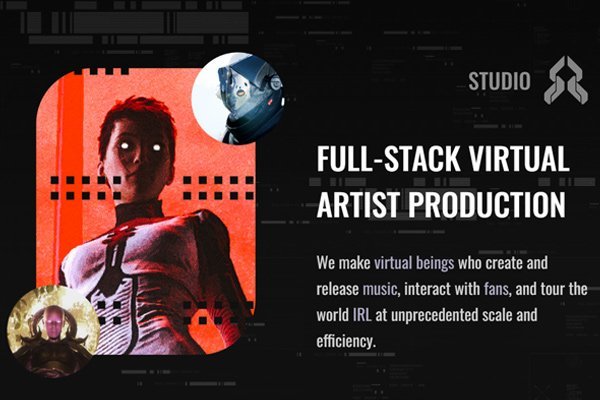
Strangeloop: When you’re a visual artist working with musicians, you’re kind of uniting for this moment in time where you realize their musical aesthetic and the visual space.
It’s crazy to think that it started in 2019 because that was before we had so much of the terminology around Web3. That has helped us, like I need a business model around it. Back to its origins, as much as we did love that fluid relationship that we have with the artists that I was describing, one thing that excited us about Spirit Bomb was the idea of building a structure. We could work with these artists from the ground up musical artists on co-creating IP rather than the system that we traditionally operated in, which is they finish an album. They come to us, and they’ve got this body of work. They would be like, “Help us bring this into visual but the live space and the visual space.”
We would often do the same thing. We’d finish a body of visual work, and we’d go and hire a composer to score it. We usually had quite a bit built out before that would happen. One of the systems that come along with that is that things often work for higher people. We’re getting cash and no ownership in the concert revenue or what we’re building. It doesn’t matter if they tore it for 5 years or 5 weeks. Our fee is the same, which makes it hard to scale your business if you’re parachuting these projects one after another.
Similarly, when we worked with musicians, we wanted to find a way to get them true ownership of the projects we were creating together. The idea of Spirit Bomb started as sketches of characters in notebooks and being inspired by projects like Hatsune Miku that we’d seen in Japan. Also, we’d seen Lil Miquela at that point and seen a digital being presenting as another human on social media.
The big light bulb moment for Dave and me was this idea that when you’re on Instagram, there’s a digital flattening that happens. We’re all given the same square to present ourselves. It doesn’t matter if you’re fictional IP or a real person. You can create a semblance of autonomy in a semblance of reality regardless of where the content’s coming from.
Those were the impetus behind creating Spirit Bomb. It was like, “Can we start creating from the ground up with other creatives rather than one of us doing the bulk of the work first? Can we create a system of co-creation and co-ownership? Can we seed it online in a way where maybe these characters feel like they’re alive?”
**That brings up a number of different interesting things in the background. We love talking about the creative side of it and the idea becoming a reality, but there is a lot in between you have to think about, and IP is one of those things, intellectual property. What does it mean in the digital space? How does it work? What does it mean in virtual reality versus augmented reality and extended reality? Where’s all that headed? How do you guys deal with this part of the business? **
It was something that we groveled with from the outset. Part of the reason why we raised money was so that we would have optionality as to how we approached that. First of all, started Spirit Bomb was picking away in between our existing gigs, which made it hard to have a regular cadence of posting or creating content. It’s time for The Weeknd to go on tour. Everybody’s off working on Spirit Bomb and on working on The Weeknd gig. It was hard to build up momentum.
Part of the reason why rather than finance a particular character with a Warner or more film-style financing, we went through a slightly more venture route was to create the infrastructure that would allow us to build the IP ourselves and figure out who the best partners would be. From the outset, we wanted our IP partners to be artists and start with the people who are breathing life into the project.
There’s plenty of room for other people who are providing things like distribution, capital, or infrastructure to grow the artist and also to have a piece of the IP. A lot of the conventional funding systems start with the latter. If we’re helping you get this off the ground, we’re going to take a big chunk or all of the IP of these characters. We wanted to fundraise against the system of IP creation rather than fundraise for the individual pieces of IP.
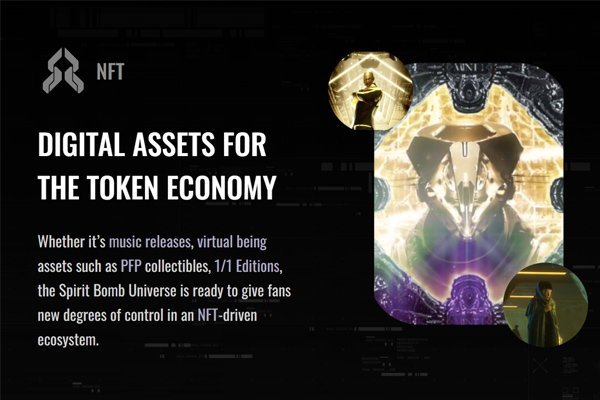
That’s the beginning of it. We can get into where it went from there because that’s where Web3 came into. We were beating our heads against the wall with some of these questions in Web2, particularly having flexibility with the fractionalization of ownership. We were at a loss, moving ahead with only the IP ourselves and cutting in artists on the derivative revenue streams of the characters. Web3 opened up the ability to give us a somewhat more substantial stake in the IP itself and the people who were helping bring it to life.
**We’ve seen that and it’s going to happen over and over again where people have a problem that they didn’t have a solution for, and they go, “Oh my gosh.” Ticketing is another one. That’s huge, and people are still working on perfecting it. The ticketing model at Web3 makes much more sense than the one in Web2. Those are the places where the naysayers on blockchain and Web3 don’t see the reality of how the problems are magically solved as long as you implement them. **
They’re often not the sexiest. Some of my favorite Web3 applications are not the ones that are going to be the biggest headlines to the widest amount of people, but they’re the use cases that are based on anachronistic and outdated models. The back end of the entire music recorded music industry is a perfect example.
I think some smart contracts have such wide applications because we’re still holding on to many of these systems that were set up for physical distribution, like apparatus that hasn’t been the way that people consume music for decades. It’s been co-opted by different massive power centers. That’s not the sexiest headline about royalty distribution and people being able to collect more quickly instead of on a quarterly basis. That sounds revolutionary to me. That’s someone who’s not even that deep in the recorded side of music.
**You guys are being creative with what’s going on, and you’re doing some things that offer solutions to live artists who might be uncertain about what to do with a recorded track. You got some creative things going on there. Can you tell us how that’s evolving? **
One of the first things that made us realize that artists would be interested in collaborating with us was when we started designing the characters in our studio. We would always show artists who came through what we were working on in our spare time. One thing we would hear from like Justin Boreta from the Glitch mob, who was one of the first people who came through and was like, “I’m working on this body of work that wouldn’t fit under Glitch Mob and under a Superposition,” which is his other side project. He was still like, “I would love for there to be a home for this music.” We heard it from a lot of artists.
They had different reasons why I was attracted to them. Some of them were about protecting the brand of their original project and feeling like they didn’t want to cross-pollinate it. Absent using their current platform and starting a new project from scratch is daunting, especially with the content and demands on artists to launch a new project.
We realize that one of the value propositions of a virtual artist is we’re creating the content. We’re the face of the music. If you’re cool with that, or if that’s exciting to you, it can be a heat shield for experimentation. As people who love jazz and the beat scene, we want all your experimental shit. Give that to us. We’ll pair it with some tricky crazy visuals and try to launch it.
That also made us realize that it’s attractive to up-and-coming artists who maybe aren’t great at content creation. You’ve got Doja Cat and Lil Nas X, who were perfectly primed for this music ecosystem because they’re great at music and they’re great at the internet. That’s not everybody. How much music isn’t getting out into the world because the person behind it is too intimidated or doesn’t give a shit about Instagram?
**You’re saying a well-established artist with something that’s maybe not in the same genre that everybody knows for, and they’re like, “I don’t want to release it.” They don’t realize that fans of that artist want to hear everything that comes out of them creatively, whatever it is. Finding a way to is amazing. **
I feel like the squeaky wheel sometimes gets greased too. You’ve got that small subset of fans that are upset about like, “This wasn’t like your last album.” Artists are over-indexed towards being sensitive folks. In their comments being like, “What the fuck is this? It doesn’t sound like your last album.” That’s going to impact how you feel about putting out your next record.
I would love to hear Doja Cat pick up a guitar and cover Rivers Cuomo or some shit like that. They’ll be like, “That’s amazing.” Doja Cat is an amazing and great artist. This is an amazing person.
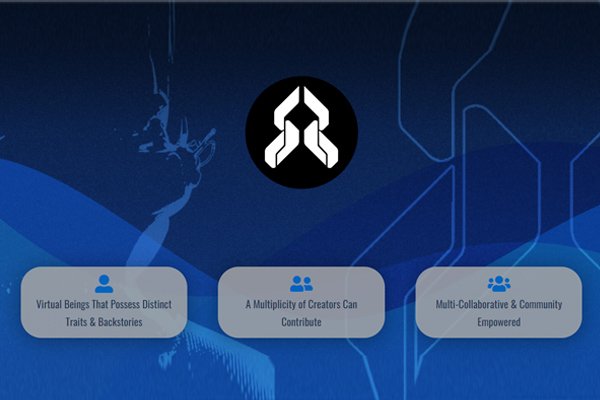
**You guys made a big announcement that Spirit Bomb is going to be minting its most popular virtual being LV4. I had to do a little research on LV4. I found a description for our readers at home to set some context for the question. LV4 wasn’t born as a cyborg. He was born as a human and spent his childhood wandering the streets, crafting inventions from scrap peeps. One thing led to another, and now he is a cyborg. Tell us a little bit more about your plans with LV4 as NFT and how it allows holders to have a stake in the creative direction of this artist/hip-hop DJ/cyborg work. **
LV4 is our first artist that found a fan base, or if you want to go by the more tech pipeline verbiage, he found some product-market fit out there because we did have a testing pipeline to figure out what virtual artists resonated with people. It was this weird combination of wanting to trust our artistic instincts and making sure that the idea for these virtual artists that I alluded to is that we want them to be a platform for people to put music out through.
**It sounds good. Let’s do it. **
We’d love to help.
He better not trash the hotel room.
—
—
Let’s go.
Deck of Pokémon cards.
**Any other questions, Grand Inquisitor Ethan? **
Do you eat that chicken?
I ate half of it. Half of it, I’ll eat later.
I’ll throw it to Ethan. He does have the bonus.
One of mine is Skylark.
**They installed those for us, Jeff. **
Important Links
-
Claude VonStroke – Past episode
-
TikTok – LV4
-
Tatiana DeMaria – Past Episode
-
@SpiritBomb_ai – Twitter
-
@_Blount1 – Twitter
-
@_Blount – Instagram