Top Podcasts
Gökberk Kızıltan Of Snapmuse.io — A Community-First Web3 Platform For Content Creators And Fans, Plus: Bruce Lee Enters Web3
The quest to give content creators more control over the product of their labor is not a unique thing to Web3. It has been a problem that has been tackled in so many forms in Web2. But Snapmuse takes a step further by finding a way to reward both creators and their fans to benefit from the value that they create together. Joining the podcast to explain how this works is Gökberk Kızıltan, the Community Manager at Snapmuse.io, that is revolutionizing the social media experience of millions through blockchain technology. Join in and find out how they came up with the concept for Snapmuse, how they onboard new users, how they’re expanding to new markets, and what they envision for the product in the future. Plus, learn about their new native token called SMX and some of the most interesting collabs going on right now in the Web3 space. Spoiler alert: one of them features Bruce Lee! Tune in and learn more about it.
Listen to the podcast here
Gökberk Kızıltan Of Snapmuse.io — A Community-First Web3 Platform For Content Creators And Fans, Plus: Bruce Lee Enters Web3
This is Gökberk Kızıltan of Snapmuse.io, the platform that is revolutionizing the social media experience of millions through blockchain technology. I’m here on the Edge of NFT, the show that delivers everything revolutionary in Web3.
—
NFT-curious readers, stay tuned for this episode to learn about Snapmuse.io, a Web3 project that allows creators and fans to benefit directly from the value they create together, what popular restaurant chain serves sandwiches that taste like freedom, and finally, what are the latest Web3 collabs in the works for iconic IP brands like Bruce Lee and Adidas. All this and more on this episode. Enjoy.
—
In this episode, we feature Gökberk Kızıltan, the Head of Communications at Snapmuse.io, a platform revolutionizing digital socialization. He’s a political scientist and international relations specialist. He began his career at GRF, an international think tank before working at a consultancy firm focused on geostrategy, geoeconomy, and geotechnology. In 2019, driven by his passion for innovation and cutting-edge tech, he founded an NFT consulting and artist management company and has since been fully immersed in the Web3 space.
Gökberk also creates videos for his YouTube channel in his free time. Leveraging extensive expertise in music and content, Snapmuse.io is a groundbreaking community-driven Web3 platform that connects YouTube content creators with their fans. The platform empowers content creators to grow their channels while offering fans an opportunity to engage beyond merely consuming content. For the purposes of the show, we will be calling you Gök because you have an interesting pronunciation. You could say your name upfront so people can get the true spirit of it.
The true spirit of it is Gökberk Kızıltan for the record.
Thank you very much. We were given a lot of alternatives. It means sky in English. Is that correct?
Gök means sky in English.
That’s beautiful. That’s cool.
It’s always great to have someone on the show that is drinking their Kool-Aid. You are doing some creating of content like us. It’s a special type of person that likes to create content for the world. We immediately have that bond going on. As we are looking at blockchain technology and how to use it to make things easier for content creators, which is a shared passion of ours, it’s always nice to have experience on both sides of the process and learn from doing as opposed to learning from what other people do.
Tell us how Snapmuse came into being. Where did this idea come from and get started?
I love to tell the background story. It all starts with a company called SMG Müzik. That company is the biggest music licensing company for retail businesses in Turkey. In Turkey here, when you go to your local supermarket to buy some groceries, for instance, and when you hear music, it’s more than likely licensed by us, or if you go to a restaurant. That’s a ten-year-old business. Eventually, right before the pandemic, we started building on our expertise and experience in music and licensing. We created a royalty-free music business for creators. This is when we have started to work with creators across the board from YouTube, TikTok, Instagram, or whatever platform.
As you can see, I’m sitting at a music studio because we produce our music in-house. That royalty-free music business is called Snapmuse.com. We accumulated a lot of experience. We got to learn the problems creators face. We got to learn the issues with different platforms, the shortcomings, and also the problems that the fans have. The a-ha moment comes when we realized that we could solve most of these issues using this new technology called Web3. That’s how Snapmuse.io was created.
As someone who’s a musician myself, I’m familiar with the music licensing world. I need to go back. I have a bunch of music that I need to put into the system. I probably got more distracted than I should have because my royalty streams didn’t come in until a couple of years after I submitted my first music. All of a sudden, I’m getting a check for $50 here and there. Something was on Amazing Wedding Cakes on the Discovery Channel or something. Music licensing is a very fascinating world.
We like to do things a tad bit differently. We create our music in-house. We don’t buy music but it is a fascinating world for sure.
It’s one ripe for disruption. We talked about it a lot at Outer Edge LA, and the conversation continues in New York where I am now for NFT.NYC. I was at a big music event at a recording studio where this was the theme, “What can we do here to help empower creators?” You are stating that you are the first project that enables creators to grow, relying solely on fans and empowering fans to do more than watch. That’s a pretty bold proclamation, which is cool. We got to be bold in this world. I would love to understand where that statement comes from and how the platform works to achieve this goal.
Let me go back to my previous point and pick it up from there. When I told you that we have got to learn the main issues that the creators face, one of the core problems that were out there is that creators need growth. For growth, you need funding and engagement. The funding part is a big thing because as a social media creator, you can’t go to your local bank and say, “I make videos for YouTube. Please give me a loan.” That doesn’t work. You do have some alternatives. You could consider selling your content, which is not great. We are in the business of empowering creators. We have been doing this for a while, and that doesn’t sit well with us. We think that creation and creators shouldn’t be separated. That’s not okay for us.
Snapmuse: Creators need growth and for growth, you need funding and engagement.
Another option is you could create extra content or what we call exclusive content. There’s a whole business on it. We are not super happy with that either because based on our experiences with creators and my personal experience if you are creating content, especially as a full-time creator, you have to keep up with at least three platforms. You have your YouTube, TikTok, and Instagram. You have to be everywhere all at once and create a constant stream of content. When someone asks you to put exclusive content on top of this, it pushes you to the edge of burnout. That’s not okay for us either. What we want to do is to give the tools to creators.
Keep Edge of Burnout in mind as another show name, Josh.
What we want to do is to give the tools to creators to almost tokenize access to them. We want them to create what we call creator passes, which are NFTs, and offer those to their fans. By collecting these, the fans give the creator the funds to invest in their channel. That’s step one. With this, the creator will do whatever they want, start a new channel, take a trip around the world, or vlog their way through. That’s up to you. That’s your money. The fans get to access their favorite creators on an exclusive Discord channel for three months.
There’s a beginning and an end to this. It’s not an endless NFT contract. We added an honorable exit, which is very valuable after spending a few years in the crypto and NFT spaces. That’s that. We want to give the fans access and the ability to contact their favorite creators. The fans also get rewards based on their engagement levels. We create a reward pool. That’s a percentage of the primary sale. We want to incentivize the fans to engage more and reward the fans who engage more. This is the part of Web3 mix. We want to reward people for the time and attention they give the creator.
That makes a lot of sense. As a creator knowing a lot of creators in the space, everyone is looking for that more direct relationship with their fans and that ability to incentivize folks on both sides.
We don’t want to give the creator the burden of extra content. We want them to show up once a week on Discord to chat with their core fans. There’s a sense of togetherness that we are creating because these are the fans who spend money to buy your creator passes. These are people giving you a lot of their time and attention to you. You are becoming one of the first people who are giving something back in return for their engagement and time. The creators get funded without intermediaries. I like that idea.
Me too. Can you tell us a little bit more about how you are building this Web3-style sense of partnership between what would traditionally be Web2 creators and their fans?
I touched upon that a little bit. In my mind, Web3 stands first for removing intermediaries and second for getting something in return for the time you put online. These are to me two big staples of Web3. For the creator side, we remove the intermediaries to get access to funding. We also remove the intermediaries to get in touch with your favorite creators. On the fan side, we give you a way and enable you to get something in return for the time and attention you put into your favorite creator.
It sounds great on paper. I’m curious how it works in reality to onboard new users. That’s what we all want to do here. We want to showcase this amazing technology that’s available. We want to empower creators. There’s still a gap between traditional music content creation enthusiasts and Web3 that exists. How is Snapmuse going to onboard new users and unleash this potential? What are the obstacles you see along the way that you are going to navigate around?
This is a perfect date to be asking this. Before I get to this, I will clarify one thing. We are focused on social media creators, not on music creators. It’s going to be your YouTubers, Instagram creators, and TikTok creators. These are our target audience.
Thanks for that. I get impressed by your music background but that’s only one niche of creators, and you are trying to support all different types of creators.
We will get to this but we will be expanding to music creators too. This is part of our roadmap but we are starting with social media. The onboarding part is something that we have been spending a lot of time and energy on. This has been the topic at the office. The big issue with onboarding new people to Web3 is mostly technical. You have to go over technical hurdles. You have to get a MetaMask. You have to learn how to navigate all these centralized exchanges and buy crypto.
It’s very complicated. We have seen it. I have been in the space for a while. I know my way around. It seems easy to me but we have done some product tests. As I saw people struggle, I remembered myself a few years back trying to understand the basics of this technology. We have been focusing on making that crossover as easy as possible. On Snapmuse.io, as we launch, you will be able to log in using your Gmail account or any email account. We will automatically give you a non-custodial wallet. There won’t be any requirements to have a MetaMask wallet. That’s Big Hurdle number one.
Big Hurdle number two is if you want to buy anything in crypto, you need crypto. What we have established is a one-click checkout of NFTs using credit cards. Looking at our website, you could tell that at face value, it looks very much like a Web2 website whereas we use Web3 infrastructure. This has been the talk in any Web3 space if you go back a year or so.
It’s that the newcomers to Web3 won’t necessarily know that they will be using Web3. They will be using it as an underlying technology, and they will have an easy UX. The team here has a vast background in Web2. They are now becoming very native in Web3 as well. We are doing a good job. I can say clearly and happily that we are doing a good job using the Web3 infrastructure and providing the easiest UX. That’s what’s going to help us onboard a lot of people.
I created an account. It took me one minute. I was impressed with that, “There’s a wallet address right there under my username. Did I connect my wallet? What’s this?” I like that there are some aspects of people wanting to completely put it behind the scenes, so there’s nothing there but sometimes you have a username or number anyways. It’s cool to have that as a nod. The people that are Web3-familiar get it. I also like the fact that there’s a quick email check-in process and stuff like that to get things going. That’s interesting stuff. You have a launch coming up here. You have got a Spanish-speaking LatAm geographical expansion on your agenda. We are talking about also going to Africa and India. What can we expect to see going out of these initiatives?
Maybe you could elaborate on the question a little bit. What do you mean by going out?
Meaning as we get into these different areas of the globe, is it content that’s focused on how you are going to onboard some Latin American-specific creators? Is it more directing it toward an audience? Are there any partnerships specifically around that?
We are preparing for our launch, and that’s a very exciting time for us. Maybe you can tell by the way I talk that I’m a bit sleep deprived. We have been sleeping little hours at the time but these are exciting times for the entire team. I’m happy.
You fell asleep for the past five minutes. You just woke back up but we are rolling with it.
We are starting with Latin America and Spanish-speaking Latin America, in particular Mexico. This comes with the burden of localizing the language of the website and all the processes, flows, and communication. As we expand to new geographies, we will reiterate that over and over again. We want to be localized. We want to talk the language the people talk.
We want to be able to communicate with them. We have built our team in Mexico. We have started slowly building our team in Brazil as well. We want to create the proof of concept there. As soon as we get that, we will expand to other areas. Each time, we want to have a local team. All the creators that we are going to be dropping are from Latin America, Mexico, and Colombia.
I spent some time living in Peru. I have a lot of families from Mexico and various Latin American connections.
I have been to Mexico a couple of times but I have yet to see Peru.
We have got a great team member with our partner, Howl Labs, who’s located in Columbia. His name is Daniel Forero. He has been doing our Twitter Spaces as well. He has been doing a great job at that. It’s great to be connected there.
I am curious about how you choose your launching areas. There’s a creator boom globally. There are different maturations of the creator market in different geographies and different considerations around that. It sounds like you thought pretty methodically, given your background in terms of where you might launch a project like this. I’m curious if you could comment on that.
There are a few metrics that we looked at when drawing our roadmap and deciding how to go about that. First and foremost, we need social media usage. This is criteria number one. In Latin America, it’s quite powerful compared to, for instance, Turkey. Turkey is trailing Mexico, for instance, in terms of the maturity of YouTube content creators and the market. That was criteria number one. Number two, crypto adoption and the ability to use crypto are of the essence. That’s another thing that we look into. Three is the youth of the population. For a product like ours to be able to thrive, we need a young population.
You are launching a native token soon called SMX. I would love to understand how that’s going to look and what some of the utility elements of the token are.
We are doing things a little bit differently than your regular crypto project. This is something that we considered as a team. We decided not to launch the token before the project. I told you the team has some deep roots in Web2. We decided that it would be better to create the proof of concept and then launch the native utility token on top of that.
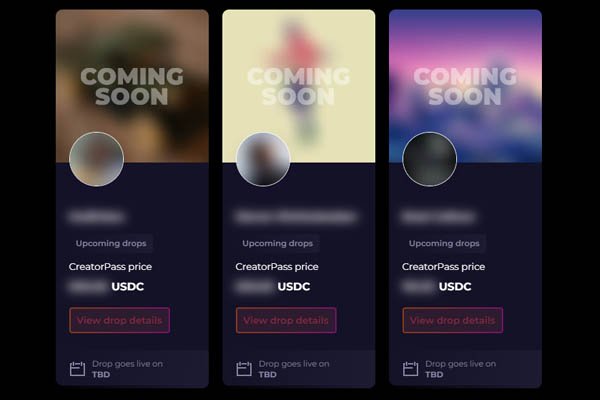
Snapmuse: We decided that it would be better to create the proof of concept and then launch the native utility token on top of that.
Not that you asked my opinion but that’s the prudent way to go. When you look at both the regulatory environment and the need to create more trust and credibility in this ecosystem, it’s, unfortunately, a novel idea when you look back historically at crypto projects but looking forward, let’s give people value and then use these token economies to amplify that value.
It never sat well with us to sell a speculative idea anyways. That’s how we decided how we end up going. We are planning to launch SMX three months after our first creator drop. That will give us enough time to drop a few more creators and show that the product is working. From there, our long-term vision for SMX is for it to become the standard bearer of the creator economy in Web3.
There will be utilities. You will be able to buy your creator passes using SMX on our website. That’s one thing but we also want to do the reward distributions using SMX. This will enable us to distribute the rewards. In the long term, once we have 10, 20, 100, or 500 creators in the system, we want to bring the brands into the picture too. Ideally, what we want to do is to have the brand add input in the creator ecosystem to trickle down all the way to fans. We are hoping that SMX will help us underpin that.
How do you keep that token economy stable and the right level of viscosity before you have the advertising component? Fundamentally, the ability to buy the creator passes is going to surge at the beginning and then slow down. There are reasons for people to convert these tokens to dollars and extract them. What are the reasons for them to hold these tokens long-term? What are the staking mechanisms? How are you thinking about creating a token economy that has a high level of utility on both the supply and demand side?
Let me touch on a few points. Honestly, for the initial phase at least, I do not expect the demand for creator passes to dwindle. We are hoping, planning, and working toward increasing that. That’s number one. Eventually, after the first drop, we are planning to onboard more creators. There is the growth phase. Somewhere in that growth phase, we will be bringing the brands into the picture. That’s number one. The rewards mechanism is one of the main utilities of the SMX token whereas 20% of each drop is allocated as a community reward pool. That will be distributed to the community through various community activities.
For instance, you will watch a video from the creator, and there will be a code in there. You will input that and earn some rewards, for instance. Those rewards will be distributed in SMX. The good thing about that is that SMX will be backed in USD because we are not distributing a speculative coin. At least there’s a claim mechanism to be precise. The fan is gaining $100 through that community activity. They will be able to claim $100 worth of SMX. This is what we mean when we say we are bringing rewards based on real value. We are not expecting that much, hopefully, of a fluctuation. We are hoping that it’s going to be more or less stable.
He crushed it. I’m telling you.
That is also great for a house party.
For lunch and dinner.
Go to the gym.
Do you have that T-shirt?
I don’t but I have seen it somewhere I’m sure.
Collabs are the name of the game. Click To Tweet
I’m happy to look out for the community.
Important Links
-
@KingOfMidtown - Linktree
-
Bruce Lee Enters Web3, Starting With Open Edition NFT From Pplpleasr
-
Pplpleasr - Previous episode
-
Adidas Releases Chapter 1 of Its ALTS Dynamic NFT Collection
-
GMoney - Previous episode
-
Companies Behind Azuki NFTs and Line Friends Characters Join Forces for Web3 Expansion
-
Yat Siu - Previous episode
-
Discord - Snapmuse
-
@SnapmuseIO - Twitter
-
Spotify - Edge of NFT
-
iTunes - Edge of NFT