Top Podcasts
Garrett Minks Of RAIR: "Not All NFTs Are Created Equal" Plus: BohoBones Music License NFTs, RECUR Series A, Epic Hero Battles Game Steals Art, And More...
NFTs are set to revolutionize streaming content, and RAIR is there at the forefront of this revolution. Designed to solve the thorny issue of digital ownership, RAIR and CTO Garrett Minks are focused on true authenticity, exclusivity, and durability of digital assets. In today’s episode, Jeff Kelley, Eathan Janney, Josh Kriger talk to Garrett about RAIR and its mission to deliver one of the best and well-considered approaches to ownership in the NFT space. We also hear from Allen Crosby of BohoBones as he drops by to talk about music and licensing rights for creators and owners of NFTs within Boho’s groundbreaking project. Tune in and get more cutting-edge NFT news in this episode.
—
Listen to the podcast here
Garrett Minks Of RAIR: “Not All NFTs Are Created Equal” Plus: BohoBones Music License NFTs, RECUR Series A, Epic Hero Battles Game Steals Art, And More…
Hang out for this episode to learn why all NFTs are not created equal.
Also, how snow cones helped to inspire RAIR digital rights management.
As well as, how Boho Bones is revolutionizing music rights so deeply that fans have Boho not just rattling in their bones but also inked onto their skin. All this and more on this episode. Enjoy.
—
This episode features guest Garrett Minks. He’s the CTO of RAIR.tech, a blockchain-based digital rights management platform that uses NFTs to gain access to streaming content. Garrett has deep expertise in distributed ledger technologies and their unique token economic incentive frameworks. He is an early adopter of blockchain innovations, digital collectibles and DLT based media platforms.
After writing his first book on distributed technologies, he realized no viable publishing platform using next wave distributed technologies existed where content could be sold and resold via immutable ledger tokens. Instead of using FANG platforms and giving the majority of proceeds to predatory intermediaries, RAIR.tech was born. Garrett, welcome to Edge of NFT.
Thanks so much for having me.
It’s a pleasure.
It’s great having you here.
Let’s jump right in. I want to ask you a question. For the readers who are unfamiliar, tell us what RAIR is and what problems are you solving? Let’s go a little bit deeper.
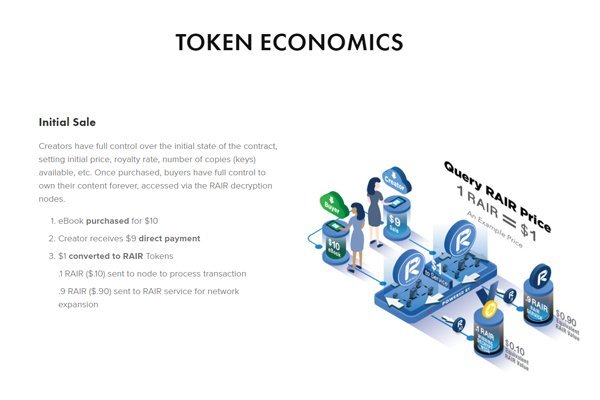
Many of your viewers are aware of what these non-fungible tokens do, these awesome and unique serial numbers that allow you to make almost anything work like Bitcoin, which is awesome. To be able to say, “I own this magic apple and I can send it to you and now you own it and now I don’t.” Now the whole world agrees on that. Taking it much further than a nebulous token in the sky but applying it to all sorts of interesting things, arts, collectibles, eventually real estate and all sorts of other crazy use cases. Once I found out about them from CryptoKitties way back in the day, I immediately got obsessed and then have been tinkering with how to make them more useful ever since.
It seems like we’re scratching the surface on what NFTs can do. You mentioned a few different applications but it’s like bananas. It’s much more than collectibles. Could you tell us a little bit about the technology behind an NFT unlockable content? Why should we care about encrypted streaming versus unencrypted downloads?
The amazing breakthrough with NFTs is this authentication mechanism. You can prove that you own a thing and then you can use that to ideally do stuff. This NFT 1.0 is like, “Look at this image. Look how pretty it is. I own it and nobody else does, even though everybody can view it.” Where I see the space moving is here’s your authentication credential and we’re using this giant global supercomputer to verify that I own a thing.
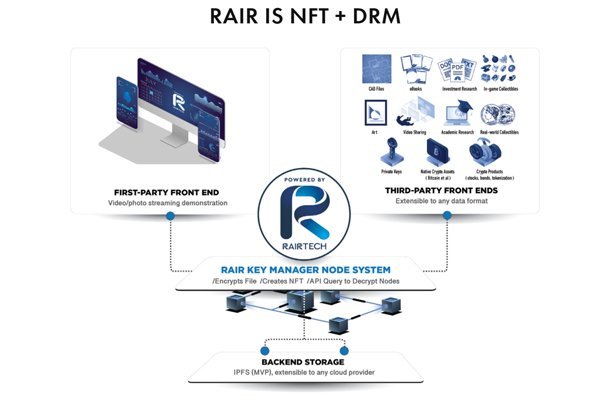
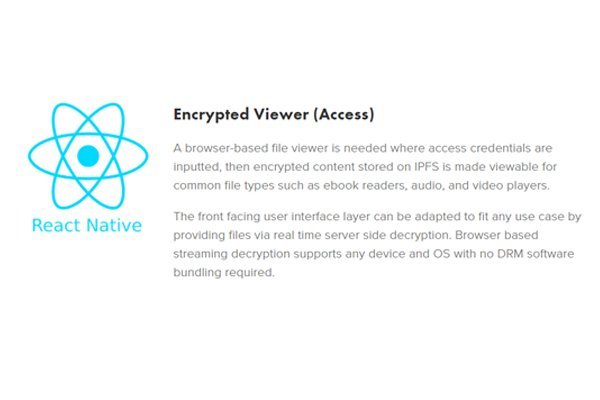
Now, instead of seeing an image that everybody else can see, you can use it to unlock anything. We started with streaming video because that’s the biggest thing on the internet. If you can use an NFT to unlock streaming video, you can use it to unlock audio albums, eventually, eBooks if you get the eBook reader hooked up properly. Any media or generally, any data can be unlocked using this secure and new mechanism. That’s what gets me excited, especially about NFTs. It’s not just that they’re cool images but the future that they hold and proving that you own something and then using it to do something that you couldn’t if you didn’t own it.
We talked about these FANG platforms, which sounds Halloween-esque. You mentioned metadata too and how it’s stored and how that affects this whole equation. Talk a little bit more about the gamification of NFTs and why it matters if it’s shared or unique. How is RAIR making this process easier for folks that care about that?
Metadata might be one of the most interesting parts about NFTs because, without it, it’s just a serial number. It’s like, “I have 0x1.” If there’s a link to the giant JPEG, it’s not some random 0x1. It’s this thing that’s worth $70 million. The only reason is that there’s metadata that says it’s that way. That’s another thing that we’re barely scratching the surface of.
Metadata, as we see it now, is the image, the description and then some attributes. That’s already provided enormous value. With those attributes, the Bored Apes have different mouths, hats or eyeballs. That’s all metadata. That’s what gets those collectible spirits going, “I want the one that has this set of eyeballs and this mouth.” Only 0.1% of them do. That all comes from metadata. That’s what breathes life into an NFT. Without it, it’s just a serial number that doesn’t mean anything.
What can folks do with RAIR that they can’t do without RAIR in the context of what we talked about?
With metadata, there are a lot of folks that reuse it over and over again. That’s not how the high-value type of work operates. If you look at your Bored Apes, CryptoPunks, Art Blocks, they’re using metadata in this interesting and complex way. With Art Blocks, they’re doing all of this generative Math-type stuff to make their metadata. If you look at the run-of-the-mill NFT, that might be the same image 100 or 1,000 times. What makes number 2 different from number 1,000 if you keep sharing the same image over and over again?
In addition to our streaming tools, we’re also working quite hard on a lot of batch upload, batch optimization of NFTs to make sure that every single one of them can be unique. Even if you only provide one base image, we would then be able to manipulate that image in all sorts of interesting ways to make sure that the product that you sell to folks when you’re making NFTs using our platform is unique.
An interesting example is maybe you’re an artist and you only have this one image that you worked hard on, you can use our tools to assign a different HTML color code to every one of those images. Even if you only made one, if you wanted to make 1,000 copies of them, they could at least all be a different color at minimum.
It does put the onus on the creator. We have quite powerful tools that we’re developing. It’s up to the creator how they want to use them. Fundamentally, what we’re trying to do in all sorts of different ways is create powerful tools for creators to be able to make high-quality NFTs, if that’s making better metadata or better streaming video.
What about the flip side of that in terms of who can see the NFT? Do you guys play in that world at all?
Yes. The metadata is like the public-facing part. That’s what everybody sees. It’s the people image in the description. What we also do uniquely is we can upload streaming video and only the owner of the NFT can prove with MetaMask that they own the item and then we then can unlock an encrypted stream that only they can see.
This is beautiful. I don’t know how deep you’re going into membership sites at this moment. You got the streaming video but I’m thinking about courses. Courses are huge or even gated content. Like there is now, there’s going to be a ton of players who gate their online courseware with NFTs. It’s a matter of who’s going to get in there first and do it well and do it in a way that integrates like existing platforms do.
We’ve heard NFTs described as mini supercomputers before. In this conversation with you, specifically, I’m becoming more and more aware that there’s much more to be done. I’m curious why you don’t think more has been done yet in terms of the functionality of the NFTs and taking advantage of all the potential of the supercomputer aspect. We’ve got collectibles. We’ve got a few things and you’re trailblazing on how complicated it could be. Any thoughts on that?
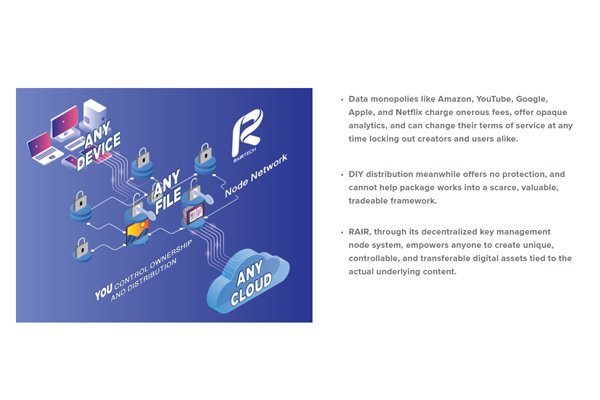
Digital Ownership: People are aware of what these non-fungible tokens do. These really awesome, unique serial numbers basically allow you to make almost anything work like Bitcoin, which is awesome.
It’s a shiny new toy, for sure. Maybe the logical first step is to do a pet rock and that sort of functionality. It’s interesting. I love that it makes people think a little bit deeper about what value is. If it’s already this valuable where it’s an image, you can imagine what could happen if it’s used as an authentication layer to then unlock things. Why exactly it’s been popular, I’m not exactly sure, especially given the state of what’s selling for such big money. I don’t judge if people want to spend hundreds of thousands of dollars on these things. It’s great. It brings media attention and it’s positive.
The next question I want to ask you is comparing what you’re doing to other marketplaces. Other marketplaces are performing centralized accounting and not using the blockchain. Why does it matter if a project writes data on-chain for all transactions or if they don’t? What’s the difference?
A lot of this stemmed from how expensive Ethereum can be when gas prices are high. There’s been a lot of what I would call shortcuts taken to not use the blockchain very much or use it minimally. Moving forward as more people learn about what NFTs are, which is this provenance layer, if you can’t look up the thing that you own in the blockchain, then why use the blockchain at all?
These problems will get resolved with these faster networks like Polygon, Klaytn and all these other ones that are Ethereum compatible, maybe if Ethereum itself gets its act together and solves the scaling problem. It’s a temporary thing. A lot of technologists that jump into the NFT space, they’re used to centralized systems and used to using Amazon Web Services that it leaks into their products. They then end up providing an NFT without providing an NFT.
That plays into this other thing that a lot of people don’t realize and that’s that if you mint on OpenSea but you move over to Rarible and you try to sell something over there, your contract is compatible with OpenSea but you’re not going to be able to earn your royalties over on Rarible. There’s this cross-platform compatibility that’s not there. How are you guys working on that? How are you solving that problem and making it much easier for people to reap the same rewards across platforms?
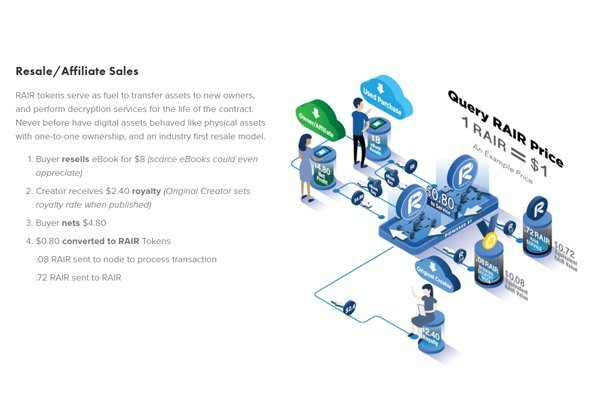
That is a dirty secret in the space that your royalties are siloed to the marketplace of origin. Whoever writes the contracts, usually writes a custom way of doing the royalties. The only way that they’ll honor the resale royalty is if you use that same marketplace. That’s a perfect example. Mint something at OpenSea and sell it on Rarible. That’s not going to work. The solution that we’ve implemented is this thing called EIP-2981, which is this universal royalty standard.
The community came out with another awesome Ethereum improvement proposal. It came out in 2020. It should finally get integrated into the mainline of the Ethereum codebase. That should hopefully clean up some of this. With that, you put in this little field called royalty info. In the royalty info, you’re using a universal standard or ideally a universal standard if everybody adopts it where you can look and say, “This is what the royalty rate is.” If everybody adopts this EIP proposal, then you will have cross-marketplace compatibility. Now, everything is siloed, so just be careful.
With everything you guys are working on, is that incorporated into RAIR?
Yes. The awesome part about staying inside of the Ethereum ecosystem is that we can move to other places like Binance, MATIC and Klaytn and that same codebase will work perfectly. By them developing the universal standard on Ethereum, we’re able to use it in all of these other places as long as they’re compatible. It’s called a virtual machine. It’s the same underlying thing that the smart contract code compiles to.
I have SolPunks. Is Solana also in the mix there?
Solana is interesting. I’ve looked into them quite a bit. There’s one thing called Neon Labs. They’re trying to get the Ethereum virtual machine to work on Solana. Don’t they have Degenerate Ape Academy?
Yes. I thought about one of those. I didn’t pull the trigger.
That’s fun. We should do our own derivative. Those SolPunks at least are written in a Solana standard. It’s completely isolated and siloed onto that platform and would have no way of moving anywhere else unless somebody wrote the code to do it.
We’ll save that one for another day. It’s exciting what you’re doing to help the industry evolve. When we take a step back outside of RAIR and what we’ve discussed, you’ve been around a while. You talked about CryptoKitties. What stands out to you as game-changers over the next few years on the technology side? What are you excited about?
We’ve put quite a few of our eggs in the Ethereum virtual machine basket for good or for ill. At the end of the day, it is JavaScript. It’s not one of these fancy functional programming languages like Cardano has. The ERC-721, the original NFT standard, has so much value associated with it now and people like the people things. 0x1 looks nice.
Moving forward, if it’s the Ethereum itself or if it’s these dozens of other competitors that are trying to eat their lunch, it’s moving towards how we solve the scalability thing and allow people to make a high quality 721 standard NFTs. Do them in lots of places. If you want to have a lot of provenances and a lot of authenticities, mint it on several blockchains so that even if one of them goes down, it’ll still survive somewhere else.
You have an interesting technology perspective. I wanted to briefly touch on decentralized versus centralized storage and how you see that competition playing out over the next few years.
As a long-term Bitcoin person, “No keys, no crypto,” always rings true but at the same time, it’s difficult for the average consumer to even get MetaMask set up. I can see both sides of those. Maybe there’s even a bit of an evolution in a consumer where maybe they start in a custodial type product and then maybe they graduate to doing their own self custody. To get Fiat and credit card-type payments integrated throws a huge wrench in things because you’re trying to use the blockchain but you’re doing it on somebody’s behalf and that is quite tricky to balance.
Does Amazon dominate here? Do Filecoin and the other players have a shot?
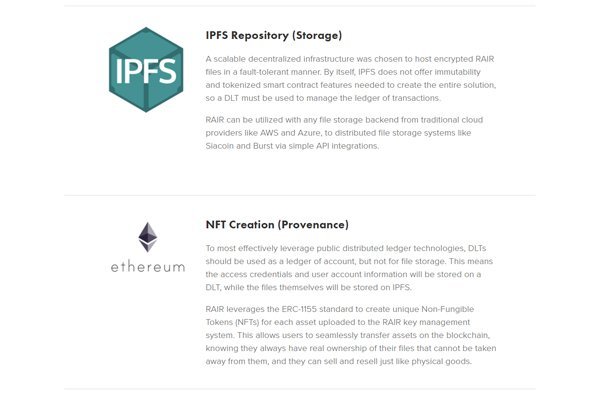
Certainly. We use IPFS. Filecoin is a fancy version of IPFS. I certainly hope so. If you treat the actual serial number, the NFT itself, with all of this care to make sure that it’s being replicated on a blockchain, I don’t know why you wouldn’t also do so with the underlying data. If you have this powerful, interesting serial number, and then it’s going and rendering you an image that’s stored on Amazon Web Services, that seems like lying to me. That is the state of the state. A lot of these platforms were able to get up so quickly and scale fast. The OpenSeas of the world is using Google Cloud and things like that. They were able to jumpstart into things by leveraging these existing centralized platforms rather than doing the hard work of trying to get distributed stuff to work.
It’s version one of NFTs in the modern sense and not the CryptoKitties world. This is the mainstream version one. We got to get to the next layer here. I need to write a sweet series of Medium posts or something on these subjects. There are so many things that people don’t know. The way you’ve articulated it is very clear. We’ve hit on a few things that I don’t believe we’ve talked about before on the show and we rarely talk about in our circles but are important. People need to know this stuff. It’s critical. The cross-platform royalty question is a great example of that.
The summary of all this is that all NFTs are not created equal. Before we move on, could you expound upon what are the main ways to make it clear what went over that NFTs are not created equally that people think they are?
It’s not one thing. It’s a collection of things that make either a high-quality NFT or not. They all revolve around what you are buying. People don’t know what they’re buying most of the time. A blockchain is a bunch of databases that all agree on a shared truth. That’s why Bitcoin and Ethereum have been successful. When you see a slick-looking frontend and you see that you can click a buy button and then you see that an NFT shows up on the website, you might think that you own an NFT but you should check where they are storing this image. Are they storing it on something like IPFS? Are they using Amazon? That’s a given to the whole parlor thing.
If you support a centralized thing and they decide that you shouldn’t exist anymore, then you don’t exist anymore. The same thing goes on writing the NFT itself to a blockchain. You would think if you bought an NFT, it would exist on a blockchain. That’s also not necessarily true. A lot of places do this. It’s called lazy minting, which is an apt description of what it is because it is lazy to not put something on a blockchain but to store it on your internal database.
That makes sense. Thank you so much. It’s a transitional period. Kudos to everyone for putting in their two cents on how to make this work. We appreciate you bringing clarity of thought to the conversation. It’s much needed. Jeff, should we head on over to Quick Hitters. What do you think?
Let’s do it. It’s great info for everybody, Garrett. Thanks for sharing. It’s critical that people hear this and put it into practice when they’re buying and selling these things because it matters. Edge Quick Hitters is a fun quick way to get to know you a little better. There are ten questions and we’re looking for short, single-word, or a few-word responses but feel free to expand if you get the urge. Are you ready to dive in?
Digital Ownership: It is a dirty secret in the space that royalties are currently siloed to the marketplace of origin.
Let’s do it.
Question number one, what’s the first thing you remember ever purchasing in your life?
It was The Offspring Americana CD with the little alien on it that’s eating the guy with a little leg brace. It’s such a vivid image in my mind. I was seven years old.
Question number two, what is the first thing you remember ever selling in your life?
Probably snow cones. Everybody else was selling lemonade and then I figured snow cones.
Dare to be different.
It’s more refreshing, “I’ll 10X your refreshment over here than this lemonade.”
Some foreshadowing there with what you’re doing with RAIR, you’re taking a different path.
Where were you slinging these snow cones?
In front of my parent’s driveway, it’s free real estate.
What state was this in?
In balmy Houston, Texas.
It helps. Question number three, what’s the most recent thing you purchased?
That’s the problem with NFTs.
Thank you. You freed me from the chains.
At least make an NFT out of it though at the end.
You then burn that NFT.
It’s an important trait, for sure.
We’re an interlude here.
You learned that from our guest.
Yes, exactly.
It’s garbage in, garbage out.
We’ll move on to the next hot topic.
Let’s do it.
There is a 25% discount thanks to Ethereum.
That was 350 GWEI watch out.
Gas is no joke.
Yes. We’re giving away five.
I’m looking forward to it.
Thanks so much, Andy.
Important Links:
-
@BohoBones.eth – Twitter
-
iTunes – Edge of NFT Podcast
-
@EdgeOfNFT – Twitter
About Garret Minks

Deep expertise in distributed ledger technologies and their unique token economic incentive frameworks. An early adopter of blockchain innovations, digital collectibles, and DLT based media platforms. After writing his first book on distributed technologies, he realized no viable publishing platform using next wave distributed technologies existed where content could be sold and resold via immutable ledger tokens. Instead of using Kindle Direct Publishing and giving the majority of proceeds to a predatory intermediary, RAIR was born.