DownloadPreken.nl Trailer Bonus Episode null Season 1
De priesters stonden steevast
More episodes
-
De priesters stonden steevast
The beauty of Web3 does not have to end in the virtual world. Using the right membership platform, you can put your NFTs to use even in IRL communities. This is exactly what Fred Hsu has done through ClubID, building the modern Web3 identity. Joining Eathan Janney and Josh Kriger, he delves into how their platform works using the right CRM approach, QR codes, and even token gating. Fred also discusses how they stay ahead of the curve and build interconnected communities all sharing one exciting experience. For this episode's Hot Topics, Max Smotritskiy explains how they are fostering Web3 growth at CryptoOracle Collective while providing community-oriented advisory to those interested in working in crypto.
DownloadPreken.nl Trailer Bonus Episode null Season 1
Geloofstoerusting Full Transcript View the website
This is Fred Hsu of ClubID, the software identity platform powering the authentication, enablement and commerce layer of IRL experiences for Web3 communities. I’m here on the Edge of NFT, the show that helps you build your identity as knowledgeable Web3 leaders.
NFT-curious readers, stay tuned for this episode to learn about ClubID’s vision of how Web3 IRL can be a whole new world of possibilities, how our guest’s prized possession is a unique piece of jewelry with a timeless utility and finally how CryptoOracle Collective is creating an incredible community of support and growth. Lastly, NFT LA 2022 was a blast. It was also a blast-off in a giant plume of bright burning rocket fuel. Web3, NFTs, blockchain, decentralization and a suite of immersive new tech developments have exploded onto the canvas of life.
Outer Edge is the theme of 2023’s event dedicated to those of you building with us at the outer edges, making the future happen. The community-centric gathering returns to Los Angeles from March 20th to the 23rd, 2023 to uplift creators and technologists through interactive experiences, a wide variety of discussions and presentations and entertaining surprises that transport participants to the outer edge of what’s possible when we co-create a new paradigm, embracing the decentralized web, artificial intelligence, extended reality and more.
To register to attend or learn how to co-create an experience on the Outer Edge, head over to OuterEdge.live. You can also head on over to Hackathon.OuterEdge.live to register for our hackathon, which is happening two days before the event. You can have an opportunity if you play your cards right to attend the actual event for free if you submit a project through the hackathon for judging. Go to that site and apply for the hackathon too. This event and everything we’re talking about are being organized by the Edge of Company and the founders of the show.
This episode features Fred Hsu, Cofounder of ClubID, a platform known for building the modern Web3 identity. Fred has many years of experience as an entrepreneur and technologist, successfully founding three startups across the internet, technology and media sectors. Previously, Fred was the Cofounder and Chairman of Ember Entertainment, a mobile game studio responsible for the development of the new blockchain-based game for the AAA franchise, The Walking Dead, acquired by Gala Games in 2021.
Fred was also the Cofounder and CEO of Manage, a leading advertising technology platform acquired by Criteo, that’s NASDAQ CRTO, in 2018 and Cofounder and CTO of Oversee, one of the first internet domain names operators acquired by private equity firm Oak Hill Capital Partners in 2009. Finally, Fred is a prolific Angel investor and early backer of the Rubicon Project, which later became Magnite, which is also NASDAQ MGNI, the world’s largest independent omnichannel sell-side platform. He graduated from the University of California, Los Angeles with a BS in Computer Science. Fred, welcome.
Thanks, Eathan and Josh.
It’s great to have you here, Fred. It has been great having a chance to learn a little bit about you and your background over some meals and fun conversations.
Likewise.
I’m jealous you got to meet up in LA.
You will be here soon enough. That’s another reason to take advantage of this real estate boom we call Los Angeles. Eathan, come on over.
There you go. Let’s dive into the conversation with Fred here. How did you come up with ClubID? What makes it unique?
I came up with ClubID based on degen activity. I caught onto the whole NFT bandwagon relatively late. I’ve been in blockchain for about five years. I started doing my ETH projects back in 2017. I collected a portfolio of coins, protocols and gaming. For me, it started with technology. I’ve had a gaming background as well. I started a gaming studio years ago. That gaming studio was responsible for a lot of what we call MMORPG games on the App Store and Google Play Store.
We have been building a lot of this quick-hit, super fun and highly competitive games for a while now. Back in 2020 and 2021 as we hit one of the first booms of bull markets, it was very natural that I went into gaming. The metaverse was becoming in the public consciousness and being so hot. An acquisition by Gala Games was very natural. That was one experience as well in Web3.
To get to the original point, I was a degen. I’ve been in a degen since 2021. I purchased very expensive NFTs and noticed that there’s a lack of utility. I plopped a bunch of money for an NFT. It’s a great status thing. It’s a great piece of art oftentimes but what can I do with it? I had gone to ApeFest 2022 in New York and thought this could probably be a little bit better of an experience, not only by way of what they call token gating but also the benefits. I bought merch, a Bored Ape hat, at that conference. I wanted to buy more. I spent a lot of time trying to figure out where to buy more. It wouldn’t pop up.
I ultimately had to buy this stuff off of eBay. I thought, “That’s another use case.” As a degen, I would like to see, feel and experience something tangible, including merch. I thought, “Let’s come together and figure out what this problem is.” Based on my experience, it’s an eyeball-in-the-audience thing. If we can figure out a way to aggregate this audience, we can bring them into live entertainment and venues. We can give them experiences, whether they’re physical or digital. I’m working with a talented team. We look forward to the next iteration of our utility of these NFTs.
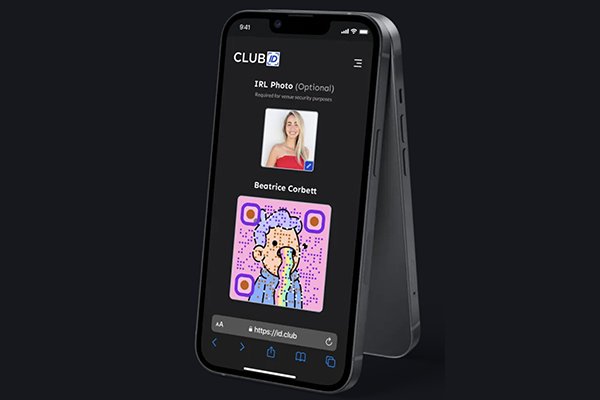
Membership Platform: ClubID encapsulates the idea of making NFTs into something tangible and bringing them into live entertainment and venues.
You’re solving your problems. I like it.
To me, this feels like a total no-brainer that we have to have something like this in Web3. Jeff, who couldn’t be here, is a veteran. When we were looking at how we support veterans at our other company, we turn to ID.me, which is a way of verifying military status for veterans. They have expanded to also verifying student status and other types of status. It makes sense that there needs to be a way to verify status that doesn’t give away the farm. You don’t want to overgive information but you need enough information to be able to make decisions around access.
I’m excited about what you are solving. It’s a massive problem. When you’re looking at Web3 identity and there are some nuances here that aren’t relatively applicable to the Web2 world, what are some of the key principles that you keep in mind in the creation stage of things? How do you stay ahead of the curve? This is not a space that stays static by any means.
My perspective in building, scaling and exiting three different companies and also being a prolific-ish Angel investor is speed is of the essence. We are lucky to be at the right time and the right place in all prior endeavors. Speed is being at the right place at the right time, getting in there on the ground floor, understanding the ear to the market, listening to customer feedback, bringing it back to the back office and not relying on a giant monolithic org to push things forward 3 to 12 months from now because this industry can evolve overnight.
You’re working hard. The experience that you have that I read through in the bio shows you know how to move quickly and make things happen. It’s impressive. You have all that experience in building companies but also, you’ve been building this experience in the Web3 in-real-life space concurrently. I would love to hear what you think about Web3 IRL. You talked about going to ApeFest, getting merch, doing stuff and having something that you can hold in your hand. How do you see Web3 in-real-life world evolving in the coming years?
For me, it’s a little simplistic. Having built several Web1, Web2 and Web3 companies, I adhere to the adage. Content is king for sure. They say, “Distribution is queen. The queen wears the pants in the family.” I have to admire it when I see companies like Yuga assemble such a critical mass around their brand. It’s the same thing with Azuki, Moonbirds, very large retail establishments, food brands, hotel brands and hospitality brands. Connecting those two has to be focusing on getting to the top of the ecosystem and being able to utilize that through trendsetters to have dolphins and minnows follow. If we can attack the whales and the head of the snake across several focused industries and if they work for them at scale, it makes things a lot easier down the line.
Do you have any visions of events or in-real-life stuff? Maybe that’s not even events. That’s a personal experience. You mentioned the hat. Is it something where you log in with your NFT, you have a merch, you click go and it shows up as it would on Amazon? What’s your visualization of a real-life experience there?
For me, it’s around something very common. It’s about a QR code. My wife uses a QR code and a picture of her face to go into her fancy gym. We have seen all kinds of restaurants switching to QR code-based menus post-pandemic. There has to be instant recognition even going back to Super Bowl ads for it to be adopted in the public consciousness like Super Bowl, menus, going to the gym and hopefully soon the way people associate their NFTs and digital assets with their identity but that’s only half of the problem.
The other problem is how you get these organizations to also be like, “That’s a pretty common use case. I would love to have my audience classified and organized and be able to follow up with them, not just through their Web3 anon profile but also their real profile if they’re to spend and enjoy themselves at my establishment, my business or whatever offering that the community organization or DAO might be able to offer them.”
It’s the QR code from that instant recognition but also everything underneath that iceberg. When I saw the environment, it was this concept called token gating. It’s not token gating. You want to gate. It’s person gating, purchasing power gating or however you want to think about that. Offline, even non-Web3 and certainly the Web1 and Web2 businesses I’ve built recognize that.
You answered one of my questions in advance. Some people are like, “There are some companies out there that launched a while ago and raised funding even to do token gating. Why do we need ClubID?” What you’re getting to is some other unique use cases and features of ClubID that those folks aren’t focusing on. It’s not to say that there isn’t room for a lot of folks in the sandbox. It’s a big sandbox and there’s plenty of room. It’s a lot of fun but what are some of the unique use cases that you’re focused on that are different from the folks that are out there already both in terms of awards and the real world?
One thing that we’re pretty different in is that we built a full-on back-office CRM for these communities and organizations. Think about Salesforce meets an authentication protocol like Auth0 or other single sign-on services, plus eventually things like point of sale. If I’m Nike, Adidas or something, I may not be thinking in terms of token gating per se. I’m thinking in terms of, “How do I give a meaningful experience to these Web3 audiences or people who can spend?”
I read something that 70% of people who still purchase these digital assets and NFTs still do it as a social thing, a social flex, a social handle or something. It could mean much more. I can’t stress enough too that unlike some of the other token gating companies, our things are all white labeled. I’m using as an example the Nike Web3 community. You feel like you’re part of the Nike Web3 community, not that you’re part of a big monolithic app.
No offense to Discord but you don’t have to download a 100-megabyte app to get through and then fill out a bunch of things. You don’t have to download one of the other companies in the space and wait for their next app update a month or two from now to get that feature your community needs. We like to keep it web app-based. We like to keep it community-branded, simply power that back office and be that connective tissue in between. That’s pretty different but we are QR code-driven pretty much like everybody on the front end.
That’s interesting you mentioned the CRM side of it. One of the cool things you have with these tokens, especially these collections, is you do have a community. You know who the members are but in this anonymous way. You could do some research to find out who they are and all these types of things to connect it with a CRM-type capability to engage with them. I’m sure privacy gating becomes what people want to opt into at that point but it’s direly needed. That’s a great angle to take.
What’s the payoff too? What interesting things are we building or activating in person? What thing can they not currently get even in the non-Web3 world? Maybe they can get access to the physical clubs that we’re going to be building and announcing with a major partner coming up. That’s verticalized and token-gated but also experience-wise, it’s something that you probably haven’t experienced before.
We’re working on that with two pretty exciting partners, each one of them with thousands of employees. There are huge brands behind them, both in Web3 and also in real life. Being able to build a stack custom-tailored to those partners is a dream come true for me as a builder. Ultimately, it will strengthen this idea that we’re not just a bunch of tokens. We’re people with disposable income per my prior point. The rest is up to the ecosystem to drive content, food and music.
When you say a physical club experience, are we talking about a nightclub experience or Soho House? If you’re a member, come on in and do your thing. Use the spaces and rooms. Club is a versatile word. What do you envision?
Eathan is trying to ask if there is going to be a bottle service for him. That’s what he means.
Bottle service and complimentary massages.
I am a part of some clubs like one in San Francisco named Modernist. They’re great people. I bought into that club for something like $10,000 a while ago. It was all through word of mouth. There are bottle lockers. They hold regular weekly events. I did moderate a discussion with a recent presidential candidate. That was cool for that specific audience to be able to experience, at least in San Francisco, as they think about what a Soho House in Miami or what a Soho House type of experience in LA might be. Before the Web3 community, I get pretty excited because I’m all over that.
It’s the content, the people, the programming, the food, the drink and pairing with awesome partners from the offline world, food and beverage with 400 restaurants. They know their experiences. It’s not just a restaurant. You have to have experience. That’s along the vein of Soho House, Modernist or even Battery club. I don’t know too much about Gary Vee’s club coming up but I’m pretty excited and I’ll probably buy a membership for that too.
Let’s cover the CRM side of things a little bit more because that is a unique component that we have talked about here. I would love to learn more about how you see blockchain-based CRM and ticketing changing the industry and what challenges you see facing them. I have an opinion here as we have talked about because of our exploration of NFT ticketing for our events. It’s not a straight line when you’re dealing with a multi-day event with in-and-out in different components and access points. More broadly speaking, what do you see as the opportunity and challenges when it comes to CRM and ticketing solutions in blockchain?
With CRM, it’s pretty much a green field. Ultimately, if you’re a conference organizer, a startup or a big company, it’s universally understood that the value of emails, names and phone numbers is pretty critical. It’s unique to then start going above and beyond and connecting that with wallet addresses. For the first time, people are able to gauge my spending power through full KYC or at least basic KYC and then a whole slew of potential products you could build around that.
The CRM, to talk about the nuts and bolts, is grabbing some basic information. If I am a restaurant operator or club operator like one of the ones we’re building, I want to see the CEO of Warner Music come in. You scanned in. Every one of my staff, including the onsite manager, is going to get a group WhatsApp, “Here you go Mr. Bob Smith. Here’s a front-row seat table for you.”
A CRM to me is true relationship management, tying that to point of sale. Another experience I have in private social clubs is I never need to drop down my card for anything. They knew who I am. They take it from my account or in this case, they take it from my debit card or my credit card and file but maybe I also put some ApeCoin on my balance. Take from that. I don’t care. Part of the exclusivity and enjoyment factor is tied to convenience. That was a lot more than your basic CRM. It’s new for Web3 in my opinion.