Top Podcasts
Erick Calderon Of Art Blocks - The First Interactive NFT Generative Art Platform, And More...
Art in the NFT space is not a new thing but today’s guest has taken it to the next level. Erick Calderon is the CEO of Art Blocks, the platform that offers generative artworks through creative coding on the Ethereum blockchain. Today, he joins hosts Jeff Kelley, Eathan Janney, and Josh Kriger to chat about the first-of-its-kind platform and how it helps the artist community. Erick also discusses the philanthropic work attached to the project and how artists in the space have collectively donated over $50 million through their art. Listen in as he breaks down the story of how Art Blocks was founded and how he got into the generative art space. Plus, get the inside scoop on future partnerships to look forward to!
—
Listen to the podcast here
Erick Calderon Of Art Blocks – The First Interactive NFT Generative Art Platform, And More…
This is Erick Calderon of Art Blocks, the NFT OG home for creative coding and generative art. I am here on the show where the newest OGs in NFTs love to hang out and chat about the good old days.
—
NFT curious readers, read this episode and find out how humility in the Wild West World of NFTs keeps our guest centered, how getting lost in NBA Top Shot turned out to be a key ingredient in the unintentional launch strategy of one of the most iconic projects in the NFT world and what first-of-its-kind computer peripheral this first-of-a-kind generative art platform creator chose to make his first-of-its-kind purchase. All this and more on this episode. Enjoy.
—
This episode features Erick Calderon, Founder of Art Blocks, the platform that offers generative artworks through creative coding on the Ethereum blockchain. Erick Calderon is a Houston, Texas-based blockchain entrepreneur who is fully immersed in the NFT space. Erick has dedicated himself to exploring the functional use cases for NFT technology, specifically in the art sector. These explorations culminated in the development and subsequent launch of the generative art NFT platform, Art Blocks, in November of 2020 and the release of his NFT project called Chromie Squiggles.
Art Blocks is a first-of-its-kind platform focused on genuinely programmable on-demand generative content that is stored immutably on the Ethereum blockchain. You pick a cell that you like and pay for the work. Randomly generated versions of the content are created by an algorithm and sent to your Ethereum account. The resulting pieces might be a static image, a 3D model or an interactive experience. Each output is different and there are endless possibilities for the types of content that can be created on the platform. Erick, welcome to the show.
Thanks for having me. How is it going?
It’s great to have you here.
It’s so cool to have you. We’re big fans of the world of generative art over here. We have a few pieces in our stash. We’re excited to talk to you about it.
I met Jeff over at Bright Moments when things were kicking off there. We have been following what you’ve been doing all along. It was just a matter of time before we have you on the show. We’re so excited to have you here.
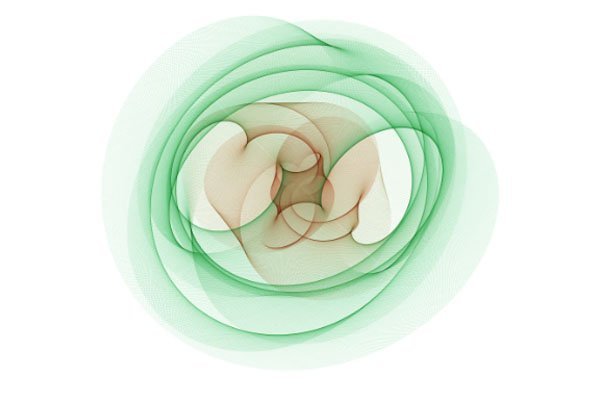
NFT Generative Art: In this era of new generative art, you have these people that are making art as a passion that were handed a tool that allowed them to monetize their art and enabled them to distribute their art to a huge audience with very little friction.
I’m honored to be here. Thank you for having me.
November 2020 was an interesting time. The few months right around that time of fall 2020 and in the winter were pivotal points for the world of NFTs and Web3 as we know it. It was the moment that we launched into this next phase of happenings. Tell us about how that moment came to be. What’s the origin story of Art Blocks?
We can go way back but that moment specifically was super interesting because it did feel like things were heating up. I’ve been in the space since 2017. I claimed a bunch of CryptoPunks when that contract went live for the first time. There were NFTs prior to CryptoPunks. Technically, CryptoPunks aren’t even NFTs according to standard but that to me was the first a-ha moment. It blew my mind and it’s something that I spent the next years building towards.
What’s funny about November 2020 is that I started working on Art Blocks and thinking about it. Immediately after minting CryptoPunks, I started working on it in early 2018 with actual contracts and deploying it on the Ethereum blockchain. I kept trying to convince people to help me build this thing in terms of the developers. It was very hard. I was poor at communicating. I struggled to communicate the vision for what I wanted to do to Art Blocks.
I was working with these amazing human beings and great developers. I eventually got to this point where I felt like I was paying for someone to create something. They weren’t 100% sure why they were doing it. They were like, “Whatever you say, it’s all good.” The pandemic hit. I found myself with three extra hours a day. I went nuts with this website called Codecademy. Instead of paying developers to build it, I built it myself.
I had a programming background. It’s not like I came out of nowhere but I was far from being a professional coder. I built it and the crazy part is I probably would have launched it in June 2020, which would have looked different. We have a great product-market fit but I also think we got lucky and launched at the right time based on everything that was happening. I got so deep into Top Shot that I lost track of anything but that.
There were days there and I’m not exaggerating, where I would spend 4 or 5 hours a day going through the list of my 4,000 Moments looking to complete full sets of Moments for this obsession of having full sets. I finally did. I was trading people cards or Moments that were $1 or trading $4 at a time. I went deep. That delayed the release of Art Blocks 3 to 6 months depending on how deep. That was one of the best things that could have happened to Art Blocks and then also to me because when Art Blocks launched, people were offering me to buy my full Top Shot account.
I was like, “I don’t know when I’m going to transfer 4,000 Moments. I can’t now.” That’s a good thing that happened because I would have otherwise sold my Top Shot account for 5% of what eventually it got to be worth. There were lots of good stuff happening at the time. The CryptoPunk aliens selling was part of that initial story. Much has happened in that timeframe. It all feels like a blur.
I want to know the alternate reality that you expected to happen. After all this, it was probably a lot more boring than what has been going on in the past.
I thought Squiggles would still be available to mint. I thought, “Who’s going to want these 10,000 things? It’s so many. I’m a nobody in the space. It’s going to take a while.” CryptoPunks went very fast because they were innovative but also free. Squiggles were $10 to $20. I was like, “People aren’t going to pay for this.” Sometimes you had to pay $5 for gas, which was even crazier.
The alternate reality was I had extra scripts lined up in case artists didn’t care for what we were doing. I had fully thought of this as a hobby. I remember my Gwei bill was $50. I was on the free one. I remember on the first day that everything started selling. I was like, “I have to pay $50 a month to maintain all these ETH calls. Can I afford that at this rate?” My life has been derailed as a result of all this.
It’s pretty amazing what’s possible when all these things converge and a passion project turns into an entirely different future. Eathan, Jeff and I got together in March of 2021 and did our first show. It was like, “This is fun.” After our tenth show, we were like, “We can do this for a long time and not get bored. Interview amazing people, bring people together and talk about cool and disruptive technology.”
We never would have guessed that a year later, we were producing NFTLA, the largest NFT conference in Southern California history. There were 150 satellite events all over LA as a result. With the power of Web3 and when you bring passion and technology together, anything is possible there. I would have loved to be a fly on the wall in some of those early days. Maybe there’s going to be a documentary about you one day. Who knows?
There are a lot of things being discussed but the most important thing is the trajectory of my poor wife as she heard me go on and on about this for years. That’s what the fly would watch. It’s the eye-rolls turning into deeper eye-rolls, “What? Did you launch?” I had been working towards it but then I stayed up all night for a long time. I launched it. She was like, “Are people buying stuff?” I was like, “They’re buying stuff.”
It was this weird thing. We have two kids. They’re young. I was like, “Could you watch the kids? I have to concentrate on this.” I didn’t expect it. I went into a black hole for four days. It was all night every night for four days going into that. That’s wild. I’m very lucky that my wife was willing to stick with me through the initial crazy talk because it was and through all the craziness that has happened in the last couple of years.
You’ve gone deeper down the generative art hole than most human beings. It would be great to get your perspective on what is art 101, what’s the origin, why is it different and why it matters. We have done some of this research. I was excited to learn that this stuff has been around since the 1950s. Correct me if I’m wrong. A lot of this stemmed from scientists and engineers doing their thing and having fun hacking. What’s the real backstory here? Why does all this matter?
It stems from a certain level of nerdiness and professional people also having a creative side. It’s the people that have access to computers in the ’50s and ’60s. I don’t know that a lot of people were creative people and said, “I want that huge mainframe. I’m going to make that into something.” Herbert Franke is one of the first names that comes to mind. He’s a brilliant mathematician and scientist that had access to some tools and also had a creative side.
I was like, “This is beautiful.” I started making prints and stuff that he called art that most people did not call art. This type of algorithmic or computer-generated art has been accepted by few in the same way that the sculpture world or oil on canvas accepts those mediums. I see three generations of this. I see the generation of the early pioneers. You look back at their work and you’re like, “You did that in the ’70s.” They’re beautiful plotter drawings from back then.
You have this wonderful crew of people that were making generative art and using computers after things like p5 or Processing came around that made creating stuff with code more accessible. That generation of people is special because very few of them got any artistic recognition for their work. There’s this nerdy/pure passion project behind a lot of this because it was not something still even in the early 2000s that people chased as a type of art.
Therefore, there was no monetization. I didn’t know anybody that was like, “I’m going to be a generative artist and it’s going to be my career.” We have this generation. Anne Spalter, who’s one of the original collectors of generative art called new generative art this era of new generative art. You have these people that are making art as a passion that was handed a tool that allowed them to monetize their art and enabled them to distribute their art to a huge audience and huge being anything over 100, honestly, with very little friction.
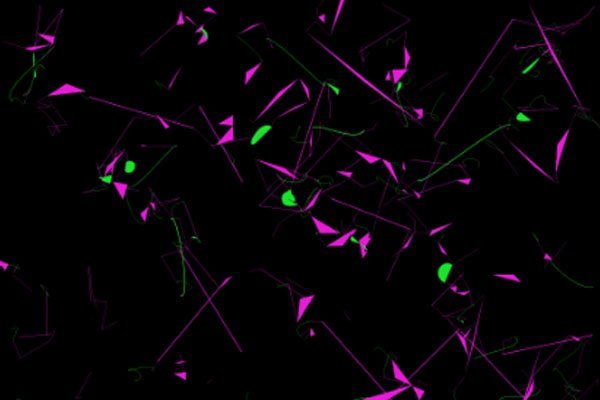
NFT Generative Art: What we’re seeing now is this is an extension of generative art that is enabled by the fact that blockchain technology creates an NFT in it, which is immediately visible around the entire world within two seconds of minting.
In exchange for that, what they had to do is spend hours, months and in some cases, years tweaking an algorithm to make it to where they were satisfied with anything that it spits out without knowing exactly what it was going to spit up. What this has done is this has elevated generative art. It has forced artists to spend time putting forth their best work. The results are that 100, 1,000 or in some cases, 10,000 people get to participate in that artist’s journey and watch at the same time as the artwork comes to life on the platform followed by a generally pretty lively discussion about what the art means to them in front of the artist.
There are lots of things falling into place but what we’re seeing is this is an extension of generative art that is enabled by the fact that blockchain technology creates an NFT in it, which is immediately visible around the entire world within two seconds of minting. That has created communities, conversations and dialogue that didn’t exist before and are very much part of this equation of the success the generative art is happening.
It’s great to hear all that. I resonate with it so much. I’m realizing I happened to put this background up for the first time. These are 3D versions of trees that we’re creating as a team and I was creating in 2D with this software called Processing. I don’t know if you’ve ever played with that. I was doing that years ago. It’s the same thing. It’s making it, enjoying it, being amazed by it and feeling like there’s something to it but not always being able to communicate with other people about what’s so cool about it. It was great to go through that story with you as well. Art Blocks announced this metric of having surpassed $50 million in donations to over 100 charities around the world. Could you tell us a little bit more about your aims to bring inclusivity and equality into crypto?
I’ve been invited to speak at universities. I asked for feedback and the feedback often, 2 out of 3, has been that I was the only speaker that went in there and didn’t talk as if what was happening was expected, normal or deserved. This is all a bit nuts. It is a revolutionary technology that we’re experiencing. It’s emerging. There’s all this crazy stuff that we can apply to a lot of different parts of our lives. We should dig in and enjoy every piece of that. Along with that is crazy amounts of money being thrown around that in some cases are not necessarily based on value but based on this speculative and almost frothy situation that we find ourselves in with NFTs.
Early on, I built Art Blocks specifically to have this functionality that each artist could set a secondary address on their project that would create a split so that anytime funds came into a project, there is automatically a split. That was to serve two points in case an artist works with a collaborator. There could be two artists and they would both receive their money at the same time. The whole point of decentralization is not having to send your money to one person and then wait for them to bill you, send it 30 days later and say, “The check is in the mail.” Ideally, that happens at the same time but most artists do work solo.
The other option there was that an artist would be able to designate funds to go to charity. It took a long time before artists came around to that. I tried to set an example early on. During the Squiggle mint, I announced that for the next 500 mints of the Squiggle, the proceeds would entirely go to The Processing Foundation because The Processing Foundation is very much the root of that second generation. Not everybody uses it but it’s pretty much how most people learn to be creative coders. The result of that was that the single greatest private contribution to The Processing Foundation, which at the time felt huge but looking back was pretty small was $20,000 came from that.
The Processing Foundation reached out, “This is the single largest individual grant.” That got the ball rolling. Our Art Blocks artists started contributing a bunch of stuff to charity. In particular, Dimitri created Ringers. He didn’t need Art Blocks to do that. He already has his humanitarian or charitable side. I love that it has always been part of his process. As Art Block started to grow and explode, we started to suggest or hope that artists would contribute a portion of their job. When we talked about Art Blocks and $50 million, Art Blocks did not donate $50 million but Art Blocks enabled or made it to where 25% of drops would go towards charity.
It’s the artists themselves that have donated over $50 million. As an organization or startup, we donated as an organization the same amount that we had overhead in 2021, which is $1 million. It’s not even that much when you compare it to this $50 million but as a startup, that’s a pretty significant number to donate. It’s put to shame by the $50 million that the artists themselves have set aside or earmarked for charity. That continues to happen every time we have to carry a drop. Any artist that uses a Dutch auction adds a 25% charity to the drop.
That means that usually, it’s for anything above the settling price. What that means is saying, “Anything above that final listing price on the project, the artist is giving up part of it and then once we get to a normal price.” A normal price for art is $500 for an addition of $1,000 and $1000 for an addition of $1,000, which is a huge number. The artist gets to keep all the proceeds. That’s a nice thing. The bottom line is it’s not Art Blocks that should be able to take credit for it. The artists are on board with this and they’re the ones that are being the most generous. We’re grateful to get to work with such generous people.
I love this flow here though and my ignorance. I said, “Maybe you’ve heard of Processing, the software that is used to generate these.” You’re like, “That was a major donation.”
It’s possible that Processing has received over $10 million in donations in 2022 as a result of all of this.
I’m checking out their website. They’ve got these great fellowship programs and teaching programs. They’re doing their thing and have a lot more resources to get done.
Casey Reas and Ben Fry are the godfathers of all of this, at least for me. That’s how I and most of the people I know started learning. We were either messing with Processing or eventually p5.js. I owe it to them that Art Blocks can even exist. The Chromie Squiggles are written in p5.js. A lot of my success and then also the success of the platform is based on that. It was one of the first initiatives that I wanted to support what they’re doing.
Let’s not downplay the fact that Art Blocks is the conduit through which these donations have been made. That’s a major piece of the puzzle here.
We’re very proud but it wouldn’t be without the artists and the art. The art is incredible. It’s a beautiful combination here.
Let’s talk about the art specifically. We have been in and around the NFT space for some time as well. We have heard the feedback from more traditional artists, non-crypto artists and non-digital artists. There are a bunch of different camps around what they believe is art or not whether it’s Bored Apes, generative art or pure physical art alone. We wanted to know how you view what Art Blocks is doing through the lens of crypto art versus traditional art. What differences do you see are not?
I’m on a mission and 90% of my travels are to put generative art in the same category as any other kind of art. I’ve been saying that people had to fight to put surfing and skateboarding into the Olympics because that was their passion and what they wanted to spend their time doing. They got real good at it and they wanted to compete with other people on a world stage but they wanted to do it in a formal setting. That’s how I’m looking at generative art.
All of a sudden, we’re 110% better.
Important Links
-
@ArtOnBlockchain – Twitter
-
@ArtBlocks_io – Twitter
-
Instagram – Art Blocks
-
Spotify – Edge of NFT
-
iTunes – Edge of NFT