Top Podcasts
Edge Of Science & Data: Data Con LA + IM Data 2022 Panel Feat. Josh Kriger + Stanley Bishop & Gordon Gould (New Atlantis)
In today’s episode of the Edge of NFT Podcast, Josh Kriger sits down with Gordon Gould and Stanley Bishop from New Atlantis, an open platform for ocean and biodiversity regeneration, to unpack the origin of decentralized science and how that movement is serviced by the utilities that NFTs offer. Part of the New Atlantis’ core team, Gordon and Stanley dive into biodiversity markets, bioinformatics technology, tokenomics, biodiversity credits, IP ownership, and even the MRNA technology for the COVID vaccine. NFTs truly have a lot of fantastic roles. Tune in to discover what’s now possible with NFTs, data, and open science and how you can take part in helping save the ocean and get compensated for it.
Listen to the podcast here
Edge Of Science & Data: Data Con LA + IM Data 2022 Panel Feat. Josh Kriger + Stanley Bishop & Gordon Gould (New Atlantis)
Welcome, everyone, to our fourth annual IM Data Conference. Thank you to our panelists for coming out. We’re super excited. You’re our first panel group. That’s exciting. I’m not going to take the honor of introducing them because these guys are going to do a way better job at that than me. The floor is all yours. Thank you.
**Thanks for having us. Gordon, Stanley and I are of the rare breed where this is more fun than being on the beach for Sunday. You will start to understand why we’re so passionate. My name is Josh Kriger. I’m one of the Cohosts and Cofounders of Edge of Company. We produce the Edge of NFT podcast, which is one of the top NFT podcasts in the world. We also host NFT LA. The inaugural one had about 4,000 attendees, 150 satellite events, and 11 million media impressions. People care a lot about what is going on in this space. That was the lesson learned there. We will be hosting that again on March 23, 2023. **
**I’m also building and advising in this space. I’m passionate about real utility-based approaches to NFTs. Part of my background in a former life before being an entrepreneur is I worked in Federal government consulting. I helped program the Geospatial Line of Business and do some data analytics projects around homelessness and veterans. That’s where I learned about the power of data in an open government and what can be done in the innovation world. **
**I started the first-ever innovation lab in the Federal government with Housing and Urban Development, which was full of bureaucratic challenges and opportunities to empower the stakeholder with information and bring them into what the government is doing. We see a lot of these similar trends in what’s possible with data, NFTs and open science, which we will talk about here. I would love to hear from Stanley and Gordon a little bit about yourselves and why this topic is relevant to the work that you do. **
My name is Stanley Bishop. I’m a mathematician who works as a data scientist and a machine learning scientist. Typically, I build computer systems that help scientists in other fields use machine learning in their research. I also have run an alternative art tech incubator in Venice Beach called Spacepost Labs for the past ten years as a community service practice. We try to bring technology and art together in interesting ways. My entry to NFTs was them becoming an incredibly powerful tool for building inclusion for artists.
Having gotten some cool exposure to NFTs, Web3 and the art space, I’ve discovered that in my main life as a scientist, they have some incredible contributions. I’ve been contributing as a bioinformatic solutions architect to a project called LabDAO, which I’m excited to talk about. Roughly, LabDAO is looking to use transparency in the blockchain to lead to scientific reproducibility and stability of the software, which is a big problem in the field of genetics and bioinformatics. I can also queue up and hand the microphone to Gordon for LabDAO, which is looking to support scientific projects. Gordon’s project is probably the most important one we’re working on right now.
I’m Gordon. Stanley is the Chief Architect of the project that we’re working on together called New Atlantis, which is an ocean region DAO. We’re very focused on building biodiversity markets for the oceans. By way of background, this is going to severely date me because I’m the oldest person in the room here. I’ve been in the internet business since the early ’90s. I did a ten-year stint with my wife and business partner where we built and sold a CPG company. We built it to $200 million in revenue and exited through Unilever in 2020. I have been working full-time in crypto since then.
I have been an investor in crypto since 2016. I have raised a lot of venture and PE money over the course of my career. I’ve done digital publishing, early mobile communications platforms, and early social web and social shopping. New Atlantis is our full-time focus. I don’t know if any of you have Apple TVs. There’s a picture of the swimming polar bear on the screensaver. The guy who shot that is named Paul Nicklen. He’s one of the founding partners of New Atlantis along with me and Stanley. He is the most followed photographer on Instagram in any category. His wife is the most followed female photographer.
We originally started New Atlantis like, “Let’s sell some NFTs to raise money for ocean projects,” but we quickly realized that the NGO model is super broken. After spending a year studying ocean conservation and emerging opportunities, we focused on the idea of biodiversity markets. I’m sure all of you have heard of carbon credits and the carbon market. There’s carbon and there’s climate. Carbon is a proxy for that. There’s nature, which is biodiversity. Nature gets forgotten a lot in a lot of these things and having a planet that’s the right temperature but with no life. There’s no wind.
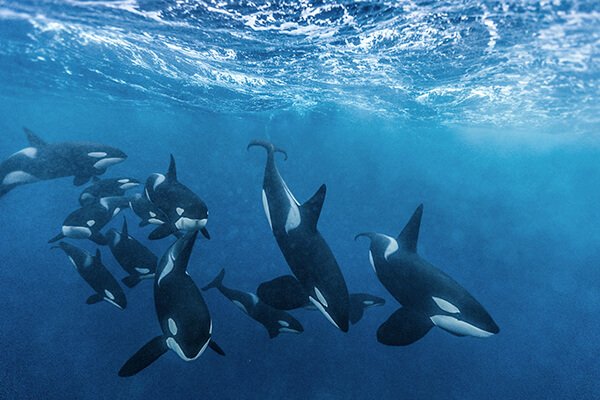
We’re very focused on preserving marine biodiversity. It’s worth noting that the ocean sequesters sixteen times more carbon than the total combined area of all terrestrial ecosystems. Most of that sequestration comes through life. We’re building New Atlantis. We will be selling NFTs as memberships in the community. We may be doing one-of-one NFTs for high-end collectors with Paul and Christina’s work. We’re interested in using NFTs as governance tools as well, not just as collectibles.
Open Science: NFTs can also be used as governance tools, not just as collectibles.
**What was the product that you sold to Unilever? **
It’s a gummy vitamin brand called SmartyPants. I ran the data science team for us and the Amazon business. We grew that from $0 to $110 million. We were the number one multivitamin in Amazon for eight years in a row before we exited. We were in 30,000 stores across the US.
**We both had that food tech background. Stanley, let’s start with you and unpack the origins of decentralized science, which is the underpinning for this whole conversation, and how that movement is serviced by the utility that NFTs offer. **
That’s my favorite topic. You can ask my girlfriend. It’s hard to get me to shut up about it. It’s great to be here with you all again. Decentralized science has been fascinating. To me, a lot of the practices grow out of the field of open-source science. I’ve been a contributor to various open-source science projects for quite a while. You see incredible successes but then you see a lot of the same failures, particularly when a project reaches a point where there’s a lot of demand and it needs to scale.
If a project didn’t start with a profit motive alignment, it’s very challenging for an open-source project to pivot into systemic operationalization for a number of reasons, but one of the biggest is money. When you have a project that wasn’t originally envisioned with a motive, it can be hard to fit it into the four corners of a business deck in a way that venture capitalists would normally understand.
One project they contribute to that’s a beautiful project is called DeepChem. It’s out of Stanford. There are a lot of the same people who do Folding@home, which is such a fascinating example of pre-blockchain decentralized science. This is an interesting project because there are a bunch of very high-level quantum simulation tools for molecular dynamics.
It’s stuff that’s done with the best-in-class software practices. In bioinformatics, there’s a little factoid that we should all be ashamed of. The more impactful a piece of bioinformatics technology is in terms of research, the less likely it is to run in terms of code. It’s the only field where that’s true. There’s a big cultural issue in bioinformatics that to me all spins from over-centralization.
To bring an example on this project, DeepChem has the most stable, reliable and reproducible tools for the quantum simulation of molecular dynamics. The tools are starting to be used by Big Pharma companies all over the place but then it’s a struggle to get enough developer time to do the work as the tools become more popular because they started within an open context. In the Web2 world, it is difficult to pivot into a profit or a partial profit context.
**I’m thinking about going down the rabbit hole, which is to think of everything you said in relation to the COVID vaccine process and the fact that that was semi-permeable, which is a big deal for a situation where most of the time, that doesn’t even happen. With it also came a lot of challenges. Maybe you can talk about your perspective there as it relates to open science. What about these NFTs? How do they fit into the mix? **
You opened up a different can of worms with the COVID vaccine because we are very fortunate that we did have the MR technology for the J&J vaccine, which was a DNA vaccine that was not so good. A lot of the easier reasons we’re having so far with COVID are because the mRNA vaccines do produce robust immunity. That almost didn’t happen.
There’s a particular female scientist that is going to win the next biology Nobel for her work. She believes that mRNA vaccines would be possible. She was told by her institution, “They weren’t possible, and if you don’t stop studying them, we’re terminating your employment here. That’s not a subject we’re interested in supporting.” She laughed and founded a company and is now going to be a legendary hero for progressive history.
There are a lot of situations where the over-centralization of decision-making in science leads to bad outcomes. What would lead to good outcomes? How does this NFT stuff fit into the picture? At LabDAO, we’re doing an interesting thing. We’re taking bioinformatics workflows and putting them on the chain in a reproducible way. For example, New Atlantis is creating what’s called a Metagenome Pipeline.
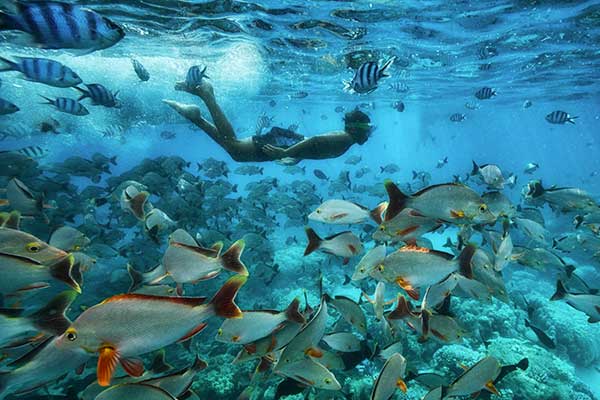
Open Science: There are a lot of situations where the over-centralization of decision-making in science leads to really bad outcomes.
It’s a system that takes every little fragment of DNA that’s present in a cubic yard of ocean water and produces the taxonomy of what species that DNA is evidence of, and even gets some of the details of the metabolic interactions between the different creatures. It’s a powerful piece of bioinformatics technology that has only been possible in the past few years. Typically, if you find it, it won’t run.
**We’re going to move back to NFTs. A lot of people talk about NFTs as mini-computers with layers of metadata. Is that the connection we’re talking about here? **
100%. The workflow would exist as an NFT on the blockchain. The relationships the NFT has with the workflows that have been executed off of it are transparent. You can see what success people have had with different hardware and software configurations. All of that becomes a shared and learnable common source database.
**Gordon, you can help us bring traditional blockchain infrastructure and tokenomics into this. As you’re looking at New Atlantis and this ambitious project that you have, it seems like there’s a hybrid economy here where you’ve got NFTs that serve a purpose from a metadata layer but also there are some benefits with some of the pure blockchain infrastructure and tokenomics. How do you see those two fitting together? **
NFTs have a couple of roles. One is the one that Stanley outlined in the workflow. Second, as I alluded to earlier, was membership. Those can be different tiered memberships. That’s more about access and direct fundraising into the DAO. The third one also could be an NFT that represents certain areas within the ocean. People can buy into a square kilometer of ocean. To your question about tokenomics, we start to develop biocredits based on the biodiversity within that square kilometer. Those can get put into the piggy bank of that NFT.
**If I buy a part of the ocean and support your project, can I fly there in the metaverse and hang out? **
Can we get you to do that and tell the story? That’s part of the power of community building that we’re excited about.
**Certainly, an important thing that we’re talking about here is that narrative or that storytelling that makes more people curious about the project. That’s part of the power of NFTs. **
It’s the ability to leverage that community engagement into monetization and commercial reality. That storytelling is a huge part of the model. I was excitedly sharing that Oxford Nanopore liked a tweet of mine with Gordon at the start of this talk. I don’t know if you’ve heard of Oxford Nanopore but it’s a Star Trek tricorder for DNA. It’s a little device you can plug into your cell phone, take to the beach, and sequence the water at the beach. One of the things we’re excited about is empowering citizen scientists to do regenerative work on the oceans and get compensated for it. You could travel to your favorite MPA and sequence it, and then benefit from the economics and the data.
**I see your collab with Baby Shark at some point in the future. **
Do you want me to talk about tokenomics?
**Yes, please. Sorry, that was a little bit of a tangent. **
To Stanley’s point, the narrative is super important in this space because most people don’t care about technology per se. They want to get behind a story, some art or a cause, or they want to make money. NFT appreciation or price appreciation is certainly one area to do it, but our focus is on marine biodiversity markets. NFTs can be containers that can hold these biocredits at the end of the day. The biocredits will be a fungible layer and empower the overall community.
The International Monetary Fund, which is a giant potentially questionable international institution that manages trillions of dollars, has put a price tag on the ecosystem’s value of the oceans at around $30 trillion a year. Putting actual pricing onto these ecosystem services represents a massive trillion type of opportunity to build a market. Those fungible layers will allow the NFTs to accrue value, not just on the art side but as they represent certain aspects of the ocean or pieces of the IP that is developed either by the DAO and the Metagenome Pipeline or the people on top of our platform.
Open Science: The International Monetary Fund has put a price tag on the ecosystem value of the oceans at around $30 trillion a year. Putting actual pricing onto these ecosystem services represents a massive trillion-type opportunity to build a market.
**How do you create a sustainable tokenomics model there that isn’t going to be another Axie Infinity or one of the many projects that we had high hopes for but ultimately, correlated strongly with the markets and flatlined? Is that even possible? **
Tokenomics is a hugely complex question. The real answer is that we don’t know all the answers, but we are big believers in the idea that we have to try because as Elon says about SpaceX, “The odds are likely that they will fail but you need to take the swing because what’s the alternative?” This gets down into a little bit of the weeds but there’s something called a Marine Protected Area, which is a national park for the oceans. The United Nations has said that we need to get about 30% of the oceans into these MPAs by 2030. Less than 8% of the oceans are in MPAs. Only 3% of the ones that aren’t nominally in MPAs have even marginal funding to manage their enforcement.
You have a scenario where you’ve effectively got a 10X the amount of ocean that needs to be adequately protected to protect our remaining biosphere. These MPAs are government programs often in the Global South in a world where there’s increasing energy shortage, increasing food shortage, and deglobalization, which is going to impact supply chains and inflations. For anybody who’s downstream of the dollar, it’s going to be very problematic. It’s very unlikely that Global South governments are going to be positioned to adequately fund these MPAs.
What we can do is go in, look at the MPAs, evaluate the health of those MPAs, and start to generate both carbon credits and eventually biodiversity credits that can be used to fund that MPA. Speculators are also able to participate in that because they can bet early that the value of a square kilometer, square meter, or cubic meter in the case of the water column, will have a discount associated with it now because the data resolution won’t be as good as it will be in 3 to 5 years as our platform gets developed and we get more time series data.
There’s an idea of green bonds that people can buy into. The problem with Axie is the game wasn’t that fun to begin with, which is problematic in a game. It was also a child of excess liquidity in the marketplace. In our case, we have 130 million kilometers that need to be protected by the oceans. That’s a big speculative opportunity. A lot of governments are also going to be looking to swap their nature-based assets for debt that they owe. By being able to price the value of those marine ecosystems, we can help them swap living ecosystems instead of forcing them into situations where they’ve got to exploit those ecosystems to make debt payments.
**As we think about all these opportunities, some core things always come up. One of those things is IP ownership. That’s a particularly interesting topic when it comes to science and what we’re talking about here with decentralization and encouraging innovation. At the same time, people who are going to dedicate their lives to research want some value back because let’s face it, it’s not the highest-paying job all the time. **
Particularly in academia.
**Stanley, I would love to get your perspective on how NFTs and IP interact or the ways that you’re thinking about data science and IP rights. **
I mentioned LabDAO supporting them in Cloud architecture for data science and environment informatics. They have some partner DAOs that I also work with through the relationship. It’s interesting too to mention in particular VitaDAO and Molecule. Molecule has a very banger DeSci podcast. You should start it too. It’s worth checking out. Do you know a longevity DAO?
Their articulation of the research use case towards human longevity is one that’s very suited to decentralized science. It’s interesting. To a lot of pharma companies, it might not make sense as a profit motive for them to be researching extending life. It might not be. There are certain situations where it is. Allocating funds specifically to extend the human lifespan is something we all have an interest in. It’s cool to see it happening in a decentralized way.
Important Links
-
@Lab_DAO - Twitter
-
@NewAtlantisDAO - Twitter
-
@EdgeOfNFT - Twitter
-
@NFTLAlive - Twitter
-
Keith Grossman - Previous episode
-
Filecoin - Previous episode