Top Podcasts
Edge Of Davos Part 4: Daniel Santos Córcoles, Josh & Fahad (Woonkly), Dre (Cool & Dre), Nick Bilogorskiy (Nova Ukraine), Jevan Fox (AE Studio), Alex Altman (Seal Storage), Marik Hazan (Medical Psychedelics House)
We continue to delve into the amazing NFT market from the lens of industry leaders in Davos, Switzerland during the World Economic Forum annual gathering. Kicking off the episode and sharing their goal of opening the space to a wider audience are Daniel Santos Córcoles, Fahad Al Ahbabi, and Adam Ladjadj of Woonkly. They talk about their efforts to create an interactive NFT directory that could finally bring this space to the mainstream stage. Meanwhile, Dre (Cool & Dre), Nick Bilogorskiy (Nova Ukraine), Alex Altman (Seal Storage), and Marik Hazan (Medical Psychedelics House) explain how NFTs have impacted the world of music, storage spaces, humanitarian efforts, and psychedelics, pushing for more positive changes in their various lines of work.
—
Listen to the podcast here
Edge Of Davos Part 4: Daniel Santos Córcoles, Josh & Fahad (Woonkly), Dre (Cool & Dre), Nick Bilogorskiy (Nova Ukraine), Jevan Fox (AE Studio), Alex Altman (Seal Storage), Marik Hazan (Medical Psychedelics House)
We’re here with you in Davos, Switzerland, coming to you from The World Economic Forum convention that happens here every year. We’re going to bring you some of the sharpest minds and global leaders, telling you what they think about what’s next and how they’re making it happen. In this episode, we’re going to transition from one interview to the next. Stay tuned, sit back, relax, and enjoy.
—
Crypto House of Java, thank you for joining us in the beautiful Swiss sunshine for another edition of the Crypto House sessions. We are so excited to welcome the Woonkly team. We are also graced with the presence of the Edge of NFT Cofounders and hosts of NFTLA, one of the biggest people in the NFT business and the world. We’re excited to be having this next panel where we’re going to be talking about some of the work that Woonkly is doing, the importance of NFTs globally and where some of this technology is going. We have a few exciting announcements for the panel as well. Please welcome, Josh Krieger.
How great is this? This is thought leadership and a bear garden. This is amazing. I’m honored to be here. I had the opportunity to start the Edge of NFT podcast with Eathan Janney and Jeff Kelley, who couldn’t make it. We have had a chance to interview over 140 leaders in the space. It has been a learning adventure for us. We have seen the space evolve so much in 2021.
For this panel, we’re going to learn about where the evolution is going and some of the innovation these guys are doing is quite special. Let’s welcome the two Cofounders, Fahad and Daniel. We have a third guest as well, Adam. I had a chance to dig into your project a little bit. You have thought about a lot of things and tried to solve a lot of the problems we have seen in the space as it evolved. Let’s start from the very beginning with your origin story that got us here.
Thank you, Jeff and everyone. We started several years ago in the blockchain. First of all, we opened a challenger bank that is now going to be a crypto bank regulated in Europe and also starting with the regulation in the UAE. After that, we did everything that was foreseeable in DeFi. We opened several DeFi CMMs, etc. We were playing with that and how that was working.
Finally, we ended with NFTs. In the NFTs space, in the beginning, I became a heavy user buying every collection and going into every whitelist possible. I learned a lot about that and what were all the failures, the bots, and the mistakes that other platforms have. For that, we developed Woonkly. It’s a decentralized meta social network in which we don’t know any data. It’s a marketplace with steroids mixed with a decentralized social network. It’s good.
When people come to me with ideas, having gone down the rabbit hole, I immediately say, “You got to get in there, play with the stuff, and be a power user.” We interviewed Erick Calderon, the cofounder of Art Blocks. He admitted on our show that he delayed launching his project for three months because he was too busy having fun with Top Shot. That’s good in this industry because you have to get into the deep and dark rabbit hole and learn. How did you get involved? Is there anything in particular that brought you to be inspired by this project?
It is a platform that gives a very huge competitive edge to NFT users and brings it more into the mainstream of usability for the users. That was the most important part for us when we decided to collaborate and invest with Daniel. The aspiration of this project is to bring NFTs more to the mainstream rather than niche users.
We’re going to talk about that quite a lot. If you have some burning questions in the audience, we will open it up to questions at the end. Please feel free to conjure up the difficult or important questions you want to ask this illustrious panel. First, we’re at an economics event. These guys have gotten creative with the economics of their platform. I’m curious to know a little bit more about the model and how it was created the way it was and why. I was hoping you could talk to us a little bit about that.
First of all, I want to present Adam Ladjadj with us. He is a cofounder. He is the Chief Investment Officer of one of the sheiks of Abu Dhabi and, before that, one of the Sheik of Qatar. He has a great history and reputation in Abu Dhabi and Dubai.
Let’s hear from him. What drew you to this venture?
I was on the delegation in Madrid, Spain, where the Dubai government was out there looking at companies and opportunities. His Excellency, Mohammed bin Salman, and a gentleman called James Bernard introduced me to Daniel. We have been looking at blockchain, digital asset projects, and AD Investment in Abu Dhabi with Farhad for a long time, but we never found a project that we trusted or one that went out of its way to make sure that it wasn’t about hype or making a quick buck and that there was some longevity to it and some sustainable model.
When I met Daniel, I immediately clicked with him and all the projects that he goes into. He goes way out of his way to make sure it’s close to the regulation and policy comfort zones which, for me and Fahad, are important because we look at institutional-level investments and projects that are not going just to be localized. They’re global. Scalability is important. For us, working with the government is a niche at AD Investment. That was the pinpoint for me.
It started as a simple decentralized network for social NFT users. Daniel, when you talked about a rabbit hole, it was difficult for me, Fahad, and the partners because he went AWOL for 2 to 3 months. He went into this zone and came out with an art piece of a platform that looked at every single thing that no one was doing or they were doing badly. That was the point for me. We invested. We were full partners with Daniel and any other project he ever goes into for the rest of his life.
It is inspiring when you make those big NFT flips. It’s a lot of fun. We shouldn’t disregard that part of the industry, but then when they go down, it hurts, but you also learn from that process. That’s part of the accelerated growth in the industry that we have all experienced with the highs and lows in 2021. You develop some thick skin in the process.
Let’s talk a little bit about the economic model that you’ve built based on what you’ve learned from that experience of going down the rabbit hole. It’s very different than some of the other major platforms when you look at OpenSea, LooksRare, and some of the newer ones that have come up. I’m curious why that is and what are some of the inspirations behind how you built it.
Thank you. We look at OpenSea. OpenSea doesn’t have a token. It’s all shares. Their company has a $13.3 billion valuation in 3 to 5 years. It’s fucking amazing. We have LooksRare, in which you can trade. With the trading of the NFTs, you win the LOOKS token. You have Rarible, in which the token is for governance. In our protocol, what we did is, first of all, if you hold our token, you can stake it.
Forty percent of all the fees in the platform are 2% if it’s a cryptocurrency and 1% if it’s our token, Woonkly Power or WOOP. We give back 40% of that to the users that staked our token. This is the first thing. There’s a percentage of the remaining profit that we win. We use it to buy NFTs from people on our platform and build our gallery so that people can buy them. We can do auctions with it. That increased a lot of users to create new collections and things.
There’s another percentage of that. We use it to pay influencers to come with us to do NFTs and collections with us. We also opened Woonkly Collections, which is a 360-degree agency to do collections. We go with these big hotels, brands, and influencers and do everything from the concept to the launch and marketing. It’s going well. We are doing a lot of high-end collections that will be launched in June 2022. This is how the model is working.
One of the things that are very important is that we also give a chance for our community to give back. We also have options in the platform that when you trade these NFTs, you allocate that for a social cause and a social impact perspective. It’s important in this world that we always give ourselves and our community the opportunity to always give back from a charitable perspective, whatever winnings or revenues they’re generating through the platform.
Correct me if I’m mistaken. One of the other interesting things about the token model that I read is that some of the fees for trading go back into a fund where you buy some of the top collections on your platform. That’s original as a way to reward the creators that have chosen to bet on your platform to support them back. That’s cool.
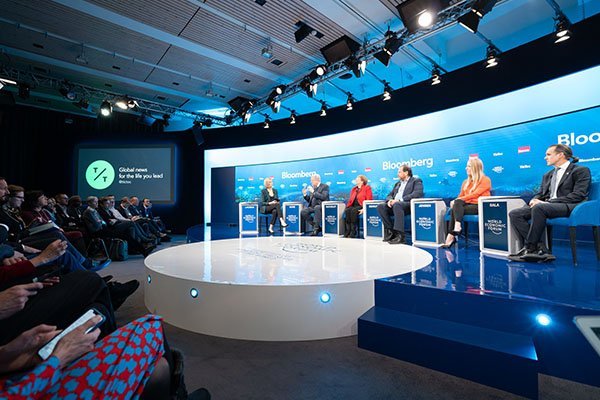
NFT Market: NFTs allow creators to keep a percentage of their work as an item changes hands. It powers the creative.
Fifteen percent of all the profit generated goes to buy back the best collections and NFTs. It’s good because imagine you have a ranking in which every week, we buy the top five NFTs of the top five collections. That will create that the people will try to buy them before us. It generates a cycle.
We’re talking about a creator economy and Web3. I would like to know more about some of the advanced features you’ve created for creators to inspire them to work with you and your platform and make the most value for themselves as artists in this space.
This is going to be long. First of all, I am a heavy user of NFT. I have been scammed. I have been on the wrong Discord and the wrong whitelist. One time, I connected my wallet to a minting page and I withdrew again. A lot of things happened to me. What I did is to write every fucking problem that was happening to me for three months in a row and then we will toll.
For example, one of the things is there is a lot, but it’s too difficult to create high-end collections in OpenSea. You need to hire developers, etc. First of all, what we did was do all the processing inside the platform. First of all, you go into the platform. Second, we built the Woonkly generator. You can upload the ledgers of the NFT collection and generate all the rarities there inside Woonkly.
You click on publish and now it goes to IPFS or The InterPlanetary File System. You don’t need to do anything. You can set your limits and whitelist date. The whitelist is inside Woonkly. The minting page is done inside Woonkly. You don’t need to go to another minting page to mint the NFT. You will see all the minting pages inside Woonkly with our technology.
Finally, you can create a high-end collection in one hour. With the other platforms, you need to spend a lot of time. This is for collection creators. We also have been working a lot in the process of creating a collection. It’s not the same as, “Create a monkey collection or art collection for a music record, podcast, movie, NFTs, games, characters, spaceships, or whatever you need to create.”
We have differentiated the kinds of users. When you register, you can register as an influencer, user, company, brand, game, or metaverse. When you create a music record, the process for creating is everything created for you. You get to blow the cover and everything for podcasts, etc. For the users, we created the same experience. All the whitelisting is inside. You only can go into verified collections. You mint inside. There are no more scams in the NFT space.
I believe the journey is the most differentiating factor that we bring to our platform. We capture the journey from the moment you have an idea of creating a collection and run with you on that journey to make sure that it’s as user-friendly as possible from jumping into 3 or 4 platforms between Discord, minting pages, and social media and have it all in one platform that enables you to do that. That’s the future. That’s how we should be interacting with platforms rather than working with 4 to 5 platforms at the same time.
When I hear about how you built this, I think about some of my backgrounds in traditional startup building, lean startups, and customer discovery. I’m thinking of all those pain points and how to solve them. It’s a very thoughtful solution. You had some other thoughts there.
I talked about scalability. When I look at the NFT space and the space in general, the guys that can make the most out of it are the ones that understand the technologies and what’s happening and know what to do. With Woonkly, the most beautiful part for me was it’s now available to the ordinary person. For example, one of the things that Daniel is going to mention is you can log into Woonkly with your social media platform that you own, like your Instagram account, LinkedIn, Twitter, or whatever it may be.
When I go on to make an NFT, I could be a small entrepreneur or an SME that wants to have a collection and thinks it’s going to be impactful and has some utility. I can make it without even needing to code. I don’t need to understand the development language. I can be the ordinary Joe and make an NFT feel safe. There are security elements added to the platform as well. I know that my NFT won’t be stolen and that my transactions are looked after correctly. It’s the ordinary Joe factor that makes a lot for me.
That’s a great bridge to another area I wanted to dive into, which is this. Every venture I’ve talked to in this space and we have had on the show is thinking bigger than their project in terms of how we create mainstream adoption for Web3, especially when we have challenges like what has happened with the Terra LUNA system, the hacks, and all that stuff. It begs the question. What’s the pathway here? What’s the journey to mainstream adoption? What’s missing?
One area is the use of the metaverse. A lot of these metaverses are dormant. There might be 1 or 2 projects in Decentraland that make up 90% of the traffic. This is a two-part question. The first part is this. When it comes to the integration of what you’re doing with the metaverse, what are your thoughts on getting to that real mainstream adoption? I’ll ask the second part.
NFTs are being used by a bunch of freaks like us. The reality is it’s difficult to use. It’s not as difficult, but normal people that haven’t been involved in crypto don’t know how to create a wallet like MetaMask, Trust Wallet, and SafePal. We have the first challenge. When an influencer buys my collection on this platform, the users will go there to buy without going into a centralized platform because, in a centralized, it’s easy, but how do you do it in Web3 and the decentralized way?
Finally, there are incredible solutions. This one comes from LA. It’s Magic Eden. You can go into Web3 and generate a noncustodial wallet by connecting your Instagram, Twitter, Discord, Facebook account, or mobile number. This is the beginning of the huge growth of mass adoption. We have another thing. The regulatory part is your second thing. Fahad can say the regulatory part better than I can. It’s going to be a huge part of the mass adoption. We need to make the users and institutions comfortable to start investing.
Daniel, thank you for elaborating on the tools that we have in our platform. Regulatory is hard and what we developed from products and platforms. That’s the future. That’s what gives us a very distinctive edge. We meet with the regulators on a very frequent basis in the United Arab Emirates, where we are looking at different regulations. We’re going to adopt metaverses, NFTs, and play-to-earn into the mainstream. We’re keeping close so that whenever these regulations are out, we as an organization or an institution are compliant with these regulatory frameworks.
This is very important because our users would need to bank their winnings. They will not be able to do that without the proper regulatory framework that we comply with. For us to do so, we are keeping that relationship with the regulators in our jurisdiction. We’re doing that not only with the United Arab Emirates. We’re doing that with specific regulators within the Emirates itself and with global regulators as well. We’re working in Spain, the UK, and other parts of Europe, where we will provide all the ring-fencing required for us to operate in a very legitimate matter.
Thank you. Do you have any additional thoughts?
When we talk about our comfort when it comes to regulation, which is a topic that not many people like, especially in a decentralized world, you’re trying to stay away as much as you can from some control system or mechanism. The UAE and the region, in general, have been agile in doing so in the comfort of global operations. They believe in this vertical of blockchain and digital assets very strongly.
You saw Emirates Airline announce that they were going to accept Bitcoin as payment. For a world-leading airline to do so is insane. You would have assumed other countries or governments allowing such transactions to happen quicker than a country that’s 50 years old in 2022. Saying so, the regulators are putting comfort in the families. I’ll be talking later about families. It’s only now reaching the 2nd and 3rd-generation of family wealth management in the UAE since it’s only 50 years old in 2022.
The younger generation thinks relatively differently. It’s leaning on the government to make sure that they’re protecting them and the capital and investments going into this factor with companies that are registered in the Middle East, especially in UAE. The thing Fahad mentioned about keeping relationships with them is all about being on that roundtable or discussion table. Daniel Santos and Fahad Al Ahbabi are on those tables with me in the background.
The relationship is daily and weekly. Things change so fast, so quickly. You saw it with some of the most trusted tokens or companies that all of a sudden went 180 degrees. You’re like, “What the hell is going on?” How can regulators feel comfortable that their current model works? This market fluctuates and changes a lot. We’re comfortable with the regulators in the region doing the right thing.
Before we get to some exciting news, because we are in Davos and this is where all the alpha does drop, I want to talk about another part of mainstream adoption, which is partnerships and building bridges. We have seen that type of bridge-building be paramount to the success of a number of projects in the space, creators creating with other creators, and platforms that you wouldn’t even think would play in the same sandbox playing together. I would love to know a little bit about your partnership strategy. What are some of the existing and forthcoming partnerships that you’re thinking about?
—
I’ll be playing keys on your next record.
—
Thank you.
It’s my pleasure.
—
Let’s get geeky.
That would be fantastic. We’re always around.
Thanks for joining me. I appreciate your time.
—
Thanks so much for your time.
Thank you, Josh. I appreciate it.
—
Important Links
-
Erick Calderon – Previous episode
-
@CoolandDre – Instagram
-
@DreDay3000 – Instagram
-
Quincy Jones – Previous episode
-
@MarikHazan – Twitter
-
Spotify – Edge of NFT
-
iTunes – Edge of NFT