Top Podcasts
Edge Of Davos Part 3: Social Impact & ESG Feat. Alex Gordon-Brander (CoDEX Financial Network), Alessa Berg (Top Tier Impact), Jonathan Barry (Earth Trust), & Lori Hotz (Lobus)
As blockchain slowly takes center stage, major players are curious about the possibilities it brings to the social impact space. Blockchain represents a next step in tech evolution, but this new tech also can contribute to our progress as a society. In this episode, Eathan Janney engages with an assemblage of ambitious industry leaders to find out how they are making an impact today. The stage is Davos, Switzerland, during the World Economic Forum Convention at a venue called the “Crypto House” where deep creative ideas are exchanged over simple cappuccinos or a lite lunch. Eathan talks with Alex Gordon-Brander (CoDEX Financial Network), Alessa Berg (Top Tier Impact), Jonathan Barry (Earth Trust), and Lori Hotz (Lobus) share their work supporting reforestation, offsetting carbon emissions, and aiding war-torn countries through Blockchain and NFTs. They explain how they use these technologies to push forward efforts that will benefit humans as a collective.
—
Listen to the podcast here
Edge Of Davos Part 3: Social Impact & ESG Feat. Alex Gordon-Brander (CoDEX Financial Network), Alessa Berg (Top Tier Impact), Jonathan Barry (Earth Trust), & Lori Hotz (Lobus)
We’re here with you in Davos, Switzerland coming to you from The World Economic Forum convention that happens here every year. We’re going to bring you some of the sharpest minds and global leaders telling you what they think about what’s next and how they’re making it happen. In this episode, we’re going to transition from one interview to the next with a sound effect briefly in between to give you that feeling that you’re here with us, transitioning from one engaging conversation to the other. Sit back, relax and enjoy.
—
We’re going to have a Social Impact panel here at the Crypto House at Davos. I’m here with the Edge of Company. We’re a tech media and events company. We’ve got the show, the NFTLA event that’s in Los Angeles, California, as well as some very interesting tech projects that are forthcoming and we also have NFT projects.
We care very much about social impact. We’ve got our NFT projects that offset carbon and plant trees. We’re privileged and excited to be hosting this panel. What I want to do to launch us off is pass the mic to each of our participants. Let them introduce themselves, a little bit about where they’re coming from to give some context and then we’ll dive into this conversation. It’s going to be a good one. Alex, why don’t you get started?
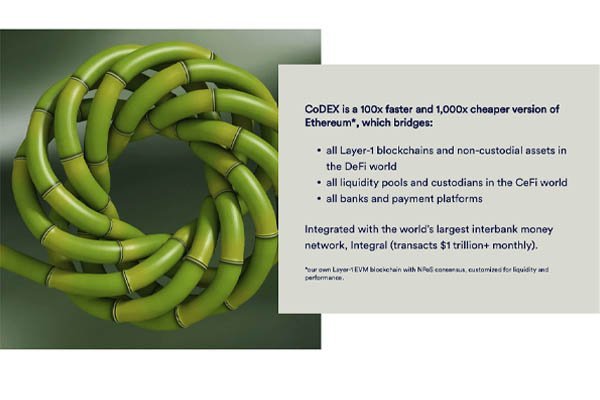
My name is Alex Gordon-Brander. I’m here from Puerto Rico. I’m here to talk about Teratree, which is an NFT project for old-growth forests. I’m also a Cofounder of CoDEX Financial Network. That’s a new Layer-1 that’s dedicated to sustainability but I’m here to talk about old-growth trees.
I’m Alessa Berg. I’m the Founder and CEO of Top Tier Impact. We are a global ecosystem of impact investing sustainability covering all sectors from food, climate and tech through Web 3.0 and psychedelics. I first came across the whole Web 3.0 space in 2012. It was a different world and had early government design. It has been so exciting to see the past couple of months alone the escalation of projects that we see at the intersection of impact and Web 3.0 so I’m excited about this one.
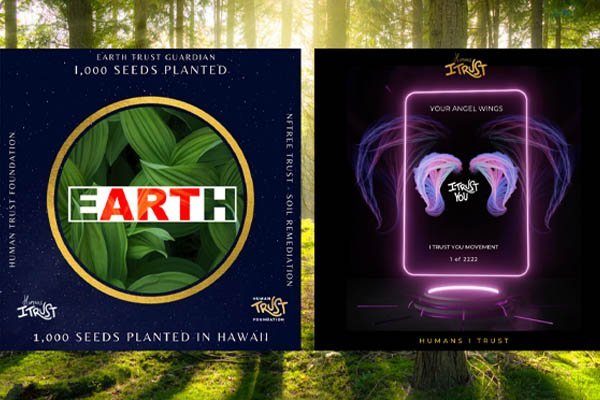
My name is Jonathan Barry. I’m the Cofounder of the Earth Trust and NFTrees. We have a collection of NFTs that we’ve been showing for about a year that plant trees. The Earth Trust is regenerative finance and clean energy impact investment fund. I’ve been in the NFT space since 2018. I’m fascinated by the evolution of the industry and excited to dive deep with you all.
Thank you so much for having me. My name is Lori Hotz and I’m the Cofounder of a company called Lobus. Our mission is artist equity. We have a marketplace and asset management platform for physical and digital art. I’m excited to participate because NFTs are a great way to create an impact for artists, their communities and also institutions that are the stewards of art. Thank you for having me.
It’s a privilege to have you all here. We’re here at Davos. We can talk a little bit about what’s going on here and what we’re all going to be planning to do but I’d love to hear each of your experiences in creating impact. I’d also love to hear about not only the successes or what’s working for you but where are there issues? Where is it you have good intentions and it’s not following through but you found a solution for that or do you wish something would change so that we can all have better access to making an impact? We’ll continue the conversation after we lay that foundation. Let’s send it over to Lori.
What’s exciting for us is that Web 3.0 solves every systemic issue of the art market and one of them is the artist’s economic position within that market. Most artists earn about $0.30 on the dollar as their primary transaction. Smart contracts and blockchain enable artists to continue to earn a royalty on the secondary markets. We’ve had a lot of impact on emerging artists who have extended their communities using this technology and also brought economic quality in the process. In turn, they always have a project that’s important to them, whether it be environmental or helping other artists. There’s a big impact there not only to the artists but communities likewise.
Blockchain is a technology that creates communities that are not siloed. Click To Tweet
We work with larger organizations like SFMOMA and The Obsidian Collection. They’re stewards of the arts and they use NFTs to also impact the communities. Awareness and reach are important for the success of a project. We focus on quality because we think quality always puts nails in these situations. I know you understand what it means when quality is different but for us, it’s the audience, the breadth of the audience and the quality of the drop that is the recipe for the successful drop. Also, the artist’s participation is critical.
For me, my background in the impact space started when I created my first nonprofit years ago. I’ve been deep in the area of impact and one of the biggest challenges that I’ve had has been accessing capital and funds. A lot of times, you’re writing these huge grants that you put so much time and energy into. By the time you’re done with the project, you have to write a huge report. The task of doing that is not even worth it.
NFT as a technology for advancing social issues is huge because then, we have decentralized communities of people who can rapidly activate initiatives, get behind a project and fund the initiative. At the same time, they can generate revenue and value. These people have a chance to make the projects thrive.
I’ve published two books. I’ve launched numerous online programs and had a lot of disaster relief type of initiatives around the world. I’ve never had NFTs to support me but now, we have this entire decentralized network of Degens or what I like to call Regens or Regenerative Degenerates, who can activate new initiatives together. I see this being a huge step for the advancement of the impact project.
When there are so many systems thinking that is required when it comes to impact, this is what we see. If we are to take impact into the mainstream as a way of investing and running companies, all sectors need to connect the dots. I had this insistent thinking. It’s how I originally approached the impact space because I saw a much better way of having our companies and portfolios show up in the ecosystem but I also found so much space to bring more synergies.
It’s ironic to reflect on these because it keeps us from reaching these escape velocity where we are able to do a lot of those dots connecting at Top Tier Impact but there is so much more to be done because the more we grow in it as an ecosystem, the more of these connecting the dots there is. This intersection of impact and Web 3.0 from my perspective coming both from the impact investment space for a long time but also coming from an understanding of Web 3.0 and how to use blockchain technology for designing your government systems feels that we’re finally getting to a point where these can happen at scale. It is understood.
I see blockchain technology in itself as so impactful from a traceability perspective, transparency and enabling what Lori was talking about. You’re ultimately getting payments for the people who are producing value. That’s a more efficient economy. To me, it is about efficiency as well in the way that we can do it right and experience these beautiful lives that we’re gifted with. That systemic thinking that includes all different sectors in the picture is where I came from. What I keep chasing is the unreachable sunset but it is all exciting because I see the progress. I see so much more to be done in connecting the dots.
Between 2008 and 2010, I was working with Standard and Poors and was involved in some of the early creation of carbon market frameworks. For years, it has been interesting to look at the successes and the failures of that. The global carbon market has picked up a lot on the agenda. That’s moving in a good direction but fundamentally, the problem I’ve encountered is that in doing impact right, whether it’s a social impact or environmental impact, it is complicated, heterogeneous and nuanced. The world tends to latch on to things that are simple and measurable. Carbon is not the same in one context as in another context.
What I’m loving about the potential of the blockchain and NFTs are opening up and what we’re doing with the old-growth forests up in British Columbia is it created a framework where the non-fungible aspects of every individual piece of forest being different is to abstract it down under a non-fungible token and then the fungible aspects sit above that.
This catered enough to create frameworks that allow us to deal with how nuanced everything is in the real world and at the same time, how simplistic the markets need to get anything to scale. Not to dampen the party but if we don’t change some of these things, we don’t have a very long time so we’ve got to figure out ways to scale up to a global level. I see this technology as being key to that.
Social Impact: Blockchain and NFTs catered enough to create frameworks that allow people to deal with how nuanced everything is in the real world and how simplistic the markets need to get anything to scale.
I appreciate you highlighting old-growth forests. People talk a lot about carbon capture, carbon emissions and how we’re going to do it. It turns into a numbers game. A very concrete example from a domain that I’m in that many people don’t know about is the piano industry. I’ve been a piano tuner for part of my life and worked within that industry. The piano soundboard is made of a very specific kind of spruce wood.
There’s only a handful of individuals in the industry who have taken note of the fact that that’s being used up because it needs to be old-growth wood. There’s going to be a certain point in the future where those soundboards of pianos cannot be made. Those trees don’t exist anymore because we chopped them all down. You could grow new ones but it’s going to take decades. You had a very important point here in saying not all carbon is the same. It comes from different sources and the sources that it comes from also have a value packed inside of them way beyond the fact that there’s carbon capture going on. I appreciate that point.
We’re here at the Crypto House talking about blockchain. There’s a buzz, energy and electricity in the air around these topics. People are excited about it. We do challenge each other but we generally don’t have to rationalize our place in the blockchain ecosystem when it comes to, is there a conflict of interest between environmentalism, the use of carbon and excess use of energy?
That is a huge issue for a lot of people, especially in art and music where the communities don’t want their artists to be affiliated with that activity. I’d love to get some thoughts from each of us on how you see that conversation and how you talk to people about that so that they can gain trust in what’s going on. We’ll let Alessa jump in first.
I have lots to say on this topic but before I go into the discussion, let’s acknowledge the fact that years ago, the press seemed to talk nonstop about the energy consumption of the bitcoin protocol. Now, we have all these amazing Web 3.0 projects that are being covered properly in a lot of cases. This has been a very fast timeline. Let’s give ourselves props for that because it’s a testimony to the speed at which things can move in this space.
In May 2021, I remember being at Top Tier Impact and had people coming from so many different sectors asking, “What about the energy consumption?” There’s something to say about that, which is a larger or more mainstream understanding of the fact that is this for proof of work that’s specific to the bitcoin protocol? There’s all of that that I found lacking in the understanding in the mainstream and that’s normal and okay because there are a lot of complex contests that are easy for us but that are tricky to bring across in the mainstream messaging. It was an easy target, in a way.
The energy consumption point is one. That is why I decided at the time to invest and thanks for that. I got to make investments that are aligned with bringing renewable energy. For me, that was also making a statement that this is not going to solve a problem at all. On top of that, it doesn’t represent what the overall space is about. This is to briefly talk about the energy consumption point.
With all the success stories that are starting to come out with all the other applications like the application of technology to create impact and a value system that has transparency and inclusive structures whether they’re funds and all the other things we are talking about, what I want to stress out is it is our job as well to do our best to explain and educate on these issues. That’s where we found that it became an easy target to demonize this energy consumption, specifically of the bitcoin protocol, without necessarily having a broader understanding of how other protocols and systems work.
I agree with what Alessa said. Highlighting the issues with blockchain and its impact on the environment was fantastic because it created a lot of innovation around the space and people wanted to mitigate those issues. It’s an objection that can be overcome at this point. There are options. It’s true. Every artist or institution we speak to is like, “I don’t want to do more harm by creating something good.” On the flip side, we committed to a $25 million project with the Vatican and African ambassadors. A lot of that is going to go to reforestation and creating a positive environment there. People are thinking about impact projects in a way that mitigates any of that impact.
There’s a proof of stake and a proof of work on those certain questions. The proof of stake one is simple. At CoDEX, we’re launching a chain that is extremely energy efficient and offsetting carbon. We see that our launch getting near and other chains like that who are also doing the work that if you’re operating on that blockchain or our blockchain, you’re creating a negative carbon impact.
I also think there is a place for proof of work. The Bitcoin protocol is going to remain. The proof of work is a bit nuanced but it’s interesting. I was talking to someone who’s developing super high-efficient chips that are going to be able to process with a significantly lower energy cost than current chips. The big driver for that is the profitability of bitcoin mining.
Bitcoin mining can create opportunities for renewable energy that would not otherwise be profitable off-grid. It can fill some of the gaps, whether it’s supply-demand imbalances. If you look in a nuanced way, you can see that even straight-up bitcoin proof of work mining shifts the innovation and the infrastructure built in such a way to move us in a better direction. It’s a hard story to get into a one-page tabloid article but it’s real and we’re seeing more data about that at the time.
On a macro scale, think about the difference between the traditional monetary system and how the money is being utilized with the legacy systems and then look at the cost of innovation in the blockchain space, the advancement of environmental initiatives and the change that is coming from the blockchain. Compare the amount of oil that’s burned from everyone having to drive to the bank to go and do their banking, the brick and mortar and energy of the costs that go into keeping the lights on in the bank.
If you were to compare the two blockchains versus the traditional legacy system, you would see the cost of innovation is an investment that’s worth it for humanity’s future in the long run. To send a rocket to space, you have to blow up a few rockets. The bigger that the chunks get or the greater the explosion that happens, that’s advancement happening. We’re on a good trajectory for a sustainable future on the blockchain.
Bitcoin mining at this point has done quite a bit for the advancement of renewable energy and helped to drop the costs because it is fully incentivized to make that happen.
It’s very interesting. It’s a pattern. With new technology, we always see that people have their problems with it. I was hosting another Twitter space and somebody was bringing up the fact that when the light bulb first came out, people were like, “That thing is going to burn my house down.” It takes a while to the adoption of these things. The other very natural piece of something new is for some reason, it’s always easy to see the drawbacks but the advantages are always yet to come because you have to engage with it and see what all the possibilities are.
I had that experience in a different domain doing online education in places where they say, “You can’t learn that online,” but there are advantages to doing that online. You can get more people and deliver the content in a more curated way. These are great points to say that there are a lot of benefits that even remain to be seen.
There is a lot to be said about that but let’s dive right in here. We’re in Davos. I want to hear from everybody how have you been treating your time here. Have you been here before? If so, have you seen any interesting changes over the years? How do you make an impact while you’re here? Do you have any interesting strategies or things you’d like to share? Let’s go back over to Jonathan.
This is my virgin year at Davos and it’s an absolute pleasure to be here. I always get mixed media in the mainstream. You get the news about Davos on CNN and then on other platforms that aren’t so mainstream. I was having a great conversation with Brock Pierce. He was like, “There are so many people out there who are hating on Davos and Web 3.0. At the end of the day, if you’ve got a message to share or something important that you want to get out on a global platform, then show up and share your voice because if you don’t show up, then your message will not be heard.”
There’s this article that came out saying Davos is dead but Davos is just getting started. There’s also the article saying that Davos is burning. We’re going to see an entirely new generation of influence and affluence that’s going to roll into the space and become even more of a platform for decentralized collaboration to take place.
Social Impact: Bitcoin mining can create opportunities for renewable energy that would not otherwise be profitable off-grid. It can fill some of the gaps, whether it’s supply-demand imbalances.

—
—
—
Important Links
About Alex Gordon-Brander

Co-founder
Designed trading system for Bridgewater, world’s largest hedge fund. Patented the matching engine at MarketAxess. Both platforms have moved trillions of dollars. Serial Founder with focus on liquidity, inclusion and regeneration. In crypto since 2010.
About Jonathan Barry

Co-Founder of Human Trust Foundation
Jonathan Barry Fritzler is an impact entrepreneur and investor on a mission to activate conscious leaders and create systemic change. After a near death experience in 2009 he had a profound awakening that compelled him to shift his efforts toward helping humanity.
He launched Everyday Hero Project 501c3 and raised $1M to build a recording studio in Hawaii. In 2013 he participated in the World Youth Forum and helped advise the UN in establishing what later became the Sustainable Development Goals. As a youth advocate he published the book “Hack Your Education” was published as a curriculum in universities and highschools internationally and presented a TED talk on the “Education Energy Movement”. Today Jonathan creates “meditations for your medication” with his nutritional supplement company Transcend Alchemy and hosts transformational leadership retreats including meditation, business strategy, and somatic therapies.
About Lori Hotz

Cofounder, Lobus
Three years ago, Hotz started the asset management platform she wished existed when she was a global managing director at Christie’s.
Now with $5 billion in assets, Lobus leverages blockchain technology to provide artists, collectors, and advisors with management tools.
Its mission is to give artists continued ownership over their work so they profit from future sales.