Top Podcasts
Edge Of Davos Part 2: Feat. Medha Parlikar & Mrinal Manohar (CasperLabs), Alex Bornyakov (Minister of Digital Transformation of Ukraine), Marcus Shingles (Exponential Destiny)
Back with another episode coming to you from Davos Switzerland during the World Economic Forum 2022 conference, the Edge of NFT team brings you engaging interviews with key players in Web3 and beyond. Prominent names such as Medha Parlikar and Mrinal Manohar (CasperLabs), Alex Bornyakov (Minister of Digital Transformation of Ukraine), and Marcus Shingles (Exponential Destiny) join us to talk about exciting projects and developments in multiple areas. We’ll cover an array of impactful topics like tackling education and government funding, supporting humanitarian efforts, venturing into the nonprofit space and addressing the UN’s SDGs. Get to know a wide spectrum of exciting projects and prospects for NFT in this informative episode. Don’t miss out.
—
Listen to the podcast here
Edge Of Davos Part 2: Feat. Medha Parlikar & Mrinal Manohar (CasperLabs), Alex Bornyakov (Minister of Digital Transformation of Ukraine), Marcus Shingles (Exponential Destiny)
We’re here in Davos, Switzerland coming to you from the World Economic Forum Convention that happens here every year. We’re going to bring you some of the sharpest minds and global leaders telling you what they think about what’s next and how they’re making it happen. In this episode, we’re going to transition from one interview to the next to give you that feeling that you’re here with us transitioning from one engaging conversation to the other. Stay tuned, sit back, relax, and enjoy.
—
Welcome back to Davos. This is our second day here. We are excited to keep the excitement rolling. We’re here at Blockchain Hub doing some interviews. We’re going to talk to some members of the Casper team. It’s looking to be a great interview. Let us have them each introduce themselves. Let’s start with you, Medha.
I’m Medha Parlikar. I’m the CTO and one of the Co-Founders of CasperLabs. We’re the company that built the Casper Network and turned it over to the public Casper association who are now stewards of the network. I’m happy to be here.
I’m Mrinal. I’m one of the Co-Founders and CEO of CasperLabs. I’m a computer scientist who went to Wall Street. Now I’m reformed.
It’s apropos, too, because we have here in Davos an experience like the old guard in the traditional finance and the non-traditional interacting daily. It’s a big deal that you guys decided to do this house. It’s been incredible to be a partner here. The hospitality has been amazing. The lattes have been critical. The croissants have been on point. I would love to hear the genesis story about the Blockchain Hub. Why did you do this? How did this come to be? Why was 2022 the year to pull this off?
Davos is where we have government financial and enterprise leaders. There is a slightly anarchistic streak sometimes in the blockchain. I view it as an augmentation of the system, not a great replacement. If you think about any big technical innovation, it seems disruptive at first and can be disruptive, but it usually ends up being an augmentation. You still go to the grocery store even though you can order bananas on Amazon, but having that option is great. Having an option of self-sovereign money is great. That message doesn’t come across enough that this is an augmentation.
It’s something enterprises and governments need not be scared of. We purpose-built our blockchain to be government and enterprise-friendly. That’s why we called it the Blockchain Hub and not the Casper Hub. We thought it’s important to have educational content for these world leaders in both government and enterprise to learn about blockchain technology in general and what we can offer as a Casper Network in particular. The Blockchain Hub is an educational endeavor more than anything else.
**One thing I have realized from meeting your incredible team here is you have this interesting mix of folks that come maybe from the blockchain space, but also other folks that come from traditional business in Cisco and companies like that. What is it like to build that type of culture and for that team to rally around planning this event? **
I will differ Medha on this because Medha is the one who has had the most enterprise chops here. I was a Wall Street guy. I did work in software, but it was more buying, selling, and managing than anything else. When we started the company, our ethos was blockchain is a technology. We’re looking for great engineers and builders, which means you don’t need to have a blockchain background.
Davos: Blockchain is a technology you can teach someone about. You can’t make someone a great engineer. You can’t give someone great experience, but you can educate them about blockchain.
It’s a technology you can teach someone about. You can’t make someone a great engineer or give someone great experience, but you can educate them about blockchain. That culture permeates both internally within our organization and also externally when we face the external world, which is why educating people about blockchain is so important to us.
People have asked us about how we built the team like, “I talked to someone on your team that doesn’t have a blockchain background.” I was like, “That’s fantastic. We need those people. In the industry, if it’s all the same people, then how do we make this industry bigger?” I’m totally on board with that.
That’s exactly right. Our engineers come from all kinds of traditional software companies. These are the core developers that built the Casper Network. They took a traditional software focus when they built the protocol. Even the developer workflow is much like software as it has always been built. They didn’t step outside of the workflow that they were used to.
We feel it is going to make it easy for non-blockchain developers to onboard onto the system because it’s going to work exactly the way that other software always works. From the smart contract engine itself to the workflow for building contracts, it’s going to feel much like Web 2.0 and the software the way we have always written it.
We see that theme at the larger level in bringing all these things to the public that we need to make it easy for them. There’s another level that you’re demonstrating here for developers. Why make them learn something new if they don’t have to make things easier? On that note, let’s talk about what you guys have been building. Let’s talk about some specifics.
We have been focused on building the Casper Network. It took us about two and a half years to build Mainnet. Mainnet was launched on March 31st, 2021. It has been in production for about several months. Our focus was to create features that we ourselves would use as technology leaders in a large technology organization. That’s where I come from, 25 years in Web 2.0 and Web 1.0 technologies. I looked at the blockchain landscape when we founded the company and couldn’t find a public protocol that I would use that gave me flexibility, power, and control.
I needed to service customers being service to regulatory requirements or my investors. I have to innovate even if I’m using blockchain technology. I needed to be able to continuously upgrade software on chain, get business intelligence and analytics through an ETL process, and build and test my contracts using the same processes that software has always been built with. When we looked at those protocols in the space, we didn’t find that. That’s what we set out to build. Casper has got fantastic granular permission schemes and features that all the stakeholders in an organization would need before they approve a protocol platform in their infrastructure.
I appreciate you reaching back to your experience in Web 2.0. For folks reading and even for myself, can you give a little bit of context on how that experience in Web 2.0 informs what’s going on in Web3 with you? That’s a lot of experience you have under your belt. There are similarities and differences.
Having an option of self-sovereign money is great. Click To Tweet
Web3 is an extension of Web 2.0. I look at the blockchain protocol separate from cryptocurrency. I think of HTTP Web 2.0 as an information protocol. You see a lot of information out there on the internet. I see blockchain as a trust protocol. Any information that passes through the blockchain can be trusted. I see it as an augmentation to Web 2.0, not a tear out and replace. By that extension, blockchain has to become part of a larger application infrastructure.
I understand Web 2.0 infrastructure well from the back-end architecture and infrastructure involved in Web 2.0 systems. I can understand how to integrate blockchain technology into that application stack. That’s what Casper does well. Our engineering team also hails from that era as well. They understand how to build large, scalable backend production systems. The Casper Network is purpose-built to work alongside those Web 2.0 production systems.
**I would love to zoom out a little bit more. On the show, we go well beyond the conversation about NFTs. There are so many business problems that can now be tackled with this technology and the convergence of technology that’s now available, including what you guys have built in Davos. People are talking about some of the biggest problems in our society, from what’s going on in Ukraine to the economy, and the agricultural challenges we’re having across the food tech world. **
**I would love to understand more about the business problems that you guys are solving. I have heard bits and pieces of some of the interesting projects that you’re working on. If you could elaborate on that and what you think Casper is good at tackling when it comes to that this century’s challenges. **
I’ll cover some. I’m sure Medha will have even more. Instead of talking about specific companies, let’s talk about specific use cases. Let me abstract them and then give an example of how you would use them. One thing that we are excited about is track and trace. Any item, how it moves either through a supply chain or if it’s a patent or IP, how it goes from one owner to the other, bring that back to some of the biggest problems we have. We know we have a food supply chain problem in the world, especially with Ukraine being such a big supplier of wheat.
I was hearing from a senior world leader that we might have only twelve weeks of wheat inventory left in Europe. There needs to be a solution to that problem. If we had a worldwide blockchain-based food supply management system, because each country keeps track of its stuff on its own, and it takes experts to come and aggregate this. You could have a snapshot of core fundamental commodities like wheat, rice, etc. If you don’t have them, people start starving and then the pitchforks come out. You got to solve that problem.
**If I did not have European bread and I was in Europe, I would not be a happy camper. **
That’s track and trace. You can extend that to lots of things. An airplane manufacturer feels much more confident about putting this engine together because I know where every single part of that turbine came from. Putting the wrong piece into a turbine can have pretty disastrous consequences. Track and trace is something we like. Another thing is digital certification. NFTs are part of that. The way we think about NFTs is their digital certificates. We take that concept further where we say the real value of it is A) If it can be a digital certificate of something that has real value, for example, a watch, the whiskey cast we auctioned, or a piece of art.
Davos: There’s an opportunity here where you can take an NFT and enhance it with added value and features later on. You can take brand marketing to the next level and deepen your engagement with your customers using this wonderful technology.
In the second layer, if we talk more about NFTs or some unique features is add intelligence to that. I’ll give a specific example. Vincent van Gogh died a pauper. His estate never made any money, but people who have traded his paintings have made hundreds of millions of dollars. What if there’s an NFT backing each of the paintings? 1) You’ve solved the authentication problem. 2) You could tack on every time it’s resold, 10% goes to Vincent Van Gogh’s estate.
It solves the problem of artists and people not being properly compensated. You could add any level of intelligence. You do the same thing with a house. Your house has an NFT. You can sell portions of it to let people stay a few months. Every time it’s resold, there’s automatic value added. If you do a refurbishment, the house value gets re-slotted. It’s up to your imagination. Those are two big ones. Medha, any others are your favorites?
If you dig deeper into track and trace, there are interesting things in the food supply that become important in terms of the quality of the food and the standards. The European Union has different standards for food than the United States and has clarity around which resources you can use for Europe because they need to be compliant. One of the revolutions in the computing industry was this notion of just-in-time manufacturing.
If you order a computer from Dell and they assemble it after you’ve ordered it, you can take that even one level further and get even more transparency and more real-time information about your supply chain. That is a good example. Similarly, there are also innovations in ticketing, coupons, and customer loyalty programs. There’s even an opportunity here where you can take an NFT and then you can enhance it with added value and added features later on. You can take brand marketing to the next level and deepen your engagement with your customers using this wonderful technology.
**As co-founder of a food tech company that had to deal with sourcing consistent ingredients across five different regions, it was mission impossible. The grades of different types of products that you don’t even realize are graded and the nuance of those grades and the definitions of those grades, it’s complicated. Organic is not always the best quality. There’s a lot to it. It sounds like complex problems like this you guys are trying to solve. **
**We also might have some interesting things for you to share with us that people will be excited to hear. Before we go to that. You’re so in on what’s going on. Give us a little bit of a projection into the rest of 2022 from now, anything that you could share about the way that you’re thinking about the future from this point forward. **
I tend to prefer more outlook only because I’m fairly confident it’s going to be somewhat like what I say in a few years, but I don’t know when. Stuff happens faster or slower. There will be a formalization of the blockchain industry. There are going to be more standards around financial instruments, what they look algorithmically, and what data exchange looks like. If you think about it, the internet only works because every piece of infrastructure can talk to each other because there’s TCP/IP.
We don’t have TCP/IP in the blockchain. I don’t know whether it’s half a decade or a decade, but I see more formalization, which means there will be significantly better interoperability. As a result, adoption goes fast. The second big thing I see, and one of the biggest challenges in blockchain and what is so under-penetrated is huge UX improvements. For us who are crypto natives, MetaMask looks fine. If I give it to my grandmom, it’s equivalent to asking her to do brain surgery.
We think about NFTs as digital certificates. Click To Tweet
**Ethan tried to onboard one of our friends to get on our spirit season. It took an hour or two. **
**Luckily, it was a rewarding purchase. **
You ended up winning one of the Nicole Buffett Limited Edition Spare Coin. It worked out for him, but what an effort.
The internet only took off after the web browser made it simple. You type the name of the thing you and you get there. Before, if you had a shell account, it was so complicated. Two more things I see on the horizon, we’ll have a lot more regulatory clarity in the next few years, which will be good. Either way, it ends up. Blockchain is one of those things that will always survive. If one country doesn’t adopt it now, it’s good for another country to now become the hub. It’s antifragile that way, but some clarity would be great. It’s hard to know whether what you’re doing is right or wrong.
Finally, there will be a lot more expenditure, especially from the government and enterprise side. That’s lagged. It has been funded as a community so far. It has had its pros and cons. There’s been a lot of self-sovereign entities but you have a limited set of funds, where the kingmaker is in the space and that’s so against decentralization. The spread of enterprises and governments funding real use cases will make this industry more serious.
In the next few years, I do see enterprises moving into having production projects running on hopefully on a Casper Mainnet as well as others. I do see that they are much more interested in adopting public blockchain infrastructure. There’s a lot of education that’s happening in the space. We are proud to be at the forefront of that. The first thing a lot of our customers that we speak with are asking is, “Educate me on blockchain.”
“What is the difference? How should I use it? What are the use cases?” As a community, we should all be striving to educate everybody we come in contact with on the merits of permissionless, public blockchain protocols, the trust that they provide, and the right way to use them. We want to optimize these valuable resources to use them properly. I see a lot of education and adoption happening.
To your point on education, that is one of my pet peeves. It’s this hammer and nail problem. They’re like, “Blockchain, use it for pretty much X anything.” It’s not an appropriate technology for a lot of things. It’s always going to be computationally more expensive. It costs more processing cycles than centralized consensus. It always will. It’s not an appropriate technology for a lot of things, but for the things it’s appropriate at, it is powerful.
Davos: As a community, we should all be striving to educate everybody we come in contact with the merits of permissionless, public blockchain protocols, the trust that they provide, and the right way to use them.
**We know you guys have a lot of things you’re cooking up. You can’t share probably too much about it, but I always ask people to at least tell us what you can’t share. It’s a little of a sneaky way of getting you guys to share some interesting news, but I hear there’s something cool that you guys are cooking up that you like to share. It’s some breaking news. **
We are in the user-acceptance testing portion of a brand new NFT standard that we’re coming out with, which is pretty revolutionary in this space. I don’t think there’s any other protocol out there that has this NFT standard. Because Casper contracts operate regular software, you can install and configure your NFT contract the way you configure regular software.
We have an NFT standard that will allow you to create NFTs that are not transferable, non-burnable, have mutable metadata or non-mutable metadata, upgradable, and non-upgradable. You do this at install time. It’s a no-code NFT solution that will enable you to create any NFT you want. You get a binary web assembly. When you run the transaction, you specify the modality in which your NFT contract is going to run.
Is that compatible with other Layer 1 solutions?
It is not. It’s this purely Casper-specific thing. Casper is the only protocol that has a contract package manager which is similar to other software that you see on your computer or if you go to GitHub and you’re looking for open-source software. This notion of package management is common in the tech space, but it’s not common on blockchain.
It’s not public information yet but soon.
Our pleasure. Thanks a lot.
—
—
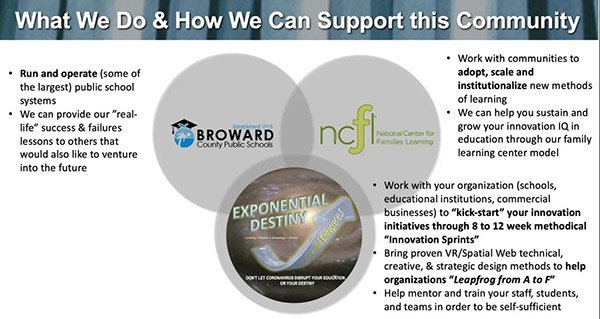
If I wanted to build this restaurant in virtuality a few years ago, it would have cost me $100,000 and would take me a while to do it. I need specialized skills. Now one of my team members from Exponential Destiny, the nonprofit I run was born and raised in South Central Los Angeles, a first-generation high school graduate, getting into college. They could put on that headset and without having the technical skill like coding skills which not everybody has, especially if you’re coming out of a public school and a low-income community. They’re not getting that type of education.
Thank you. I appreciate that.
—
Important Links
-
Medha Parlikar – LinkedIn
-
Mrinal Manohar – LinkedIn
-
Britanny Kaiser – LinkedIn
-
Marcus Shingles – LinkedIn
-
Spotify – EdgeOfNFT
-
iTunes – EdgeOfNFT