Top Podcasts
Edge Of Asia 5: Andrew Ku, Phillipp A. Sostmann, Emanuel Erdem & Kyoja Hwang
Welcome to another episode of The Edge of NFT coming straight to you from Seoul, Korea, for METACON. We bring you the latest insights on companies doing incredible stuff and building out the metaverse for Web2 and Web3 brands. Listen in to hear insights from today’s esteemed panel: Andrew Ku of Altava Group, Phillipp A. Sostmann of PwC Germany, Emanuel Erdem of Exclusible, and Kyoja Hwang of LG U+[1] . Hear them speak on the developing luxury NFT marketplace, metaverse-enabled agility through VR technology, luxury metaverse commerce, and heightened customer experiences through NFTs.
---
Listen to the podcast here
EdgeOf Asia 5: Andrew Ku, Phillipp A. Sostmann, Emanuel Erdem & Kyoja Hwang
Welcome to the episode. We’re bringing you a very special one filled with content curated from our travels to Southeast Asia and beyond. Stay tuned for some amazing interviews with incredible folks. We will cut from one conversation to the next, introducing each guest as they arrive to give you the feeling like you’re right there with us, jumping into each engaging conversation as it emerges. Stay tuned.
---
I am here in Seoul, Korea at METACON. I finished moderating a fascinating panel with four different companies doing incredible stuff and building out the metaverse for Web2 brands as well as Web3 brands. I was able to snag Andrew for a moment to tell us a little bit more about what he’s doing at ALTAVA Group. Andrew, it’s great to have you on the show. It’s great to have been on that panel with you. It’s incredible what you’ve been doing. You guys have been busy.
We have been very busy. First of all, thanks for inviting me for this wonderful interview. It was a great job on the panel. I enjoyed having the panel with you. We have been extremely busy. As a product company, we begin our focus with luxury fashion but it’s not just luxury fashion. It’s about all possible product companies out there trying to get into the Web3 domain. To be honest with you, they are all clueless at the moment about exactly what to do, but they all know that they have to get into this space now than later. We have been busy helping them with providing the full ideas and consulting, as well as the development, and operating the virtual Web3-related projects.
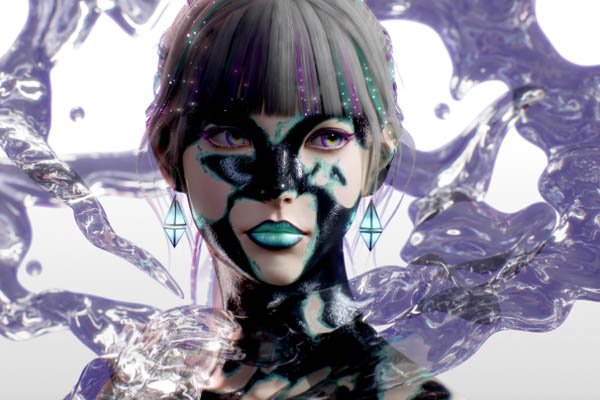
METACON: As a product company, ALTAVA began to focus on luxury fashion but it’s not just luxury fashion. It’s about all possible product companies out there trying to get into the Web3 domain.
You’re based in Seoul but you have a global company. You put a PowerPoint slide up that had dozens of brands that you work with. Give us a little sense of the size of your operation and some of the collaborations you’ve worked on.
In Korea, we have 60 engineers and developers all located in Seoul, Korea. My co-founder, Elizabeth, is located in Paris. She does all the communications and brand relations in Paris.
That’s a good place for her to be.
She comes from the luxury fashion side. We have a CBO or Chief Business Officer, Chiara, who joined from Balmain Group. She is in Singapore. We are a Singapore-registered company, having Korea as our R&D center. We have business units all over the world in Europe and Singapore, and two people doing the creative artwork based in London.
What about North America? Are you going to come over there at some point soon?
It’s the most important market for us. That’s our next focus. We would love to discuss a lot more with you how we can better approach and get into the US market.
Why don’t you tell us about some of the exciting partnerships you’ve done in 2022? Give our audience a sense of what luxury brands can do in the metaverse that works. There’s a lot of skepticism about this space still, but you have done some projects that have been quite successful.
There’s a lot of confusion out there with the brands. There are so many people approaching brands and telling them all different things. There’s an NFT project. There’s a virtual pop-up store. There’s a metaverse integration. There are so many. They are all different. The companies out there specialize in different categories within the realm of Web3, the metaverse or virtual worlds. We are the one rare company that produced a full spectrum of services where we have our own 3D digitization technology. We have one of the best avatar technologies.
We pioneered running and building virtual popup stores for brands. We come from a gaming background. We know how to put it all together to gamify a system. We have our own metaverse. We act as an A to Z total solution company. We can offer a holistic view and approach to how brands can penetrate into and take advantage of what’s happening in the world now where everything is shifting to Web3. It’s not just about one detached idea. What we offer to brands is one holistic idea.
You’ve worked with some pretty big brands. You mentioned LVMH. Did I see Burberry?
In June 2021, we have created LVMH’s first official virtual ambassador. Her name is Livi. She was introduced during Viva Tech in Paris. She was at the center stage speaking to the chairman of LVMH directly. We are the creators behind Livi. We will continuously manage Livi for the LVMH group. We have also launched the very first luxury metaverse commerce with Fendi in 2021. We integrated their Summer 2021 Vertigo Collection into the metaverse where users will come in. Instead of clicking pictures and purchasing the product, they will go into the metaverse environment, engage with the avatar, and view everything in 3D. With a single click, they can purchase the real product.
We worked with Bulgari also and organized their virtual popups and exhibitions for users because high-end jewelry is only made by one piece. It’s rare that even though the office has that high-end jewelry, the presence is in local markets. Digitizing the highest fidelity manner possible and showcasing it through the virtual world was the choice for Bulgari. We managed that process. We also worked with Balmain and launched numerous different fashion NFTs. The fashion NFT came with physical goods as a utility. In this case, in collaborating with The Dogpound, we had a special edition of sneakers. When you buy an NFT, the sneaker comes with it.
There are so many other virtual pop-up stores as well. We are also expanding our reach beyond luxury fashion. We launched the French car company Renault’s digital campaign and NFT project. We are managing the digital campaign with the gamified system and then the NFT project that links to the digital campaign, and plugs the user experience directly into our metaverse as well as Sandbox going forward. When we speak to brands, we’re not just selling or pitching to work only with us or within our metaverse only, but we offer full access to other metaverse projects as well.
That’s exciting. Being a pioneer in this space and working with so many folks, you think about the future of fashion a lot. I love your perspective as we are in this “bear market.” Someone told me that it’s a bull market trap in a global bear market. Regardless, there are a lot of questions about how the traditional fashion industry and virtual fashion will coexist. You called it Commerce 3.0. What is your vision of Commerce 3.0? Where is this all going?
In the Web2 era, which is internet-based and eCommerce-based, everything was focused on the direct-to-consumer or D2C experience. There’s only a single business model out of it, which is transaction-focused, “Buy or sell.” From that, now going into Web3, everything is also shifting to the metaverse and the user experience becoming more 3D, and the user experience becoming more through your own avatar. We call it D2A or direct-to-avatar.
We are betting that, especially for younger generations, the first-ever product experience will happen first within the metaverse instead of the physical store. The D2A experience is becoming more important and then moving away from a single business model, which is transaction-focused. Going forward, how much is 3.0? It’s about the community but also sharing our creativity and the economy with contributors, creators and whatnot.
What does a community mean to you? We use the word community a lot. It’s becoming so common that it has lost some of its luster. When you think about the Web3 community, are there any specifics that you can pinpoint that are different from communities that existed years ago in clubs, membership groups, and local community gatherings? It can be a little bit nebulous for some people.
For example, we have a very active community on Discord and Twitter. As NFT holders, they know that if we do well, they get the benefit. In our community, we are 100% aligned.
It’s like co-ownership almost.
If we do good, they do better. There’s a co-ownership stance in a way. They become active marketers. Whenever we launch a new project or do something, they’re the first ones to come, test, and provide us feedback. They know that as NFT holders, they will continuously receive benefits, whether through the staking model, getting white-listed for the next big NFT projects, or sharing some revenue opportunity with the holders. Our interest is 100% aligned.
Before, in Web2, it was a one-way direction. Oftentimes, we make important decisions by listening to the community. The community has enough power that we listen to them and make important decisions based on that. That’s our case but there’s also a DAO. It’s a completely decentralized organization. All the decision-making and everything is done in a trustless way.
Are you doing that as well?
We are going in that direction. In Web3, communities are always going to play such a big role. Your efforts should be focused on not generating extra profit but building more communities going forward.
InWeb3, communities are always going to play such a big role. Click To Tweet
That’s exciting. It’s great to spend a little time with you. We will have to unpack this more at NFT LA. We will get you over there to LA and talk to all the folks in the US about all the exciting things you’re doing because I do think that’s a market that could benefit from the product suite that you’re bringing to the market. Meanwhile, how can folks stay in touch with you and tap into your community?
We have over 70,000 Discord members on our Discord channel. We have active Twitter members. Those are the two major community channels where you can find us and hear about us on a daily basis.
What’s your Twitter handle?
@ALTAVAGroup. You can also log into ALTAVA.com. You will see the latest NFT projects that are happening and then updates and everything about us on a daily basis.
That’s exciting. Thanks for spending a little time with me. You have to get back to the office and keep building the future but I’m glad we could chat a little bit more about what you’re up to.
Thank you.
—
I’m excited to be here with my new friend, Philipp Sostmann from PwC Germany, who came this way to talk about the future of the metaverse in collaboration. Philipp, it’s great to have you here on the show.
It’s my honor.
You gave a keynote here about the real utility of the metaverse that PwC is utilizing not only for your clients but also internally. I would love for you to share what your observations have been on productivity, especially given the challenges with COVID, remote working and everything, and what you’ve done to increase productivity using the metaverse.
We see a big potential here. We realized in the last few years that we lack social distance. The social distance increased by so much. Normally as consultants, you work together next to each other. You are trying to create value for your clients and learning on the job. There was a study released by the Harvard Business Review or Harvard Business Manager talking about how the consulting industry has changed. Normally, you went into consulting to learn on the job, sit next to each other, and be there as a team. All that was gone from one day to another.
What we needed is a collaboration platform, which is better or has more opportunities than simply always collaborating on a screen size that is 20×30 centimeters diagonal, which in the end led to us implementing VR technology. What we did is we rolled out headsets for our teams, specifically my team. We are working daily in VR. We’re doing our dailies, retros, and plannings. Even though we are just working on gaming devices or those big and bulky headsets, we see already the advantages at this early stage, which is super interesting.
What was the reaction of your team when you were like, “We’re going to do this.” Were they gung-ho or skeptical? What has been the feedback so far?
There are two sides. There was one part of the team which was super excited and open and saying, “I want to be there at the forefront. I want to try hiking Everest. I want to be the first one,” and the other side which was very skeptical.
It’s a natural change curve.
We have a university that’s doing checks in parallel to have it scientifically proven what the results are. We have recorded that social distance is getting better and reducing. We have higher creativity and focus on relevant content. We have a stronger team feeling and enhanced communication, which is amazing. We’re now working on big headsets. The next generation of comfortable headsets without the exhaustion effect is just about to come out.
That’s pretty cool to have that type of empirical data so early. They offer so much promise. What’s the opportunity for your clients in terms of collaboration, especially when you mentioned a smaller team environment? Back in the day when I was a consultant, there were usually 3 to 10-people teams, but when you’re working on clients’ projects, there can be as many as 50 to 100 people involved in different divisions of large companies. What do you see as the possibility there?
We have a lighthouse project in that area. We are working with a German ministry. We have a program with 150 employees working on a digitization initiative. We conducted our first program increment planning with over 70 people wearing VR headsets. We gave those people headsets and figured out that when we have the right virtual spaces arranged, we could conduct agile meetings in a perfect manner. We have our Kanban boards. We start together with 70 people. We split up and do our retros in smaller teams which are guided. We come back together, which is a super immersive feeling. It brings people back together without everyone needing to travel and spend time in a train, a plane or a car, reducing CO2 and travel costs.
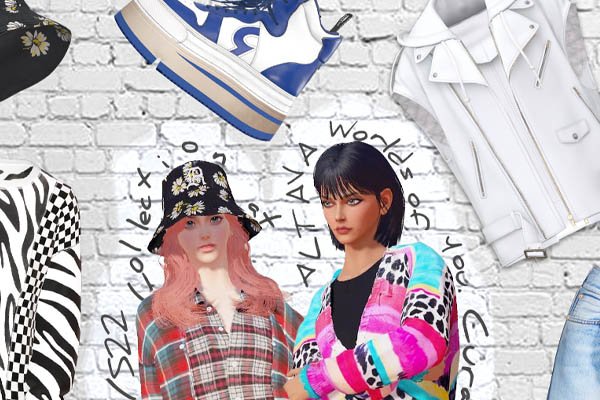
METACON: It brings people back together without everyone needing to travel and spend time in a train, a plane, or a car, reducing CO2 and travel costs.
The germaphobes are happy too.
It is indeed at the moment an issue.
You don’t have colds or anything spreading around the office. How long are people wearing these headsets? Are they typing at the same time that they’re having these meetings? I wear one of these headsets for a while. I get a little bit of a headache. What has been your experience on the ground here?
We still see this exhaustion effect, but that’s also a reason why we always plan the sessions with a lot of breaks. I must admit it. Roughly 45 minutes is the max we can go, and then we take a 5 to 10-minute break to make a bio break, take a coffee, or simply do some other work. We get back into virtual reality. It’s important to always charge your headset because the headset’s performance is at the moment maxed out at 2 or 3 hours per charging. You always need to connect your headset again. We see some progress there but indeed, we need to always limit and time box very well our sessions. With the next generation of headsets, I hope and I’m very convinced that we will be able to endure longer without headaches.
That’s exciting. Are other divisions of PwC and locations adopting this yet? Is your particular office the pioneer?
It depends on the region. In Germany, yes. In the UK and the US, PwC is having significant efforts. They’re also thought leaders in the implementation and adoption of VR at work. We’re doing a lot. I know that we have quite some initiatives going on parallel to stay at the forefront of it.
That’s exciting. You don’t hear too many stories of real-world business applications in the metaverse where there have been some proven empirical results. Hearing this for me is very encouraging about what is possible. I love that you are taking a very iterative and methodical approach with some outside research to back up what you’re doing. I’m excited to follow along with what you’re up to. I wish you the best. If anyone wants to learn more about this project, where do they go?
We have a website. If you simply google metaverse-enabled agility. There is a website from PwC where we have all the information. That’s the right spot to go.
Philipp, thanks for hanging out with us. I’m excited to keep track of what you’re up to in the metaverse to increase productivity.
Thanks.
---
It has been exciting learning about everything happening in the metaverse, not only in Asia but also companies that have come here from Europe, including my new friend, Emanuel Erdem who’s the Head of Metaverse for Exclusible. He came all the way from Brussels. It’s great to have you on the show. It was great to have that panel together.
It was a great panel. It’s nice to be on your show. Thank you for welcoming me.
I’m sure our two co-founders, Jeff and Eathan, would have loved to have been here with you. For them and the audience at home, tell us a little bit about what Exclusible is up to in this space.
We have been known for launching the luxury marketplace for NFTs. We wanted to build the far-fetch of NFTs or the meta party of NFTs. We first started with our NFT drop with 3,000-plus memberships. You can see it that way.
What was that called?
It was the Alpha drop or the genesis NFT drop off Exclusible that we sold on our landing page on our website. It sold out in 48 hours. Out of that, we created a community of enthusiasts for affluent lifestyles and luxury NFT collections. Out of that, we then started doing NFT drops with luxurious brands. We started with different brands like Hogan with the shoes and Christian Lacroix. We have done Asprey Bugatti, which was our biggest success.
We had 261 NFTs. We sold it at 3 ETH. The floor price went up to 20 ETH or even 25-something. There were many people who did a lot of money there but also fans and collectors of this NFT, which is seen as a luxurious car NFT. You have La Voiture Noire, which is a figure. You have a real physical asset that you can put on your wall and this actual statue is worth 60,000 pounds. People could receive it physically.
That’s exciting. In some ways, the synergy between luxury goods and Web3 is very obvious because this idea of exclusivity in membership and being part of something special is synergistic with the luxury goods lifestyle. I’m curious about what the background of your team was and why you chose this niche, as well as what you’ve learned along the way in doing all these types of drops.
Many of the founders of Exclusible, especially our Chief Commercial Officer, Olivier Moingeon, come from twenty years of careers in luxury. Other members of the team have worked at different luxury groups. We have this DNA of luxury. What you mentioned about NFTs being very close to the DNA of luxury is true because NFT collections are exclusive. They’re not unlimited. They are scarce, between 1,000 to sometimes 10,000 per collection, but there’s an aspect of scarcity, exclusivity, and hype also created around a drop. These are also things that luxury brands try to create in the Web2 industry. You can bring that into Web3 by doing NFTs, which is perfect. That’s why we see so many luxury brands that enter the NFT space.
I remember that day.
It’s possible.
It sounds like fun. I’ll take you up on that.
I hope to see you in NFT LA also.
I would love to have you there.
Thank you very much. Thank you for your time.
---
In May 2022.
It’s nice to meet you.
---
Important Links