Top Podcasts
Edge Of Asia 3: Token2049 & All That Matters, Feat. Yohan Lee (Sandbox), Max Kordek (Lisk), Jeff Morris Jr. (Chapter One), & Jagdeep Sidhu (Syscoin)
Live from Token2049, a premier crypto event organized annually in Singapore and London, Josh Kriger sits down for an insightful conversation with some of the leading figures in crypto. In this episode, Yohan Lee and his team at Sandbox share how they’re achieving steady growth even during the bear market, as well as the exciting stuff they’re doing in Singapore and Asia. Max Kordek of Lisk tell us what he sees blockchain development going and how Lisk is contributing to the space. Jeff Morris Jr. of Chapter One shares how NFTs can affect the subscription space and why you don’t need to start with decentralization for everything. Meanwhile, Jagdeep Sidhu of Syscoin explain how DAOs are going to be the critical piece upon which our future structures will be built, and what Syscoin is doing to evolve the sophistication of DAOs. Join in and get the latest scoop from some of the biggest voices in crypto today!
---
Listen to the podcast here
Edge Of Asia 3: Token2049 & All That Matters, Feat. Yohan Lee (Sandbox), Max Kordek (Lisk), Jeff Morris Jr. (Chapter One), & Jagdeep Sidhu (Syscoin)
In this episode, we are bringing you a very special one filled with content curated from our travels to Southeast Asia and beyond. Stay tuned for some amazing interviews with incredible folks. We will cut from one conversation to the next, introducing each guest as they arrive to give you the feeling that you are right there with us, jumping into each engaging conversation as it emerges. Stay tuned.
This is an exciting event. It’s a melting pot of music, gaming, sports, entertainment, and Web3. Naturally, I have some of the crew at Sandbox representing from Asia here, Yohan and George. It’s great to have you guys.
Thanks for having us.
We love to learn a bit about each of you and your journey in terms of getting involved with Sandbox. Let’s start with the OG, Yohan.
It’s nice to meet you. I’m Yohan. I am the Global Operations Manager for The Sandbox. I joined The Sandbox in 2019 in the early days. I have been sticking around. It’s not something that happens in the crypto scene where someone worked for a blockchain company for more than three years because here in the industry, 1 year is like 10 years in a traditional market.
I’ve heard that. The comparison went through like dog years.
It’s like Interstellar. It’s a different planet here. I began my role here in The Sandbox as the lead in Korea. I have been leading marketing operations and overall our activity to expand Sandbox there for the last few years. It was 2022 when I transitioned to Global Operations so that I could have a global experience and come to this great conference.
George, what about you?
I hit up Singapore and Malaysia. I have been doing Malaysia for not so long and am moving to Singapore, so it’s a new experience for me. All that matters is a very interesting space for that. I have been in the crypto space since the last bull bear in 2016 to 2017. I had a bit of a career in the Web3 space. I’ve done ICOs and a lot of blockchain advisory but The Sandbox was the first NFT I ever bought, which was interesting.
I knew the head of China at the time. We are decentralized. The head of Hong Kong China was based in Malaysia. We are friends, and he told me about The Sandbox, and that’s how I got in. I bought my first NFT. He then said, “I need some help in Malaysia.” That’s how it all began. This was in 2021. I have been here since, and now I’m going all in The Sandbox.
It has been an exciting year for Sandbox. Matthew was one of our keynote speakers for NFT LA. That was in March 2023. I’m sure there’s a lot to catch up on, starting with Alpha Season 3. Tell us a little bit more about what’s going on there.
Back then, when we met with Matthew, we probably had Alpha Season 2 launched. In Sandbox, we first launched VoxEdit in 2018 and Marketplace in 2019. In 2020, we launched Game Maker. The Alpha Season was the first playable game content on The Sandbox that we launched in November 2021, which was Alpha Season 1. We launched about eighteen quests back then. In Alpha Season 2, it was 38 quests. For Alpha Season 3, we launched in mid-August with 98 experiences. It’s almost 100. We should have maybe created 2 more to make it to 100 but it’s 98. There are more than 650 quests to complete. It’s time-consuming to finish the whole journey.
In Alpha Season 3, in this season, there are games using IPs like Steve Aoki, Snoop Dogg, and Walking Dead also. You can come and play The Walking Dead game on our Metaverse platform. It’s giving us a good boost in terms of user acquisition, also. In the 2021 summer, our total registered number was only 200K but throughout the year, through several offices, we now have almost 4 million accounts created on our platforms. That’s a part of the content. We are not crypto-based or speculative in the project. Our focus is on creating content for the users to enjoy. Thanks to that. We were able to make steady growth even during the bear market.
George, am I allowed to ask what your favorite quest is from the latest batch?
To be very honest, I like the S Aoki one because I brought it up a lot. A lot of people, when they want to come into the Metaverse, they are not sure what they want to do. How does a musician or an artist come into the Metaverse? I felt that if you look at it, it’s an innovative form of storytelling to give people an idea behind the artist. They place quest and games and get to know a bit about the history of the artist as well. From there, they create more of a connection with their favorite artists. We did that with Snoop Dogg as well as with his Villa. S Aoki is another one.
In many ways, one of the unique things about the Metaverse when it comes to user-created content or brand content is that advanced or expanded storytelling. Another example was we were speaking about movies. There are independent movie makers who want to go into the Metaverse but we told them, “What if now your storytelling could be two-way?” It’s because movies are all one way. You are telling a story in one direction to an audience but you can then add on that Metaverse experience, and people can be a part of the story and expand it. These are things that we are working on. Maybe some companies are experimenting with it. To me, that would be my favorite.
Just to add, one of the key attributes for Alpha Season 3 is play to earn. Users can complete this quest and earn those points and EPs, and they will be given the right to earn tickets so that they can win raffle tickets. They can join the raffle to get the Alpha Season 3 ticket. Once they have the ticket, they can get 500 $SAND in reward as a basic. If they hold any of our existing NFTs, they will get additional $SAND as a guaranteed reward. Finally, there’s a leaderboard in Alpha Season 3. If you are the first place, you will receive 30,000 $SAND, which is closer to $30K. If you play our Alpha Season 3 for three months, there’s a good amount of reward.
It’s a very competitive amount of value to be created, especially depending on where in the world you live and the cost of living. That could be extremely meaningful. That’s exciting, guys. This is my first trip to Singapore with the whole team that’s here. It’s a hospitable country. Everyone is so friendly. The food is amazing. It has an interesting architecture. There’s a lot happening here in Singapore. A lot of people are asking, “Are you moving here?” I’m like, “I don’t know, maybe.” You came on board for Singapore and have been here a while. Can you give us a sense of what’s going on the ground in Singapore and why it’s become such a significant blockchain hub?
When it comes to Singapore, it has always been a regional hub for all businesses, especially when it comes to technology and innovation. It has been spearheaded a lot by the government as well. It has been voted for two years and running to be the top technological hub in the world. It’s because of that the acceptance of technology is big.
A lot of companies here are very open. The conversation is easy. Compared to other countries that I have been with or managed when you talk about blockchains, some countries are still like, “Is this legal?” That’s the conversation. In Singapore, it’s, “What can we do?” There’s a different starting point. It’s that openness and desire from the smallest companies to the biggest companies to innovate their business.
I have been here for two weeks, preparing for the introduction of The Sandbox in Singapore. We’ve already launched an academy. We’ve got DBS in the same span of time because all this was pre-negotiated. More than that, I’ve met every kind of company you can think of. I’ve met so many of the biggest household names here of telcos, funds, etc. they all want to talk. They all want to do something. The conversation’s like, “We want to do this or that. Can we do this?” That’s a good conversation to have in any country if you think about it. Other countries will be more like, “Tell me what you want.”
Yohan, you have been here a little bit longer. I have an observation. You can comment on it. You could agree or disagree. I went to one of the national history museums. It came clear that the whole history of Singapore, which is fascinating, you got these great waterways and an economy based on building bridges, imports, and exports. Why not extrapolate that to the Metaverse into the virtual exchange of goods and services? It seems like a very open culture about trying new things and being innovative. What are your thoughts there?
I agree. Every country has its own attributes. It’s important to capture those values into the Metaverse to make it more appealing for players and partners. I believe that Singapore has always been the leader in terms of innovation. They always strive to be the most innovative country in Asia. What we are discussing at the moment is not fully decided but we are preparing something like a Singaporeverse. In The Sandbox, what we have been doing since early this 2022 is we have been doing a LAND sale with the team of each region that we are expanding.
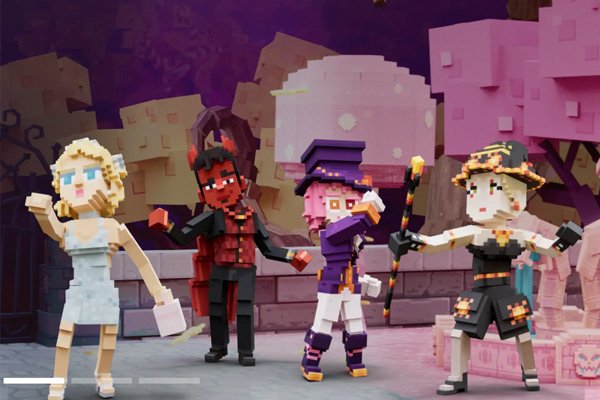
Token2049: Singapore has been always the leader in terms of innovation and they always strive to be the most innovative country in Asia.
For instance, in Hong Kong, we have a market there also. We launched the Mega City within our Metaverse, where we introduced all of our Hong Kong-based partner companies and IPs. We are doing the same with Korea also. We are launching Kverse with all the entertainment companies, sports companies, and companies from the financial sector, media, and crypto. We are introducing them in the Kverse in the designated location. We are doing the same for Singapore. We are in the process of building the narrative. We will see how that goes. I hope that our story will be appealing to the Singapore market and our partners.
It sounds like you have some fun jobs. George, what are you looking forward to here in the forthcoming quarter or two?
Now, that’s a combination of things. The key thing is to try to have some innovative experiences for the market. We are building that. The academy is one. That’s our educational. That’s not a common thing in The Sandbox globally but we want to build creators and builders. It’s not just about the tech. It’s also about the conversions of art with tech. That’s where the academy comes in because we teach people who walk at it Game Maker. We want to do more of these initiatives. We got some cool stuff that we are planning for that people will be excited about.
Any hints?
Alpha Season 3 has interoperability with BAYC and Gutter Cat Gang. The point is that a lot of these NFTs are these communities that are coming in, and we make them interoperable. There are some things that we are working on in this space as well. It’s a big use case for the Metaverse to be interoperable with other projects as well. We are going to see a lot more of that because Singapore is not just for Singapore-based companies. It’s for companies throughout entire Southeast Asia. There are many huge projects in Southeast Asia. They meet and convert here.
I’m excited to connect and bring new communities in and the opportunity to do so in a conducive place like Singapore for the next two quarters. Why the next two quarters? It’s because we are in a bear, so it’s probably the most accessible time for companies to collaborate with us in a sense because we are building. This is a time when real builders are here, so we don’t have to deal too much with the speculators and pumps and dumpers. They are all not there. It makes the conversation a lot more constructive. In the next two quarters, we want to take advantage of the bear and do a good implementation in Singapore.
You are more than welcome to come to join us in March of 2023 at NFT LA. I’m sure we will have a lot of the US representation from Sandbox there. It would be amazing to have you on a panel, talking about what’s going on in Singapore. Let’s work on that. Meanwhile, if folks want to stay in touch with you or get involved in Sandbox and all the exciting stuff you are doing in Singapore and throughout Asia, what should they do? Where should they go?
The easiest is to connect with me on LinkedIn or by email. It’s George@Sandbox.game. It’s very easy. That’s meant to be easy to connect with. LinkedIn and email are great to connect as well as our Twitter.
Visit our website. All the contact information is there. For Singapore and to join our initiatives here, please contact George, who is our Head of Singapore.
Thank you, guys, so much for spending a little time together. We are looking forward to seeing you around town. We wish you the best with the next phase of The Sandbox journey.
Thank you so much. Thank you for having us.
I get to spend some time with Max Kordek, CEO and Cofounder of Lisk. Max, how are you?
It’s a pleasure to be here. I’m very good.
It’s fun out there on the floor. Is this what you expected for the return of TOKEN2049?
Yes. I know the organizers pretty well. They always make their latest conference better than the one before. I have been to London and Hong Kong before, and they were already amazing but this one trumps them all. I’m excited to be here. There are already many great people and great minds building in the space. From here on out, it’s going to be a very established event here in Singapore.
I can see that. We would like to iterate too. You always got to improve in this space and take it up a notch. They have been extremely hospitable to us. We met some great people as well, including yourself. I would love to get some more background on you and Lisk for our folks that aren’t maybe as familiar with what you are doing.
I have been a long-established crypto guy in space since the end of 2012. In 1/3 of my life, I have been in crypto.
That’s like 70 dog years. In crypto, that’s a lifetime.
That’s a lifetime, for sure. In 2016, I created Lisk, a Web3 application platform where we enable JavaScript developers to build their own crypto applications essentially. For that, we developed a software development kit that they can use to easily do that. It took us three years to get to a stage where we have a stable blockchain but then it will take an hour to get there with our tools.
The next step is to build a platform for these Web3 applications so that we don’t only enable developers but also empower users in using these new use cases being established. It’s a pretty long journey already being from 2016 to here. It took longer than expected. The platform is just launching early in 2023 but now is a pivotal time for us because we are finally here with the product and can showcase what we have been building for so many years involving so much research with over 60 research papers. I’m happy to be here.
That is a serious build you got going on. It’s not for the quick flip.
No, the hustle’s real. I’m always thinking long-term.
That’s great. As a long-term thinker, I’m curious. Where do you see blockchain development rising? What are the areas that we should all be thinking about where builders should be focusing their energy?
There are two paradigms to build blockchain applications. One is via smart contracts, and the other is via app-specific chains. It’s what we enable, what customers enable, and what Polkadot enables. Smart contracts are a great way to get started in the space but to build scalable and user-friendly applications, they are going to be app specific. You have much cheaper fees. You can fine-tune your blockchain and user interfaces right to your use case.
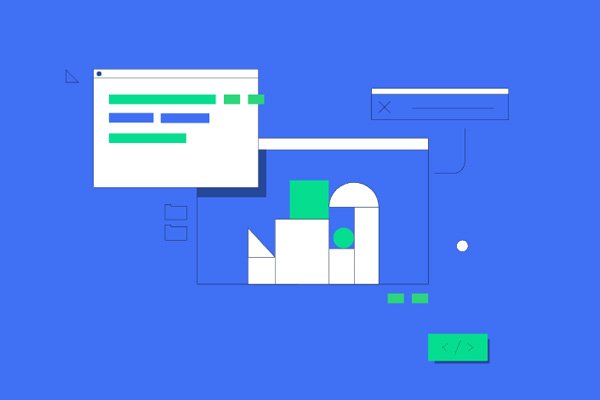
Token2049: There are two paradigms to build blockchain applications. One is via small contracts and the other is via app specific chains.
By app-specific, do you mean web-friendly and downloadable apps?
By that, I mean that 1 app list on 1 blockchain in contrast to many smart contracts living on the same blockchain. That’s the future of blockchain development. That’s something developers should focus on. We see it with dYdX, one of the most popular Ethereum applications moving over to the Cosmos site chain. It’s being app specific.
It helps clear the cobwebs, clutter, and traffic jams to have your own. With that comes some challenges technically in terms of maintenance. It sounds like Lisk is helping with that.
Yes, definitely. Why it didn’t get much traction so far is because it’s much more work to build your own blockchain. The main advantage of smart contracts is that it’s easy and fast. You don’t have a lot of maintenance to do. You deploy it once, and that’s it. In our case, it’s different. Therefore, you get a wide range of other advantages. What we do is we are providing all the tools necessary. We got them pretty well done to the point where it’s easy to deploy your own blockchain and maintain it.
What does that mean from a staffing perspective? I’m sure there’s variability based on the type of application you are building but using Lisk once, it’s like, “Lisk, for me, I like the name. I like guys with German accents. I’m going to go with Lisk.” What’s the level of effort in terms of building on Lisk for different types of applications?
First of all, what we focused on was to build everything in a very accessible programming language at JavaScript. With that, there are twenty million developers out there already who can speak that language. Especially for businesses, it is important so that they don’t have to rehire talents. They can use their existing pool of developers. If you want to build a blockchain application on this, for the user interfaces, you need your designer and frontend developer always.
For the application itself, it would be very good to have one person being a bit more on the research side of things. It could be a developer as well but understanding more the theoretical assumptions of a blockchain and a regular backend developer. It doesn’t have to be elite what you need for solidity development, for example, because one small mistake can mean the loss of all the funds.
That’s good because developers are hard to find. The elite ones are quite expensive.
If you don’t have the elite ones, you are going to get hacked at one point. That’s the biggest advantage for me. With your own native protocol, you have much more flexibility in terms of securing yourself because you can rely on existing proven development tactics and strategies. Also, let’s say if there’s a hack, you could, through a decentralized governance vote, somehow get it back because, on your chain, all the users collectively have all power you need. On Ethereum, the governance is separated from the use cases. If your smart contract is losing money, you will never see it back.
They are really cool people.
I think it’s everywhere. In the US as well.
It’s a typical Berlin outfit.
What was the timing there approximately?
Early in 2023. I can’t specify it any further.
Thank you, and same to you.
**I’m with **Jeff Morris Jr
When did you start Chapter One?
Thank you. I appreciate it.
I’m excited to be here.
Thanks for having me.