Top Podcasts
Edge Of Asia 2: Token2049 & All That Matters, Feat. David Shin & Youngsik (Yoshi) Shin Of Klaytn & Dreamer Of DeFi Kingdom
Live from Token2049, a premier crypto event organized annually in Singapore and London, Josh Kriger meets the leading voices in the crypto space. David Shin and Youngsik Shin from Klaytn talk about the company’s interesting roots and share what’s going on with Klaytn and why it’s globally significant to both the web2 and web3 worlds. Dreamer, the President at Kingdom Studios, also talks about their collaboration with Klaytn and how Kingdom Studios is gamifying DeFi Kingdom. Don’t miss this episode to learn more about the market, the web3 gaming culture, and a blockchain solution everyone needs to know about from the founders and executives themselves.
Listen to the podcast here
Edge Of Asia 2: Token2049 & All That Matters, Feat. David Shin & Youngsik (Yoshi) Shin Of Klaytn & Dreamer Of DeFi Kingdom
Hello, everyone. This is Josh Kriger with Edge of NFT. I’m one of the co-hosts here live at Token2049. I’m honored to be here with Klaytn’s Global Head of Adoption, David Shin, who is an OG in this space. I’ve been told by many that I have to get a little bit of that background from you. We may not have all heard about Klaytn in the US, but I heard about it in Asia. It’s an exciting company that has some interesting roots. I had the pleasure of talking with Yoshi and learning more about his background with Klaytn. I want to go into more in-depth with those because people need to understand what’s going on with Klaytn and why it’s significant globally to both Web2 and Web3. First, let’s learn a little bit more about you. How did you get into the space and to where you are now?
Thanks for having me, first of all. It’s awesome to be here. I got involved in 2012. I started out as one of the first ASIC miners, and then I quickly rotated in 2013 to create my own startup called PayWise. I was based out of Hong Kong at the time. While I was doing all that, I was an investment banker. Being a regulated banker, I had to disclose a lot of what I was doing. In the early days of banks’ compliance, they didn’t know what Bitcoin mining was, so they said yes to everything. The Silk Road event happened in 2013, and they pulled me aside and I almost got fired. I remember that much. I told them, “I would rather choose to do what I’m doing. If you want to fire me, let me go.”
They ended up keeping me because they realized that at some stage, they may want to go down the path of having a blockchain strategy. This is a large European bank. I continued on. I was able to set up a company called PayWise out of Hong Kong. It caught the attention of a guy named Gary Kremen out of Silicon Valley. Gary Kremen was the founder of Match.com. He called me up and said, “I need you to come in and speak to Chris Larsen because PayWise was essentially looking at using Ripple to disrupt Swift.” Now, when you think about Ripple, for those of those people in your audience, they’ll probably think, “Isn’t that what they do? Don’t they go after the cross board of Swift-type use cases?” They didn’t in the early days.
I had quite an effect in changing and having them look at this use case. To finish off that story, I flew out to San Francisco. I met Chris. I spent about three days whiteboarding for him and his team, and why they should be going after Swift. Long story short, they did that. Shortly thereafter, I introduced them to a good friend of mine because of Bitcoin named Matthew Mellon, who passed away in 2018. Matthew was a part of the Mellon family, Carnegie Mellon, Bank of New York Mellon. He was into Bitcoin early on because of the Winklevoss twins.
He was interested in Bitcoin in Asia. That’s how we became good friends. I told Matt that for his profile, it would be a lot better for him to work with Chris and Ripple. He did that. For those of you out there, you can google the name Matthew Mellon and Ripple. You’ll see how much he was involved with them after that introduction. I’ve got a long history. I decided in 2019 that I would retire from banking completely and stop playing this Bruce Wayne Batman thing.
Fully out of the closet.
That’s a great way to present it. At that stage, I decided to go help my friend Roger Ver set up his exchange for Bitcoin.com. I told Roger one of the conditions would be that I want to get paid in Bitcoin. I love the fact that I was taking a full year’s salary in Bitcoin, but it gave my wife a lot of brain damage.
You also got to get some of those old stodgy suits out of the closet, and she could put some more dresses in there.
Correct, because I burned all those suits.
I remember that day when I got rid of all my suits from my old consulting days. That’s one of the big perks of the crypto industry.
I’m sure you’re the same as me. I will never put another suit on. No one will ever make me wear a suit unless I have to go to a funeral.
I had a Jewish Orthodox wedding. I had to find a suit.
There’s always going to be 1 or 2 reasons. That’s it. I’m here at Klaytn now. Klaytn is Kakao’s blockchain. For those who don’t know Kakao, it’s the largest Web2 platform in Korea. When we say platform in Asia, super apps are a thing. A lot of people communicate by chat. That’s what Kakao grew their business on. It was a chat application called Kakao Talk. Over 95% of the population of Korea is on it. Klaytn is their blockchain.
Given your history and how you seem to attach yourself to exciting projects with truly disruptive capabilities, there’s a reason you chose Klaytn and Klaytn chose you. A chat app is fun and interesting. The adoption rate is incredible. What’s the bigger story here? What do you see happening at Klaytn that gets you pumped?
I see a lot of Asia moving towards mobile as a platform and away from the desktop. Having that transition of users who are already pretty tech savvy in Asia, I’m sure you know the average person here is quite active digitally on the internet, but having them move and convert from a desktop platform to mobile creates a lot more opportunities, especially when it comes to Web3. What we’re excited about is a lot of these projects are looking to continue to build infrastructure on Klaytn to create more mobile transactions because 90% of Asia, whether it’s Southeast Asia or Northeast Asia, are all on mobile phones.
For Kakao, we know the mobile environment quite well. They are a super app. They’re a platform business. It’s probably worth noting that they were one of the first digital banks in Asia, and now they are the biggest digital bank in Asia. They’re the biggest bank in Korea at this point. It says a lot. They launched in 2017 if I’m not mistaken, or 2016. That happened all within 5 to 6 years.
As we’re thinking about leveraging this incredible community and how it applies to the metaverse and NFTs and gaming, you don’t want to force-fit things. You guys want to be methodical and intentional about looking at these different aspects of the industry. You have plenty of resources to look at the trends and think hard about these different areas. What conclusions have you come to about these different aspects of Web3 and where this is going, and how Klaytn can support those ecosystem components?
When we look down at our crystal ball, we see a lot more social interactions that will happen on the chain. To be specific, if you think about our social activity now on Web2, Twitter, Instagram, and Facebook, a lot of these will transition in terms of how we interact on the chain. A lot of the data that gets collected on the chain will add tremendous value to traditional companies in the sense that they’ll have more information on how people transact. The difference between how they transact in a social way in Web3 versus Web2 is a lot of these social interactions end up with some transaction, financial, economic or some swap. Monetizing a lot of that data will become interesting and important for traditional companies. When we get infrastructure and more data collection on the chain, we’re going to see a plethora of traditional companies coming in.
Is that an opt-in experience for the user? There’s a lot of criticism of not only your data. Brittany Kaiser has been on the show several times and spoke at NFT LA. How do you give brands that opportunity without encroaching on individual sovereignty?
I agree with that. I like to be kept private, but the data that I’m talking about is more metadata. It’s not data about you per se, it’s data about what you prefer. That’s the important differentiation because I don’t care about whether or not I know 100 people in Web3, who they are and how old they are. That data is not as important to me. It’s more about whether there is a pattern of those 100 people in terms of what marketplace they went to or what type of NFT projects they liked. These types of data points are higher-level metadata points. This is where the monetization becomes quite interesting.
Is that a pathway to figure out how to activate the metaverse and make it more vibrant? Can data help with that as well?
It can because where that becomes relevant is if you think about the metaverse, it’s going to be a 24 X 7, 365-day digital economy essentially.
There are places you drive to twelve hours a day in the US since desolate. It’s commuter cities, where everyone’s in the city for a few hours and then leaves. When you say it that way, there’s a vacancy rate within the metaverse at times. It’s not that surprising.
My belief is in 5 to 10 years, when governments talk about GDP like trying to achieve 5% GDP or what have you, a percentage of that GDP will represent digital activities. It’ll be primarily within the metaverse. This is why Facebook and Microsoft all have quite a bit of interest in developing one. More importantly, this data is important because you can’t have people activated and providing services 24/7, 365 days on metaverse. What becomes important are NPCs.
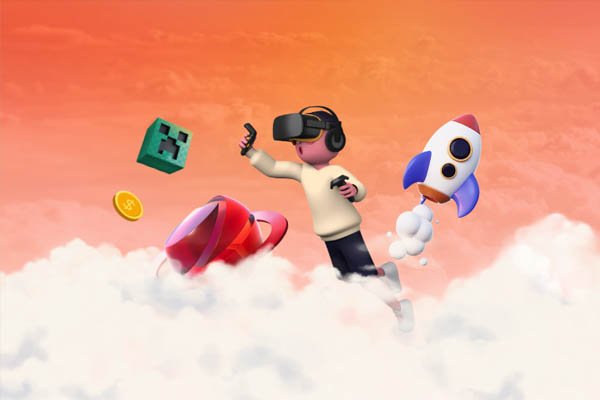
Token2049: You can’t have people providing services 24/7, 365 days on a metaverse. What becomes important are NPCs, non-player characters, that are embedded into games and fill some space and time in the game.
NPC stands for?
Non-Player Character. These are non-intelligent drones that are embedded into games at the moment. They fill some space and some time in the game. We see them a lot in open-world games. I play Red Dead all the time. There are tons of NPCs. This data is important because the data will allow NPCs to be able to have more of a structured conversation with people who are coming into the metaverse. If you think about a donut franchise like Dunkin’ Donuts had something in the metaverse, they were selling NFTs or they were providing some service, you can’t have someone at that portion of the metaverse operating 24/7. You’re going to have to have some NPC interaction. All that data that gets collected and processed through NPCs will derive the interaction that will be more interactive than what we’re seeing in games now.
Let’s continue the conversation about gaming. I would love to learn more about your perspective on what Klaytn’s doing there and how this social graphing is applicable.
If we think about where the social element of the chain is going, people are going to want to flex their NFTs. They’re already doing that. People are going to want to talk about different projects. People are going to want to like, dislike, and all this stuff. All that social data needs to get captured on the chain. There’s a lot of work being done now. Lens Protocol, CyberConnect, and all these projects are not working on our chain. They’re working on other chains. At Klaytn, we’re looking for projects that are doing similar things to help generate and collect social data.
Touching on the data point, when we have that kind of infrastructure, we’re going to be able to social graph, which is going to be important because social graphing in Web2 is limited. Whatever you’re doing on Facebook, you can’t carry that social footprint or graph onto Twitter. Your social footprint becomes fragmented. In Web3, there won’t be any walled gardens. Your social graph starts getting bigger and bigger. That’s the real opportunity because now I can understand you and your preferences more than I could in Web2 because how you behave on Twitter could be different from how you behave and what you say on Instagram.
You mentioned walled gardens. Immediately, what popped into my head is your partnership with DeFi Kingdoms, a project I have a lot of respect for. Was this type of long-term thinking influencing you all to partner with them or was it more about these guys having a cool gaming experience that’s rocking, fun and engaging?
It was a conversation that I had with one of their Founders, Dreamer, in New York. We talked about their ability to access Asia through Klaytn. That was the focal point. They’ve got a great game. Clearly, they know what they’re doing. They’ve got an amazing community, but they haven’t been able to amplify to the next level on Harmony. The discussion was about how we can amplify DeFi Kingdoms in Asia. That’s when we talked about migrating Serendale, their biggest kingdom, over to Klaytn. We have an environment where we like incubating our projects. I don’t think all layer-one blockchains are like that. Most of them will give you a grant or give you some sort of investment and away you go.
There’s some variability in the level of TLC that’s available.
We’re fond of incubating them and growing them in Asia. We think they’ll do quite well. We know the market in Asia. The gamers here are a lot more sophisticated. They appreciate good games. Also, it’s a big crypto market. People love crypto out here at a retail level. Combining those two things, accessing huge swaths of the population that are playing games every day, we thought it was a great fit for them.
David, this has been fun. I’ve learned a lot from you and your perspective on where this industry is going. It is so helpful, given where you’ve come from. If folks want to stay in touch with Klaytn and yourself, what should they do?
You can look us up on Twitter or Facebook. Our tag is @Klaytn_Official. We’re also on LinkedIn. You can also find us at www.Klaytn.Foundation.
For the people at home that are building interesting projects, take a look at Klaytn and what they’re doing. There could be some interesting synergy there.
Thank you.
I’m excited to be here with Dreamer, the President of Kingdom Studios. Previously nine years at Goldman Sachs. An interesting shift of business, but maybe not. We’ll get into that. It’s nice to know that when you’re not working on this killer game, some skydiving, surfing, scuba diving and martial arts get in the mix. Dreamer, it’s great to have you here.
I’m happy to be here.
How has the vibe been at Token2049 for you?
It’s been incredible. I’ve been to a number of events so far in 2021. It’s a bit different in Singapore. People come very intentional. They’re organized. They come in teams and network like the best of them.
They are good networkers here.
I was surprised in every other event, merch people are lining up. They come and they’re lining up to ask detailed questions. They like the merch, but they are asking for twenty-minute discussions, and people are waiting. It’s a different mindset here. Good energy in a market where sometimes it’s hard to find that not toxic intoxicating good energy that’s surrounding this place.
I couldn’t agree more. I’m enjoying our time here. I’m glad we came to Singapore. It’s important for the cross-pollination of the ecosystem. We got this “bear market.” A lot of building is still happening including what you guys are doing. There’s this big announcement about the launch of a partnership with Klaytn. I had a chance to talk to Yoshi and David from Klaytn. I would love your perspective on that collaboration. Why did you guys choose to collaborate with this amazing South Korean venture?
First of all, Yoshi and David, both separately and together are incredible. I love them both. I met Dave in NFT NYC. We started talking about what we are focusing on at DeFi Kingdoms. Some of the Three Sigma events that happened impacted a lot of us. We were not excluded from the impact there. We were thinking about how to be strategic. In a bear market, you have to do a couple of things in order to survive, staying relevant, finding ways to be deflationary with your economy and your endgame tokens, and also getting good partners where there are good incentives. A result of that conversation with Dave led to a move to Klaytn. An expansion to Klaytn and a partnership with Klaytn are what we need in this market. They have a strong team. They have a great targeted focus in a region that we didn’t have a strong hold on yet.
Token2049: In a bear market, you have to do a couple of things to survive, like staying relevant, finding ways to be deflationary with your economy and endgame tokens, and getting good partners where there are good incentives.
You mean close to 100% adoption for their Messenger app in South Korea. That’s unheard of.
It’s not a new app either. It’s an app that has been around for over a decade. I lived in Korea for a few years in the early 2000s. I was using that app. Before we started using messaging apps in the US, they were already on it. A lot of stickiness with that user base. Therefore, the majority of the country is using that. That collaboration with Klaytn is huge. They also have a lot of other interesting partnerships.
Their professionalism is incredible, from marketing to tech to the ecosystem. DeFi Kingdoms has a lot of transactions. When we’re looking at chains, it’s not just who wants us, it’s who can partner with us because we’re high maintenance. We need to make sure that we don’t break the chain. We need to make sure that our users aren’t frustrated with their experience, and that we have good co-marketing. Avalanche has been that for us. Other partners in the past were a little bit less so. We’re learning to identify good partnerships. We’re excited about this one with Klaytn.
Let’s rewind a little bit because I almost assume everyone knows about DeFi Kingdoms at this point. Maybe you can describe DeFi Kingdoms in a nutshell to folks, and then let’s go into what’s new in the world of DeFi Kingdoms.
For those that are wanting to get caught up, we launched a deck where we simplified DeFi, made it gamified, and made it a lot easier for people to get onboard and understand. They started staking in the decks or planting seeds in the garden. From there we launched our Hero NFT, which is like any RPG game that you might be familiar with. Take the hero, and make it an NFT. That hero has stats that are linked to battle and questing. Those stats get better as you play and level up. As you play and collect resources like Catch a Fish, that thing is a token.
I caught a few in my days.
I hope so. Hopefully, more than just floaters, although we love floaters. These tokens are then used to burn and make potions in the future and make equipment and weapons to make your heroes stronger. Your heroes can then travel through maps and realms. Each chain is gamified as a realm to fight each other in PVP to PVE campaigns, and have that RPG experience on the blockchain where your assets carry values that are interchangeable and “real” compared to traditional games where it’s real to the player, but it’s hard to convince somebody else of a set price or liquidity or any real digitally tangible value.
In their own new gene sets.
I look forward to it.
—
I lived there after graduating college.
Did they get into dating?
Yeah.
It’s simple. We have our website Klaytn.com. If you visit Klaytn.com, you should be able to see all the ecosystem partners and the tech stack that we provide. We also have our official Twitter, @Klaytn_Official. You should be able to see our news there as well.
Are you on Twitter as well?
Yes, I am, but I forgot mine.
Cheers. Thank you, Josh.
Important Links
-
Brittany Kaiser – Past Episode
-
Facebook - Klaytn
-
@Klaytn_Official – Twitter
-
LinkedIn - Klaytn
-
iTunes – Edge of NFT Podcast