Top Podcasts
Ed Zipco, Co-Founder Of Superchief Gallery NFT, The World's 1st IRL NFT Gallery, Plus: David Bianchi’s New Senses NFT Project, And More...
There are exciting developments in the NFT Art space and here to tell us all about it is Ed Zipco. Ed is the co-founder of Superchief Gallery NFT, the world’s first physical gallery space dedicated to NFTs. He joins hosts Jeff Kelley, Eathan Janney, and Josh Kriger to share the story behind starting and creating this the world’s first IRL NFT gallery. Ed highlights the importance of giving artists space to not only show off their art, but to have it respected and appreciated as it should be. The goal is ultimately to celebrate and elevate the artist community and their art. Plus, learn about David Bianchi’s exciting Senses NFT Project that offers a multi-sensory psychedelic experience. Be among the first to learn about upcoming events in the NFT Art space straight from the source by tuning in!
—
Listen to the podcast here
Ed Zipco, Co-Founder Of Superchief Gallery NFT, The World’s 1st IRL NFT Gallery, Plus: David Bianchi’s New Senses NFT Project, And More…
Our sponsored spotlight episode features Ed Zipco, the Cofounder of Superchief Gallery. Ed is a photographer, writer, and gallery director. Superchief Gallery is an independent artist-friendly gallery with permanent large-scale warehouse locations in New York and Los Angeles. Encompassing a broad scope of contemporary art, Superchief presents photography, illustration, painting, sculpture, performance, installation, animation, and digital art. Superchief Gallery has a history of supporting artists from disparate scenes and collectives, enabling them to participate in the larger community. Superchief Gallery is the world’s first physical gallery space dedicated to NFTs.
—
Ed, Welcome to the show.
Thank you for having me.
It’s good to see you here. It’s been a little bit since we were live and in person at NFT LA. It’s crazy how time flies. Superchief was a central part of that entire experience. It’s great to see you here again.
Thank you. It was an honor to do it. It was exciting to dive in with you guys and try to make the most out of something exciting and turn it into something huge. Everybody killed it. I’m happy to see everybody again.
For a little context there, Superchief was a hop, skip, and a jump from the convention center. We had incredible programming throughout the entire week of NFT LA that we worked blood, sweat, and tears on for several months prior and some after too. There was a lot of clean-up with such a big undertaking. It’ll be good to come to whatever you got cooking in New York and not be on the other side of the planning process and enjoy the spectacle. I’m sure you’re up to something cool, which we’ll talk about on the show.
We’re excited for NFT NYC. We loved NFT LA. We’re excited to do more NFT LA stuff too. We’ll get to all of it. It’s exciting.
Superchief is such an important and influential gallery in LA. It’s been there for a long time doing all kinds of cool things with different people. Talk to us about the origin story. How did this entire project come to be?
I founded this with Bill Dunlevy back in Brooklyn in 2009. We were part of the creative scene in New York. Our friends were throwing events, parties, and art shows. We were supporting those with photography and writing. We had a little magazine that we were starting up. The big deal for us was 2012. At that point, we realized we’ve been throwing large-scale events with them for three years already.
In 2012, we realized if we formalized that a little bit and drilled in on the fact that it’s a gallery, the neighbors will stop calling the cops. We were excited to figure that out and also what it’s like to properly try to support the community instead of gathering us again and again. What did it look like to put a bit of an organization behind it? That was the real birth of Superchief in 2012.
Since then, we’ve had galleries in New York, Los Angeles, and Miami. They are these large-scale immersive spaces where we can get the scene together, have the scene exist, champion our best and brightest, and show them what it looks like if there are other people that are trying to support them as well on a professional level.
On that point, let me dig into that a little bit. The origin of this is built around community. We talk about community a lot. I’m curious. How did you make those connections? You guys are part of the art community, but how did you make those connections to specifically work with folks in the gallery and get them on board with everything you were doing?
I have to say it did go back to me going to art school. I went to Pratt Institute back in Brooklyn in 1999. That was a big moment of connecting with everybody and realizing that I was surrounded by geniuses. If we could hang out, sure, but what if we did something? What if you took that adage of togetherness where we’re stronger? I got behind people that we were close to and believed in. That was the introduction to all of it. It was getting obsessed with the people around us and being fortunate by being in the right place and at the right time and not wanting to leave.
Shoutout to Pratt. I did not realize you were there. I wasn’t there at the university, but my apartment was in Willoughby. That’s right next door. I used to go over there all the time and hang out around the grass. Pratt has these cats. They probably still have them. These were cats that prowled around campus and owned the place. There are only 2 to 4 of them because it’s their territory. They get fed and hang out.
It’s so fun that you were in the neighborhood. Swoon was in our class. Tod Seelie, who is a brilliant photographer, was in our class. Coby Kennedy, who is an artist that we work with who has not only done powerful artwork that was pulled out of not just as Afrofuturism narratives, but also protests, and a lot of cop cars on fire, was also in our class. It was an exceptional scene that we were able to be a part of at the jump, and then a lot of it was supporting them.
Let’s fast forward a little bit. How did NFTs get in the picture? Would you have thought that this type of evolution could occur in such a rapid time span from when you originally were building up this concept?
In all honesty, it was a dream because the whole mechanism of NFT has answered an existential question we were having for our digital artists. In 2016, I started to get angry that digital artists weren’t getting shown or weren’t being treated as artists in general. They were relegated to doing client work. That was the only real road ahead of them.
Digital art is the medium of our generation. Click To Tweet
Especially in 2015 and 2016, so much of the discourse in the community was online. It was all on Instagram. There was a complete separation between all of that on Instagram and all of the actual IRL events, art shows, and exhibitions. All of it was kept separate and then also disregarded. If it was on Instagram, it wasn’t art. I feel like that was something that was brutal because it was cutting our whole community short. It was cutting the whole discourse short.
We started a gallery in Soho. We got lucky. We found one that was turnkey. We had wall-to-wall smart TVs. My goal was once a week, we’ll do a whole new exhibition every Saturday. It was impossible to sell it, so I was like, “Let me show a lot of it. Let me at least create an intersect for our community and then that community.” I jammed my hand behind the TVs and threw in USB drives once a week. It was like this bowl flip. Years ago, graffiti and street art were told by the establishment that they had no value and they couldn’t sell, so they wouldn’t call it art, and I knew that this was going to shift. There was going to be that change because this is the medium of our generation.
You can’t say that you don’t believe in digital art. Every art you see is on your phone. It’s digital. The way that you’re experiencing it is digitally. It was just a matter of time. For us starting in 2016, showing digital, we had four years of physical artwork and those kinds of artists to intersect and throw parties for both groups where they could meet each other and contribute. We also started building relationships with digital artists that were killing it. As soon as NFT started, they were the use cases for everybody. It was incredible to see them do so well so fast.
A painful but fun anecdote is we were the gallery for people’s first-ever solo shows in America. We had them scheduled for New York, Los Angeles, and Miami the year COVID came out. That was a blast, having all of those canceled right after we advertised. It hurt a little bit, but for the most part, it’s about us wanting these artists to get out there and succeed. Whether with us, solo, or somebody else, I want people to dent culture. To see him break through was huge. When he had his $3.5 million weekend, I was watching on Instagram and saw that happen. I was rooting for him and learning. I was rooting for him to win because I wanted him to win.
On Monday, when he did it, I was like, “I’m getting dumped. That’s okay.” On Tuesday, I got a text from him. He was like, “Can you imagine how big it’s going to be when we do it now?” I was like, “That’s solid.” He loved the scene and the community that we were putting together and Superchief’s take on a gallery. He was supportive of it and excited to be a part of it. He did the $69 million and then it’s Gagosian talking to him. I got to acknowledge and respect it. We were aware early of what was going on.
For us, it was important to support NFTs because, more than anything, it creates this system of artist royalties. That’s the most important thing that’s happened in my lifetime. If we can support that, respect that, and establish that where there are artist royalties, that can change the model overall and kill the idea of the starving artist.
It can unify artists and their collectors instead of separating them as soon as the artwork is purchased and then when it’s sold for much more at auction later, the artist gets nothing. Now, everyone’s on the same team, and that’s an incredible moment. Even with the collectors and flippers, it’s still the same team. That’s something that we’re still starting to get our heads around. That’s a huge way for people to build a relationship with their community. I can go on, and I would go on.
It’s fascinating to reflect on the extent to which digital art was embedded in a class system that has put a lot of barriers to entry for mainstream consideration, yet at the same time, graphic artists are going up in value. In the professional and business worlds, everyone needs a graphic artist, yet the art world doesn’t see it that way. It’s quite fascinating to think about how that shift occurred with some of these memorable moments in the last few years like the one you described.
It’s the birth of the art star, which is an incredible moment. We’ve had little pockets of that with Warhol and Basquiat. These are moments where people become larger than life and become true celebrities. We’re finally starting to see the infancy of that rollout. I love to see it. It’s pretty exciting to see creativity get rewarded on that level.
We’ve seen so many evolutions of how people can get compensated, and a lot of it has to do with logistics. We saw some very interesting things happen with the evolution of digital music and the whole record industry shifting, exploding, and changing models. It’s making me aware that this is an inverse of that. We reached a place where you could share anything, and then that made people go, “Concert revenue is the only place we can go.”
All of a sudden, we’re having a different angle where you can have value from the digital things even if they’re all over the place. It’s a general human and even biological problem. We’re like, “Where are the shortcuts? How can you close the gaps?” It doesn’t make anything less valuable with the fact that you can’t add value to it or place value on it. It’s fascinating to hear you explain it that way.
I want to ask you about everything that’s going on here. You’re working on the first IRL NFT events with folks like Christie’s Auction house, OpenSea, MakersPlace, United Nations, and the Ukrainian government. Talk to us about these events, how they’re evolving, and what you’re excited about there.
It has been incredible. We got the opportunity to steal the story by opening up the first IRL NFT gallery in the world. Beating Shanghai by one day changed all of our lives. It changed our lives and the lives of our artists. It put us in 200 plus newspapers and magazines inside a month. It created a huge wave for our artists and for the opportunities that were showing up.
A lot of the institutions that wanted to support NFTs didn’t have a reputable source to team up with. There wasn’t someone out there who was showing NFT artwork and digital artwork with respect to the work. It’s a very easy mistake to turn a place or an installation into a best buy and have the feeling of being in a big box store rather than an exhibition about the artwork. Being able to be a gallery that was centering that as the argument and the opportunity allowed us to be the go-to.
For Christie’s Auction House, when they did their first CryptoPunks auction, that was brought together by our relationship with Justin Aversano. Justin brought that to us because he was working with all the CryptoPunks and putting them on billboards in Miami through SaveArtSpace, a wonderful organization he runs. We had been Justin’s gallery for years. We premiered Twin Flames at Superchief before NFTs. It was a physical art show with hundreds of his photographs everywhere. Thirty sets of twins came out for the opening night. It was fun. He brought CryptoPunks and Christie’s Auction House to Superchief.
We created and art-directed an installation that respected the scene, brought the community through, kept it at a high level, and then created an environment that kept the audience giddy. It was fun to see all of these people get to connect. I don’t even remember what month that was. It must’ve been May 2021. It was still early for people to take their masks off to see somebody. It was a special moment.
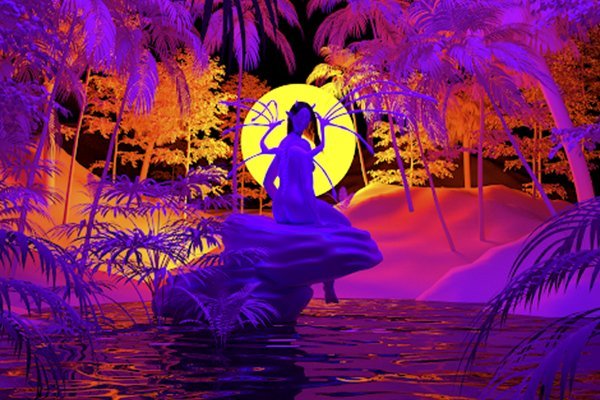
NFT Gallery: I started to get really angry that digital artists weren’t getting shown or treated as artists in general.
From there, we did the first-ever IRL NFT events for OpenSea. Their first one was at Superchief MakersPlace Foundation through The Digital Diaspora with Diana Sinclair. That was an incredible project. It was about giving the industry that we respected a home and creating an opportunity for people not just to get to know their cofounders. If they worked on this digitally, a lot of them hadn’t ever been in person before and that was very surreal for everybody, but also the community and the inner circles of this.
It was special to create a space where not only do they feel comfortable, but we could elevate the work and show the work either how it’d be at a real gallery or ideally also what it would look like to hang this stuff in the home. We sell these digital canvases that we are happy to have access to through our partnership with WHIM. I’ll say it out loud. WHIM is the leader in digital canvas tech. It’s incredible working with them. We’re proud to be bringing that out.
We also love working with Infinite Objects for the small collectibles. Being an actual location you can visit if you visit New York or Los Angeles to experience what NFTs are off your cell phone and off your laptop and see them treated with respect has been a wonderful niche to find ourselves with. We’ve always been about community and artwork. We only show work that we believe in and that we’re truly into.
Having seen it firsthand, I can also say what a difference it is between seeing it on your phone or on your computer screen and seeing it in the context you provided and crafted. There’s something special there. You have to get to it in real life to appreciate that. It is an order of magnitude difference. There’s no question about it. It’s such a cool experience. I wanted to highlight that you’ve got this NFT multipass for IRL events. Tell us about that because that’s part of this. It’s getting people out to see this stuff live and in person.
It’s been incredible watching how fast it’s all grown. I know everybody’s seen the boom and then another boom. As this has been getting bigger, we’ve been seeing the parties get bigger and the events get larger. For us, we want to be able to do parallel roads. We’re always going to be doing free-to-enter giant events because we love it.
We love the community and we want more people to see this stuff and meet each other. It’s always going to have that within it, but beyond the free stuff, we want to do something that allows that community that’s been with us from the start and the artists that we show to be formally appreciated and formally given access.
I don’t want somebody who was with us at the start having to wait in line. I don’t ever want somebody who believed in us and bought NFT artwork from us and supported these artists to be told they can’t get in. For us, it was like, “How do we offer that IRL multipass where you can go to any Superchief, whether it be in New York, Los Angeles, or the new exhibition that we’re doing in Venice, Italy, that we have a full NFT exhibition with us, Bright Moments, Obscura DAO, and Art Blocks?” When we do special events in Venice, Italy, for the Venice Biennale, we want the home team to have access. That’s the big purpose for it.
We all here realize going to be more, without a doubt. You’re going to kill it.
The other part of this is the unknown. Similar to our project we did with Spirits Seeds, you never know what’s to come. This is a gallery that worked with people. What’s the next exciting collab or mint that you’re going to get a chance to be part of that maybe there’s a line of 10,000 people that don’t get in there for that mint, which you do as being one of these OG holders? With that in mind, my question is about the collaborations and partnerships in the pipeline. It’s probably a difficult question for you to answer and unpack because there’s so much that you guys are always doing, but let’s talk about it anyway.
There is a lot. Between Los Angeles and doing some fun stuff with you guys with NFT LA, there’s New York. We have a couple of exciting things going on there. There is stuff that I can talk about that I’m not under NDA. This is a special sliver. We’re doing a two-month activation that we’re going to be kicking off in Chelsea, New York. That’s going to be incredible. It’s in the heart of Chelsea. I believe it’s the first time that NFTs are getting pushed to that level. We’re excited to be doing that. We’re talking about doing some private events there.
We’re also having a strong relationship cook up with VR World. I believe VR World is the largest VR space in the country. It’s incredible working with them. It is three floors in the middle of Manhattan. That’s getting exciting. I’m probably going to miss it, but we’re going to throw a 1,000-person party in Tokyo on June 25th, 2022.
We’re doing NFT LA, so I have to stay there, but we have strong relationships in Tokyo. We’re curating a large installation. It’s a 50-foot wide screen. It’s 20-feet tall and 50-feet wide. A concert series is going to happen in front of it with this party we’re throwing. I might bring CYBERPUNK out there and then make it that if there is anybody out in Tokyo who comes out, we can give them VIP access and trick it out for them. We’re cooking all the time. Miami Art Basel’s coming up, and then also Halloween, where we’re going to be going crazy in New York, LA, and then Italy as well.
It’s the number of different angles that we tend to hit all of this at and the fact that we like to stay active with not just the artists that we show and the communities we want to support but also the cities that we actively take over. It’s been exciting meeting all of these other NFT galleries that have been popping up in 2021. It has been wonderful making relationships with them. I want to create sister galleries in the cities that we can’t be active in and share information and opportunity because that’s been the best thing.
It’s pretty exciting to see creativity get rewarded. Click To Tweet
Yeah. Let’s do it.
I have the pages. Those are preserved.
NFTs. Every day.
Who carved it? Tell me more.
I smoked weed and wrapped up another meeting.
I’ll smoke weed and then have another meeting.
—
SensesDavid Bianchi** with us to talk about this amazing project.**
—
That’s a special project.
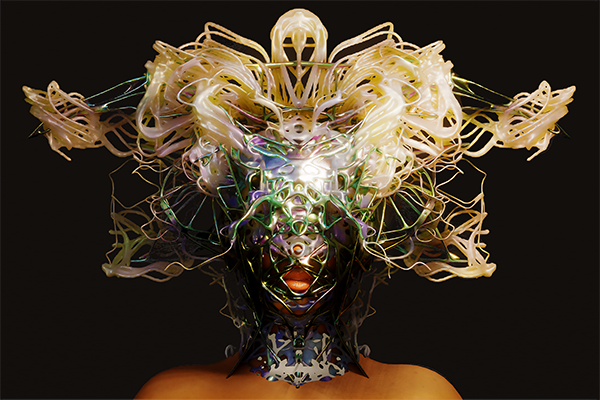
It’s my pleasure. Thank you so much.
It was great to see you.
It was great to see you too.
Let’s talk soon.
—
Important Links
-
@SuperchiefGallery – Instagram
-
@SuperchiefGalleryNFT – Instagram
-
@SuperchiefGalleryLA – Instagram
-
@SuperchiefGalleryMiami – Instagram
-
@DavidBianchi – Twitter
-
@PlsAndTyBased – Twitter
-
Dogan Demir – Twitter
-
@Senses_NFT – Twitter
-
Spotify – Edge of NFT
-
iTunes – Edge of NFT
About Ed Zipco
Photographer, writer, and gallery director Edward Zipco is the co-founder and director of Superchief Gallery, an independent artist-run gallery with permanent large scale warehouse locations in New York and Los Angeles. Encompassing a broad scope of contemporary art, Superchief presents photography, illustration, painting, sculpture, performance, installation, animation, and digital art. Superchief Gallery has a history of supporting artists from disparate scenes and collectives, enabling them to participate in the larger community. Superchief Gallery is the world’s first physical gallery space dedicated to NFTs.