Top Podcasts
EcoFi Founders Kevin Monahan, Lawrence Lanoff, And Denver Nunly On Fractionalizing Art And Saving Economies, Plus: A Certified Picasso Art Giveaway You Can't Miss And More...
Are you a lover of fine art but can’t imagine owning the works of your favorite masters? It’s time to break the financial barrier within the new economy facilitated by crypto and NFTs. Eathan Janney, Jeff Kelley, and Josh Kriger bring EcoFi founders Kevin Monahan, Lawrence Lanoff, and Denver Nunly to the show to give us their unique perspective and deep knowledge of the cryptocurrency space and what it can facilitate. They break down EcoFi’s economic model and how it incorporates staking, DeFi, yield-farming and NFTs. EcoFi has created a marketplace that can allow anyone to purchase fractions of art represented by NFTs. Join them in this episode and discover the new collaborative economy that could allow many more of us to own a stake in the finer things that spring forth from our collective culture.
—
Listen to the podcast here
EcoFi Founders Kevin Monahan, Lawrence Lanoff, And Denver Nunly On Fractionalizing Art And Saving Economies, Plus: A Certified Picasso Art Giveaway You Can’t Miss And More…
**This episode features Kevin Monahan, Lawrence Lanoff and Denver Nunley, founders of EcoFi, a hub for NFT marketplaces that fractionalized ownership of real-world property. They’re cryptocurrency ecosystem time nearest and masters of arts, cinema and networking who are rewriting the book on how to engage a global audience. Let us know a little bit about each of them. Kevin Monahan is from the world of venture capital and cryptocurrency wallet platforms to give him a unique perspective and knowledge that he deploys as EcoFi. Prior to founding EcoFi, he’s the Cofounder of the company My Crypto and coordinated operations at MyEtherWallet. **
**Next, we have Lawrence. He’s been in the cryptocurrency space since 2011 and participated in the guidance and building of various platforms. He is an award-winning filmmaker, professional producer and director as well as best-selling author. Finally, Denver. He’s an early adopter supporter and build the Ethereum ecosystem before founding EcoFi. Denver gained crypto’s inside information of T five platforms by working closely with the team behind MakerDao. He has an interest in film and the proliferation of cannabis legalization. Guys, welcome. It’s good to have you here. **
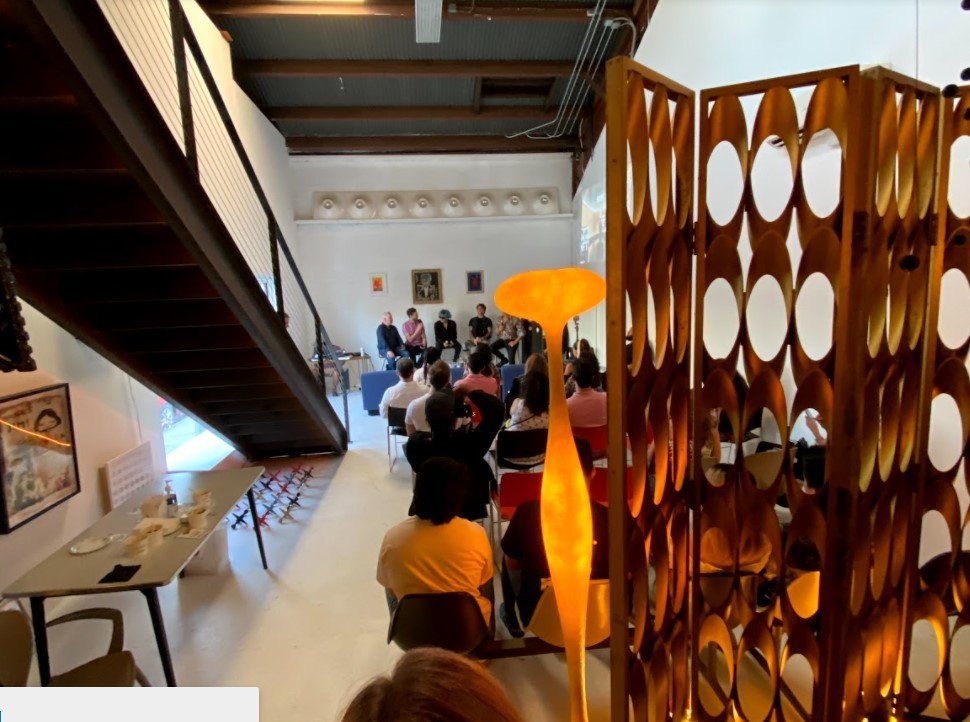
It’s so great to have you here. This is the first for us. It’s our first time having three guests and it’s our first time with a live audience, which we’re very excited about. Thank you guys for being here. There’ll be a little adjustment. Since we have an audience, we’ll do some Q&A at the end of the show. Think about your juiciest questions for this last furious group we have here. Let’s kick it off with Eathan, who has a question for these gentlemen.
**The first question we want to get underneath is starting from the beginning. How did you all come together? How was EcoFi born? **
Do you want to start with that Burning Man Santa Claus?
**Burning Man circa 2016, I am about to leave the Playa. This is a big deal when you leave the Playa. Everybody is going away. We’re about a week into having torn down the camp. I see a half-naked Santa Claus from the bottom. I was like, “Are you involved in Bitcoin?” He’s like, “I am.” I said, “What’s happening now?” He goes, “I’m super excited about the Ethereum and what’s going on there.” The DAO hack had happened. I was in the empty God’s thing. He mentioned Ethereum and then we set up a private group, which is where we all met. I wanted to go deep. It so happens that half-naked Santa Claus is very deep in the space of Ethereum. **
There were ten people, a very small niche group with some people who are working on Etherum itself.
**If it were, I would be unable to disclose this information. **
EcoFi is an economic model that hinges on the principles of staking DeFi new form of NFTs. Tell our readers more about how the system works.
**There are two parts to this. I’m going to take the first one and this is our staking mechanism because this is what I thought. Basically, when these guys hit me up to make the project, I was like, “How can I do something productive with this space? It’s all hype and BS.” I was thinking about Venezuela because I was spending a lot of time out in Spain, where there are tons of refugees from Venezuela. They’ve corrupted their government. Their whole political staff are really messed it up and they hid it to themselves. **
**I was like, “How could you make it a better system?” I started to think about our banking system and how it could work better. When you give your money to the bank, they take your money and then they make more money with your money and you get none of that. Banks in Germany are now charging negative interest rates so you pay for them to make money off of your money. I thought that was a really screwed-up way to do financial systems. I came up with this system that basically pays off a little guy the most and the way that that does that is by paying out the richest people the most as well. **
**The way that you can do that is when you give $1 to something, you get $0.90 back. You will get your $1 plus $0.90 and of that, $0.10 is leftover. We take half of that and that goes to us where we can monster up and the other half of that, we split equally between everybody who’s in the pot. That means that the people with the most money, they’re still got the biggest number but they get the smallest percentage of that pot. The way that I thought that this worked best was if you force people to learn how to invest. **
**The only way that I could think to do that was forced them to lock up their money for some period of time so you don’t have the option. When you start saving with us, there’s a 90 day period. You cannot get your money back. At the end of that 90-day period, you will get all of your money back and then whatever interest you’ve approved. You get the interest you approved over the time of the entire mechanism but you cannot touch your money. **
I was talking to someone about even with Wall Street, it used to be when you buy a stock, you believed in that stock. It was a mechanism for holding it for a long time. The blue-chip were blue-chip for 5 to 10 years. With rapid trading, this culture of short attention span and quick profits changed the game. We’ve seen that amplified in crypto. It sounds like you recognize that fact and you realize, “We need to do some retraining here.”
The thing is, it’s mostly education. Most people aren’t educated to do this. If you are born into money, you have enough money to stick into something and live there. You are in a very awesome situation as a person but the reality is 99% in the world is not in that situation. How can you still make this system work for them? The only way that I could think to do that was to allow anybody with any amount of money. You don’t need a specific amount of money. You don’t need a minimum amount of money to make money. You just need to decide that this is as much as you have. You will make money based on everyone else in the pool, which is honestly how the system should work anyway, in my opinion. Maybe you could essentially create a global income that basically met the needs of every person on the planet. It’s not that hard to do.
There’s another cool part of all this, which is the NFTs and fractionalizing art. I’m sorry if I’m stealing your thunder here.
**That’s good. This is where I pass the torch to somebody else but this is the second part of this. We have this staking mechanism. We’ve created a financial system that will work in the economy itself. How do we make it valuable? **
We’ve decided to take masterpieces. These are some examples. We keep hearing about Scott. This is Peter Scott. For each of these pieces, 100 NFTs are mended. Users will be able to buy fractionalized ownership of each piece. For the small guy who doesn’t have enough to buy a whole painting, they could own a piece of a painting and they could trade that painting. If they collect all 100, they could receive the physical piece itself.
**That is one thing that makes me happy. Three things are going on here. Number one is, how can someone who wants to start collecting art but has no way? Maybe you’re coming out of college or high school and they’re like, “I love art but how do I participate in this?” The first thing is we created a mechanism so you could take any amount of money. You would receive the currency that we’re using to purchase this first round of NFT. That was the first big idea. No matter how much, there is a way anybody to purchase. Let’s say you wanted to own NFT but it’s impossible to own it. We had a show and people were crying in front of these works of art because they’ve been so removed from units and yet you see one close up. You can connect with it, feel it and participate. **
I was there. It was amazing. It’s the NFTs you can touch.
**Now you can have a piece of this masterwork or any other. We’re working with a collective. I started feeling like it’s freeing arts but also giving you a chance to invest in it. **
This goes back to what I was talking about education. I didn’t realize you could buy this or the museum took off and you knew how to find whatever you want to see in any museum. That was the only way you can see it. This guy, unfortunately, opened my mind and told him that if he could get these things and I said, “Why don’t we have them?” There’s something very different about being in the loop or the Getty. I’ve see this from afar versus touching distance from these things, the brush strokes to everything. I didn’t really doubting the fine arts before I have these things in my hands and saw it. I was like, “You can see the energy that was put into these. It’s amazing.”
**Also, I remember we spoke about how someone had offered to buy them. You have to get them through labor and time. Can you talk about why we didn’t go with that and why we went with the way we went? **
We didn’t want to benefit people that had money. If you have money, you have the equal shot. You have a better shot if you have more money to stick into the things. You can generate more of these at times but the reality is we made it so that you could bypass the system that we created that we think works better than trying to get a shot in the foot. It’s going with the corruption and basically different financial systems. If you don’t like the way that something works and you have enough money for it to work a different way, you could make it work in different way. That’s not the right way for things to work.
**It’s important for folks to understand that these pieces, once they go on the platform, they’re in a vault. They’re owned, at that point, by the people. Can you talk a little bit more about that? **
We will evolve and we will be moving into a gallery at some point as soon as we have enough money to afford it together and we’ve been spending all our money on acquiring the art. The by-product of spending money on art is that we have no money for the gallery but we will be setting up a public gallery. I met a guy in Paris at the Ethereum Community Conference that builds the augmented virtual reality gallery just like real gallery. You can walk around the gallery and see these pieces of stone wherever in the world you are and you basically could see pieces that you own.
The DAO system will decentralized autonomous organization that we will be launching at some point. If you have these pieces of art, you can vote as long as you have a majority of vote or you can sell the piece of art. If we move them, the shares increase in value. It is an economy. It’s not like you put money and you get money out.
It’s an entire market in one system. We’re trying to create a new system. This is our first marketplace in the hub. We have a partnership with another art curator but longer-term, we’re in talks with several other very exciting things, not specific to art. We have digital fashion, real fashion, authentication for high-end jewelry, things like that. Pretty much anything that you can own. There’s no reason that you shouldn’t certify that it’s a real thing. That’s huge especially with any of the high-end market. I like to think of EcoFi is like the Beverly Hills Mall. All of the highest-end products in this space are what we want to be on our platform.
**The question that I’m curious about is we’ve been seeing throughout our experiences in the show, NFTs and crypto in general was all about collaboration in communities and you’ve alluded to some potential partnership and collaborations that might be going on. I’m wondering if your could dive a little bit more specifically about anything that’s actually going on or you perceive going on in the coming months and years. **
We’ll start with one of my favorite things having grown up in an artist and collective housing in New York City. Back in the day, I realized the importance of, “I’m looking in this space and this space.” Being in this space is so satisfying because it is collaborative spaces where you share ideas. You can share knowledge and ideas with people in some lawns of Paris. This is what’s happening in NTF. It’s whatever it is, it’s cooked.
EcoFi: Our ideal world is we’re a hub, and whatever you can imagine, you would eventually be able to plug into space.
**It’s a form of collaboration with the show. **
If you just sign to jewelry makers, people have been mind-blowing by what is possible. We have this one beautiful art collective that is all handmade stuff. They have phoned me. Their entire career of this collective has only been physical stuff and now, they’re sticking their toe into this space of NFT. Everybody was like, “What’s possible?” That’s one of our first collaborations that will come out. Basically, our ideal world is we’re a hub and whatever you can imagine, you would eventually be able to plug into space.
**I’m thinking about one of our guests, Digi Labs. They have these beautiful metaverse pieces of attire made by world-renowned designers but some of these pieces that I was showing a friend. They run for $180,000. It’s funny because there’s factional creation of these pieces with different designers around the world and then there’s the minting. There could be factional ownership. We could start to be part of garments that celebrities wear and our favorite gamers wear. We’re like, “I own part of that beautiful garment or necklace.” It gets pretty wild when you start thinking about these things. **
It’s funny because this was the idea of the DAO initially. You have a community of people in a less affluent area of the world. You can’t afford a drill saying, “There’s a locker in your community.” Everyone in your community can put $0.50 in and, all of a sudden, you have a community drill. You put your DAO token in and you’re saying, “I want this.” You’re all out for the day. You go rent the drill for the day. You use it, you put it back and now your community benefits from everyone using this. I feel like this idea has been around for a long time. It’s just been getting more refined. You have to start with something big.
**I’m realizing this beats timeshares and takes the whole cooperative community ownership concept to a different level. What are your thoughts, Jeff? **
Partnerships and collaborations is a big part of the growing NFT space. Can you tell us a little bit about any forthcoming collabs that you are excited about?
**We have been hinting at this but I’ve been in talks with a few very large fashion designers that are trying to get into the NFT space so they can certify their pieces of whatever it is. It’s maybe jewelry, dress or anything one-of-one. An idea that we had while we were building this is I’m a big fan of Cartier. Cartier has a huge fraudulent market. This was for Rolex. Any of these companies have fraudulent Certificates of Authenticity. If you had a contract that was verified to the blockchain and this company was like, “These are all of our pieces.” **
**When you got your Certificate of Authenticity, you have a QR code on your wallet. You scan it and you basically know the exact date and time with that user’s name. If you know that this was made in Cartier’s contract, you can be like, “I have a contract and we look the same but it will not be Cartier’s contract. There is no way for me to fake the Cartier’s contract. It’s not possible.” You cannot eliminate forgeries. People will always find a way to make this but you can put a big wrench in their tire. I bought this expensive thing. Is it real? Even if I buy it from a store, it’s like, “Someone on the diversity is watching this from above. Now, I’m going to pay it.” It’s possible. This would make a lot to deal. **
What’s the next year from now look like for EcoFi? Tell us a little bit about your roadmap and what additional features you’re bringing to the masses.
**Our platform is in the demo stage. The technology is built. We’re working out all the kinks and the bugs. The token is going to be trading live. That’s the first step. We will deploy to mainnet where the platform will be live then we will start selling NFT. As time progresses, we will move on to other things like Kevin was saying about the education of anything. **
Since we’ve been talking about one of the roadmaps in general anyways, there are a few other things that we’ve been working on. I have other people in this space that are building these things that are half-hacked. We’re ready to give them the space to do it. This is a curated list for Spotify on my blockchain where all of the artists get paid for their work rather than not getting paid to work on Spotify. You have these curators that basically hold on NFT that some artists had given to curate their work.
If someone has made a playlist on Spotify, you yourself would be kicked back every time someone listened to that song. You play the song live, you transfer it live, the artist would get paid too. As soon as our platform is up and stable, some of my time will go into the music because my background is in music. I think that that industry is also screwed up. That will be in play like our VR and AR. We want to make these marketplaces something you could walk around from wherever you are. It doesn’t matter where you are. We can basically stick whatever you have up in marketplace, go stick on your bubble, and you can go look on your phone or go to Zoom. It’s like a Google Street View on your maps.
Even the NFT marketplace that we have, if you have an NFT, that will give you access to both physically visit the gallery but also virtually visit the gallery, which is great because this is a global phenomenon to be able to be anywhere in the world. It’s super accessible.
At this point, we are starting it as a private gallery. We don’t know what kind of people to be in there. We don’t let you get very close to these paintings. We’ll probably going to try and keep it private and then boosting these digital galleries because they are exactly the same. I was surprised when this guy was showing me this marketplace gallery he’s building. I was like, “That’s the best that you can offer to our art gallery?” That’s exactly the picture if you zoom in and then later, it looked the same except from the NFT framing.
We’re going to ask our last curiousity question then we will find out a little bit about you guys which is at our segment Edge Quick Hitter. The question we usually like to get on our guests are, thinking about other projects and platforms and how they see the future of NFTs in general. Any projects or platforms you guys are excited about aside from the EcoFi you’d like to call it off?
Live life by ABC, Always Be Cool. Click To Tweet
There are RTF Katie’s studios that are doing this. They’re doing digital fashion. They all come from the gaming community so they’re doing skins for video games and then they were like, “Why can’t we do this for real life?” It is really cool and amazing if you’re looking at someone on your phone on the street and they can draw new clothes on them.
**It’s a shoe shine kit. **
Kevin?
**I was too easy on that. **
**That I can talk about. **
You can talk about whatever you want here.
I would go to space. I’ll have that trip.
Where in space?
Around.
**Hanging out with friends up there. That’s fun. **
How about you, Lawrence?
You need courage to go through this.
You own the painting.
I’ll be interesting to see what comes of that.
Certainly possible.
**We’ve been talking about this for a long time. **
Thank you. I think there’s another question.
—
**Thank you. **
Important Links:
-
Telegram – Eco_Finance
-
iTunes – Edge of NFT Podcast
-
@EdgeOfNFT – Twitter
About Kevin Monahan
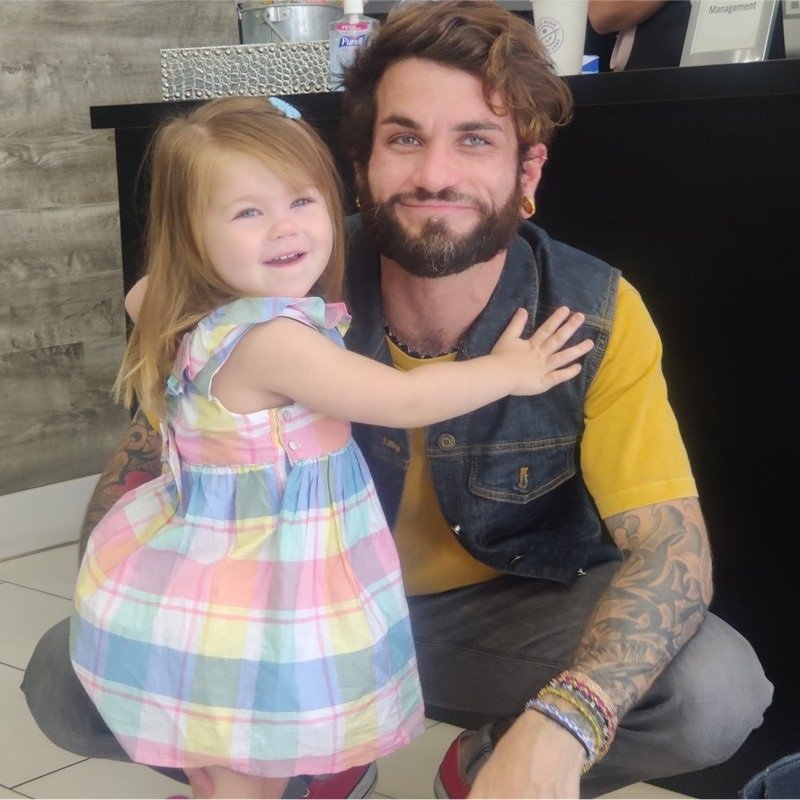
EcoFi Founder Kevin Monahan leads the coordination of project management. In addition, Kevin provides full-stack support to the development team.
His additional experience from the worlds of venture capital and cryptocurrency wallet platforms give him a unique perspective and knowledge of best practices. Prior to founding EcoFi, he co-founded My Crypto coordinated operations at MyEtherWallet.