Top Podcasts
Dubai's Crypto Odyssey: AI, Gaming, And Blockchain Marvels Unveiled With Sui Foundation, Enjinstarter And Bitget
From the dazzling heart of Dubai, Edge of NFT had a chance to attend the Future Blockchain Summit to cover the forefront of a digital revolution. Josh Kriger met with industry leaders who are figuring out how to build tomorrow’s Web3 highway and catalyze the success of their partners using the latest cutting-edge technology. On the list are Will Riches of Sui Foundation, Prakash and Vasseh of Enjinstarter, and Gracy Chen of Bitget. If you don’t know about Sui, then you will want to get the latest scoop on this Layer 1 which generated a record-shattering 65 million transactions in a single day. We learned the latest trends in AI and blockchain from one of the top launchpads in the Web3 space. Lastly, stay tuned to a fresh perspective on the crypto macro-climate of one of the key voices in our industry and learn what it was like for her to be a judge on one of the first-ever crypto reality shows.
Listen to the podcast here
Dubai’s Crypto Odyssey: AI, Gaming, And Blockchain Marvels Unveiled With Sui Foundation, Enjinstarter And Bitget
From the dazzling heart of Dubai, Edge of NFT had a chance to attend the Future Blockchain Summit to cover the forefront of a digital revolution. We met with industry leaders who are figuring out how to build tomorrow’s Web3 highway and catalyze the success of their partners using the latest cutting-edge technology. We also dig into the vibrant UAE ecosystem and what types of projects are trending. Did someone say AI?
On this show, if you don’t know about Sui, then you will want to get the latest scoop on this Layer 1 which generated a record-shattering 65 million transactions in a single day. Next, we learned the latest trends in AI and blockchain from one of the top launchpads in the Web3 space. Lastly, stay tuned to a fresh perspective on the crypto macro-climate of one of the key voices in our industry and learn what it was like for her to be a judge on one of the first-ever crypto reality shows. Leap into this extraordinary realm of Web3 and the metaverse with us where you’re dynamic co-pilots on this digital journey, and you’re tuned into the Edge of NFT.
Josh Kriger here, co-host of Edge of NFT, live in Dubai at the Future Blockchain Summit. I’m here with Will Riches of the Sui Foundation. It’s great to have you on the show, Will.
It’s great to be here. Thanks.
There’s a lot going on. It’s pretty early in the day, and this place is bustling.
There are a lot of activities. It’s our second day here. A lot of these conferences start quite slowly in the morning but I’ve been surprised how many people make their way in the mornings.
For those that don’t know, and we’re going to know, this is your first trip here and my first trip, Dubai has quite the scene with any type of food you can imagine and any type of nightlife you can imagine. I get the sense it’s a work-hard play-hard culture.
I haven’t had a chance to play hard yet personally working at the conference. It has been great fun.
Before we get into it, I want to give the audience a sense of your background, which is interesting. You’re the Head of Developer Relations at Sui Foundation. For those who don’t know, it’s a leading platform for Web3 development with over a decade of experience in cybersecurity and a strong background in mathematics. You played various roles in blockchain, cryptocurrency, and cybersecurity. Why don’t you tell us a little bit about Sui Foundation?
Sui Foundation is the foundation behind Sui, a new Layer 1. In terms of the actual foundation itself, we launched before Mainnet, which is quite unusual. That demonstrates how important the community is in supporting builders from day one, which is something we have been strong on. Sui itself is a new Layer 1 that launched earlier in 2023. The background goes back quite a few years before that. The Facebook team was looking into Web3, especially on the Facebook platform.
You have a lot of micro-transactions and things like that. Web3 was a huge area of interest for Facebook. They led a lot of research efforts there, which resulted in a number of initiatives. One was a blockchain that they were developing, as well as a smart contract language. From there, the research team spawned after that project was killed internally within Facebook. This created the Sui blockchain.
You joined in 2022. What got you pumped to be part of this?
I’ve been interested in Web3 for a number of years. I have a background in math and cybersecurity, as well as finance and investing as well. All those areas come together. I’m very interested in Web3 and blockchain, particularly in Sui. I have been working within Web3 already for a year or two before. For me, the developer platform in Sui was attractive. It can be hard to develop on blockchains.
A lot of people, when they first discovered blockchain, they saw it purely as a financial instrument. It was the same for me when I discovered the Bitcoin white paper. Ethereum opened everyone’s eyes to the fact that it could be a lot more than that. It could be a computing platform but it has been very difficult for people to realize that promise by being able to develop applications that can utilize the power of having a decentralized computing network.
One of your major initiatives to make all this easier is the zkLogin. Break that down for us.
It’s very important for developers to be able to develop easily on the platform, but also for users to be able to use the applications. If they’re not user-centric applications, then developers also won’t be excited about creating those applications. For us, the actual user onboarding is critical. One of the features we have released is called zkLogin. That enables you to log into services using a Web2 social login like Google or Facebook. What that means is you don’t have to have a separate application that creates a wallet for you. You don’t have to store a private key or remember a seed phrase or something like that. You can log in with a Google, Facebook, or Twitch account.
Is there a wallet that’s being created for you in the background? Is that a fully decentralized wallet? How does that work?
For that question, it’s useful to break down what a wallet is because a lot of people say, “My MetaMask wallet,” as if that is the wallet itself, but the wallet is something that exists on the blockchain itself, and a wallet is an interface for you to be able to access that address or that account that already exists on the blockchain.
It’s there and it’s just tapping into it. It’s a key.
This is another method for you to be able to access what is on the blockchain. If you log in with a Google, Facebook, or Twitch account that you haven’t used already in zkLogin, an address will be derived from your token when you log in. That’s using a zero-knowledge proof, which means there will be no strong link between the social login and the address, so people can’t derive one from the other. It’s automatically created for you. There’s no setup required or anything like that.
What happens if I lose that email address? Is my account gone? Is there a way to retrace my steps there?
If you lose your actual credentials to, for example, your Google login, or it’s compromised, you would have to go through the usual methods of recovery for that service. We would strongly recommend that if you’re going to be using a Google account, you have two-factor authentication on that account and all the usual practices. It’s not a magic bullet because if there was an easy way for you to be able to recover it, that would also be a risk of someone being able to compromise your account.
Can you have multiple logins? Can you tie it to multiple accounts?
Behind the scenes, the way that this works is when you log in, it’s using the token from your Google login, plus the actual application is adding a sort on top of that as well. People from a Web2 background might be familiar with sorts and how that adds protection to hashes. It’s a very similar process to that. Different applications can use different sorts that they apply. You can have different accounts for the same login.
That’s another option for creating that continuity, de-risking, and whatnot. There’s always some nuance you have to pay attention to with any product or any login experience for Web2 or Web3. You had a pretty successful hackathon with over $125,000 in prizes. Were you instrumental in that? What were some of the exciting results?
That’s a strong focus of ours at the foundation. We have done a few hackathons so far but this was a little bit different because it was for liquid staking. Not only is there the price pool that you mentioned but there’s also $25 billion of Sui tokens that we are going to be staking through those platforms. In some ways, it’s nicer than the prize money because, for a lot of these DeFi platforms, the challenge is bootstrapping, getting momentum, and getting liquidity on their platforms.
I ran into many of those entrepreneurs. They have a great product but getting to that minimal viable level of liquidity is essential. What were some of the winners and the types of things that they were building? Were there any surprises along the way in terms of what novel solutions came out of the hackathon?
We had five different solutions. Some were doing the actual liquid staking itself and having interesting ways in how they select validators and things like that. Some were doing some derivatives on top of that with lending and borrowing. The key part is that all of these were non-custodial liquid staking token-derived solutions. The key for us was to ensure that these early solutions from these talented teams were non-custodial and using liquid staking in the correct way because we weren’t going to bootstrap that initially. You always end up with innovative platforms that are good for the users but are custodial. That was the situation we didn’t want to get into.
Did non-fungible tokens fit into the mix at all at the hackathon?
There wasn’t anything specifically for non-fungible tokens although we have done other hackathons based on that, and we’ve got some more coming up. If you are in the NFT space, then keep a close eye.
What are some of the use cases in the NFT space that you’re particularly excited about?
On Sui, NFTs are interesting because everything is an NFT. We have an object model where every single thing is an object, and fungible tokens are a special case of objects where they can be divisible.
On Sui, NFTs are interesting because everything is an NFT. Click To Tweet
In terms of the pyramid, NFTs are the foundation.
Doing interesting things in NFTs is natural. We have things like dynamic NFTs and composable NFTs, which don’t use huge numbers of lines of smart contracts. They’re very much built into the actual object model and the smart contract language as a core principle of the platform. You can do things like attach objects to another object. If you think of that in terms of image NFTs, you might have a character that you attach a hat to. In the Ethereum space, when you do those things where you upgrade an NFT, normally, you burn the NFT and then create another NFT as well. You try and do that in an opaque way so the user doesn’t see that happening on the front end. It looks like you’re upgrading the same NFT.

Future Blockchain Summit: Doing interesting things in NFTs is natural.
In this case, can you detach them as well?
You can detach them as well. There are a lot of advantages to that. It’s a lot more natural for the developer to program in that way. It’s a lot easier on explorers as well because you’re not burning NFTs. Following the history of the blockchain becomes a lot more natural as well. For the users, it saves a lot of money on gas because when you’re attaching something compared to destroying it and creating something else, it’s a lot more efficient and cheaper.
It’s more environmentally sustainable as well. When we think about the new era of non-fungible tokens, this is the type of technology that mainstream brands need to be able to do what they want to do and not deal with the baggage of that 1.0 or 2.0 version of NFT technology. That’s exciting. I’m sure we can dive into that more in the show at some point in the future. We’re here in the MENA region. Something compelled us all to be here. I’m curious about what Sui’s perspective is on the importance of this region and what you hope to get out of being at the Future Blockchain conference.
It’s my first time here personally. It’s exciting with the buzz here and the amount of talented people that you’re talking to. I feel like I’m the least smart person in every conversation, and that’s quite a good feeling when you’re in a place like this. From what I know of the region, it’s loose in regulations in the right way but has a lot of very strong regulations in other ways.
I’ve been speaking to some of the operational teams behind exchanges here and things like that and asking how they found it in the region, and they found it easy because there are thousands of pages of regulations that take them a while to read but they know if they follow everything to the letter of the law that they are within regulation. That certainty makes it a lot easier for people to build in the region.
There’s a playbook. I’m based in Los Angeles these days. What’s been interesting in some of the other regions of the world is a lot of people want the rule book, “Give us the rules, and we will work with them.” This technology is pretty adaptable to a lot of different rules, and we in the industry are very creative and innovative to work it out. Having that playbook here helps encourage innovation.
It’s great to learn more about what’s going on in Sui. One more question in that regard is this. You’ve been with Sui for a year. A lot happens in a year in Web3. Time moves very fast. Are there any inspirational moments or things that have happened along the way in Sui that the general public doesn’t know about or isn’t as aware of that you think is particularly notable?
One that probably flew under the radar was a couple of months ago, we had the most transactions ever in a single day on a blockchain. It was 65 million, or something like that, transactions in a day.
What caused that? That’s incredible.
We had a quest campaign. We had some challenges and things like that, and we were incentivizing people to get involved and to take part in games and things like that. It wasn’t a synthetic test. It was an organic activity. It was something that we initiated. The impressive part was monitoring all the metrics, the validations, and things like that. It didn’t blink at all. They didn’t even register that number of transactions. It was so easy for them to handle. We can go way beyond that scale.
That’s that moment when the SpaceX rocket takes off to outer space, and everything is smooth. Everyone in the control tower is high-fiving and cheering.
It was within the control tower because we didn’t make too much noise about that. We’re very developer-centric. We realize that’s not relevant to developers at all. They just want to be able to build easily on the platform.
It was a testament to why you joined Sui and the effectiveness of the technology that you all are building. Congrats on that. I didn’t know that. That’s cool. I appreciate you hanging out with us, getting to know us a little bit better, and sharing what’s going on with Sui with our audience. Where can folks go to learn more and follow along?
There are several places. If you want to read about the high-level stuff, then go to the main website, Sui.io. If you’re a developer, search Sui docs. If you want to dive into some workshops, probably head to our YouTube channel.
Will, thanks a lot for hanging out.
Thanks a lot for having me.
Welcome back to Edge of AI live in Dubai. Thank you to the Future Blockchain Summit for hosting us. We’re having some great conversations with new friends and old friends. In this case, we have Prakash, the CEO and Founder of Enjinstarter back, as well as a member of his team, Vasseh, who’s the MENA Managing Director. It’s great to have you both on the show.
It is great to be back on the show. We did it once in LA and New York, and now we do it in Dubai. I’m very excited to be joining and being on the show with you.
Here’s a little bit of background on these gentlemen and then we will get right into it. Prakash is the CEO and Cofounder of Enjinstarter, merging two decades of experience and expertise in Web3 innovation, as well as digital marketing, gaming, and metaverse launchpads. Vasseh, your background is fifteen years of wealth management, as well as FinTech experience fostering you as a key player in the Dubai evolving metaverse and Web3 landscape.
For those that don’t know, Enjinstarter is one of the foremost blockchain, gaming, and metaverse launchpads dedicated to accelerating the Enjin ecosystem projects and deepening community and commitment. They have been strong believers in blockchain, AI, gaming, and NFTs. We did cover the basics of Enjinstarter at this point but is there anything else the world needs to know about what you all are doing? Give us a sense of what throughput has happened on the platform over the last few years.
We started focusing on gaming and entertainment in the metaverse, but because of the bear market, we had to evolve. We started doing a lot of AI projects. With the general hype around AI, the Web3 community also wants to get exposure to that. That’s why we started looking for AI-related projects.
Are these AI plus blockchain plus NFTs or some are completely just AI?
They’re always AI and blockchain. They’re trying to solve different parts of the equation. Some of them have done well. One of the exciting projects that we were proud to have hosted is a project called ChainGPT. They’re creating a whole lot of AI tools backed by Web3. The community can come and create a whole lot of assets on them. They did more than 30X on the ideal price. We were proud to have delivered some of these good returns to the community, and they are now continuing to deliver a whole lot of good work.
We’re seeing a lot more AI projects coming on but now, we are also a bit more discerning because, in the early wave, a lot of them were hype projects. They were riding on the hype but now, we’re digging deep to make sure that they have the right toolsets. They’re solving the right problems. Those are the kinds of projects that we are going to be bringing onto the launchpad.
Along those lines, it’s easy to ride the train and create an AI component in your business that’s relatively surface-level. What are the strongest use cases for AI you’re seeing that have longevity where this isn’t technology that can be copied and pasted by somebody else? What are some of the use cases that you’re looking for? How does a company that wants to use AI with blockchain create a moat?
There’s so much content creation that we all do, and AI plays a very important part in that. Even with our team coming out with the content and developing the content now is AI-driven. Projects like that and toolsets to make the whole content creation space a lot better interest us a lot. From a gaming perspective, there are toolsets that are creating MPCs and solving some of the ghost-town problems that we had with the early gaming and metaverse projects. That’s an area of interest for us.
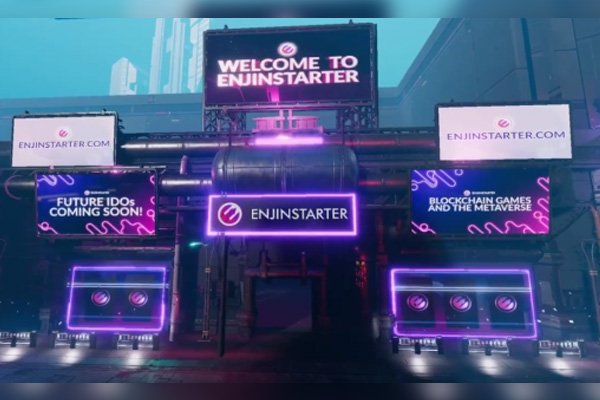
Future Blockchain Summit: There’s so much content creation that we all do, and AI plays a very important part in that.
Lastly, what we have been seeing is AI plays a key role in trading where it helps people become better traders. Participating from a trading perspective is something that we are also looking at. We believe these are the kinds of infrastructures that we need to build in the bear market so that more people will come in the next bull wave.
This is not just NFT projects.
It could also be fungible token projects.
Six years.
Where are you from?
Pakistan.
We don’t discuss cricket.
That’s quite powerful.
All my socials are my first name, @Vasseh.
It’s a pleasure. Thank you.
Thank you for having us.
Josh, thank you for having me.
Let’s do something together.
That’s still a lot.
It’s also to make an impact though.
It’s my fourth already within a year.
You have your pick and your shovel.
They’re trying to get into the mix as well.
Is there anything else to add?
You’re becoming very popular.
It was nice meeting you.