Top Podcasts
Dr. Jesse Reich (Aggroed) Of Splinterlands - A P2E Platform Where Magic Meets Mayhem, Plus: Arabian Camels NFT Movie, Henessy NFT, Wall Street Bull NFT, And More...
Combining trading cards with NFTs has become one of the best ways to have a good time while earning money and accumulating assets. This is exactly what Dr. Jesse Reich had in mind when he developed Splinterlands. Sitting down with Jeff Kelley, Eathan Janney, and Josh Kriger, he shares how the game serves as a P2E platform combining Magic and Mayhem. Dr. Reich A.K.A. Aggroed explains how he intends Splinterlands to be more than just a source of enjoyment—its a force of peace and goodness amidst today’s chaotic world. He also talks about the future of Splinterlands, the mainstream games he draws inspiration from, and game updates every player should look forward to. For this episode’s hot topics, the group talks about the first-ever major movie funded by an NFT, a Wall Street Bull NFT that sold out in under 32 minutes, and Henessy jumping into the NFT space.
—
Listen to the podcast here
Dr. Jesse Reich (Aggroed) Of Splinterlands – A P2E Platform Where Magic Meets Mayhem, Plus: Arabian Camels NFT Movie, Henessy NFT, Wall Street Bull NFT, And More…
This episode features Dr. Jesse Reich, AKA Aggroed, Founder and CEO of Splinterlands, a digital collectible card game built on blockchain technology. It is similar in concept to games like Magic: The Gathering and Hearthstone where you build up a collection of cards, which all have various stats and abilities, and use them to battle other players and skill-based matches. By using blockchain tech, players can buy, sell, and trade their digital assets freely as if they were physical cards, and all transactions are recorded publicly and immutably.
Jesse has been a gamer for life and created his own game in 2014 using Kickstarter. After working with his partner, Matt, they decided to combine forces and develop a digital version of another game Jesse had been designing, which became Splinterlands. Before founding Splinterlands, he worked as a professor, then as part of software sales and marketing for educational software companies.
—
Aggroed, it is a pleasure to have you here.
Thanks for having me. It’s good to be here. It’s exciting stuff. These are hot days for NFTs. I don’t know if you have been getting that feeling here, too. It will seem to take them.
It seems like January 2022 is going to be a warm month for the NFT season.
Let’s talk about the origin story. Where the heck did this idea for Splinterlands come from? We gave a little bit of background there but give us the full scoop.
When I was working with my partner, I made a game back in 2014. I physically printed it. Making the game and talking about the game was awesome. Physically printing it, shipping it, storing it, re-shipping it to individual users was an absolutely miserable process. I did that as a hobby. I took the weirdest route into this stuff as possible.
I’m a PhD Chemist. I was a foreign professor teaching courses at a military college in Massachusetts and then switched over to publishing. I have always been a gamer. What I did was catch the crypto bug. I want to have the most honest conversation on the show that I can. I’ve got pissed and angry, and I said, “This world totally sucks now. There’s way too much poverty and war. The surveillance state is totally overwhelming and disgusting.”
What I want is to provide the antidote for those poisons. Its peace, prosperity, and freedom. When I looked around, I said, “What do I need? What tool can help undo all this crap?” I landed on crypto. Crypto is the most powerful tool, second only to memes, to change the way that people’s behaviors are. In my brain, I quit. I said, “I’m done.”
I threw my PhD on the floor. I said, “I don’t even care about this stuff anymore. I’m going to dedicate my life to this.” What I wanted was a way to get people that aren’t into crypto to get into it and experience the benefits. Crypto teaches you peace. It helps facilitate so much trade that you are not likely to fight, kill or murder the people that you do business with. Crypto is facilitating all that.
That surveillance state gets pushed back because you have so much control of your own finances. They can measure every transaction that they want. You can still send things the same day to whatever person you want in the world whenever you want to. You just need your keys, some coins, and you are good to go. There’s a lot about this that I love.
When I was looking around back in 2018, I was talking to my partner and we were like, “It’s not going to be some high finance application that brings the masses here.” Maybe you will get that for trading and it will be billions of dollars. Don’t get me wrong, trading will be big money but I don’t see that as the way that you get mainstream into crypto. It’s too niched.
Gaming is something where I can grab somebody by the collar and say, “Come play this game. I’m not even going to shove the blockchain stuff down your throat. You are just going to play it and have fun but by the end of it, you are going to go from this normie that never experienced this stuff to be like, ‘Here are my keys. Here are my passwords. Here’s my NFT. Here are my own digital programmable assets. Here are the tokens that I own.’ We are going to turn you into a degen through our game and be at the vanguard of doing that.”
You are like the guy that’s sneaking peas into a delicious calzone and they don’t even know that they are eating the peas because the calzone is so delicious.
It’s definitely a Trojan horse. It’s like, “You are going to come here for this game but you are going to stay for the life-altering crypto experience that you are getting.” If we want to go down that road, it’s more like putting LSD or some other crazy narcotic into that calzone. The people don’t even know how much this stuff can inherently change their behavior and mindset.
I had a bank put a nine-day hold on a check that I deposited. They were like, “How do you do business like this?” Even Bitcoin is an hour to process sometimes. I’m like, “The hell with this? Who can even handle this? I need my transactions fast. I need the ownership to be mine.” I want the freedom of speech that comes with these things.
If you look at Twitter and YouTube, they are de-platforming and de-monetizing everybody. They own your stream. You think you own it but you don’t. You were renting it and they are paying you little crumbs of the income that they are getting based on the views and the data that they are selling for you and your audience. You are getting the crumbs, and people don’t even get it. It’s going to take another couple of years for this to fully sink in how much that Web 2.0 has totally been screwing and extracting value out of users.
Here at least, I’m trying to be one shining example of, “Here’s a game. Come play it. Come own it. It’s fun. It’s exciting. It’s competitive puzzle solving. It’s quite enjoyable. By the way, all along the way, you are not wasting your money. You are buying assets, collecting tokens, growing your knowledge base, and building a community. We are going to change your life. It’s not going to happen in a week but over time, as you enter into this game and this experience, we are going to turn you into a crypto degen and you are never going to look at it.”
Let’s cut open this calzone because I’m enjoying this analogy too much. I’m afraid of how addicted I will get to your game, especially after this episode. In spite of my fare, go ahead and unpack what’s in this calzone. Describe Splinterlands to us.
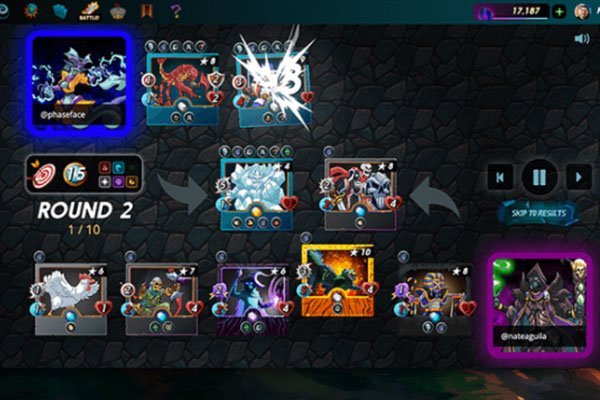
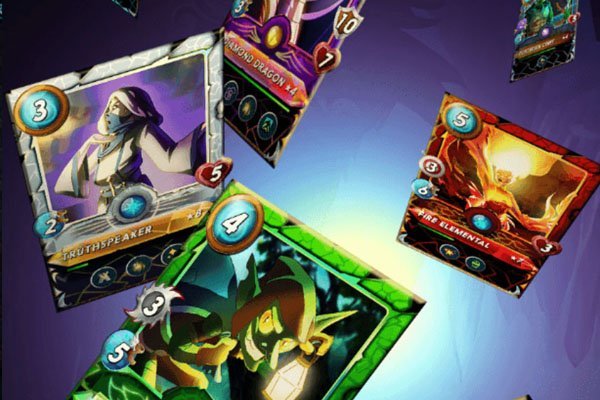
Our primary mission is to bring people into crypto. What we try to do is make this stuff as simple as possible. The game mechanics need to be rich and complex but what you have to do in the game needs to be simple. You come into our game and buy a pack of cards. In that pack of cards, you will have Summoners and Monsters. The Summoners are a team coach and your Monsters are the team. They will do battle. It’s like gladiator combat. It’s simulated.
This takes people getting used to it. It’s a trading card game but it’s an auto battler. The battles are only 2 to 3 minutes. If you are used to owning a Magic, Pokémon or something like that, you are like, “Where is my turn by turn? Why isn’t this a 30 to a 60-minute game?” It takes a second to get used to the fact that this is 2 to 3 minutes, super quick. It’s all about the strategy. You get in there, you are playing and battling it out. Right after, you watch it, see how it played out, and are right back into the next strategy.
What you are doing when you get a match, you find out who your opponent is and there are a couple of rules that change every single match. When you are starting off, it’s always the standard rules but when you get into Silver League or Gold League, now the rules start changing all the time. That means that there’s not one card that you have to own and it’s the all-powerful thing. It’s like, “I can’t even play it this round. Now it’s nerfed. It’s the most powerful card in the game.” It keeps changing depending on the ruleset.
There’s also a Mana Cap. It determines how much worth the cards you can spend. You are not actually spending them. They were not gone. It’s resource capping like, “Here, you can only play three cards. Here, you can play six big cards. Here, you can play either 3 big ones or 5 little ones.” It’s all part of the strategy of this, and then what team you can play.
That’s the way that we change this thing up all the time. As a player, you come in, see your matches, see what the rules are, what your Mana Cap is, what Splinters are available, and all you have to do is choose your Summoner and your Monsters. The battle plays out, it takes 2 to 3 minutes, and it will spit out a winner. If you are the winner, you earn cryptocurrency.
There are things like daily quests. If you complete enough battles that meet certain criteria, then you will get either NFTs or fungible tokens that are part of the game. If you are sitting there and you own assets, there’s an airdrop going on, so you get a governance token. If you stake the governance token, you can get more governance tokens. We are building out all the ways that that governance token can influence the environment.
Ultimately, we want this game to be one of the first, if not the first, truly decentralized games where it’s up to the players. We will be a development company to help build it. We will provide some vision but the ultimate fine-tuned detail is something that we want validator nodes for and we want an entire system of how this all runs. We want it to be ultimately a game that is owned and operated by the users, where our company assists in building the things that they want or we want but are only approved by the stakeholders that own the governance token.
There’s so much there. It’s clear that you are the primary reason that unemployment by choice has gone up in the United States.
How are you ever going to work your slave job? There are crafts and trades. God’s honest work is wonderful, so I don’t want to disparage it. The alternative is you get to hang out at home, own NFTs, watch them appreciate, earn and battle with them. The two aren’t even mutually exclusive. There are two demographics that I thought of. I traveled a bit through Southeast Asia and you would have all these shopping malls, people selling T-shirts, shorts, dresses, underwear, and whatever else they are going to sell. If traffic is slow, you don’t make any money that day.
Imagine that you are sitting there, you have your phone and can do some play-to-earn while you are waiting for customers. Maybe it’s too early or too late in the day and nobody is there, or it’s an outdoor market and it’s rainy. Rather than being like, “That day was wasted,” why not do some play-to-earn and you can battle and earn? We call it play-to-earn. Sometimes I’m like, “This is like work-to-earn. You can get both done at the same time.”
Another demographic that I keep thinking of is single moms. If you put your baby down, you can’t just go out and get a job. You can’t do part-time labor somewhere like, “My baby is sleeping. I will go to my next-door neighbor’s house and clean it.” That’s not an option but something like play-to-earn is. It’s this way that you can fit 1 to 2 hours of community video game labor and work into your overall ecosystem.
That’s at the lower end of the spectrum where you are socioeconomically disadvantaged and your objective is to earn money so that you can eke out a living as the fiat governments keep printing money ad nauseum and devaluing your dollar so that you can ever catch up on how much rice you need to eat. That’s the face that those guys are facing. What they will often do is rent cards in our ecosystem. There are so many different ways to earn in this game that you can rent cards and make a profit doing that.
Who are they renting those cards from? It’s the Whales. The Whales buy up a whole bunch of cards. Sometimes it will play them. Sometimes that’s vanity. Sometimes that’s entertainment. Oftentimes, they are renting cards out. You have this capital exposure from the first world nations that it’s then getting lent to third world nations, where they can then earn a better living than they otherwise would have.
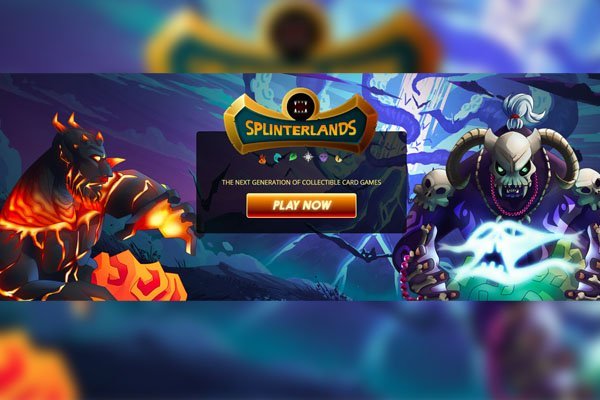
Splinterlands: Crypto teaches you peace. It helps facilitate so much trade that you’re less likely to fight, kill, or murder.
Germans are directly employing Venezuelans and Filipinos to go leverage their assets through this proof of victory game to earn as much money as possible. By doing that, it gets back to what you said, come work with us. You can go sweep the floors. There’s not an infinite amount of Splinterlands you can play in a day, so you might want to have some other things to do as well.
We are phenomenal for supplementing income all over the map geographically but also socioeconomically from the lower-end spectrum dudes that have to work to the higher-end spectrum dudes that buy a bunch of cards and rent them. We help people across that entire geographic and economic spectrum.
There’s so much to unpack. I have a billion questions and I’m loving this. One thing has been on my mind here. It’s this philosophical question. It has been in the news over and over again. I don’t know who’s pumping it or if it’s just an emergence here. The four-day workweek has been all over the place and it reminds me of this philosophical idea of we have made so much progress as a society but people are less happy and feel like they are working harder.
It feels like we could be at the precipice of this point in history where we can enjoy where we have gotten to. We can play games to earn as opposed to fighting battles with each other to steal each other’s treasure or something like that. Maybe that’s a little bit idealistic but you are onboard with this as that philosophical PhD style folk like me. What do you think there?
Let’s have nice things together. The twentieth-century government model of how things ought to work and the way that we print money, do war, and engage our neighbors is one atrocity following another. What I hope to spread are peace, prosperity and freedom. I hope to use crypto to do it. My game is the best on-ramp in the world to get people to come in.
You don’t have to buy into every piece of philosophy that I think. I’m a voluntaryist. I don’t want to force people into anything. I do like this Trojan horse idea of, “Come play my game. Come experience this. Come trade our tokens. Come rent and buy. Come form camaraderie with your neighbor and people all over the world.”
We are going to be less likely as a society to want to invade the Philippines if we are constantly, as people, engaging them in commerce. If our governments start trying to be like, “The poll numbers are down. Let’s go back to the dog and start another rover,” hopefully, that’s not the thing that can happen in the future if crypto is widely adopted or if this economic web is intertwined and interwoven between the common people of all countries around the world.
This is how we have nice things. There’s no law that we could write that would be like, “You need to be nice to each other. We should probably have laws that you can’t murder each other.” That doesn’t do the trick. What you need is leadership and economic incentive to bring us together as community members, friends, family, and neighbors, and have a social and a financial tie to having that be successful.
It’s not just Splinterlands that does this. It’s crypto that does this. We are one of the best ways to get people into crypto. Over the coming years, I hope that we get better at it by providing even additional games and additional ways to get in. Splinterlands is this complicated, heavy game. I would love to see some things like solitaire, chess, checkers, and dominoes have them be play-to-earn so that when a player walks in, the barrier of entry is even less.
They don’t have to figure out, “How do I play Splinterlands?” They just come in and they are like, “I’m playing dominoes or I’m playing backgammon,” or something. It’s built within this play-to-earn ecosystem. Maybe there’s some meta storyline. There’s a whole bunch of match-3 games like Candy Crush. You play Candy Crush, and then you power up your character to blast the spell at the evil wizard.
There can be this separate metagame. This is always from a designer because I’m still a game designer. Don’t get me wrong. I run this company, I do all this stuff, and I’m a chemist but honestly, all I want to do is make games and be snarky on the internet. That’s it. All of this is enabling that addiction. What I want is to be able to take that game and be like, “You are going to come in, do this battle, and it’s going to look familiar when you start. You are going to be playing foosball, solitaire or games that you have known your whole life. It’s going to be these easy internet things.” It takes this twist where you are like, “I own NFTs and I’ve got to do this RPG thing. I own cars, assets, and all this other stuff.”
I want to get folks engaged, even though you mentioned these simpler platforms. How do we get people into Splinterlands? We know that you have a card pack coming out. Chaos Legion launch is set for January 17, 2022. Can you give us some details about that and how people can get involved?
This is going to be our sixth card pack. We sold out a five, a land, and a skin. This is the first brand new offering I have had since June 2021. It’s Chaos Legion and it’s the next edition. It’s one of the bigger editions that we have done in terms of a sheer number of cards, the number of card packs that we are minting. It’s honestly to match the audience.
The number of people that have joined our game since June 2021 is 50X or maybe 70X, somewhere in there. It has been this enormous growth curve that’s happened here. We have Chaos Legion coming out. We had a presale for a month or two but that’s finally over. For anybody in the community that’s looking to start, this is the best time to get in because we haven’t had anything for people to buy since June 2021.
Do they just need one pack?
You start with a Summoner’s Spellbook, which is a $10 purchasing account. I know that’s a little bit weird because free-to-play games would never tell you, you have to spend $10 to even start. It’s like crypto. There are bots and other things, so you always have to have some kind of barrier to entry or else, they will take over everything that you are doing. There’s a small barrier to entry there. It’s $10 but then packs are $4. I know games that put out $1,000 treasure chests and things like that to get started. We don’t want to do that.
It was probably some candy.
Do you ever go to these days on the candy front?
Justin’s, is that what it’s called?
No. Those are good either.
That’s terrible. Why live like that?
I’m in. Send me the investment paperwork.
Important Links:
-
Arabian Camels’ Antara movie NFT to drop on January 12 – Article
-
An NFT collection of 10,000 Wall Street bulls sold out in 32 minutes – Article
-
Hennessy Enters The NFT Space With $226,000 Release – Article
-
Twitter – Splinterlands
-
iTunes – Edge of NFT Podcast
About Dr. Jesse Reich

In college Dr. Reich studied theater, chemistry, and education. He immediately moved on to graduate school at Texas A&M University. When he graduated he worked for BASF, the world’s largest chemical company. Due to family health concerns he left industry and spent a year teaching in an inner city high school followed by a year spent in a wealthier district school district. He then started professing at the college level at a military college in Massachusetts.
While teaching he adopted software in his class that pushed his students to new heights. After sharing his experience with the software he used in his course with the publishing company they offered him a job selling the software to other professors. It launched a 10 year publishing career. He sold software to prestigious schools like Harvard, Brown, and Yale and he also sold to giant schools like Ohio State and Northern Arizona University.
Two side projects ultimately merged to lead him to co-found Splinterlands.com. As a life long passionate gamer Dr. Reich had created a kickstarter game and raised $21,000 in the process. It was fun as a hobby, but he saw the challenges that arose with creating large quantities of physical products. He created a second game, but held off on publishing it until later.
In 2016 he started using the blockchain based blogging platform steemit.com to have an immutable place to free write on topics he wanted to investigate. After realizing that this blogging tool was an incredibly powerful tool towards protecting economic liberty and freedom of speech he got heavily involved. He founded a Discord group of like minded people called the Peace, Abundance, and Liberty Network with 20,000 people in it. And he became an elected official on the Steem Blockchain. He was approached by his partner Matt Rosen to work on a marketing platform together.
While at a meeting in Philly they launched their marketing platform, but also discovered they both had a love for gaming. Matt suggested they launch a trading card game, and Dr. Reich shared he had one essentially built. The resulting game was Splinterlands.com.
Since that meeting in April of 2018 the game has been played tens of millions of times, the cards are collectively worth millions of dollars, players have traded over a million dollars worth of cards with each other, and it’s become the most frequently played game in crypto!
Dr. Reich focuses his time on fund raising, sales, marketing, financials, game development, and community development.