Top Podcasts
Derek Pankaew Of Mythia - Providing Excellent Intel On What’s Hot In NFTs
With the world of NFTs changing rapidly, it’s often a race against time to figure out what’s hot and what’s not. Mythia aims to change all that, with a myriad of tools designed to give you the edge when it comes to NFTs. Jeff Kelley, Eathan Janney, and Josh Kriger discuss the NFT space with the co-founder of Mythia, Derek Pankaew. Derek gives us a look at Mythia and the tools they are creating while sharing his vision for the NFT space. Tune in to get a closer glimpse at the future as you approach the edge of NFT.
—
Listen to the podcast here
Derek Pankaew Of Mythia – Providing Excellent Intel On What’s Hot In NFTs
Check out this episode and find out how Mythia NFT is changing the game for NFT intel, how the Silicon Valley attitude to Web 3 is evolving rapidly, and how so many of our guests want to go to space that Mars might be getting crowded soon. All this and more on this episode. Enjoy it.
—
This sponsored spotlight episode features Derek Pankaew, Cofounder of Mythia, which grants users exclusive access to custom software and insider intel on what NFT whales are doing. Derek is a serial entrepreneur who, prior to Mythia, founded an eCommerce company generating $100,000-plus per month of recurring revenue. After that experience, he learned to code, built several crypto trading bots, and raised venture funding for a computer vision startup he founded. Derek, it’s a pleasure to have you on the show. Welcome.
It’s great to be here.
Derek, where are you calling in from?
I’m in San Francisco.
Josh is down in Venice, Eathan is in Chi-Town, and I’m down in Sarasota, Florida.
Let’s hop in here, Derek. We like to start a lot of our shows at the beginning in some way or another. Let’s get started asking you, how did the idea for Mythia form? How did you bring that into reality after that idea came to be?
I’ve been interested in crypto since 2016 before the first crazy ICO rush. I built a few crypto trading bots and was involved with a couple of projects. As you know, the market completely crashed and everything was dead for 2 or 3 years. During that time, I switched to traditional FinTech and built a company. We were creating a rewards card for video games. Instead of airline miles, you get money inside of Fortnite or League of Legends. We launched the product and it didn’t go that well.
We were taking that concept and switching it into crypto where we wanted to create a credit card that appealed to the top 1% of NFT holders. Included in that were a lot of the benefits we’re talking about like the custom software tools and the intel aggregation. As we were talking to people in the industry, people did not care about the credit card at all. They just cared about these digital pieces. We got rid of the credit card and then focused on the benefits that give people an edge in the market’s alpha.
That’s spoken like a true lean startup guy that did some legit customer discovery.
Thank you.
If you were going to describe Mythia to somebody who’s completely unfamiliar with it, how would you describe it?
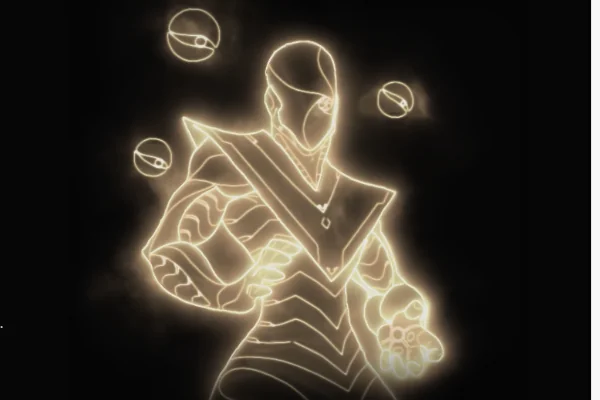
NFT: We got rid of the credit card and then focused on the benefits that give people an edge in the market’s alpha.
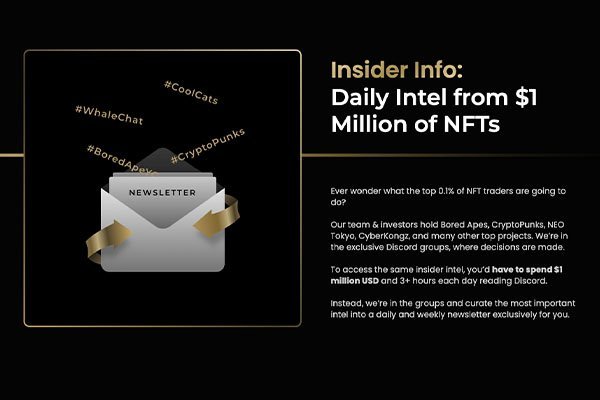
There are three core elements to the Mythia NFT, intel aggregation, software tools including an iPhone app, and a profile picture. Starting from the top with intel aggregation, in crypto, there are a lot of private communities where people share intel alpha. To get into those communities, a lot of the time, you have to have a very expensive NFT. These can cost $50,000 to $100,000-plus.
Even if you had all of these NFTs, you would still have to spend hours every day reading hundreds of messages to understand what’s going on. In our intel aggregation service, what we do is we buy all these NFTs and we have all of them. We read through all those Discord messages for you and send you one email and have one podcast a day that aggregates all of the intel in the top communities so that you can act upon that intel.
You send them the Edge of NFT show and that gives them everything they need to know. Is that exactly how it works?
Exactly.
That’s a little bit of a cheat but it works for you.
Have you acquired all these NFTs?
We have some of them and we will acquire the rest after the mint.
Sometimes you need to have the NFT to get the alpha. You have to go past that gate. That makes sense.
That’s the first benefit. The second benefit is software tools. We have built two of them. We’re going to build a third before we do our mint. In the future, the tools that we build will be driven by the community. It will be a dialogue structure where you can vote on which tools you want our Silicon Valley-based team to build next. The two tools we have already built are number one, a real-time mint tracker. We monitor the Ethereum blockchain to see what smart contracts are consuming gas. If something is consuming a lot of gas and it is an NFT mint contract, we let you know so that you can jump on the mint if there’s a room because it’s likely going to sell out and will likely trade about 4.
Number two is an upcoming mint momentum tracker where we track the growth of Twitter and Discord followers for upcoming projects so you can see which ones are breaking out. The tool that we’re releasing is an underpriced rares tool. Let’s say you’re trying to buy a Mutant Ape and the floor is at about 15 ETH. Instead of buying one at floor, you can buy one for maybe 5% above floor but it’s 50% rarer than everything else. It’s underpriced relative to its rarity. There’s no tool on the market that makes it easy to do that, so we’re building that tool and releasing it for free.
We’re building these three tools for free to show people that we can build quickly and build trust with the community. The future tools will be gated exclusive to the NFT holders and the tools that we have developed. We have a long list of ideas, but the community will vote on what we will build out and make it available to them.
What’s number three? How does that come to be?
Number three is the profile picture. We have an amazing artist who’s working on it. We have put out a couple of previews so far. I’m enthusiastic that the art itself will stand on its own and people will be excited about the art on its own. The entire package is pretty compelling. One thing I haven’t mentioned is the iPhone app. A lot of the intel that we put out there through the intel aggregation is not going to be super time-sensitive like, “There’s a mint coming up in a week that everyone is excited about.” Sometimes there will be intel that has to be actionable right now. For those, we will have an app that sends push notifications out. You can configure it to say, “I want to monitor these certain things.” The app will let you know in real-time.
This is interesting stuff that you’re doing. We have a friend that has gone way deeper down the rabbit hole than most human beings and spends eighteen hours a day doing this research. I can’t wait to tell him about what you’re building in the hopes that it gives him time to relax a little bit more. There’s a huge amount of effort that goes into acquiring this data and distilling it that you’re helping people with in a true Silicon Valley way. That’s interesting how this came about. I would like to go a little deeper with how the aggregation and the software tools work, and how you are going to draw data in the newsletter in an audio format? It sounds interesting.
That’s the one that people have given us the strongest feedback on. Different people are drawn to it for different reasons. For people who are earlier in their NFT journey, oftentimes, it’s about saving money. One NFT gives you the alpha of ten of the top NFTs. For people who are already fairly established, a lot of it is about saving time. They don’t want to be reading through all the Discords, even if they already have all of those entities. As for the format, it’s going to be a 3 to 5-ish-minute listen every morning, plus an email of a similar length or something like that.
There’s a daily audio download and summary newsletter that comes out to these folks. There are hot alerts if you have the app that lets you know if there’s an immediate buy alert or something like that.
In terms of tools that you’re offering now and in the future, have we covered everything or are there any details to go into that our audience might be curious about?
To go through some of the tools that we have on the docket for the future, one of them is a whale wallet tracker where you can either specify specific wallets that you want to track. We will have buckets that we can say, “You only want to track NFT traders who have made over a certain amount of money.” When they make a trade, then we notify you. We can say, “You want to follow specific influencers.” You know someone’s Twitter handle. They have an NFT as their profile picture, which lets us find their wallet. You can say, “I want to follow these five Twitter influencers.” We notify you when their wallet has activity.
We’re also planning on building a breakout notification. If certain NFTs are making a new all-time high, we can send you a notification. Another one is we can track TEAM token movement. This is a little bit outside of NFTs, but if the CEO of a token project is buying or selling, that’s a pretty strong signal. We can identify wallets and say, “These ten wallets belong to the core team of this project,” and then track the movements of those wallets. Those are some of the things that we might send notifications for it. These are things that we’re interested in building. The community will have a lot of ideas for what they wish existed that they don’t have the software team to build. We will have it all at a pool and people vote on what they want us to build and in what order.
I want a Steve Aoki alert. When he buys an NFT, I want to buy it at the exact moment.
We also wanted to learn a little bit more about how DAOs play in. You are forming a DAO or have that on your roadmap as well. Can we dive in there a little bit deeper? How is that going to work?
Like many DAOs, it starts in a centralized way and then gets more decentralized over time. That’s how we’re envisioning it. Up until now, the company has been driven by the core team. As we move forward, we want more of our decisions to be driven by the community. We want the ideas for which software tools are being built to come from the community. We want the community to vote on which features we build first. Even the finances of the company and where we invest in the future, we want it to also be driven by the community.
We will get more decentralized over time. The first place that we’re starting is working with our community to build the software tools that they want. A differentiation or a distinction is looking at some of the other tools on the market like Nansen and Icy.Tools. They’re all centralized and quite top-down. We think that a community-driven development effort is going to create something that the community is more excited about and we also move faster. We’re able to put out these tools at a quick pace.
I don’t think we have seen across the board community-driven projects, whether it’s a DAO or has elements of a DAO, that have demonstrated some staying power so far. We’re pretty excited about the future of that structure. It’s something that we’re looking at for our show as well.
NFT: People say, “Web3 isn’t making a difference in the real world.” We view it as a new thing that’s being born, and we don’t quite know how much it interacts with the other two, but it’s cool to see what’s happening.
I’ll add one more thing, which is with many of these software tools, the business model is you’re paying $100 to $300 a month to have access to it, and that money disappears. As you spend the money, it’s going to the company, they’re spending the money, and it’s gone. As opposed to the model where you buy an NFT, and as long as you’re holding the NFT, you have access to the software. Once you’re no longer using it, you have an asset that you can now sell, so you’ve never spent any money. That’s an interesting model for software tools that hasn’t been fully explored. We’re excited to be one of the first companies to explore this as a model.
I’m glad you elevated that. Also, with the newsletter and audio stuff, there’s some collaboration here in the making with the show. We should talk about that because we always have fun segments here and there on the show. We’ve got our newsletter, which goes out to our growing fanbase. Let’s talk about investors. What does the world of your investor base look like? Are they also active advisors in the project? What can you tell us about that?
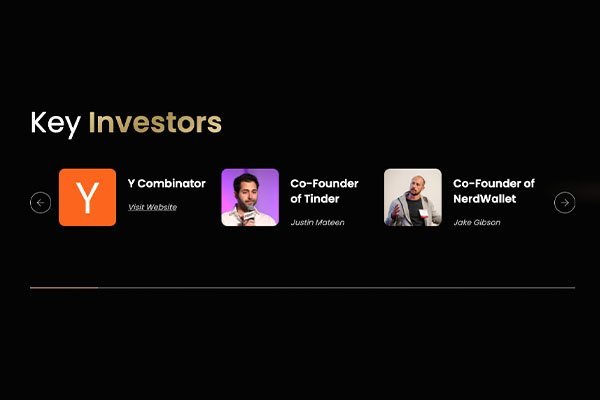
We have some of the top investors in Silicon Valley backing this project. Y Combinator were early investors in Airbnb, Dropbox and Coinbase. We have the founders of Tinder and NerdWallet, and the family that owns the Sacramento Kings team, eSports team, and Stadium. They’re all excited about this project.
Did you join YC with the Mythia idea or was it something else and it morphed into Mythia? How did that work?
We joined YC when we were the gaming debit card and then switched into crypto about six months after the YC batch.
It sounds like an incredible experience. I know a few people who have been through YC ones, specifically a podcaster. Do you know Courtland Allen? He runs the Indie Hackers Podcast. He went that direction away from VC funding to indie hacking. It seems like such a wonderful and privileged experience to be able to go through that program.
Derek, how has Web 3 thinking infused into the DNA of Silicon Valley and some of these investors? What are the types of conversations you’re having with these cats?
It’s only in 2021 that people have started thinking about Web 3. People still thought it was a fad until 2021. It’s not everybody but many of the large Silicon Valley firms didn’t necessarily see it as a big thing. Now the consensus is that this is something important and something interesting is happening here. The amount of brainpower that’s moving into Web 3 is crazy. Something like 40% of developers who are learning to code are moving into Web 3.
Some of our investors have told us that high percentages of their portfolios are pivoting from their Web 2 into Web 3. My sense in Silicon Valley is that there’s a lot of excitement around it and it doesn’t feel fragile. In 2017, it felt fragile like a 30% drop would crush it and it did crush the market. Now we can drop from 4,500 ETH to 3,000 ETH and people are like, “It’s the market. Keep going and building.” It feels real if that makes sense.
Let’s not go too far below 3,000 ETH.
To be honest, it wasn’t much of a conversation when that happened. People are entrenched in what’s being built and it’s exciting. I’m glad to hear that the same perspective is there up North in San Francisco.
Everyone wants to be in Web 3, including the traditional investors. It’s funny because Web 3 valuations are high. It’s not uncommon for a seed-stage company without a product and market to be raising at $20 million to $30 million, which is quite a bit higher than a traditional seed round. Non-Web 3 investors have been trying to catch up and get comfortable with saying, “You have an idea. We will value it at $30 million.” Understanding how to value and invest in these projects is happening. It has been cool being in Silicon Valley and watching those two ecosystems collide.
This is the status of new technology. That has been technology throughout history. That’s what technology does. It creates extreme value all of a sudden, especially when you have something that has never been around before or people are just onboarding on to. It’s not a surprise. We all know there’s that sense of dot-com bubble type of situation where there’s certainly going to be some winners and losers, but the funding running into it makes a lot of sense for our society. I want to look ahead here a year or more. Can you think that far ahead? What’s the long-term vision of the Mythia project or what you’re up to?
Phase one is this NFT launch. Part of that NFT launch is building a community of people who are excited about NFTs, crypto in general, and trading. People who are looking for an edge in the market are our core market. Once we have this audience and build trust with this audience, the second stage is we’re planning to launch a Decentralized Exchange or DEX. That will come in several steps. The gap that I see in the DEX market is there are a lot of different protocols that do different things. You can borrow, lend, trade, short, leverage, and liquidity pool.
There are a lot of different things you can do, but to do each of those things, you have to go to a different place. You go to dYdX to leverage. You go to Aave to borrow. You go to Uniswap to trade. It’s a very unnatural workflow. As a trader, you want to sit there and spot an opportunity to be able to leverage it. What we’re building is a DEX that allows you to make any type of trade that DeFi can support in one interface.
Under the hood, we will swap out the smart contracts so that if you click the borrow button, we route it to Aave. If you click the buy button, we route it to Uniswap. We are routing an aggregation layer on top of all of the other DeFi protocols. Once we have the traffic and the flow of funds, then we build our own smart contracts and liquidity pools on top of that. Long-term, we will be building a DEX. In the short term, it’s a DeFi aggregator. The core thing that drives all of these together is making trading easier for people who are in crypto.
It’s like a command and control. I appreciate those features in some of the existing sites where I could look at the price chart or something. There’s also a button that says I can connect my wallet and start trading on it but it’s outside of that site. It’s through a different exchange or something like that. I love the idea of pulling all things together. I have one more question before we wrap up with our last couple here. Back to the YC example, I hear that they have a metric that you try to exponentially grow on a month by month or week by week. Do they still have that? If that’s the case, what is it for you? Is it users or revenue? Where are you at?
That is mostly when you’re in the YC batch. You have a metric that you’re trying to improve and there’s one number that you need to get better at. For us, when we were going through YC, it was the total transaction volume per week because we were a debit card. Outside of the YC batch, it’s not nearly as much of a pressure cooker environment. It’s more like, “Here are these twenty YC partners that have years of experience.” We have access to them as well as any other resources that YC has. It’s up to us to tap it when we want to tap it. It’s a different dynamic once you’re outside the batch. They’re not as intense.
Thanks for that info. I appreciate it.
We’re all influenced by what’s around us like other projects, ideas and whatnot. I’m curious as to the primary influences on you. Who do you look to for inspiration?
I piece this together from a number of different people. Naval’s podcast with Tim influenced it a lot. I view Web 3 as a new world that’s being created. The internet is a new world. It’s just disconnected from the physical world. In a way, I view crypto as a different world where people have their own census of identities, its own metaverse, and its own money. It’s this separate community and world that integrate with Web 2 and the physical world.
Let’s do it.
Did you mow a bunch of lawns to make that flight?
I’m pretty sure my mom paid for it.
What brand were you working for?
It sounds very San Francisco and awesome.
Thank you.
It’s a good way to keep rent costs down.
How do you manage the fridge, though?
What brand of skateboard do you use?
It’s a WowGo.
Let me know.
Thank you.
Being more humble would be good.
It’s like, “Do I want to be more humble or not?”
Are you a morning guy or a late-night guy?