Top Podcasts
Derek Lau From Guild Of Guardians—The Next NFT Game Poised To Explode, Plus: NFT Game Developer Scammed, Bored Apes On Twitter, NFTs Drawing Women To Crypto, And More...
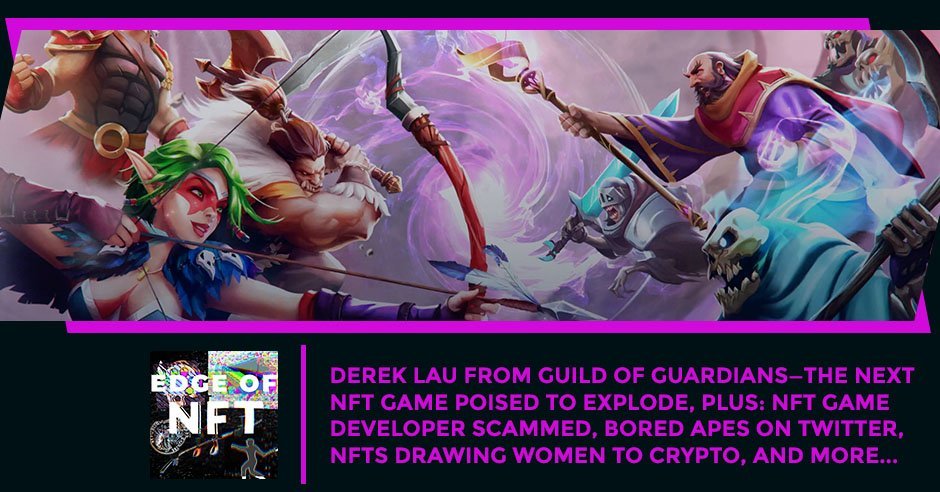
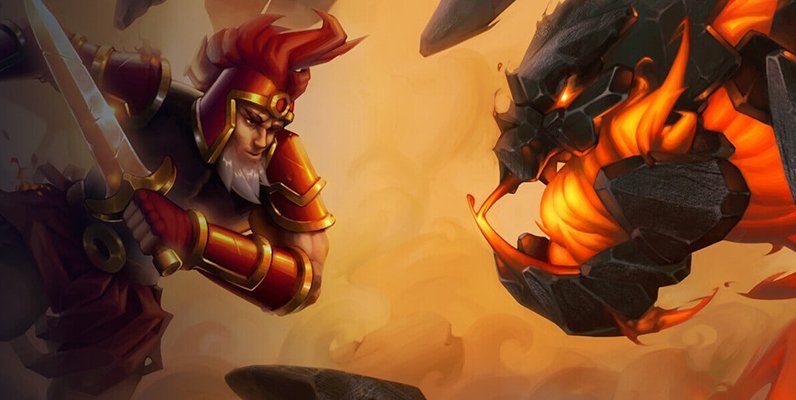
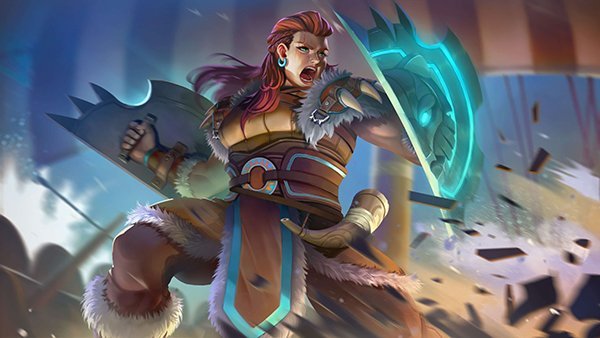
We have seen very interesting things come out of the blockchain gaming industry recently, but very few do it at the scale Guild of Guardians does. This mobile RPG NFT game is already poised to surpass some of the biggest existing projects even before it is launched. Game Director Derek Lau has been instrumental in making this project a success from inception to implementation. He is happy to announce in this episode how things are going for this new, fun way to trade NFTs, which is scheduled to do a soft launch in the second quarter of 2022. Derek joins Eathan Janney, Jeff Kelley and Josh Kriger to talk about some of the new features Guild of Guardians is introducing into the blockchain gaming space and what sets it apart from its competitors. He also gives some insights on crypto scams, Bored Ape, and diversity in NFT.
—
Listen to the podcast here
Derek Lau From Guild Of Guardians—The Next NFT Game Poised To Explode, Plus: NFT Game Developer Scammed, Bored Apes On Twitter, NFTs Drawing Women To Crypto, And More…
This is Derek Lau, Game Director for Guild of Guardians. To get into how NFTs are exploding in games like ours, make sure to check in with Edge Of NFT often and pay close attention.
—
**Hey there, Edge of NFT curious reader. It’s great to have you here. Stay tuned for a great episode and you’ll learn how a bold new gaming project, Guild of Guardians, is poised to surpass some of the biggest existing projects in NFT gaming before it’s even launched. **
You’ll learn why folks are still not close to being bored with the Bored Ape Yacht Club.
**Plus, you’ll find out what insights our guest, a former Bored Ape owner himself, has on why this community is still growing and changing in fascinating ways. Learn all this and more on this next edition of Edge of NFT. Don’t forget to subscribe to our newsletter at EdgeOfNFT.com to find out more about the latest news and giveaways. **
—
This episode features Derek Lau, Game Director for Guild of Guardians. Guild of Guardians is a play and earn mobile role-playing game where players turn their gaming passion into NFTs. He has a unique blend of experience in gaming, product and startups with long and sustained exposure to NFT since 2017. The game is published by Immutable and developed by Stepico Games. Immutable is a tech company that leverages blockchain to unlock value and align incentives within the $90 billion video games industry. Derek, welcome to our show.
Thanks for the intro. Good to be here.
It’s super great to have you here with us. We’ve heard a good amount about Guild of Guardians and we’d love to know a little bit more about it. Give some background for our readers. Where did the idea come from? How did you all bring it together?
You guys summed up the idea well. I’ll tell you more about how it started. A few years ago, I joined Immutable, which back then was already a VC-funded startup focusing on making digital worlds real. I came on board and they had a goal of figuring out how to add new NFT games into their platform. We did a series of investigations in terms of how to do that, what game would be a good fit and who we should work with to do that. We ended up settling on the mobile RPG genre for a few reasons. We ended up figuring out that we wanted to build this mobile RPG game called Guild of Guardians. We found a good partner to do that with as well. We’ve been working on this game, building out this team and trying to create something that’s going to be big. Our goal is to create this mainstream game that onboards millions of people into NFTs and crypto.
As a group, do you guys know each other for a long time? How did you come together? Building something like this is a massive undertaking. You don’t take that partnership lightly.
It was a growth over time. Immutable itself as a company had previously released a game and the game is still going, which is a trading card game called Gods Unchained. As a company, we already knew how to release games, some of the challenges involved and some of the learnings involved in doing that. There were a few of us who investigated how to add another game and we ended up partnering with a games development studio that had built many mobile games before. They brought in a lot of the expertise in terms of how to build mobile games. Whereas on our end, we had the expertise on how to design, market and publish some of these games. That’s where Immutable focuses. That’s why we’re more of the publisher and owner of the game. By doing that, we accelerate a lot of that growth as well because it’s not necessarily easy to build something from scratch.
Derek, what are some of the nuances of doing an NFT-related game as opposed to a traditional game? The industry is moving quickly. We’ve seen a lot of games come out and buck the trend of the crypto market overall during that time, which had been relatively sideways. These games are going up. What are the things that go through your mind in terms of creating an NFT game that is different from a traditional game?
There are a few things that are different. The first thing that comes to mind is that traditional games are designed to have a closed economy. They’re designed to not allow anyone to earn or trade anything in the economy. This is part of the design. Those games wouldn’t work if you suddenly added in trading in a lot of instances because it would just break the game. A fundamental principle of these NFT games is that there are NFTs which, by nature, are tradable, provably scarce, etc. The core economy of these games needs to be designed differently. The game design often needs to be unique if you want to make the most out of NFTs and you want to make them a powerful addition to the game to make the game better.
In this case, you got a multiplayer fantasy action role-playing game where players are able to build their dream team of Guardians and compete in the skill to earn an epic tradable reward. It sounds cool. What’s the difference here between a pay-to-win game versus a play-to-earn game? There are nuances here that are important for people to understand.
Taking a step back, we should think about what pay-to-win means. Often in these games, what it means is that one player is able to buy an advantage using often a lot of money. They use that to win over other players, often in PvP so beat up other players. The reason that it’s considered a bad experience is that as a free-to-play player, you’re matched up against this player who’s bought a boatload of stuff and is beating you every match. That’s the reason why it’s called such a negative connotation in the space.
I played Madden Mobile sometimes and it’s less fun if I’m playing with people that aren’t at the same level as me. They’ve done a good job of increasing the abilities of the players over the length of the season. At the beginning of the season, you’re more of a rookie and then, in this season, you’re more of a badass all-star and that does make it a lot more fun. You don’t want a David and Goliath situation is what you’re saying.
Yeah, exactly. When one person is spending a lot of money, their fun is at the expense of others. That’s when you’d be in this pay-to-win situation where you’re spending money and other people are having less fun because of the fact that you spent a lot of money.
It’s like no salary cap in the NBA. If you took that out, it’d be no fun. In all pro sports, it makes your level playing field to some degree.
What we’re trying to counter is this underlying issue. The way we do that in Guild of Guardians is that the game is focused around the social and guild part of the game. There are a few reasons. One, to some degree, is this idea of pay-to-win because you’re working together as a team. It’s more social-focused or co-op competitive as opposed to, as an individual, you’re buying all these things and trying to beat up every other player.
Instead, there’s a situation where if you’re an individual and you do spend a lot of stuff, you probably will be celebrated by a guild because you’re helping out everyone else in that guild that you’re in. At the same time, you’re not necessarily causing anyone else to have a bad experience. A key part of the game as well is we want to make it so that players can specialize. Players can end up having their own role in the game. Regardless if you’re a big spender or if you’re a small spender, you have a role in the game. Regardless if you’re high level or you’re a beginner, you still have a role in the game. That’s what a real economy is. Everyone has a role and that’s what we’re trying to create in the game.
It seems like there is some influence from traditional card games, physical in-person games. Some of the stuff like Wizards of the Coast put together Magic: The Gathering and things like that. That’s influenced gaming a lot in general. Does that play into how you guys structured this thing at all?
A little bit. If you look at some of the games from the 2000s or some of the early MMORPGs that had pseudo-open economies and the fact that they let players trade the digital items and, in the black market, people could trade it for their own money. If you look at games like that, a lot of the open economy design principles have been seen before and most people have forgotten about how they work. These days, games have a different model for you to play.
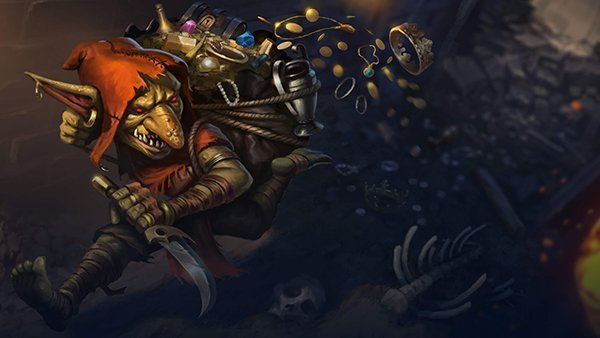
A lot of the thinking takes some of the learnings of that period as well, the Golden Era there. In terms of Magic: The Gathering specifically, we don’t necessarily take as much influence from a trading card game perspective. Our game is in this fantasy setting. We do take inspiration from things from the overall general world and the Dungeons & Dragons world as well. In our game, people can play not just as humans but also as orcs, elves and things like that.
I want to move it over to the asset side of things. We’re focused on NFTs on the show. How do you empower gamers to own and trade their assets? I know you might connect them with a real-world economy in some way. How does that work?
Our goal is we want to onboard millions of players. The way we do that is the game is free to play and it’s also available on iOS and Android. We want to make it as accessible as possible on mobile, which is the most popular platform. People can start off playing effectively as normal in-game currencies that are not in the blockchain. For example, as you’re playing a game, you’re battling in these dungeons, you defeat the bosses and you earn materials. You might earn crafting materials or you might earn summoning shards and things like that.
What players can then do is they can use these normal in-game soft currencies and pay a small number of tokens as well, which is our hard currency that governs the game to mint these NFTs. People can play the game, get stuff for free and mint these NFTs. That’s how it’s going to work. The NFT is going to be more premium in the game. Not everything in the game is NFT, that is the point I’m trying to make. Once it becomes an NFT, it means that the player earns it, trades it whenever they want, holds it and does all these cool things with it because it becomes this digital asset.
What’s cool there is you have to earn the right to mint NFT by how well you play the game if I’m not mistaken.
Yeah. There’ll be a few different ways to create these NFTs. We like to call them mint. It’s a blockchain term. They’ll involve playing the game. In fact, crafting, which is one of the key mechanics in the game, will involve you having to also play with your guild, with many other players. The only way NFT items in the game are made is through players. It’s by players playing the game, getting crafting materials and working with a guild to craft items.
Hence the name Guild of Guardians. This is cool to learn about. On that same thread, you have a partnership with Sandbox. This is the virtual world where players can build, own and monetize their gaming experiences using NFTs. What in your mind makes the marriage between mobile gaming and NFTs/blockchain appealing?
It does a few things here. The first is that mobile games are huge. It’s twice as big as a PC. It’s growing 3 or 4 times as fast. It’s a popular category. It’s the most accessible form of gaming. That’s one of the main reasons we want to build on it because we want to make it super accessible. You’re asking about the partnership with Sandbox as well.
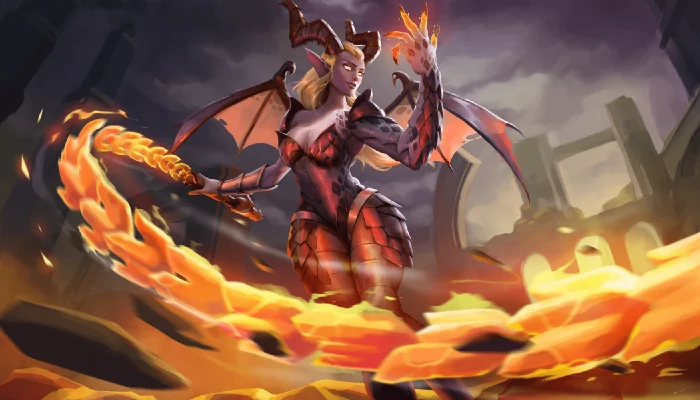
Guild Of Guardians: Traditional games are designed to have a closed economy. NFTs are tradable by nature, so the core economy of NFT games needs to be designed differently.
We’ve talked about it a few times on the episodes. How does that all tie in?
Ultimately, we’re building the Guild of Guardians mobile game. As developers, that’s what we’re building but that’s not necessarily where the Guild of Guardians universe will end. What we want to do with the power of NFTs is that we can have aligned incentives with the community. We also want to encourage the community to build on top of the game whether that’s content, podcasts, development tools or Metaverse games projects like in Sandbox. This is the general idea we want to push towards and we’ve already seen some steps towards this where our community has started doing a lot of cool things.
The collaboration with Sandbox is a step in that direction where we want to do something with another project that’s not Guild of Guardians but it extends the universe and ultimately, what we want to do is create a win-win situation. More people learn about Sandbox, more people learn about us and get engaged. Hopefully, the community members can start building stuff as well. Maybe they learned a game within Sandbox and they can even monetize and create a business. This is what we want to facilitate. There is all this community-driven content that adds value to the overall ecosystem.
There’s so much momentum behind this. Everybody’s trying to build their guild.
That’s exciting.
I’m trying on the Edge of NFT guild. I like how it sounds.
Go with The Guild of NFT.
We’ve got a naming session here.
Derek, you’re trying to build a community but you’re being rather modest because you have over 140,000 pre-registered players, which is amazing.
It could be 150,000. Let’s be clear.
You sold more than $4.5 million of assets with more to come from my understanding. That’s amazing. You’ve talked about the mechanics at the highest level of this game but let’s sharpen the pencil a little bit more. What do you attribute this type of success to?
We’ve always had a clear strategy, which is that we want to build this game that is absolutely massive. It’s not easy at all. It’s quite difficult. It’s going to take quite a long time but we’re here to build for the long-term and disrupt the industry. At that high-level vision and strategy level, we have a lot of people who have bought into that compared to other projects, which might not have as much capital, might be small or might have small ambitions. We stand out there in terms of what we’re trying to do and also having the team and game to back it up.
Are you open to sharing how much capital has gone into building this game?
We’re well-funded in terms of the game. Those are a couple of things that I can share.
It’s important for people to understand this doesn’t happen overnight. There’s a lot of thought that’s gone into this.
If you think about it, most NFT projects do a sale of NFTs to build the project as fundraising. We’re fortunate in the sense that we don’t need to do that. We’re going to build this project regardless. Any money that we get from selling NFTs is a bonus. On that side, we’re committed to this. That’s on the strategy and vision level.
The other thing in terms of building communities is that we have always tried to take an organic and creative approach. A lot of the NFT space is about how you break out of the noise. There is a lot of noise. There’s so much stuff happening all the time. It’s hard to keep up. That’s a core part of our community-building and marketing strategy. How do we keep people engaged? We’ve done a few interesting things before where we’ve done these events, which have gone almost viral within certain parts of the NFT space. These little experiments and events have led us to massively build our community.
You’re mentioning a little bit already about community building. I wonder if we could dive a little deeper into how you’re going to use the capital you might have raised from successful sales. Maybe undisclosed investments somewhere above $100,000 probably, where those funds might go and maybe even touch upon the five-year vision of Guild of Guardians.
The money ultimately goes back into the game. We’re aiming to soft launch on mobile in early 2022 but that’s not where it ends, that’s where it starts. We’re going to need a lot more capital to take it to the next level. We want to take it from 0 to 1. The first step is getting 100,000 players. The step after that is getting to one million players. The step after that is getting to ten million players.
Each incremental step is a step-change in the project and that’s where it’s going in terms of a lot of capital. I imagine a lot of it will be used to bring in new users. A lot of it’s going to go back to the community to build out in all these things and not just have us developing things but end up having this universe as well. We plan to try to make this thing as big as possible one step at a time. Each step is equally difficult but more and more rewarding.
You mentioned 1 million users, 10 million users. Not to pigeonhole you or anything but do you see a timeline on that in terms of a five-year vision? I don’t know if you’ve had experience in this already so it’s almost like you know the trajectory. You’re going to hit certain milestones by certain dates. What are your thoughts about how quickly this might happen and where things might be in five years?
I can’t put any certainty on the timeline. It always depends on a lot of different things. What I can say is that our goal is to make this as big as possible. As soon as the game gets released, I expect we’ll see a lot of attention because there’s already this big community. We have over 200,000 people in total across different channels. When we first launched, we already had this strong user base. What we plan to do is scale it from there. What we want to do is we want to make it so that the game naturally brings in these new users because other people are hearing about it, they’re seeing their friends play and they completely explode. That’s the goal.
It could be quick but it’s not easy. Ultimately, our goal is we also want the game economy to be huge. There are a few things. Having a lot of players but also having this billion-dollar economy as well within the game. That’s one of our goals as well, which is having $1 billion, $10 billion traded, etc. as these long-time ambitions.
It’s worth putting out a benchmark here that seemed like you guys are prepared to blow by. Alien Worlds had 100,000 players in April 2021 and that’s one of the most popular games in the space. What we’re talking about here is parabolic potential growth right alongside the biggest games in the space.
Derek’s being super modest. This thing is kicking ass already and its trajectory is sick. It’s no joke. That goal, the billion-dollar economy, honestly, for what you’re building may even be the start.
**Do you own a Bored Ape? **
The real world always makes things difficult.
Sure. Let’s do it.
He’s caffeinated. He’s ready to go.
I’m finally awake.
I do love lollies.
I was in bed. I just woke up.
**Hitting the snooze button. **
I try not to be negative.
**Weak sauce. **
There’ll be more.
**We drove by. **
**We were that tired that we were 20 feet away. **
Twitter is @GuildOfGuardian.
I should tell them about it.
iTunes**, rate us, say something cool and then go to EdgeOfNFT.comContact@EdgeOfNFT.com or tweet at us **@EdgeOfNFT
Important Links:
-
NFT Game Developer Scammed Out Of $1M Of NFTs and Ethereum – Yahoo! Finance article
-
Why Bored Ape Avatars Are Taking over Twitter – The NewYorker article
-
Emma-Jane McKinnon – Past Episode
-
Discord – Guild of Guardians
-
@GuildOfGuardian – Twitter
-
iTunes – Edge Of NFT
-
@EdgeOfNFT – Twitter
About Derek Lau

Building the next generation of video games where in-game items can be traded for real money. Responsible for the end-to-end development and launch of Guild of Guardians – a mobile RPG where players can turn their gaming passion into assets.
I combine deep expertise in NFTs, blockchain gaming, start-ups, strategy and product.
Immutable is a technology company that leverages blockchain to unlock value and align incentives within the $90bn video games industry. I am responsible for managing the launch and continuous improvement of Guild of Guardians, a title published and owned by Immutable.
So far I have taken the product from concept to implementation. The team has grown from 1 to 20+ and so far achieved over USD$3m in revenue (& more, but confidential).